Humidity hits, your blowout swells, and the front pieces start bending before you’ve even left the house. Or maybe your hair isn’t wildly frizzy, but it’s rough, overprocessed, puffing up at the ends, and taking too much heat every morning just to look finished. That’s usually the point where people start searching for the best keratin treatment and get buried in salon menus, “clean” claims, and product names that all sound like they do the same thing.
They don’t.
Some treatments mainly soften and de-frizz. Some push the hair much straighter. Some are better for color-treated hair. Some are safer for sensitive clients but less forceful on very coarse texture. Some are a bad match for porous, brittle hair unless the prep and aftercare are handled properly.
The right decision isn’t about chasing one universal winner. It’s about matching the treatment to your hair, your tolerance for maintenance, your safety concerns, and the kind of result you want. If your goal is smoother hair that still keeps movement, your best option may be completely different from someone who wants a glassy, low-effort finish for months. And if your routine already leans gentle, you may also want to rethink your wash habits before treatment, especially if you’re trying to reduce stripping. A simple reset can start with cleaning hair without shampoo.
Your Guide to Frizz-Free Hair
Keratin treatments get oversimplified. Clients often walk in asking for “the strongest one,” when what they really need is one of four things: less frizz, less daily heat styling, better surface shine, or easier manageability in humidity. Those goals overlap, but they aren’t identical.
Here’s the fast comparison I use before recommending anything:
| Treatment path | Best for | Main upside | Main trade-off |
|---|---|---|---|
| Salon smoothing treatment | Resistant frizz, high-maintenance styling routines, uneven porosity | More controlled application and more predictable result | Higher cost and stricter aftercare |
| Formaldehyde-free salon option | Clients prioritizing safety, comfort, and cleaner ingredient profile | Strong frizz control without choosing the harshest category | May feel less dramatic on very coarse or highly resistant hair |
| At-home keratin kit | Mild to moderate frizz, experienced home users, maintenance between salon visits | Lower commitment and easier budget entry | Results vary a lot with technique and heat control |
| Light keratin or protein smoothing service | Fine, wavy, or easily weighed-down hair | Softer finish with less risk of a flat result | Won’t give the strongest straightening effect |
A good consultation starts with four questions.
- What bothers you most: frizz, puffiness, roughness, curl expansion, or blow-dry time?
- How damaged is the hair: healthy, color-treated, bleached, or chemically stressed?
- How much straightening do you want: polished texture or a much sleeker finish?
- What are you willing to maintain: product changes, delayed washing, lower heat, and regular touch-ups?
The best keratin treatment isn’t the one with the boldest marketing. It’s the one that solves your specific problem without creating a new one.
Understanding How Keratin Treatments Work
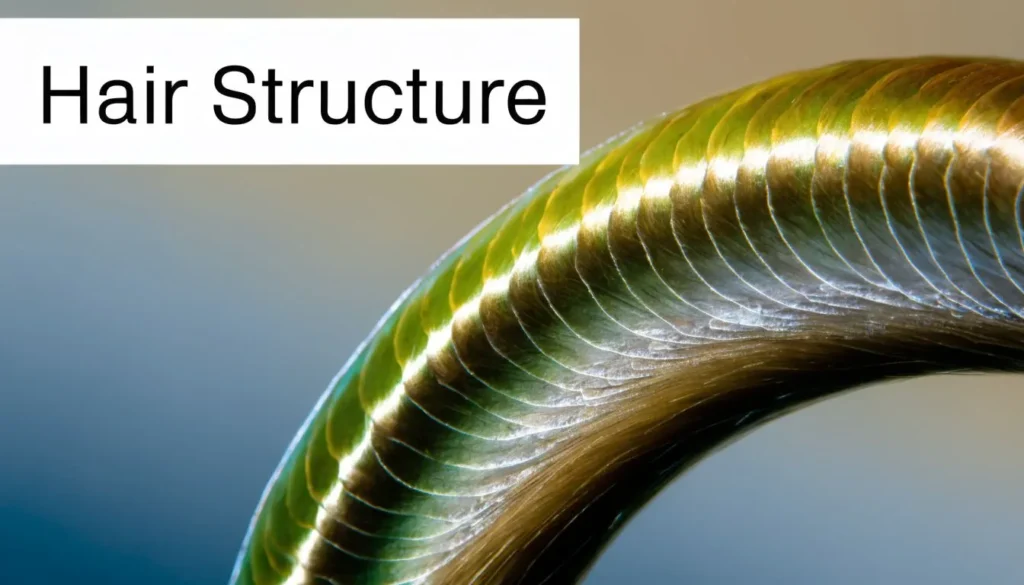
Hair isn’t one solid fiber. It has an outer cuticle, which acts like overlapping scales, and an inner cortex, where much of the hair’s strength and pattern live. When hair is healthy, the cuticle lies relatively flat. When hair is damaged, over-lightened, or repeatedly heat styled, that outer layer lifts and becomes uneven. That’s when you see frizz, dullness, tangling, and the kind of texture that keeps expanding in moisture.
What the treatment is actually doing
A keratin treatment doesn’t “heal” hair the way living tissue heals. Hair fiber is dead material. What the treatment can do is patch weakness, improve surface alignment, and create a smoother film that behaves better under heat and humidity.
In practical terms, the process usually works like this:
- The hair is cleansed so buildup doesn’t block the formula.
- A keratin-based or smoothing formula is applied through the mid-lengths and ends, and sometimes closer to the root depending on the system.
- The hair is blow-dried.
- Heat from the flat iron seals the treatment into the fiber and smooths the cuticle.
That’s why application technique matters so much. Too little saturation and the result fades fast. Too much product, or too much heat on compromised hair, and the finish can turn stiff, dry, or fragile.
What the science supports
One of the clearest pieces of evidence for protein-based repair comes from a 2018 PMC study on keratin protein K31. After a one-hour treatment on bleached hair, the average hair diameter increased by 49% and the hair’s tensile strength nearly doubled. That matters because it gives a physical explanation for why treated hair can feel denser, smoother, and less flimsy after the right protein system is used.
What that study doesn’t mean is that every salon keratin product performs the same way. It means keratin protein has real potential when the formula is built well and used correctly.
Practical rule: Keratin works best on hair that’s frizzy, porous, rough, or structurally weakened. It’s less impressive on hair that’s already smooth and healthy but just lacks volume.
Why heat matters so much
Heat isn’t just the finishing step. It’s what helps lock in the smoothing effect. But more heat isn’t automatically better. Fine, bleached, or high-porosity hair usually needs a more conservative approach than dense, resistant hair. When stylists talk about “customizing a keratin service,” this is a big part of what they mean.
Professional Salon Systems vs At-Home Kits
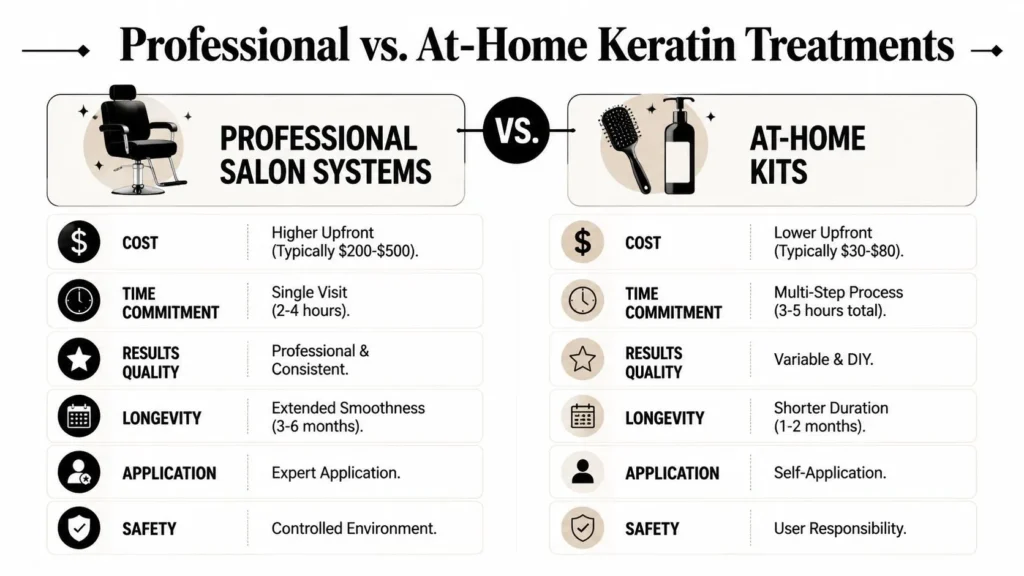
The split between salon systems and at-home kits isn’t just about price. It’s about control. Control over saturation, heat, section size, timing, ventilation, and how the formula is matched to the condition of the hair.
Where salon systems usually win
In the salon, the biggest advantage is customization. A trained stylist can see where the hair is porous, where it’s overprocessed, where it resists smoothing, and where a heavy hand would cause trouble. That matters more than people think.
If your hair is bleached, uneven in texture, extremely dense, or has a history of color plus heat damage, a salon system is usually the safer path. It also tends to be the better choice if your goal is a polished result that still feels balanced from root to ends.
A professional can also decide whether your hair should be fully sealed for maximum sleekness or left with a softer finish that preserves movement. DIY users often treat the whole head the same way, even when the front hairline, crown, and ends all need different handling.
Where at-home kits can make sense
At-home kits aren’t pointless. They can work well for someone with mild to moderate frizz, decent hand skills, and realistic expectations. They also make sense for people who don’t want a dramatic straightening effect and are mainly after smoother blow-dries or easier wash-day styling.
The problem is that many home users underestimate the technical parts.
- Sectioning: If sections are too thick, the product won’t distribute evenly.
- Heat control: If the flat iron is too cool, the result won’t set well. If it’s too hot, damage shows up fast.
- Hair condition: Porous ends grab product differently than virgin roots.
- Ventilation: Some formulas create fumes or irritation during sealing, especially in small bathrooms.
Choose salon treatment if your hair is fragile, heavily lightened, very curly, or if you want the result to look expensive instead of just flatter.
A better way to compare the two
| Decision point | Salon systems | At-home kits |
|---|---|---|
| Hair assessment | Better for mixed texture, damage, and corrective work | Better for straightforward hair with mild frizz |
| Application consistency | Higher, because sectioning and ironing are controlled | Variable, because user technique changes everything |
| Risk management | Better if hair is color-treated or compromised | Higher chance of patchy results or over-ironing |
| Convenience | One appointment, then aftercare | Flexible timing, but more self-monitoring |
| Result profile | Usually more refined and even | Can be good, but often less polished |
Product examples and what they suggest
Some salon-focused systems stand out because of how they’re engineered. According to a feature comparison at Keratin Research’s INVERTO 60 overview, INVERTO 60 uses a gel delivery system designed for deeper penetration, with 20 to 30% lower application time, up to 60% frizz reduction, 70% smoothing efficacy in humidity tests at 80% relative humidity, and 90% smoothing retention after 25 washes. That same source notes a pH-balanced formula of 4.5 to 5.0 and a 15% improvement in elasticity post-treatment.
Those details matter because they point to what separates better salon systems from generic ones. Delivery system, pH, and wash retention are not small details. They shape how the hair feels weeks later, not just the day you leave the chair.
Who should choose what
If I were guiding someone quickly, I’d frame it this way:
- Salon is the better route if your hair has multiple issues at once. Frizz, color damage, uneven texture, or strong curl resistance.
- At-home can work if your hair is mostly healthy and you want a softer de-frizzing result, not a major transformation.
- Skip DIY entirely if you’re not confident with a flat iron, especially on the back of your head. Uneven sealing is one of the fastest ways to get disappointing results.
The treatment itself matters. The application matters just as much.
Formaldehyde vs Formaldehyde-Free Formulas
This is the decision that changes everything. Not because one side is automatically “good” and the other “bad,” but because you’re choosing how much smoothing force you want versus how much formula intensity you’re comfortable with.
Why traditional formulas became so popular
Traditional smoothing systems gained traction because they’re effective on stubborn frizz and resistant texture. They tend to create a stronger, more obvious smoothing result, especially when someone wants hair that air-dries neater and needs less daily styling.
But those stronger results come with the exact concerns that have made many clients and stylists more selective. Irritation, fumes during heat sealing, and ingredient transparency are not side issues. They’re central to the consultation.
That’s why “formaldehyde-free” has become such a strong selling point. Still, that label needs context. Some alternatives rely on other chemistry to smooth the hair, and while they can be gentler, they don’t always perform the same way on every texture.
What a high-performing formaldehyde-free option looks like
One of the more specific examples is NKST Natural Keratin Smoothing Treatment. According to that product data, NKST delivers up to 5 months of frizz protection with 95% humidity resistance, can increase shine by 40%, and improve manageability by 85%. The same source says it aligns with the preferences of the 60% of users seeking clean beauty solutions.
That kind of performance is why formaldehyde-free systems are no longer just the “weaker but safer” category. Some are now strong enough for clients who want real smoothing without stepping into the harshest formula class.
Still, there are trade-offs. On coarse, highly resistant hair, a formaldehyde-free service may leave more texture than a traditional heavy-duty smoothing treatment. For many clients, that’s a feature, not a flaw. It depends on whether your goal is reduction or near-elimination of bulk and frizz.
How to read the trade-off honestly
Here’s the short version:
- If safety tolerance is low, formaldehyde-free is usually the better place to start.
- If your hair is color-treated or fragile, gentler systems often fit better.
- If your texture is very resistant and you want the strongest possible flattening effect, talk through the chemistry carefully with a stylist and don’t rely on branding alone.
- If you’re sensitive to fumes or scalp discomfort, don’t compromise just because someone promises a sleeker result.
This explainer helps visualize what stylists are weighing during that choice:
What tends to work best in real life
Clients who do well with formaldehyde-free formulas usually fall into one of these groups: they want frizz control more than pin-straight hair, they color their hair regularly, they care about ingredient profile, or they know they won’t tolerate a more aggressive service well.
Don’t choose a formula based only on how sleek it looks under salon lighting. Choose it based on how it will feel during application, how it behaves in your climate, and whether you’ll still like your hair when your natural texture starts returning.
The best keratin treatment, for many people, is the one that leaves enough of their own texture intact to look believable while still cutting the daily battle down.
Matching The Treatment To Your Hair Type
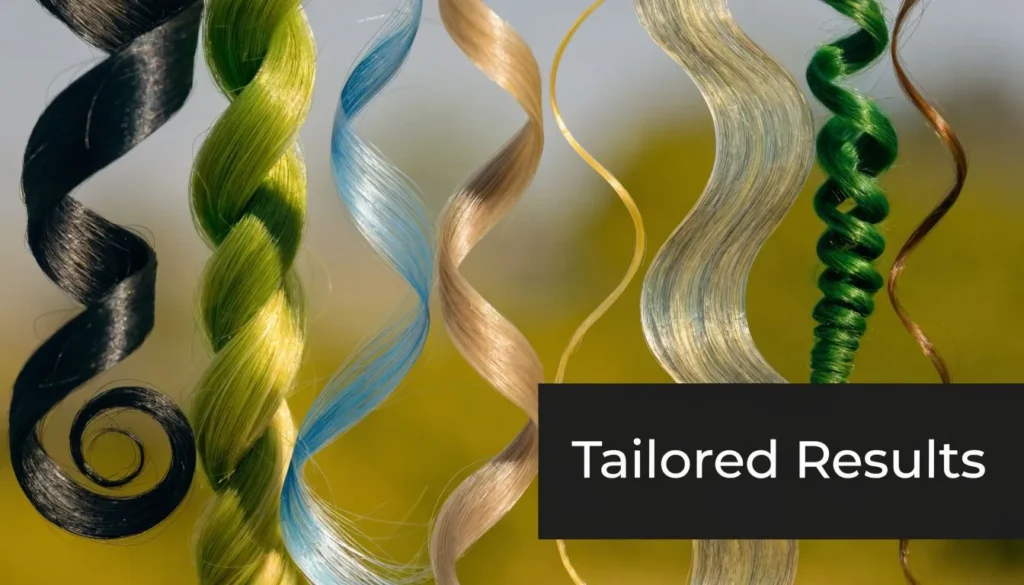
Hair type changes the answer more than product marketing does. Texture, density, porosity, and chemical history all affect how a keratin service lands. The same formula that makes one client’s hair glossy and easy can make another client’s hair limp, dry-feeling, or stubbornly unchanged.
Fine or wavy hair
Fine hair usually needs restraint, not force. Heavy smoothing systems can collapse body and make the hair look flatter at the root while the ends still need styling. On this hair type, the best keratin treatment is often a lighter smoothing formula or a service aimed at surface polish rather than maximum straightening.
If the hair is also low porosity, overloading it with protein can make it feel rigid. That’s why I’d rather see a soft de-frizzing approach than an aggressive one.
Thick, curly, or high-density hair
This group usually benefits from a stronger system, but “stronger” shouldn’t mean automatic overprocessing. The right target may be faster blow-drying, more stretched curls, or less expansion in humidity, not total pattern removal.
If the hair is thick and color-treated, balancing smoothing power with flexibility matters. A formula that seals too hard can make the surface look shiny while the interior of the hair feels less resilient over time.
Type 4 hair needs its own discussion
Type 4 hair is often left out of generic keratin advice, and that’s where bad decisions happen. The goals here are different. Many clients with coily or kinky textures aren’t looking for permanent-looking straightness. They want low-manipulation styling, less daily tangling, and a smoother window that reduces repeated heat use.
That benefit is real, but so are the limitations. A 2025 survey of curly hair users referenced here found that 62% experienced rebound frizz within one month. That lines up with what many textured-hair clients already know: humidity, porosity, and reversion can change the result much faster than salon marketing suggests.
A few practical points matter more than formula hype:
- Porosity first: Highly porous Type 4 hair can grab protein fast and then feel dry if aftercare is too lean.
- Expectation setting: Keratin may help create a straighter, low-manipulation phase, but it may not hold like it does on looser textures.
- Aftercare choice: Bond-supportive and moisturizing maintenance tends to matter more than people expect.
- Curl identity: Some clients want easier silk presses, not a new baseline texture.
For Type 4 hair, keratin is often best treated as a styling support service, not a texture eraser.
If you’re also balancing treatment with color decisions, it helps to look at the wider picture of shade choice, contrast, and maintenance. This guide to colors for hair is useful because color history affects how aggressively you should smooth.
Damaged or bleached hair
This is the group that needs the most careful screening. Keratin can help rough, porous hair feel more coherent, but a damaged client isn’t automatically a candidate for the strongest service. If elasticity is poor, the formula and ironing plan need to be conservative.
Aftercare and Making Your Treatment Last
A keratin treatment can look excellent on day one and disappoint by week two if the aftercare is sloppy. Most of the early fading I see comes from washing too soon, using the wrong cleanser, tying the hair up too early, or layering on products that create buildup and force harsher washing later.
The first 72 hours
This setting period matters because the hair is still stabilizing after heat sealing.
- Keep it dry: Water can interrupt the finish before it’s fully set.
- Leave it loose: Ponytails, clips, tight tucks, and even repeated ear-tucking can leave bends.
- Avoid heavy sweating if possible: If the scalp gets damp quickly, the surface can crease.
- Don’t add extra styling products unless your stylist says to: Too much product too early can interfere with the feel and finish.
If your hair does get bent, many stylists will tell you to smooth that section gently with heat right away. The key is not letting the crease sit.
Long-term maintenance
After the setting window, cleansing becomes the make-or-break factor. Harsh detergents strip the coating that gives keratin-treated hair its smoothness and slip. A gentler wash routine is not optional if you want your service to hold.
Use a sulfate-free conditioner and a shampoo that won’t rough up the cuticle. If you need ideas for that category, this guide to the best drugstore conditioner is a practical place to start.
A few habits help a lot:
- Sleep with less friction: Silk or satin pillowcases reduce surface roughness.
- Use moderate heat: You usually won’t need the same iron temperature you used before treatment.
- Hydrate without overloading: Lightweight masks and leave-ins work better than thick product stacking.
- Swim carefully: Chlorine and salt can shorten the life of the finish.
Good aftercare doesn’t just preserve smoothness. It keeps the hair from needing another service too soon.
Your Practical Decision Checklist
If you’re still deciding, use this like a chair-side consultation.
What’s your real goal
If you want less frizz and easier styling, a formaldehyde-free smoothing system may be your best keratin treatment. If you want hair that behaves much straighter and sleeker for longer, a stronger salon system may fit better, provided your hair can tolerate it.
What condition is your hair in
Healthy hair gives you more options. Bleached, brittle, or highly porous hair needs a gentler formula and a stylist who won’t iron it like resistant virgin hair. If your ends are compromised, the best choice might be a lighter smoothing plan, not the strongest one on the menu.
How much maintenance will you actually do
Be honest here. If you won’t switch shampoo, won’t protect the hair from friction, and know you’ll wash aggressively, don’t pay for a premium result and then undercut it at home. The best keratin treatment always includes realistic aftercare.
How much straightening do you want to keep
Some people want their natural movement softened, not erased. Others want the flattest, most controlled finish possible. Those are different service categories. Ask for the result, not the buzzword.
What’s your safety tolerance
If you’re sensitive to fumes, have a reactive scalp, or don’t want to gamble on a harsher formula, that should shape the decision from the start. There’s no prize for choosing a stronger treatment than you’re comfortable with.
Are you choosing for your hair type, or for someone else’s result
People often get thrown off by before-and-afters. Fine waves, dense curls, bleached lengths, and Type 4 coils won’t all respond the same way. Pick the treatment that suits your texture, climate, routine, and patience level.
The best keratin treatment is the one that gives you a result you can live with, maintain, and still like after the first glossy week is over.
maxijournal.com publishes approachable, well-researched writing across health, science, fashion, technology, business, travel, arts, and more. If you enjoy practical guides like this one, explore maxijournal.com for fresh commentary, everyday explainers, and opportunities for readers and contributors who like clear, useful writing.
Discover more from Maxi Journal
Subscribe to get the latest posts sent to your email.