Most advice about a low shedding dog starts with a breed list. That’s not where first-time owners get into trouble.
The question isn’t “Which dog sheds the least?” It’s “What kind of coat care can I realistically keep up with every week?” A dog that leaves less hair on your sofa may need much more brushing, combing, clipping, and bathing than a dog that sheds freely. If you miss that trade-off, the coat that seemed easy can turn into mats, skin problems, and expensive grooming appointments.
The other common mistake is tying low shedding to the word “hypoallergenic.” Those ideas overlap in people’s minds, but they are not the same thing. A dog can drop less visible hair and still trigger allergies. A curly coat may help contain loose hair, yet it won’t erase the proteins that sensitive people react to.
That’s why choosing a low shedding dog works best when you think about three things together:
- Hair in the house
- Grooming time and cost
- Allergy management at home
If you approach it that way, you can make a smart choice instead of buying into marketing language. Some homes do wonderfully with a Poodle or Bichon Frise. Others are better served by a different breed, or by waiting until the family can handle the grooming commitment.
Your Guide to a Cleaner Home with a Low Shedding Dog
A cleaner home is a fair goal. Many people want a dog but don’t want fur collecting under furniture, clinging to clothes, or drifting across the car seats. A low shedding dog can help with that. It just doesn’t mean a no-maintenance dog.
That distinction matters. Dogs described as low shedding usually hold onto loose hair in the coat instead of dropping it all over the house. For owners, that can mean fewer hair tumbleweeds on the floor and less lint-roller duty. It can also mean the loose hair has to be removed by brushing and grooming before it tangles into mats.
Practical rule: Low shedding usually shifts the work from your vacuum to your brush.
This is why breed lists alone can mislead people. A breed may be excellent for someone who enjoys coat care, keeps a grooming schedule, and doesn’t mind regular salon visits. The same breed can be frustrating for an owner who wants a wash-and-wear dog.
There’s also a quality-of-life piece here. Some households care most about indoor cleanliness. Others care about allergy concerns. Others need a dog that fits apartment living, children, or a busy work schedule. The right answer isn’t always the dog with the curliest coat or the trendiest reputation.
A better way to think about it is simple:
| What you want | What to check |
|---|---|
| Less fur on floors | Coat type and how much hair gets trapped |
| Fewer allergy flare-ups | How you’ll manage dander, saliva, and cleaning |
| Easier upkeep | Your tolerance for brushing, combing, and clip schedules |
| Predictable results | Whether the breed’s coat is consistent or variable |
When people understand those trade-offs early, they usually make better choices. They don’t just ask which low shedding dog is popular. They ask which dog fits their life.
What Low Shedding Really Means for Dog Owners
A low shedding dog sounds low maintenance. In real homes, it often means the opposite.
Low shedding describes how a coat releases hair into the environment. It does not mean the dog stops losing hair. It means more of that loose hair stays caught in the coat instead of floating onto your sofa, clothes, and floors.
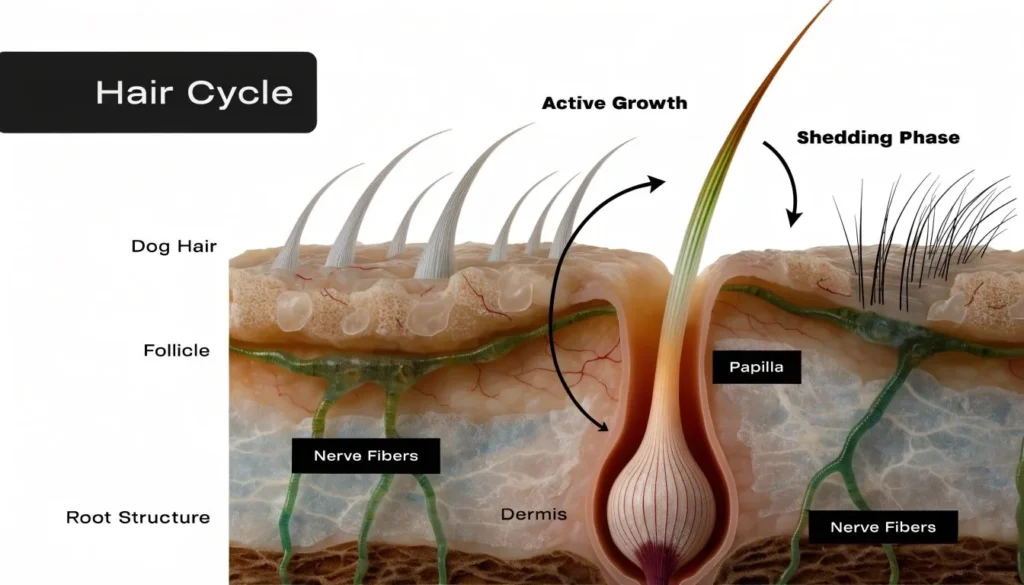
Hair still sheds. It just sheds differently.
A dog’s coat works like a growth cycle, not a switch. Some breeds, especially Poodles, Maltese, and many doodle-type mixes, have coats that keep growing longer before hairs loosen. Curly, wavy, or fine textures also tend to hold onto those loose hairs instead of dropping them quickly around the house.
That can make daily cleanup easier. You may notice less fur on furniture, fewer clumps along baseboards, and less hair stuck to black pants.
The trade-off shows up on the dog.
Trapped hair needs hands-on care
When loose hair stays inside the coat, it has to be removed by brushing, combing, bathing, and clipping. If that step gets skipped, the coat starts behaving like Velcro. Shed hair, dirt, and moisture catch together. Small tangles form first. Then they tighten into mats, especially behind the ears, under the collar, in the armpits, and around the tail.
Mats are not just cosmetic. They pull on the skin, trap moisture, and can hide sores, parasites, or ear problems. As a veterinarian or groomer would tell a first-time owner, the dog that leaves less hair on your floor may need much more coat care on your calendar.
Here is the practical pattern many owners see:
- Curly or wool coats hide loose hair well, but they mat quickly without regular line brushing and combing
- Silky single coats usually drop less visible hair, but friction areas tangle fast
- Wiry coats often look tidy between sheds, yet they still need regular stripping, clipping, or carding depending on the breed
- Long continuously growing coats need scheduled trims because the coat does not stay manageable on its own
Low shedding changes where the work happens
A heavy-shedding double coat often creates more work for your vacuum. A low shedding coat often creates more work for your brush, comb, and groomer.
That distinction matters because breed labels can give a false sense of ease. A family may choose a low shedding dog to keep the home cleaner, then feel surprised by daily brushing, six-week grooming appointments, or the cost of professional coat care. The cleaner house is real. So is the maintenance.
A better question is not, “Does this dog shed?” Ask, “What kind of upkeep does this coat require every week, and can I keep up with it?”
Match the coat to your routine, not just your preference
If you dislike loose hair on the floor but do not mind brushing several times a week, a curly or long single coat may suit you well. If you want a dog that can be washed, dried, and mostly left alone between quick brush-outs, many low shedding breeds will frustrate you.
For first-time owners, coat care is often easier to judge by time than by breed reputation:
- A few minutes most days fits many curly and silky low shedding coats better than one long grooming session every few weeks
- Professional grooming every 4 to 8 weeks is common for dogs with continuously growing hair
- A metal comb reaching the skin indicates whether brushing is working. If the comb cannot pass through easily, mats are starting
Low shedding can be a great fit. It is best for owners who understand the exchange. You usually get less fur in the house and more responsibility on the dog.
The Allergy Myth Debunked Shedding Versus Dander
A lot of people search for a low shedding dog when what they really want is an allergy-friendly dog. That’s understandable, but it’s where the biggest misconception starts.
Hair is visible, so people assume hair causes the reaction. In most cases, the problem is allergen proteins found in skin cells, saliva, and urine. Hair can carry those materials around the environment, but the hair itself isn’t the root issue.

What the science actually showed
A landmark study looking at dog allergen levels across 173 families found that 163 of them, or 94.2%, had measurable levels of Can f 1, a common dog allergen. When researchers compared homes with supposedly “hypoallergenic” breeds and standard breeds, they found no statistically significant differences in Can f 1 levels. Fur samples also showed that Poodles produced the highest amounts of Can f 1, followed by Labradoodles, according to this summary of the hypoallergenic dog research.
That matters because Poodles are often marketed as the safest choice for allergic homes. They may be excellent low shedding dogs. That is not the same thing as proving they create a low-allergen environment.
Why low shedding can still help some people
Nuance matters. A low shedding coat can still be useful in some homes because less loose hair may mean fewer dander-laden strands floating around the room. Some people feel better around these dogs because the environment seems cleaner and easier to manage.
But that improvement is not guaranteed. One owner may do well with a Bichon Frise and a strict cleaning routine. Another may react to the same breed because their sensitivity is higher, the dog licks a lot, or grooming releases dander during brushing and bathing.
So if allergies are part of your decision, use this checklist instead of relying on the word “hypoallergenic”:
- Spend real time with the dog before bringing it home
- Pay attention to saliva contact, not just visible shedding
- Use HEPA air filtration and frequent vacuuming
- Keep grooming regular, because neglected coats can hold more debris and irritants
- Talk to your physician or allergist if symptoms are significant
Don’t buy a breed label. Test your response to an individual dog and your ability to manage the home environment.
The gentle truth about the term hypoallergenic
“Hypoallergenic dog” survives because it sounds reassuring. It suggests a safe shortcut. Biology doesn’t really support that shortcut.
If you want the practical version, here it is. A low shedding dog may reduce the amount of loose hair you see. It may or may not reduce the allergic burden enough for your household. Treat coat type as one tool, not a cure.
Profiles of Popular Low Shedding Dog Breeds
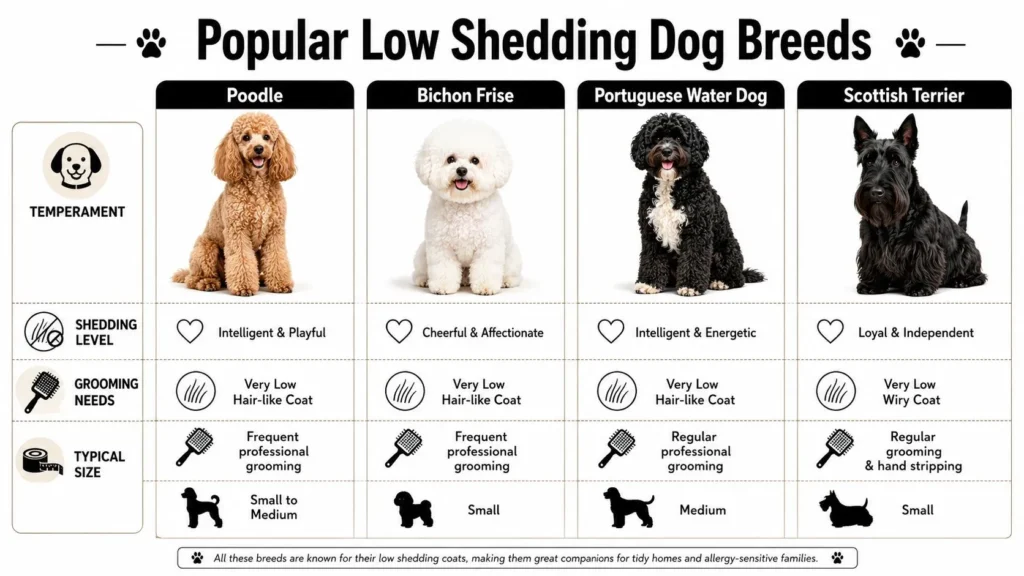
Breed lists can be misleading here. Two dogs may both be called low shedding and still create very different workloads at home. One may need a quick weekly tidy-up. Another may need daily brushing, regular clipping, and a patient owner who notices mats before they tighten against the skin.
That is the trade-off to keep in view. Low shedding often means the loose hair stays in the coat instead of falling onto your floor. In practical terms, the coat works a bit like a sweater that holds lint. You see less hair on the couch, but someone still has to remove what the coat is trapping.
Standard Poodle
The Standard Poodle earns its reputation for low visible shedding. The curly coat tends to catch loose hairs before they drift around the house, and the breed is bright, trainable, and athletic.
The catch is maintenance. Poodle hair keeps growing, and curls can hide tangles close to the skin. A dog may look fluffy and brushed on the surface while mats are forming underneath, especially behind the ears, under the harness, and where the legs rub together. Many owners make life easier by choosing a shorter clip and planning professional grooming on a steady schedule.
This breed fits active households that want a smart dog and are ready to treat coat care like routine upkeep, similar to trimming fast-growing hedges before they turn into a bigger job.
Bichon Frise
The Bichon Frise is a classic small companion for people who want less loose hair on furniture and clothing. Its cheerful temperament helps explain why the breed stays popular with families and apartment dwellers.
Its coat needs more work than its size suggests. Soft curls mat easily in friction spots, and the bright white coat often shows tear staining, dirt, and food residue. Owners who do well with a Bichon usually build grooming into the week instead of waiting until the coat looks messy.
Small dog, real grooming budget.
Portuguese Water Dog
Portuguese Water Dogs attract people who want a medium-sized dog with an athletic build and a coat that sheds less than many sporting breeds. They are energetic, trainable, and usually happiest when they have exercise, structure, and a job to do.
The coat still asks for commitment. Curls or waves can tangle quickly after swimming, hiking, or rough play, and an active dog gives you more chances to deal with burrs, damp coat, and hidden knots. This breed makes sense for owners who already enjoy training sessions and outdoor activity. It is a poor match for someone searching for a quiet, low-maintenance companion.
If you are weighing personality as carefully as coat care, this guide to top dog breeds for families can help you compare broader household fit.
Giant Schnauzer
The Giant Schnauzer gives owners a different version of low shedding. The coat is wiry rather than curly, and the dog itself is powerful, alert, and demanding in ways that catch first-time owners off guard.
Coat care still matters, especially if you want to keep the jacket tidy and the furnishings neat, but training and handling matter just as much. A large, intense dog with moderate grooming needs can be far harder to live with than a smaller dog with a fussier coat. Choose this breed because you want its working temperament, not because a breed chart placed it in the low shedding category.
Maltese
The Maltese is a good example of why low shedding and low maintenance are not the same thing. The coat sheds lightly, but the long, silky hair tangles fast and picks up debris with surprising ease.
Daily brushing is often the dividing line between a lovely coat and a matted one. A shorter pet trim makes the breed much easier for many owners to manage, and that choice is often kinder to the dog than trying to maintain a long show-style coat without the time or skill to support it. For a first-time owner who wants a gentle small companion, a practical trim is usually the more realistic plan.
How to compare these breeds realistically
A simple question helps more than the label low shedding. Ask, “Where will the hair go, and what work will I need to do because of that?”
With a Poodle or Bichon, much of it stays trapped in the coat and must be brushed or clipped out. With a Maltese, it stays attached to long strands that knot. With a Giant Schnauzer, the challenge may shift toward hand-stripping or coat maintenance plus serious training needs. With a Portuguese Water Dog, exercise demands and coat care rise together.
Choose the dog whose grooming pattern, activity level, and temperament fit your real week, not your ideal one. That usually leads to a cleaner home and a happier dog.
Essential Grooming for a Low Shedding Coat
A low shedding coat often shifts the work from your floor to your brush, comb, and grooming table. Hair does not vanish. It tends to stay caught in the coat, where it can twist into mats if you do not remove it regularly.
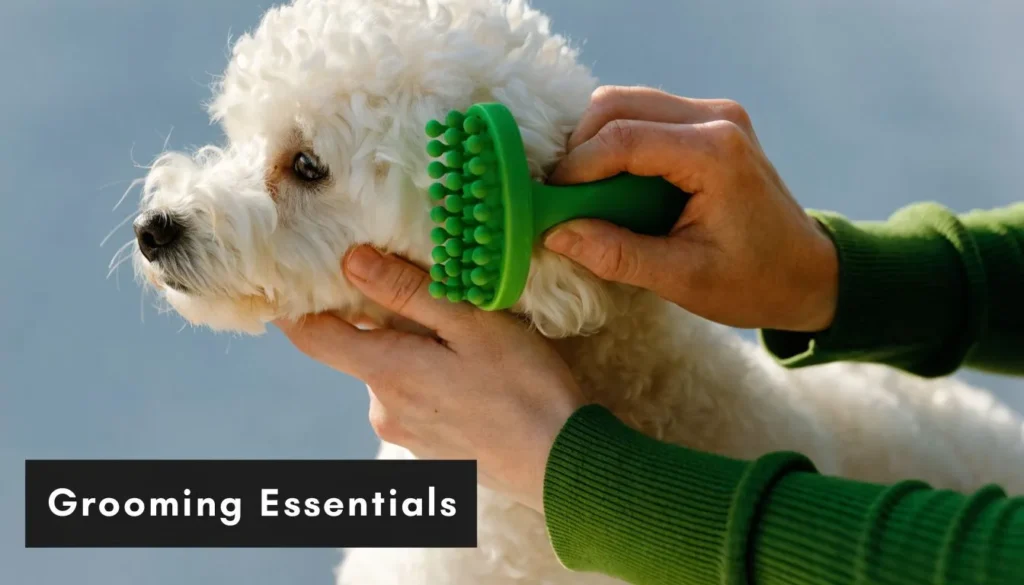
That trade-off surprises many first-time owners. A Labrador may leave hair on your couch. A Poodle mix or Bichon-type coat may leave less hair around the house, but much more coat care in your weekly routine. The practical question is not just, “How much will this dog shed?” It is, “How much hands-on coat maintenance can I do every week?”
The home routine that matters most
Short, regular sessions work better than occasional marathon brushing. Coat care works like flossing. A few minutes done on schedule prevents the painful cleanup that comes later.
Start with a small kit you will use:
- Slicker brush for surface brushing and loosening tangles
- Metal comb to check all the way down to the skin
- Detangling spray for friction spots and longer hair
- Dog-safe clippers or professional grooming appointments for coats that keep growing
The comb matters more than many owners expect. A dog can look fluffy and tidy on top while the hair near the skin has already formed a felt-like layer. If the comb catches or stops, you have not finished brushing that area.
Problem spots usually show up first in places where hair rubs, folds, or stays damp:
- Behind the ears
- Under the collar or harness
- Armpits and groin
- Leg fringes and tail
- Between the toes on some breeds
When professional grooming becomes necessary
For many curly, wavy, or continuously growing coats, home care alone is not enough. Professional clipping on a regular schedule keeps the coat at a manageable length and makes brushing more realistic for the average household. The American Kennel Club’s grooming guidance for coat-maintenance breeds notes that dogs such as Poodles need frequent clipping and regular brushing to prevent matting and skin problems, especially as the coat grows out: AKC grooming advice for Poodles.
Mats are not just cosmetic. They pull on the skin, trap moisture and debris, reduce airflow, and can hide irritation, parasites, or infection. A coat that feels dense like wool near the skin needs attention sooner, not later.
That is why handling practice should start early. Teach your dog to accept foot handling, face wiping, drying, combing, and short brushing sessions while calm. A dog who can stand calmly for grooming is safer and less stressed, and the person doing the grooming can be more thorough.
This quick video shows the kind of calm handling many owners should aim for:
If you’re also planning your parasite prevention routine, this overview of flea and tick collars is worth reviewing, because dense low shedding coats can hide fleas, skin redness, and small scabs until they become a bigger problem.
Brushing is not finished when the dog looks neat. It’s finished when the comb passes cleanly through the coat.
A realistic owner mindset
A practical trim solves many problems before they start. Plenty of owners do better with a shorter pet clip, brushing several times a week, and salon visits booked before the coat becomes overgrown. That approach is often kinder to the dog than chasing a long, pretty style that the household cannot maintain.
Choose the grooming plan that fits your actual calendar, budget, and patience. Low shedding dogs can be wonderful housemates, but the clean-home benefit usually comes with more coat work, not less.
Finding Your Dog Adoption and Responsible Purchasing
The hardest part is often not finding a low shedding dog. It is finding one whose coat care fits your real life.
That distinction matters. A dog can shed very little and still need frequent brushing, clipping, drying, and professional grooming. For first-time owners, the better question is often not “Which dog drops the least hair?” but “Which coat can I keep comfortable every week, every month, and every year?”
A low shedding dog can come from a breeder, a rescue, or a breed-specific adoption group. What matters most is how accurately the dog’s likely adult coat, grooming needs, and temperament are described. A good source explains the trade-offs clearly. You should hear about brushing, matting risk, salon costs, and daily upkeep just as plainly as you hear about personality.
If you are buying from a breeder, ask for specifics instead of labels. “Low shedding” is too vague to be useful on its own. Ask what the adult coat usually feels like, how often owners typically brush at home, how often the dog needs clipping, and whether the coat changes after puppyhood. Ask to meet related adult dogs if possible. That gives you a more realistic picture than a fluffy puppy photo.
If you are adopting, spend time with the dog in person and ask what the rescue has observed. A shaved or recently matted dog can hide the true coat type, a bit like judging a plant’s growth habit right after it has been cut back. The rescue may not know everything, but careful observations still help. Does the coat tangle easily? Does it feel curly, cottony, wiry, or silky? Has the dog tolerated brushing and bathing well?
Be careful with doodle promises
Poodle mixes are often sold as the easy answer for families who want less shedding and fewer allergy problems. The situation, however, is often less tidy. Mixed coats can be unpredictable, especially across litters and even within the same litter.
That does not make doodles bad dogs. Many are affectionate, bright, and wonderful companions. It does mean you should treat coat claims with caution. A breeder or seller should explain coat variation clearly instead of promising that every puppy will be “hypoallergenic” or easy to maintain.
The same caution applies to allergy concerns. Current research has not shown that any breed reliably produces an allergy-free home for sensitive people. If someone in your household has allergies, spend time with the individual dog before you commit, and repeat that exposure if possible. Real-world contact usually tells you more than a sales label.
Questions worth asking before you commit
- How many minutes a week am I realistically willing to spend brushing and combing?
- Can I afford routine grooming for the life of the dog?
- Do I want a predictable coat type, or am I comfortable with variation?
- Will this dog tolerate handling, bathing, and salon visits well?
- If allergies matter, have I tested my reaction to this specific dog rather than trusting the word “hypoallergenic”?
One more practical point gets overlooked. Coat care and skin health are connected. Once you choose your dog, good nutrition supports the skin and hair that groomers and veterinarians see every day, so this guide to dog food brands recommended by vets can help you plan that part well.
The best match is rarely the dog with the lowest advertised shedding. It is the dog whose coat, care needs, and temperament fit your schedule, budget, and patience. That is what leads to a cleaner home and a more comfortable dog.
Frequently Asked Questions About Low Shedding Dogs
Do low shedding dogs still need baths
Yes. Low shedding coats can trap dirt, body oils, and loose hair. The right bathing schedule depends on breed, coat style, skin condition, and lifestyle. Your groomer or veterinarian can help set a routine that cleans the coat without over-drying the skin.
Can a short-haired dog be low shedding
Sometimes, but short hair and low shedding are not the same thing. Some short-coated dogs leave hair everywhere because the coat releases easily. Some longer-coated dogs shed less visibly because the hair stays trapped until brushed out.
Can low shedding dogs get fleas or skin problems
Absolutely. A coat that drops less hair does not protect against fleas, irritation, hot spots, or infections. In fact, dense or curly coats can hide trouble until it becomes advanced, which is one reason routine skin checks matter.
How often should I brush my low shedding dog
That depends on coat type, length, and haircut. Curly, long, or silky coats usually need more frequent attention than short practical trims. If your comb catches near the skin, your schedule isn’t frequent enough.
Is a low shedding dog good for first-time owners
Sometimes. A first-time owner can do very well with one if they choose a breed whose grooming needs fit their time, budget, and patience. Problems usually start when someone wants the clean-house benefit without the coat-care commitment.
If you enjoy practical, plain-English guides on pets, health, science, and everyday decision-making, visit maxijournal.com for more approachable articles like this one.
Discover more from Maxi Journal
Subscribe to get the latest posts sent to your email.