A PGA Tour ace is rare enough to stop a tournament in its tracks. That scarcity is only the starting point. What gives these shots staying power is the pressure wrapped around them, the decision that produced them, and the consequences that followed on the leaderboard, in the player’s own mind, and sometimes in the paycheck waiting at week’s end.
Every hole-in-one moment on the PGA Tour arrives with a different kind of weight. Some come in majors, where one swing can harden belief or expose nerves. Others erupt on stadium holes, where crowd noise changes the emotional temperature of the round. On the most dangerous par-3s, an ace does more than erase a stroke. It flips strategy on its head, turning a hole players often try to survive into a turning point they can ride.
That is why the best PGA aces hold up under closer examination.
They are not just highlights for a replay package. They are case studies in timing, execution, and tournament math. A single shot can shift momentum, redefine a player’s week, and change how that performance is remembered long after the scorecards are filed.
1. Michael Block The Club Pro’s Fairytale Ace
Michael Block’s ace at the 2023 PGA Championship felt scripted, which is exactly why it resonated so hard. He wasn’t just another tour regular stuffing an iron close. He was a club professional, playing the final round with Rory McIlroy, already carrying the emotional charge of a week that had turned him into golf’s unlikely central character.
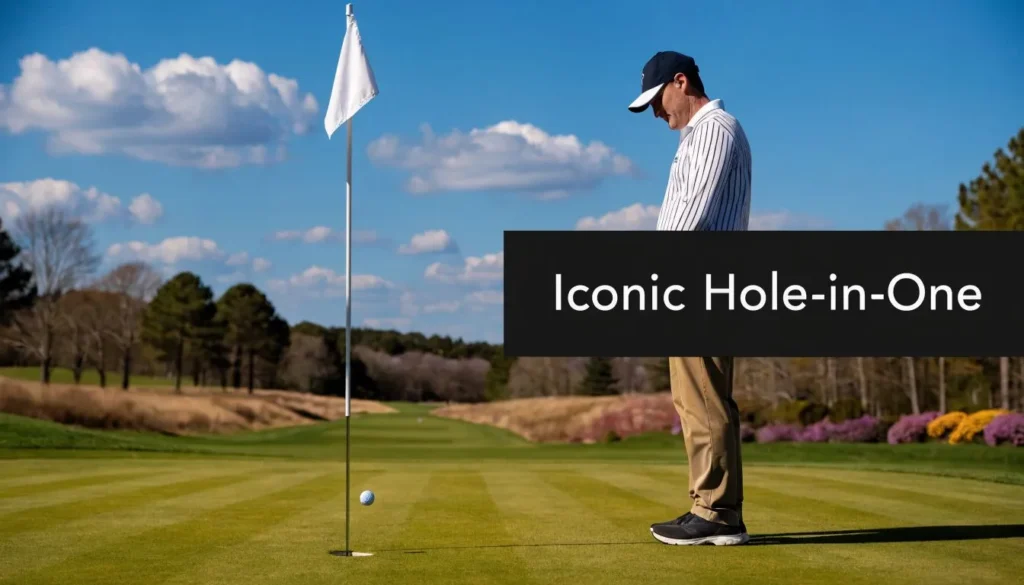
The strategic meaning of the shot is what made it bigger than a highlight clip. A late-round ace in a major doesn’t just ignite the crowd. It can stabilize a player emotionally, especially one operating in unfamiliar company and under a microscope he didn’t expect to face. For Block, the swing carried the tension of a teacher trying to hold his own against the game’s most polished performers. The ball going in felt like the final proof that his week wasn’t smoke and mirrors.
Why the moment stuck
The ace also changed the shape of his story. Instead of “nice run by a club pro,” the tournament became a fairytale with a cinematic climax. That matters in golf, where narrative often decides which moments endure and which get folded into the archive.
- Tournament context: It happened on Sunday, with the leaderboard pressure and major-championship scrutiny that give every swing extra weight.
- Psychological swing: Playing beside McIlroy could have shrunk the moment. Instead, Block expanded into it.
- Legacy effect: The shot turned a strong week into a cultural one. Fans who don’t usually remember mid-major storylines remembered this one.
A great ace doesn’t only save a stroke. It changes the meaning of the round around it.
Prize-money implications are part of the subtext even when fans don’t discuss them directly. In pro golf, every jump on the board matters. One shot can improve finish position, career opportunity, and future access. That’s why Block’s ace felt bigger than celebration. It was strategic advantage, emotion, and validation compressed into one swing.
2. Tiger Woods The Roar Heard ‘Round the World
A hole-in-one is rare under any conditions. Doing it on the loudest par-3 in golf, as a 21-year-old with the sport already tilting toward him, is why Tiger Woods’ 1997 Phoenix Open ace still plays like a turning point instead of a highlight.
What made the shot memorable was not only that it went in. It arrived on the 16th at TPC Scottsdale, a hole that already behaved more like an arena than a standard Tour stop. The setting changed the pressure profile. A wedge shot that would feel routine in a quieter event became a public test of control, tempo, and nerve. Woods met that environment with the kind of precise strike that made the eruption feel inevitable a split second after contact.
The crowd reaction is the famous part. The strategic context is what gives the moment staying power.
Woods was still early in his professional rise, and moments like this shaped how opponents, sponsors, and fans read him. A young player making an ace in that setting gains more than a stroke. He gains proof of fit. Phoenix rewarded aggression, charisma, and comfort with noise, and Woods showed all three at once. The shot helped confirm that he was not just talented enough for the Tour. He was built for its biggest stages and loudest theaters.
That helps explain why the clip has endured beyond simple nostalgia. Some aces are remembered because they save a round. This one mattered because it accelerated a narrative already forming around Woods. He looked like golf’s next commercial and competitive force, and one swing compressed both ideas into a single image. Fans often remember that kind of magnetic sports presence the way they remember headline pairings and crossover fame around stars such as Andre Agassi and Steffi Graf. The comparison is about scale of attention. Certain athletes make every venue feel larger.
Why this ace mattered beyond the scorecard
The hole-in-one also revealed something about Woods’ psychology under stress. Plenty of players can survive noise. Woods often appeared to sharpen because of it. On the 16th, with thousands waiting to react to anything, he did not appear to steer the ball safely. He committed to the shot. That distinction matters in tournament golf, where half-measures often miss in the least forgiving spots.
There is also a money angle beneath the celebration. Tour events are decided by thin margins, and one shot can affect finishing position, earnings, and the way a week is remembered by sponsors and television producers. Even when an ace does not decide the tournament outright, it can change the value of a round and the visibility of a player. In Woods’ case, the financial subtext was tied to something larger. The shot increased the sense that every future Tiger appearance would carry extra commercial weight.
An iconic ace does more than drop for one. It changes how the tournament, the player, and the audience relate to each other.
That is why the roar lasted. The shot was clean, the venue amplified it, and the timing gave it consequence. In technical terms, it was elite distance control under unusual sensory pressure. In story terms, it sounded like the sport realizing it had a new center of gravity.
3. Sam Ryder Pandemonium at the Phoenix Open
Sam Ryder’s ace on the same Phoenix 16th in 2022 worked as a modern update of the Tiger scene, but with a different kind of meaning. Woods’ ace announced a star. Ryder’s ace showed how the hole itself had become a sports venue unlike anything else in golf.

The strategic challenge at Phoenix 16 is unusual because the player has to hit a precise wedge or short iron while surrounded by noise that feels closer to an arena than a course. Ryder’s shot landed in a setting where control and chaos were colliding in real time. Once it fell, the fan reaction became the story, with cups and beer cans raining onto the green in one of the most viral scenes the Tour has produced.
Stadium golf changes the pressure
That reaction wasn’t just comic excess. It highlighted how crowd behavior can become part of the competitive environment. Most par-3s test distance, spin, and wind reading. Phoenix 16 tests those things plus the ability to stay composed in a setting that almost invites adrenaline to run hot.
A memorable hole in one pga moment usually has one of two effects. It either rewrites the tournament for the player who made it, or it rewrites the identity of the hole itself. Ryder’s shot did more of the second. It reaffirmed that Phoenix 16 isn’t merely a famous stop. It’s a spectacle engine.
- Course identity: The hole now carries layers of memory. Every player stands on the tee knowing what has happened there before.
- Player psychology: The louder the environment, the harder it is to commit fully to a number and shape.
- Broadcast value: Some aces become bigger on replay because the audience reaction tells the story instantly.
Ryder’s ace also sharpened a useful contrast in golf culture. The sport often celebrates restraint, but some of its most durable moments come from places where restraint disappears. That tension is part of why this shot still feels current.
4. Shane Lowry Conquering the Island Green
One swing can change a Sunday, but at TPC Sawgrass the margin for error is so small that even solid contact does not guarantee survival. That is why Shane Lowry’s hole in one at the 2024 Players Championship carried more weight than a standard highlight. The 17th is famous less for raw distance than for decision quality under stress, and Lowry solved it with a shot that matched the hole’s demand exactly.
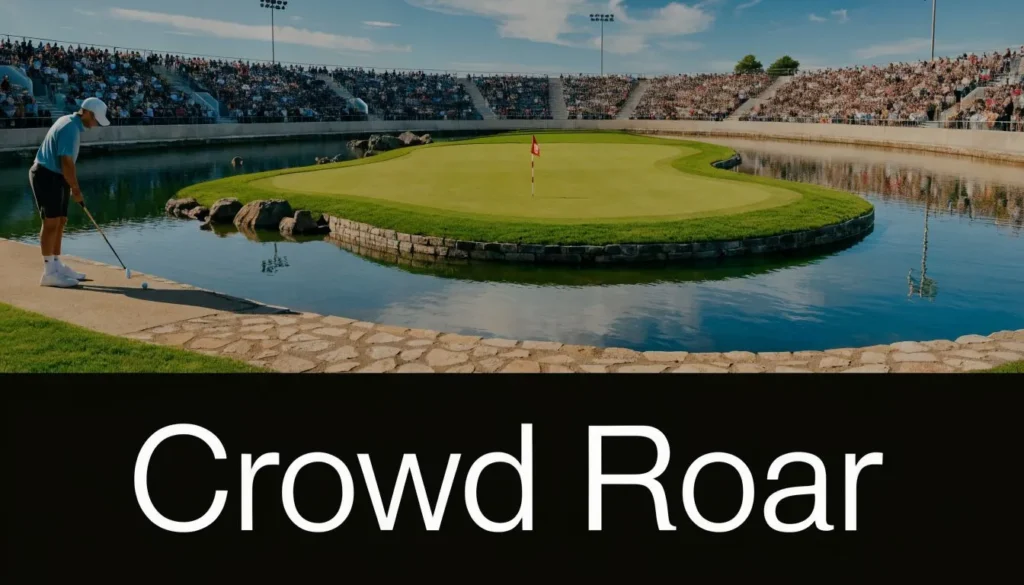
The ace stood out because the island green tests two skills at once. First, the player has to choose a precise window through wind and visual intimidation. Then he has to commit fully to that choice. Lowry’s ball finished in the cup, but the memorable part started earlier. The shot landed with the right depth, used the slope, and released with enough control to turn a dangerous target into a scoring gift.
Why Sawgrass aces carry extra meaning
The 17th amplifies psychology in a way few PGA Tour holes can. Water surrounds the target. The green looks isolated. Late in the round, players know one mistake can cost multiple shots, position on the leaderboard, and a large slice of prize money. On a hole like this, mechanics and conviction work together. A hesitant swing rarely produces the correct flight.
That is what gave Lowry’s ace its analytical value. It was not a lucky lash at a tucked pin. It was a committed strike under one of the strongest visual penalties in tournament golf, the same kind of repeatable athletic sequencing coaches study in tennis serve techniques that depend on precise timing and full commitment. The shot revealed a player trusting his number and accepting the consequence if he missed.
Tournament context matters too. At The Players, the 17th arrives late enough to change the emotional shape of a round in seconds. An ace there can free the player who makes it, put pressure on rivals who still have to face the hole, and alter the risk calculation over the closing stretch. That layered effect is why Lowry’s shot felt bigger than a replay-friendly highlight. It influenced mood, momentum, and the stakes all at once.
Some aces are remembered for noise. This one lasts because it answered a hard question the hole asks every year. Can a player stay aggressive, precise, and calm when the target appears to shrink? Lowry did, and that is why this shot belongs on any serious list of hole in one pga moments.
5. Justin Thomas The Impossible Par-4 Ace
Justin Thomas delivered the kind of shot that almost resists analysis because it sounds exaggerated even when it’s described accurately. A par-4 ace doesn’t carry the same category as the standard televised par-3 hole-in-one, but in terms of disbelief, it may hit even harder. You’re not watching a target-iron strike. You’re watching an aggressive line, enough power to reach, and a bounce pattern nobody can control all the way to the cup.
That’s what made Thomas’s effort at the 2016 WGC-Mexico Championship so absorbing. The strategic decision starts before contact. On a drivable par-4, the player has to decide whether attacking is worth the risk. Once that choice is made, the shot leaves the realm of ordinary pin-seeking and enters something closer to managed chaos.
Why a par-4 ace scrambles our expectations
Traditional instruction breaks down iron play through launch, distance windows, spin, and landing zones. A driven ace on a short par-4 breaks that frame. It’s more like the kind of explosive precision athletes chase in other sports through sequencing and timing, the same obsession with repeatable power that drives analysis of tennis serve techniques. The body has to move freely enough to create speed and precisely enough to keep the ball on a dangerous line.
The memorable part wasn’t only rarity. It was what the shot revealed about Thomas’s competitive instinct. He’s often at his best when he turns a scoring chance into a statement. On a reachable opening hole, that instinct can alter a round immediately. Opponents see aggression. The player feels momentum. Fans sense that the day might veer away from normal expectations.
- Strategic risk: Driving a par-4 asks for commitment before the ball is struck.
- Tournament tone: Doing it early in a round can reshape the emotional pace of the day.
- Replay value: The more unlikely the route to the cup, the more viewers replay it to confirm what they saw.
This wasn’t a routine ace on a stock yardage. It was a shock to the geometry of the hole itself.
6. The Rules and Riches of a PGA Tour Ace
A PGA Tour ace often carries financial meaning beyond the scorecard, even if the exact reward depends on the event. Tournaments frequently attach special prizes to designated holes, and that structure changes how fans experience the shot. The ace becomes both sporting event and insured promotion.
The insurance angle matters because it explains why these contests can exist at all. Hole-in-one coverage developed around the fact that the feat is rare, measurable, and dramatic enough to market. That logic is rooted in the kind of odds tracking collected by organizations tied to ace reporting and tournament promotions, as discussed in Great Gorge Golf Club’s summary of hole-in-one records and patterns.
Prize logic changes the drama
When a player stands on a designated prize hole, there are two stories running at once. One is the tournament story. The other is the event-promotion story, where a car, cash award, or luxury item may be tied to the shot. Even if the player’s priority is always competitive, the added incentive gives spectators a cleaner stake in one swing.
That’s one reason ace insurance has persisted. It packages improbability into a visible event. In broader combat-sports and entertainment terms, it isn’t so different from how people stay fascinated by the economics behind a spectacle, whether it’s golf promotions or questions like how much Dana White bought UFC for. Viewers don’t only want the result. They want the financial context around the result.
Money angle: In tournament golf, one shot can have parallel value. Competitive value on the card, promotional value for the event, and career value for the player.
Rules are usually strict for a reason. Event organizers need clear verification, designated holes, and defined prize conditions. That legal structure may sound dry, but it adds something useful to the mythology of an ace. The shot looks spontaneous. The machinery behind rewarding it is anything but.
7. By the Numbers The True Rarity of a PGA Ace
One televised ace can loop across broadcasts for hours. That exposure bends perception. A hole in one pga moment still sits in the outer edge of golf outcomes, even at the highest level.
As noted earlier in the article, aces are rare for everyday golfers. The more interesting question here is what happens after you isolate Tour conditions, where players know exact yardages, hit into carefully prepared greens, and spend their careers controlling launch, spin, and carry with unusual precision. Even there, a hole-in-one remains resistant to prediction.
That matters because highlight culture flattens the event. A fan sees one swing and one celebration. An analyst sees a chain of variables that only occasionally line up: tee height, wind direction, landing angle, firmness around the hole, and whether the pin offers a bank, funnel, or rejection point. The shot looks clean on television because the chaos has already been edited out.
Aces also cluster in ways that can fool the eye. One tournament may produce several in a single week, especially on a short par 3 with a receptive surface or a feeding contour near the cup. That does not mean players have solved the shot. It usually means setup conditions briefly narrowed the margin for error.
Three factors explain why certain aces become more likely than others:
- Player skill shapes the chance. Elite pros control distance and trajectory well enough to produce more realistic run-ins than amateur golfers.
- Course architecture filters the outcome. Some holes reward a shot that lands five paces away and releases along a slope. Others require the ball to finish almost exactly on line.
- Variance decides the last few feet. A strike can be technically excellent and still miss by inches because of bounce, spin decay, or a slight gust at apex.
That framework helps explain why the aces in this list were memorable beyond the replay value. Their importance came from context. Some arrived with major championship pressure, some changed the emotional temperature of a round, and some carried direct money implications through purse position, exposure, or sponsor bonuses tied to the moment.
For the analyst, that’s the central lesson. A PGA Tour ace is best understood as a low-frequency event created by repeatable skill, then completed by a narrow window of favorable conditions. That mix is exactly why one shot can feel both engineered and miraculous.
7 Iconic PGA Aces Compared
A single replay can flatten very different shots into the same highlight. Side by side, the distinctions get sharper: club choice, hole design, scoring value, pressure level, and financial upside all changed what each ace meant in the moment.
| Ace | Hole type | Typical club or shot shape | Strategic risk profile | Immediate scoreboard effect | Psychology and pressure | Money and exposure angle | Why it stands apart |
|---|---|---|---|---|---|---|---|
| Michael Block: The Club Pro’s Fairytale Ace | Major-championship par 3 | Short iron, committed directly at the flag | Conservative target on paper, severe pressure in practice because survival in the tournament mattered | Turned a strong week into a defining one, with the shot amplifying his position and visibility at once | The rare case where an outsider had to process gallery noise, TV attention, and career stakes on every swing | Exposure value far exceeded the scorecard alone because the ace accelerated invitations, endorsements, and name recognition | Its meaning came from asymmetry. A Tour star adds to a résumé. A club pro can change his professional life with one swing |
| Tiger Woods: The Roar Heard ‘Round the World | Stadium par 3 built for crowd reaction | Aggressive iron, high flight, tight start line | Attackable hole, but the setting punished any hesitation more than the yardage did | Produced a momentum spike and became a signature early-career image | Crowd energy was part of the shot. The ball dropping confirmed Woods could turn noise into fuel rather than distraction | The commercial effect was enormous because the ace became reusable broadcast material for years | It was not just a great shot. It helped define how modern televised golf looked and sounded |
| Sam Ryder: Pandemonium at the Phoenix Open | Same stadium par 3, different media era | Controlled wedge or short iron, landing in a zone that could feed toward the cup | Similar on-course demand to Woods’ ace, much larger viral multiplier off the course | Instant surge in atmosphere, with the hole becoming the center of the tournament | Players know that hole can get louder than any other on Tour. Executing there requires acceptance of chaos | Sponsor and social value spiked immediately because the clip fit every modern distribution channel | The ace showed how the same hole can create a different kind of icon once phones and social feeds shape the aftermath |
| Shane Lowry: Conquering the Island Green | Island-green par 3 with a severe penalty for a slight miss | Precision wedge or short iron with exact distance control | High penalty for failure because missing the green brings water and a fast-rising number | More than a highlight. It removed tension from one of the most mentally invasive tee shots in golf | This shot tested commitment more than aggression. Players often bail subtly on this hole, and subtle misses still lose | Strong tournament equity because a clean number on that hole protects position, while an ace creates lasting replay value | The architecture made the margin microscopic. That gives the shot a cleaner technical case than louder aces on friendlier holes |
| Justin Thomas: The Impossible Par-4 Ace | Drivable par 4 | Driver, launched on a narrow start line with enough speed to cover all trouble | Extremely high variance. Eagle chances exist, but so do bogeys or worse from a poor miss | A two-shot gain on the field is possible on the right par 3. A par-4 ace can feel even more disruptive because the baseline expectation is different | The swing demanded full commitment to a line that still looked excessive to many players | Historic replay value carries obvious branding power because par-4 aces remain a separate class of rarity | It combined power, geometry, and fortune in a way that changes how viewers judge what counts as an ace worth remembering |
| The Rules & Riches of a PGA Tour Ace | Off-course framework rather than a single hole | Insurance-backed prize structures, sponsor bonuses, and contest language | Low playing risk for tournaments, meaningful financial planning risk for sponsors and underwriters | Can add extra stakes to a routine par 3 before the shot is even struck | Players usually say the score matters first, but bonus structures still sharpen public attention | Prize money implications can range from direct bonuses to increased sponsor interest and replay-driven visibility | Aces are not only sporting events. They are also packaged moments with real commercial design behind them |
| By the Numbers: The True Rarity of a PGA Ace | Statistical lens across all hole types | Repeated elite execution plus favorable bounce and line | Low-frequency outcome even for top professionals because precision alone does not finish the job | One swing can produce a sudden scoring jump, but the rarity keeps it from being a repeatable tactic | Understanding the odds changes the emotional read. The shot looks less random and more like skill meeting a narrow opening | Rarity is why insurers price promotions carefully and why broadcasters treat every near-miss as tension worth selling | Context matters. Two aces can look identical on replay and still differ sharply in technical demand and tournament consequence |
The comparison that matters most is not loudest versus cleanest. It is which shots changed more than the number on the card. Block’s ace altered a career arc. Woods and Ryder transformed crowd theater into part of the competitive environment. Lowry’s shot is the strongest example of architecture dictating nerve. Thomas produced the outlier that bends category rules and reminds viewers that hole location, setup, and intent all shape what an ace signifies.
More Than Just One Perfect Shot
The best hole-in-one moments on Tour stay with people because they carry more than technical excellence. They compress pressure, psychology, and public reaction into a few seconds that are easy to replay and much harder to duplicate. The ball disappears, the crowd erupts, and the memory lasts because the shot solved a very specific problem at a very specific time.
Michael Block’s ace mattered because it completed a fairytale under major-championship pressure. Tiger Woods’ Phoenix moment mattered because it fused a rising superstar with a crowd scene that changed golf’s visual language. Sam Ryder’s ace turned the same hole into a social-media era spectacle. Shane Lowry’s shot at Sawgrass showed how a player can beat one of the sport’s most mentally invasive targets with touch and trust. Justin Thomas gave the category a different flavor entirely by bending a drivable par-4 into a moment of disbelief.
The numbers deepen that appreciation rather than reduce it. Once you understand how rare these shots remain, even for elite players, the memory sharpens. You stop treating aces as random miracles and start seeing the layers underneath them. Club selection. Wind reading. Commitment to a window. Nerve under noise. The occasional bounce that finally goes from favorable to historic.
Prize incentives and insurance structures add one more layer. They remind us that a Tour ace can ripple beyond the card itself, affecting event promotion, a player’s visibility, and the economic storytelling wrapped around a tournament. Fans may first remember the celebration, but the full significance often sits in what the shot changed afterward.
That’s why hole in one pga highlights never feel interchangeable. Each one carries its own architecture of difficulty. Some are loud because of the venue. Some are heavy because of the stakes. Some become legendary because they reveal something essential about the player who hit them. The perfect shot is only the beginning. The context is what turns it into history.
If you enjoy sharp, approachable sports analysis with room for culture, business, and the bigger story behind the headline, explore more at maxijournal.com. It’s a strong place to keep reading, discover fresh commentary across categories, and find out how to contribute your own work to an independent magazine that covers far more than the obvious talking points.
Discover more from Maxi Journal
Subscribe to get the latest posts sent to your email.