What should a serious buyer compare before choosing among all mastiff breeds?
Appearance and general temperament are only the starting points. A useful mastiff guide has to separate breeds by working purpose, management load, and owner fit. Estate guardians, livestock guardians, and catch-dog lines may share a broad mastiff label, but they do not create the same daily ownership experience.
That distinction affects real decisions. Space needs, climate tolerance, trainability, stranger response, exercise intensity, and veterinary risk all vary across the group. Even breeds that look similar in photos can differ sharply in maturity rate, independence, and tolerance for novice handling. Some also appear on lists of good family dog breeds, but that label only helps if it is weighed against size, guarding instinct, and care demands.
This article uses the same comparison framework for each breed so readers can evaluate them on consistent criteria instead of relying on vague descriptions.
Comparison framework
Each breed section examines:
- Original job: estate defense, livestock protection, property guarding, or capture work
- Temperament pattern: sociability, suspicion of strangers, biddability, and independence
- Physical management: size, strength, drooling, grooming, heat tolerance, and housing practicality
- Owner demand: training skill, supervision needs, and exercise structure
- Household fit: family life, rural versus suburban suitability, and compatibility with visitors or other animals
- Tradeoffs: the main advantages and the main ownership constraints
What mastiffs share, and where they split
Across the group, mastiffs tend to be powerful, watchful, and strongly bonded to their household. Those shared traits can mislead buyers into treating them as one category.
The differences usually matter more than the similarities.
A Boerboel often reflects a farm and property security background. A Tibetan Mastiff often shows more independence and environmental awareness. An English Mastiff often presents a calmer indoor profile than people expect from a giant guardian. Those distinctions shape who should own each breed, what kind of home works best, and how much management the dog will require over time.
How to read the breed profiles
Use each section as a side-by-side decision tool, not just a breed description.
For every mastiff breed below, the analysis stays consistent:
- Best fit for
- Primary strengths
- Main constraints
- Care intensity
- Temperament risks if mismatched
That structure makes the final comparison easier. By the end, you should be able to compare all eight breeds by lifespan, working style, trainability, and daily care burden rather than choosing based on appearance alone.
1. English Mastiff – The Gentle Giant
How much dog can a household realistically manage before size becomes the main ownership variable?
The English Mastiff sits at the extreme end of the mastiff spectrum because its physical scale affects daily life as much as its temperament does. Breed history traces that size back to old working roles in Britain, including guarding and large-game work. In a modern home, the practical question is less about historical prestige and more about whether the owner can support a giant dog safely and consistently.
Temperament explains the breed’s enduring appeal. A well-bred English Mastiff is often calm indoors, steady with familiar people, and less reactive than many buyers expect from such a large guardian. That combination is one reason the breed is often considered alongside other family-friendly dog breeds, though “family-friendly” still depends on training, supervision, and enough space to handle a dog of this mass.
Comparison framework
Best fit for
- Owners who want a quiet, imposing companion rather than a high-output working dog
- Households with enough floor space for a giant breed to move and rest comfortably
- People prepared for transport, cooling, grooming, and veterinary handling challenges tied to size
Primary strengths
- Calm indoor presence: Often settles well in the house when exercise and routine are adequate
- Strong household attachment: Usually forms close bonds with its family
- Natural deterrent effect: Physical presence alone discourages intruders or unwanted approach
Main constraints
- Size-driven logistics: Car access, stairs, slippery floors, and tight living spaces all become daily management issues
- Heat sensitivity: Heavy-bodied giant breeds generally tolerate hot conditions poorly
- Physical handling burden: Even routine care is harder when the dog is this large
Care intensity
- Exercise: Moderate, with more focus on controlled movement than endurance work
- Training: Necessary early, especially leash manners, guest greetings, and calm handling
- Health management: Owners need to plan around joint stress, mobility changes, and giant-breed veterinary costs
Temperament risks if mismatched
- Passive owners may end up with poor manners that are far more serious in a giant dog than in a medium breed
- Tight housing can turn a calm dog into a constant management problem
- Limited socialization can produce overprotective or wary behavior around visitors
What the breed looks like in real life
The English Mastiff usually scores well on household steadiness and poorly on convenience. That tradeoff matters. A dog that is emotionally stable indoors can still be a poor fit for a fourth-floor walk-up, a hot climate, or an owner who cannot physically control several dozen kilograms of weight on a leash.
This breed works best for people who value low drama more than versatility.
Pros and cons
Pros
- Stable temperament: Often one of the more settled mastiff types in the home
- Low need for intense activity: Usually does not require the constant exercise structure of more athletic guardian breeds
- Excellent presence: Protective image without needing constant motion or noise
Cons
- Large margin for owner error: Weak training habits become harder to correct at giant size
- Space demands: Small homes and narrow layouts create friction quickly
- Higher ownership burden: Feeding, transport, and medical care usually cost more than buyers expect
Practical rule: The English Mastiff is easier temperamentally than its appearance suggests, but harder physically than its calm personality implies.
2. French Mastiff (Dogue de Bordeaux) – The Refined Guardian
What do you get if you combine classic mastiff mass with a more family-attached, emotionally readable temperament? The Dogue de Bordeaux often fits that profile. It still brings the guarding presence people expect from the mastiff group, but its owner experience usually centers less on sheer size and more on management intensity.
Compared with the English Mastiff, the French Mastiff often asks for more attention to day-to-day care details. Compared with more independent guardian types, it usually reads as more people-oriented and more physically demonstrative with its household. That combination appeals to buyers who want a serious home guardian without the tallest frame in the category.
Snapshot: how this breed compares
For owner planning, four variables matter more than appearance.
- Temperament pattern: Devoted, watchful, and strongly attached to household routines
- Household style: Often better for owners who want a close-contact companion rather than a more detached property guardian
- Care load: Moderate to high, driven by skin-fold maintenance, drool, and heat management
- Lifespan pressure: Shorter expected longevity than many medium and large non-mastiff breeds, which raises the importance of careful breeder selection and early veterinary planning
That last point changes the buying decision more than many first-time mastiff shoppers expect.
Ownership implications
A Dogue de Bordeaux can look like a lower-scale version of a giant mastiff. In practice, the ownership burden is not lower in proportion to height. The breed still carries substantial mass, can be difficult to manage physically if training slips, and often needs more health-focused oversight than buyers assume from photographs alone.
Use this breed framework before committing:
- Training fit: Best with owners who can set boundaries early and maintain them consistently
- Climate fit: Poorer match for hot regions or households that expect long summer outings
- Space fit: Usually better in homes with easy outdoor access than in tight multi-floor living setups
- Maintenance fit: Works better for people comfortable with regular wiping, cleaning, and close observation of skin and facial condition
Owners comparing large-breed setup, climate management, and daily care routines can review broader pet care advice for mastiff-type household planning.
Pros and cons
Pros
- High family attachment: Often very engaged with its own people and responsive to household presence
- Strong deterrent value: Serious appearance and guarding instinct without the maximum height of the largest mastiff lines
- Readable temperament: Many owners find the breed expressive and easy to read emotionally
Cons
- Shorter lifespan concern: Health planning carries more weight in the ownership decision
- Heat sensitivity: Heavy build and facial structure can limit exercise flexibility in warm weather
- Daily upkeep: Drool, folds, and skin care are recurring tasks, not occasional chores
Real-world fit
This breed often scores well for owners who want a guardian that feels personally involved in family life. It scores less well for buyers prioritizing convenience, heat tolerance, or low-maintenance upkeep. A fenced home with predictable routines can suit the Dogue de Bordeaux well. An owner expecting an easier mastiff because this breed is not the tallest option usually underestimates the care demands.
The non-obvious conclusion is simple. The Dogue de Bordeaux is not defined by size alone. In a comparison framework, it ranks as a mastiff with relatively high emotional closeness, relatively high care friction, and a lifespan profile that makes health judgment more important than visual appeal.
3. Spanish Mastiff (Mastín Español) – The Ancient Livestock Guardian
What matters more with the Spanish Mastiff: size, or the judgment to use that size independently? For this breed, the second factor usually shapes ownership outcomes more than the first. The Spanish Mastiff was developed as a livestock guardian, and that history still shows in its behavior. It tends to assess space, strangers, and routine with more autonomy than many mastiff breeds kept primarily as household companions.
In a comparison framework, the Spanish Mastiff stands out less for sociability and more for role clarity. It generally fits best in homes where the dog has a defined guarding purpose, a large secure area, and owners who accept that training means setting boundaries and habits, not expecting fast, repetitive obedience. Readers building a realistic setup can start with broader pet care advice for giant-breed home management.
Comparison profile
Primary role
- Livestock and property guardian
- Bred to work at distance from constant human direction
- More task-oriented than attention-seeking
Temperament pattern
- Calm with familiar people
- Watchful with strangers
- Independent in decision-making
- Less outwardly eager to please than some companion-leaning mastiffs
Best environment
- Rural homes
- Farms and ranch-style properties
- Very large, securely fenced land with predictable boundaries
Lower-fit environment
- Dense suburbs with constant visitor traffic
- Small properties with limited separation from public space
- Homes expecting frequent dog-park sociability or high public interaction
What the breed asks from an owner
The Spanish Mastiff often tests a common buyer assumption. A giant dog does not always want constant engagement. This breed can be affectionate, but its working pattern tends to center on observation, territory awareness, and measured response rather than ongoing emotional involvement.
That distinction affects daily life.
- Training approach: Consistent rules and early social exposure matter more than drilling commands.
- Management demand: Owners need a plan for gates, guests, deliveries, and perimeter control.
- Exercise profile: Moderate physical activity may be enough, but mental stability and environmental fit matter just as much.
- Owner skill requirement: Strong judgment is more useful than a purely enthusiastic training style.
Pros and cons
Pros
- Clear guardian identity: Few mastiff breeds retain such a direct connection to livestock and territory protection.
- High deterrent presence: Size, composure, and watchfulness can discourage intrusions before escalation.
- Lower cling factor: Often suits owners who prefer a steady, less attention-dependent giant breed.
Cons
- Independent temperament: Can frustrate owners expecting quick compliance.
- Property demands: Small-space living usually creates avoidable friction.
- Social complexity: Territorial suspicion requires structured introductions and consistent handling.
- Limited first-time-owner margin: Mistakes in boundaries or socialization can have larger consequences in a giant guardian breed.
Real-world fit
This breed scores well for owners who need a serious guardian on substantial land and understand how guardian instincts shape behavior. It scores poorly for buyers looking for a flexible suburban mastiff, a casual social dog, or an easy first giant breed.
The practical conclusion is straightforward. In this article’s comparison model, the Spanish Mastiff ranks high in guardian capacity, high in environmental specificity, and moderate to high in handling demands. Buyers who match the breed to its original function often see stability. Buyers who select it mainly for scale or appearance often run into management problems quickly.
4. Neapolitan Mastiff (Mastino Napoletano) – The Protective Sculpture
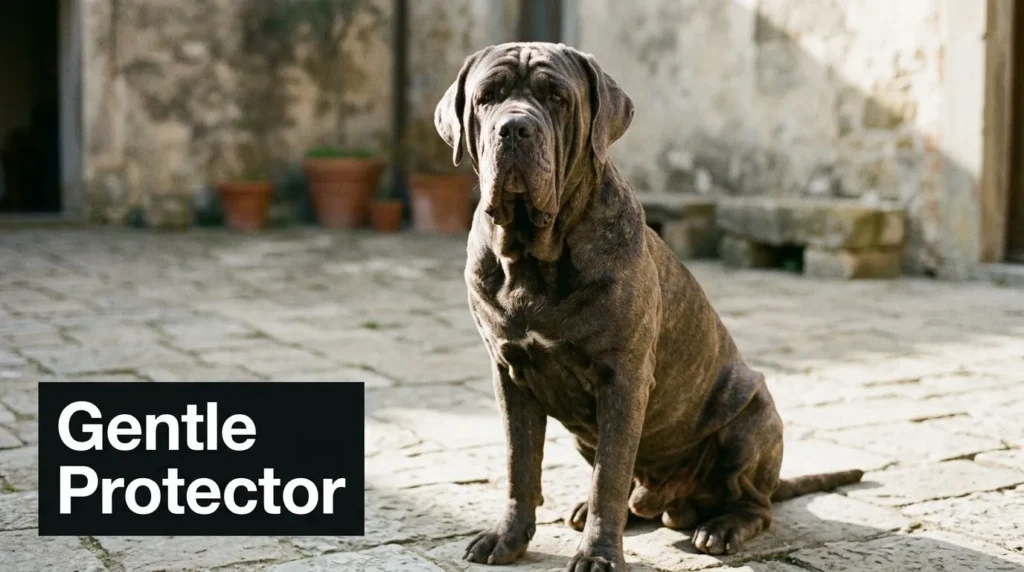
What happens when one of the most visually striking dogs in the mastiff group also ranks among the most management-intensive? The Neapolitan Mastiff gives a clear answer. Its heavy wrinkles, loose skin, dense frame, and deliberate movement create immediate impact, but those same features shape ownership demands in ways buyers often underestimate.
In this article’s comparison framework, the breed stands out less for versatility and more for concentration. It combines high deterrent value, strong family attachment, moderate exercise needs, and above-average daily care requirements. That mix makes it appealing to a narrow owner profile rather than a broad one.
Comparison profile
- Guardian presence: Very high
- Stranger tolerance: Usually low to moderate without careful socialization
- Trainability: Moderate, with better results under calm, consistent handling
- Exercise demand: Moderate
- Grooming and skin care load: High
- Heat tolerance: Low
- First-time owner fit: Low
The key ownership variable is not activity level. It is maintenance discipline. A Neapolitan Mastiff can appear quiet and settled while still requiring frequent attention to skin folds, drool, weight control, and environmental comfort.
Temperament and handling pattern
This breed was developed to guard property and remain closely tied to its household. In practice, that often produces a dog that is devotedly loyal at home, reserved with unfamiliar people, and less socially flexible than owners expect from a companion-focused giant breed.
Three patterns matter:
- Protective instincts show early. Social exposure has to be structured, not casual.
- Physical discomfort changes behavior quickly. Skin irritation, overheating, or excess weight can reduce patience and increase friction during handling.
- Public settings require judgment. The breed’s expression, size, and posture can make neutral interactions feel tense even when the dog is under control.
That combination creates a specific management challenge. Owners need to separate normal guardian reserve from avoidable behavioral deterioration caused by poor socialization or neglected physical care.
Ownership advantages and tradeoffs
Pros
- Exceptional deterrent presence: Few mastiff breeds communicate boundary-setting this clearly.
- Strong household loyalty: Often forms close, steady bonds with familiar people.
- Lower exercise pressure than athletic mastiffs: Usually easier to satisfy physically than more performance-oriented guardian breeds.
Cons
- High routine care load: Skin folds and overall body condition need regular monitoring.
- Low margin for neglect: Minor care lapses can turn into skin, mobility, or handling problems.
- Limited social flexibility: Often less suited to busy homes with frequent visitors and constant novelty.
- Heat sensitivity: Warm climates and poor cooling can create fast stress accumulation.
Real-world fit
The Neapolitan Mastiff scores best for owners who want a serious home guardian, accept daily physical care as part of ownership, and prefer a private, stable household routine. It scores poorly for buyers choosing mainly on appearance, for highly social homes with frequent guest traffic, and for anyone hoping for a low-maintenance giant breed.
The practical conclusion is straightforward. In a data-based comparison of all mastiff breeds, the Neapolitan Mastiff ranks high in guardian intensity, high in care burden, and low in lifestyle flexibility. Buyers who plan around those constraints often get a calm, devoted companion. Buyers who focus on the breed’s dramatic look often discover that the sculpture requires constant upkeep.
5. Tibetan Mastiff – The Mountain Guardian
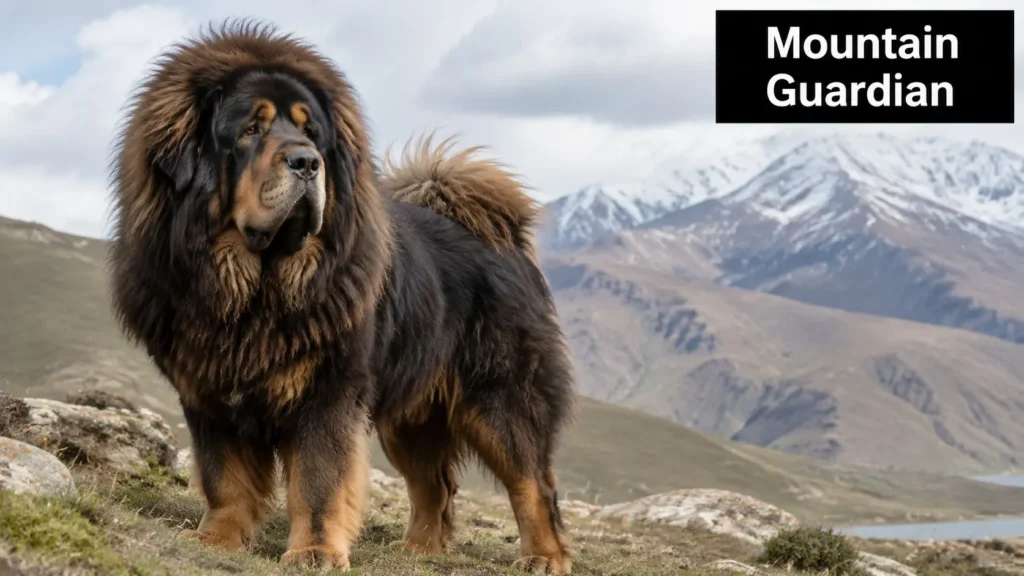
What happens when a mastiff is shaped less by close human direction and more by remote guardian work? The Tibetan Mastiff answers that question clearly. Compared with more handler-focused mastiff breeds, it usually ranks higher for independence, environmental awareness, and territorial judgment.
That profile matters more than its luxury-market reputation. High purchase prices can distort buyer expectations and attract people who want rarity or status, even though the breed is often demanding in day-to-day ownership. The harder truth is simple. This is one of the least forgiving mastiffs for inexperienced owners.
Data-based profile
For readers comparing all mastiff breeds on the same framework, the Tibetan Mastiff stands out in a few predictable categories:
- Guardian intensity: High
- Trainability for novice owners: Low to moderate
- Independence: High
- Climate tolerance: Better in cold than heat
- Grooming load: Moderate to high, especially seasonally
- Urban fit: Low
- Household flexibility: Low to moderate
Those ratings explain why the breed can look impressive in a general mastiff roundup yet perform poorly in many modern homes.
Why buyers misread this breed
The Tibetan Mastiff is often described in broad, romantic terms. That misses the practical ownership picture. A dog bred to assess threats on its own will not usually behave like a highly compliant guardian that waits for constant instruction.
For owners, that changes the whole management model:
- Training: Requires repetition, patience, and realistic obedience goals
- Containment: Secure fencing matters because independence changes recall reliability
- Social exposure: Early, controlled introductions help, but they do not erase territorial instincts
- Climate planning: Thick coat and body mass raise heat-management demands
A suburban household with frequent visitors, shared walls, and warm weather often creates friction on several of those points at once.
Pros and cons
Pros
- Strong guardian judgment: Often alert, observant, and less reactive than careless owners assume
- Cold-weather suitability: Usually more comfortable in cooler regions than short-coated mastiffs
- Distinct breed type: Appeals to owners who want an ancient working guardian with clear breed purpose
Cons
- High ownership barrier: Cost, containment, and handling requirements narrow the pool of suitable homes
- Lower compliance: Training can be slower and less linear than with more biddable mastiffs
- Poor fit for dense urban life: Noise, visitor traffic, and limited space can amplify stress and over-alert behavior
- Heat sensitivity: Warm climates increase management pressure
Real-world fit
On a large property in a cool climate, the Tibetan Mastiff can settle into a stable, functional role. In a crowded, warm, socially busy setting, the same traits often become liabilities.
In a comparison across all mastiff breeds, this breed ranks high for guardian seriousness and low for convenience. That is the useful conclusion for potential owners. The Tibetan Mastiff suits people who respect independence, plan carefully for containment and climate, and do not expect easy sociability just because the dog is impressive to look at.
6. Bullmastiff – The Gamekeeping Companion
What does a mastiff look like when the job description is unusually clear?
The Bullmastiff was developed in Britain as a gamekeeper’s dog, bred to stop intruders at close range and stay under handler control. That working origin still explains the breed better than broad labels such as “family guardian” or “gentle giant.” Compared with several other mastiff types, the Bullmastiff usually presents a more compact frame, quicker engagement with its owner, and a narrower behavioral range. For buyers, that makes the breed easier to place on a comparison chart.
Data-based profile
- Primary historical role: Estate and gamekeeping guard dog
- Build: Heavy, muscular, and more compact than the largest mastiffs
- Temperament pattern: Watchful, steady, and generally more handler-oriented than livestock guardian mastiffs
- Trainability: Moderate to good with structure, repetition, and early boundaries
- Exercise demand: Moderate, with a strong need for routine rather than high-endurance work
- Household fit: Often better suited to structured suburban or rural homes than highly chaotic environments
The practical takeaway is straightforward. The Bullmastiff sits near the middle of the mastiff spectrum. It offers serious guardian presence without the extreme scale of the English Mastiff or the higher independence often seen in more remote working guardian breeds.
Where the Bullmastiff stands out
This breed tends to appeal to owners who want three things at once: visible deterrence, manageable day-to-day handling, and stronger responsiveness than some of the more stubborn mastiff types.
That does not make it easy.
A Bullmastiff still matures into a large protection-bred dog, and mistakes in puppyhood often show up later as pulling, poor visitor manners, or unreliable impulse control. Owners usually get the best results with structured dog training habits started early and applied consistently.
Pros and cons
Pros
- Clear working design: Its original purpose still maps well to modern home-guardian expectations
- Balanced size-to-control ratio: Large enough to deter, often easier to manage than the heaviest mastiffs
- Family integration potential: Can live well with families that set rules early and maintain them
- Lower roaming tendency: Usually less drawn to wide-range independent patrol behavior than livestock guardian types
Cons
- Training errors scale quickly: Poor leash manners and weak boundaries become harder to fix as the dog gains size
- Heat management still matters: Heavy body mass can reduce stamina in warm conditions
- Protection instincts need direction: Inconsistent socialization can create unnecessary suspicion or over-guarding
- Not a low-effort companion: Calm adulthood usually reflects training and routine, not luck
Real-world fit
The Bullmastiff often works best for households that want a serious guardian but do not want the most extreme version of mastiff ownership. In a stable home with predictable rules, enough space, and an owner willing to train through adolescence, the breed can be a strong middle-ground option.
In the all mastiff breeds comparison, that is the useful conclusion. The Bullmastiff ranks well for practical guardian utility, moderate owner control, and household adaptability, but only when training quality is high from the start.
7. Cane Corso – The Italian Athlete
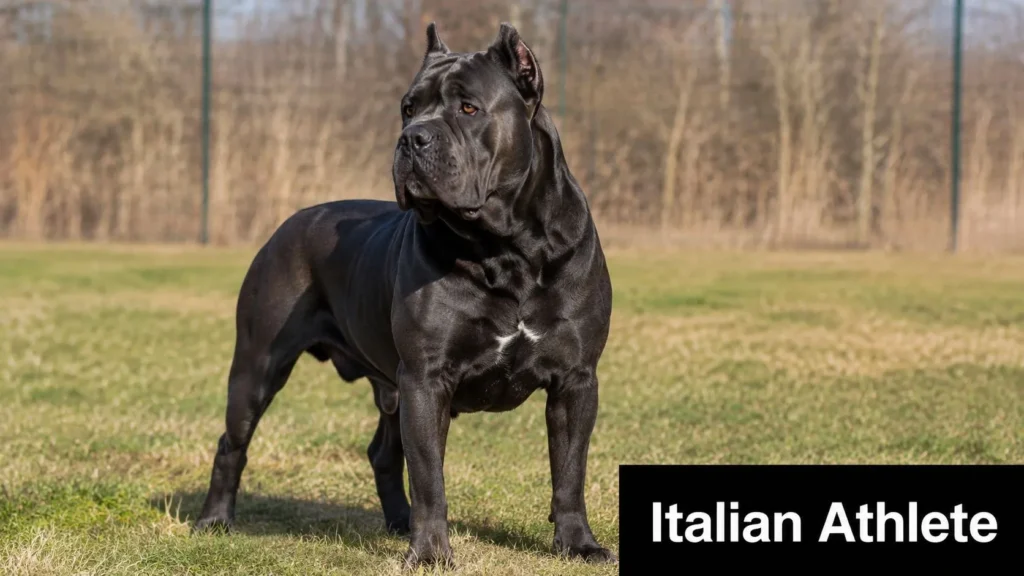
What happens when mastiff mass is combined with above-average speed, drive, and responsiveness? You get the Cane Corso, a breed that often ranks differently from heavier mastiffs on the metrics that matter most to owners: exercise demand, training load, and day-to-day handler skill.
That distinction matters more than appearance. The Cane Corso usually gives owners more mobility and more working potential than the English Mastiff, Neapolitan Mastiff, or Dogue de Bordeaux. It also gives them less margin for error. A powerful dog that notices everything, reacts quickly, and stays engaged with its environment requires clearer rules than a slower, more sedentary giant.
Comparison profile
Viewed through the same framework used across all mastiff breeds, the Cane Corso stands out in several categories:
- Lifespan: Often described as short for a large athletic breed, so long-term health planning matters
- Temperament: Alert, serious, and typically more handler-focused than the more independent guardian types
- Exercise demand: Higher than many mastiffs, with a stronger need for structured physical and mental work
- Trainability: Good potential in capable hands, but poor habits form quickly if boundaries are inconsistent
- Guardian intensity: High enough to require deliberate social exposure from puppyhood onward
Owner skill matters more here
The Cane Corso is often marketed as a cleaner, more versatile mastiff. That is partly true. Its build and movement make it easier to imagine in obedience, protection work, or active daily routines. But that same athleticism changes the ownership equation. A dog with this much strength and initiative can become difficult through repetition of small mistakes, not just major failures.
Training quality has an unusually high return with this breed. Owners who need a refresher on structured dog training habits and consistency should address that before adolescence, not after.
Pros and cons
Pros
- Higher athletic capacity: Better fit for owners who want a mastiff that can do more than patrol the house and yard
- Strong training upside: Often responds well to clear repetition, engagement, and routine
- Sharper functional versatility: Can suit protection, advanced obedience, and active companion roles
- More compact working impression: Many owners find the breed more manageable in motion than the heaviest mastiffs
Cons
- Shorter ownership horizon than some expect: Health and emotional planning deserve early attention
- Low tolerance for inconsistent handling: Loose rules often produce pushy or overreactive behavior
- Socialization mistakes show in public: Suspicion, reactivity, and over-guarding are harder to hide in an athletic dog
- Daily management load is higher: Exercise, training, and supervision usually need to stay consistent
Real-world fit
The Cane Corso works best for households that want a serious guardian and are ready to treat training as part of normal life, not as a short startup phase. In the article-wide comparison, that places the breed in a narrower but very clear lane. It scores well for athleticism, responsiveness, and practical working ability, but less well for first-time giant-breed owners or homes looking for a low-effort protector.
8. South African Boerboel – The Modern Guardian Legacy
What does a mastiff look like when selection pressure comes from farm security rather than show-ring appeal? The Boerboel answers that question with unusual clarity. It was shaped for property defense, handler awareness, and physical control, which gives it a different owner profile from mastiffs chosen mainly for size, rarity, or dramatic appearance.
For comparison purposes, the Boerboel fits the article’s high-guarding, high-management tier. Its value proposition is straightforward. Owners get a powerful guardian with strong household loyalty, but the margin for handling mistakes is small. That makes this breed less about passive companionship and more about management quality.
Data-driven owner fit
Across the framework used in this article, the Boerboel tends to score high in protective instinct, high in physical capacity, and moderate to high in daily handling demands.
Core traits
- Primary role: Estate and farm guardian
- Temperament pattern: Confident, territorial, family-focused
- Training profile: Capable, but best with clear structure and experienced handling
- Social tendency: Reserved with strangers, often selective rather than openly social
- Best housing match: Secure property with space, strong fencing, and predictable routines
That combination matters. Some mastiffs tolerate inconsistent rules because their lower drive slows the consequences. The Boerboel usually does not. Strength, confidence, and guarding instinct show up quickly in everyday decisions such as doorway control, visitor response, and boundary testing.
Practical strengths and limits
This breed fills a specific lane in the mastiff group. It appeals to owners who want a serious guardian without the coat maintenance of the Tibetan Mastiff or the heavy skin-care burden seen in some loose-skinned mastiff types.
Pros
- Strong real-world guarding ability: The breed’s working background still shapes its behavior
- Cleaner maintenance profile than some mastiffs: Less wrinkle care than heavily folded breeds
- Stable loyalty to household members: Often forms a reliable bond with its family
- Useful physical balance: Powerful enough for deterrence, yet generally more functional in movement than the heaviest mastiffs
Cons
- Higher experience requirement: Weak leadership or inconsistent rules create problems
- Protectiveness can become over-guarding: Poor socialization often shows in visitor handling
- Less forgiving of casual ownership: This is a poor match for homes wanting a low-input giant breed
- Urban living can add friction: Frequent close-contact encounters with strangers may increase management pressure
Real-world fit
The Boerboel works best in homes that treat training, supervision, and controlled exposure as ongoing responsibilities. On a well-managed property, that often produces a steady, watchful dog with a clear sense of territory. In a casual pet home, the same traits can become pushiness, suspicion, or conflict around guests.
Within the article-wide comparison, that places the Boerboel near the top tier for guarding seriousness and near the bottom tier for beginner suitability. Prospective owners should read that tradeoff carefully before treating it as just another large mastiff.
8 Mastiff Breeds Comparison
| Breed | Owner experience required | Resource requirements | Expected outcomes | Ideal use cases | Key advantages |
|---|---|---|---|---|---|
| English Mastiff – The Gentle Giant | Moderate (large-breed handling, consistent training) | Large home, daily walks, joint care, cooling, high food costs | Loyal, calm family companion, effective watchdog, shorter lifespan | Suburban family homes with space, therapy work | Gentle with children, low‑to‑moderate energy, strong bond |
| French Mastiff (Dogue de Bordeaux) – The Refined Guardian | Moderate–High (training, health monitoring) | Moderate space (apartment possible), wrinkle care, vet costs, climate control | Devoted, trainable guardian, needs health oversight, relatively short lifespan | Urban or suburban owners who manage health and grooming | Compact powerful build, intelligent, adaptable to smaller spaces |
| Spanish Mastiff (Mastín Español) – The Ancient Livestock Guardian | High (experienced, firm leadership) | Very large property, strong fencing, high exercise, seasonal grooming | Independent, reliable livestock/land guardian, strong protector | Rural farms, ranches, large properties requiring guardian dogs | Exceptional guarding ability, generally robust health, independent thinker |
| Neapolitan Mastiff (Mastino Napoletano) – The Protective Sculpture | High (skin care, handling large, consistent training) | Moderate–large space, regular skin/eye care, vet screenings, climate control | Powerful deterrent, devoted family guardian, lower activity needs | Homes with experienced owners wanting a protective companion | Impressive protective presence, deeply devoted, calm demeanor |
| Tibetan Mastiff – The Mountain Guardian | Very High (experienced owner, firm leadership) | Large secure property, heavy grooming, high purchase/maintenance cost | Aloof but deeply loyal guardian, strong independent instincts | Large rural properties, working guardian roles, collectors | Exceptional guardian instincts, thick protective coat, resilience |
| Bullmastiff – The Gamekeeping Companion | Moderate (consistent training, socialization) | Moderate space, daily exercise, mental stimulation, health checks | Balanced protector and family dog, athletic and trainable | Active families, suburban homes, protection roles | Agile mastiff, good family fit, responsive to training |
| Cane Corso – The Italian Athlete | High (firm, experienced handler) | Secure property, substantial daily exercise, ongoing training | Highly trainable protection companion, loyal and confident | Active households, protection training, dog sports | Athletic, intelligent, generally healthier than giant mastiffs |
| South African Boerboel – The Modern Guardian Legacy | High (confident, experienced handler) | Secure yard, substantial exercise, consistent training, enrichment | Strong family protector, intelligent and athletic, requires leadership | Farm and protection work, active experienced families | Balanced protective and family nature, athletic and trainable |
Choosing Your Giant: Comparison, Care, and Resources
What matters more: a mastiff’s appearance, or the daily demands built into its original job?
For this group, function predicts ownership outcomes better than silhouette. The eight breeds above share size, guarding history, and physical presence, but they differ sharply on four practical variables: trainability, stranger tolerance, environmental fit, and handling difficulty. That framework gives prospective owners a better basis for comparison than popularity, color, or headline size.
A simple screening model helps:
- Working origin: Livestock guardians such as the Spanish Mastiff and Tibetan Mastiff were selected for independent judgment. That often means lower responsiveness to repetitive obedience work than breeds developed for closer human direction.
- Social profile: The English Mastiff and Bullmastiff usually suit households seeking a steadier family guardian. Cane Corsos, Boerboels, and Neapolitan Mastiffs generally require more deliberate socialization and clearer handling.
- Physical manageability: Giant body mass changes everyday ownership. Flooring, vehicle access, heat management, travel, boarding, and veterinary lifting all become planning issues rather than minor details.
- Climate fit: Heavy-coated mountain and livestock guardians face different constraints from shorter-coated, more athletic mastiffs. Heat tolerance, drooling, skin care, and exercise timing should be matched to local conditions.
That comparison lens exposes the choice. Buyers are not selecting a “mastiff” in the abstract. They are selecting a workload, a risk profile, and a care budget.
Fast comparison for potential owners
| Decision filter | Lower-demand side | Higher-demand side | Why it matters |
|---|---|---|---|
| Training structure | English Mastiff, Bullmastiff | Cane Corso, Boerboel, Tibetan Mastiff | More demanding breeds need consistent handling and clearer boundaries |
| Independence | Bullmastiff, English Mastiff | Spanish Mastiff, Tibetan Mastiff | Independent dogs can be harder to motivate and less forgiving of novice mistakes |
| Space pressure | Bullmastiff, some English Mastiffs | Spanish Mastiff, Tibetan Mastiff, Boerboel | Large guardians often cope poorly with cramped, noisy settings |
| Grooming and skin care | Bullmastiff, Cane Corso | Tibetan Mastiff, Neapolitan Mastiff | Coat and skin structure directly affect maintenance time |
| Urban compatibility | Bullmastiff, some English Mastiffs | Spanish Mastiff, Tibetan Mastiff, Boerboel | City living tests noise tolerance, heat handling, and public-control reliability |
Universal care priorities
Across the breed group, three owner responsibilities show up repeatedly.
Early training and socialization
- Guardian instincts do not become safe or predictable without structure.
- Large-breed mistakes are harder to manage because of the dog’s size and strength.
Weight control
- Extra body mass increases stress on joints, movement, and heat regulation.
- Small feeding errors become larger orthopedic problems in heavy dogs.
Diet planning
- Giant and large mastiffs need feeding plans matched to age, growth rate, and body condition.
- Generic feeding charts are a weak substitute for veterinary guidance. For practical expert veterinary diet advice, use a source that explains how diet choices affect long-term health rather than only daily portions.
Who should be cautious?
Some households face a higher mismatch risk:
- First-time giant-breed owners
- Apartment households with limited outdoor access
- Homes in very hot climates without indoor cooling
- Owners who want low-maintenance guarding ability without ongoing training
- Families unable to budget for large-breed veterinary care
Pros and cons of choosing a mastiff breed
Pros
- Strong deterrent presence
- Deep loyalty to household members
- Clear role fit for owners who want a guardian companion
- Several breeds offer calm indoor behavior once mature
Cons
- Shorter lifespan than many smaller breeds
- High food, transport, and veterinary costs
- Training errors carry greater safety consequences
- Heat, joint, skin, and weight issues are common planning concerns
- Breed differences are large enough that the wrong match can fail quickly
The strongest conclusion from this comparison is straightforward. The best mastiff is rarely the most imposing one. It is the breed whose original work, social tolerance, exercise pattern, and care load fit your home with the least friction.
If you enjoy practical, evidence-led pet writing like this, explore more guides at maxijournal.com, where you’ll find approachable commentary on pets, health, science, travel, culture, and everyday decision-making.
Discover more from Maxi Journal
Subscribe to get the latest posts sent to your email.