What are people really arguing about when they rank the greatest boxers of all time? Most lists pretend the answer is obvious. They usually aren’t. One fan values unbeaten records. Another prioritizes title reigns. A third treats cultural influence as inseparable from ring excellence. Put those standards together and the debate gets harder, not easier.
That’s why a better ranking needs a framework, not just opinions. For this list, greatness is judged through four pillars: Technical Skill, Dominance, Cultural Impact, and Longevity. That approach doesn’t eliminate subjectivity, but it does expose where each legend built his case. A fighter can rank highly because he mastered distance and timing, because he ruled an era, because he changed public life beyond boxing, or because he stayed elite long enough to shape generations.
That framework also matters because boxing history is fragmented. Different eras had different training methods, media environments, and competitive structures. Comparing a heavyweight icon from the radio age to a pay-per-view superstar requires more than nostalgia. It requires context, and it helps to ground the conversation in verifiable evidence where evidence exists.
Readers who enjoy performance, discipline, and body composition analysis may also appreciate track macros for sustainable results, because boxing greatness has always rested on preparation as much as spectacle.
1. Sugar Ray Robinson – The Pound-for-Pound King
Sugar Ray Robinson ranks first because his case is the most complete across all four pillars. He is historically recognized as the greatest pound-for-pound boxer of all time, and his verified career record of 174 wins, 19 losses, and 6 draws, with 109 knockouts, gives that reputation a hard statistical foundation in the available data from this Robinson historical profile. More important than the raw total is the shape of it. Robinson combined volume, finishing ability, and sustained excellence.
His style explains why the numbers matter. Robinson wasn’t just effective. He was versatile. He could control pace with footwork, break rhythm with timing, and punish mistakes with sharp offensive transitions. In historical terms, that’s what separates a great champion from a reference point. Later fighters are often judged by whether they approximated Robinson’s balance of grace and violence.
Why his ranking holds up
One verified detail stands out even in a career full of them. Robinson’s 109 knockouts represented a 62.6% knockout ratio in the supplied data, and that ratio supports the broader argument that his skill wasn’t decorative. It produced damage and results.
- Technical Skill: He blended speed, combination punching, and ring geography in a way that still looks modern.
- Dominance: The verified record shows uncommon output against high-level opposition.
- Cultural Impact: Robinson helped define the very idea of pound-for-pound greatness.
- Longevity: The supplied data places his career from 1940 to 1965, which underscores how long he remained central to the sport’s imagination.
Robinson’s strongest argument isn’t one isolated achievement. It’s that every standard used to judge boxing greatness seems to strengthen, not weaken, his position.
2. Muhammad Ali – The Cultural Icon and Master Showman
If Robinson owns the pound-for-pound ideal, Muhammad Ali owns boxing’s broadest public meaning. His ranking comes from a rare merger of technical innovation and cultural consequence. Inside the ropes, Ali changed expectations for heavyweights. He moved with a speed and fluidity that made larger men look rigid. Outside the ropes, he turned the fighter into a public intellectual, entertainer, and political symbol all at once.
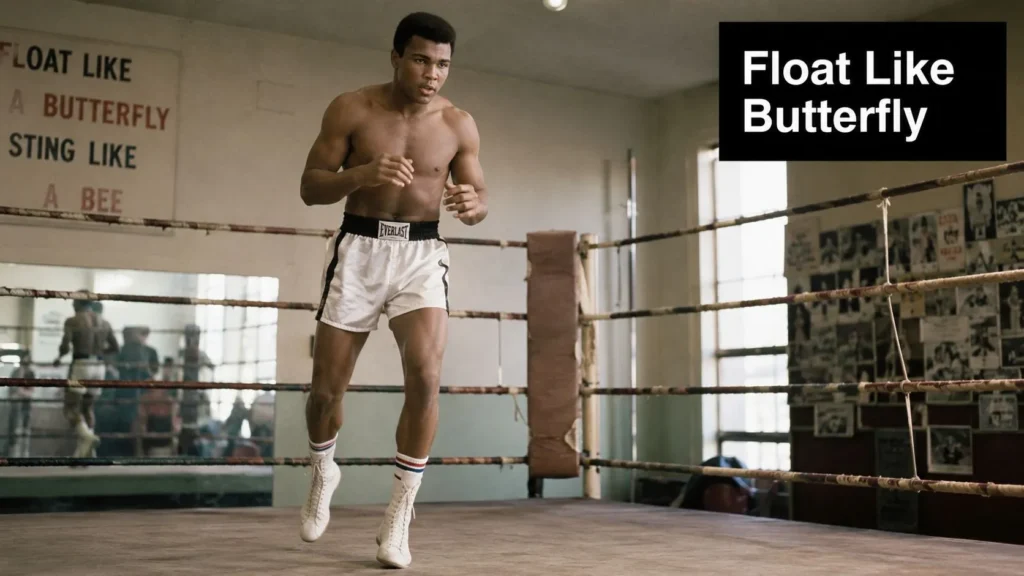
Ali’s best case under this framework is balance. Technical Skill places him high because his footwork and anticipation redefined what a heavyweight could look like. Cultural Impact may be where he has no peer. His fights became civic events, and his voice mattered beyond the sport in a way few athletes have ever matched.
The Ali argument in practice
His rivalry with Joe Frazier remains a standard for pressure versus movement, grit versus improvisation. The win over George Foreman in Zaire still anchors discussions of tactical intelligence because Ali didn’t merely survive danger. He redirected it. That’s also why Ali is central to any conversation about resilience and self-belief in sport. For readers interested in that side of performance, this piece on building confidence in sports fits naturally beside his career.
Practical rule: If a fighter changes how champions perform, speak, and carry public responsibility, his greatness extends beyond titles.
Ali doesn’t rank first here because his résumé is harder to lock down with verified numerical evidence in the supplied material than Robinson’s. He still lands near the top because no boxer fused style, charisma, and historical presence more completely. When people casually discuss the greatest boxers of all time, they’re often using criteria Ali himself helped create.
3. Joe Louis – The Brown Bomber and Dynasty Builder
Joe Louis is the cleanest example of sustained heavyweight authority. His greatness rests less on theatrical flair than on repeatable excellence. Louis fought with economy. His feet stayed underneath him, his punches arrived in sequence, and his balance allowed his power to travel efficiently. That combination made him look less spectacular than some rivals in isolated moments, but more reliable across a long reign.
From an analytical standpoint, Louis scores especially well in Dominance and Cultural Impact. He wasn’t merely a champion. He was a stabilizing figure in a turbulent period. His rematch with Max Schmeling carried national significance well beyond the ring, and his public image gave boxing a seriousness that helped define the heavyweight title as a broader symbol.
Why historians keep him near the top
Louis’s case study is about compression. He removed wasted motion from offense and defense alike. Watch enough heavyweight film and that matters more over time than occasional flashes of brilliance. Fighters could prepare for him and still fail because his fundamentals held under pressure.
- Technical Skill: Compact combinations and disciplined balance made him one of the division’s purest finishers.
- Dominance: His reign is the model for championship consistency.
- Cultural Impact: He became a public figure during the Great Depression and World War II era.
- Longevity: His extended run kept him relevant long enough to shape the heavyweight standard for those who followed.
Louis ranks above several more modern stars because his influence sits at the intersection of ring craft and historical weight. Many champions win. Fewer become the benchmark for what championship rule should look like.
4. #4. Floyd Mayweather Jr. – The Modern Defensive Technician
Floyd Mayweather Jr. forces a ranking debate because he changes the definition of dominance. Traditional boxing mythology loves destruction. Mayweather built his case through prevention. He neutralized strengths, controlled tempo, and often made elite opponents look like they’d arrived with incomplete information. That’s a different kind of supremacy, but it’s supremacy all the same.
His highest pillar is Technical Skill. Few fighters have shown cleaner command of distance, defensive positioning, and counter timing across a long elite career. He also ranks unusually high in modern Cultural Impact, not in the Ali sense of political symbolism, but in the business sense. He showed that a fighter could become both the event and the negotiator.
The case for ranking him this high
The headline achievement attached to Mayweather in the background material is his perfect 50-0 record. Even without expanding into unverified numbers, that alone explains why he stays in any top-tier discussion. He paired that unbeaten mark with visible adaptability against very different opponents, from Oscar De La Hoya to Canelo Álvarez.
His win over Manny Pacquiao remains one of the era’s defining tactical contests, and readers who want a closer look at that matchup can revisit the Mayweather-Pacquiao fight analysis.
Defensive genius can be harder to appreciate than offensive violence. It also ages better under close review.
Mayweather sits below Louis because his greatness is more specialized. He may be the superior pure defender, but Louis’s place in heavyweight history carries a wider sense of public and competitive rule. Still, among modern fighters, Mayweather is the strongest argument that boxing intelligence can be every bit as decisive as punching power.
5. Manny Pacquiao – The Southpaw Speedster and Crossover Icon
Manny Pacquiao ranks here because his greatness comes from motion. He fought with a kind of athletic urgency that made even elite opponents react rather than dictate. The southpaw angle mattered, but it wasn’t the whole story. Pacquiao layered foot feints, rapid entries, and explosive combinations into a style that could overwhelm opponents before they solved the geometry.
His strongest pillars are Dominance and Cultural Impact. Pacquiao didn’t build his legend by looking untouchable in every round. He built it by forcing high-level fights into his preferred speed. That distinction matters. Greatness in boxing isn’t only about minimizing risk. Sometimes it’s about imposing chaos that remains technically sound.
What separates him from other modern legends
Pacquiao’s wins over Oscar De La Hoya and Miguel Cotto gave his ascent a crossover quality. He wasn’t just collecting titles. He was becoming a global sports figure whose appeal stretched beyond traditional boxing audiences. Even in defeat against Mayweather, he remained central to the sport’s biggest conversation of the era.
- Technical Skill: His offense came from angles and tempo shifts, not mere aggression.
- Dominance: He could seize rounds in sudden bursts that changed the shape of fights.
- Cultural Impact: He became one of boxing’s clearest international stars.
- Longevity: His relevance lasted across multiple chapters of modern boxing.
Pacquiao ranks below Mayweather because his style exposed him to more tactical vulnerability. He ranks above Leonard in this list because his crossover significance and stylistic singularity feel broader over time. He didn’t just win big fights. He altered the rhythm of the sport whenever he fought.
6. Sugar Ray Leonard – The Technical Master and Comeback Champion
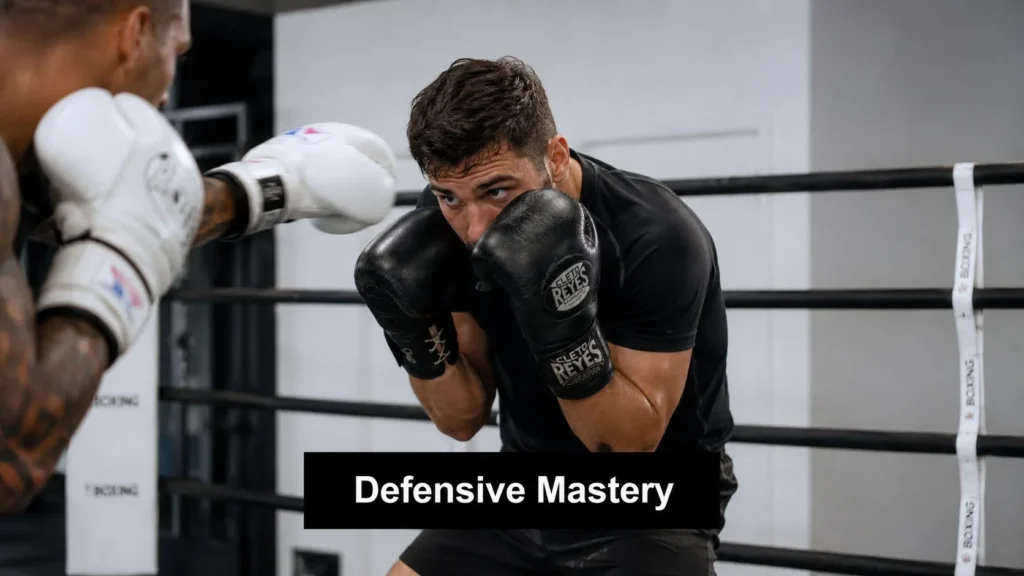
Sugar Ray Leonard’s case is built on adaptability under pressure. Some great fighters impose one system on everyone. Leonard could shift systems midstream. He had hand speed, yes, but speed alone doesn’t explain his place among the greatest boxers of all time. His deeper strength was interpretation. He read what fights required and often found the answer before his opponents did.
That ability shows up clearly against elite peers. Leonard’s era demanded flexibility because the opponents at the top posed very different problems. Wilfred Benítez required patience and precision. Thomas Hearns required alertness to long-range danger. Marvin Hagler required nerve, timing, and the willingness to steal initiative in close stretches. Leonard’s greatness comes from surviving that variety and still defining the era.
Why Leonard remains so hard to rank against
Leonard’s résumé also benefits from narrative complexity. He wasn’t a machine-like champion who only rolled forward. He dealt with layoffs, comebacks, disputed outcomes, and stylistic recalibration. That unpredictability is part of the appeal. It makes his best victories feel earned in a different way.
For readers who enjoy the broader training culture around athletic movement and conditioning, even outside boxing itself, this roundup of best exercise classes in NYC offers a useful contrast between ring-specific mastery and general fitness trends.
Leonard’s legacy shows that technical skill isn’t static. The best fighters revise themselves without losing identity.
He ranks below Pacquiao because Pacquiao’s modern global presence gives him a wider cultural footprint. He ranks above Hagler because his adaptability across marquee fights produced a slightly more expansive greatness case, even if their head-to-head result will always fuel argument.
7. Marvelous Marvin Hagler – The Dominant Middleweight Force
Marvelous Marvin Hagler may be the best example on this list of a fighter whose ranking depends on how heavily you weight rule over a division. At middleweight, he became the problem others had to solve. Strong, durable, and relentlessly prepared, Hagler could fight aggressively or box with restraint. That versatility gets overshadowed because fans remember the menace first.
His strongest pillar is Dominance. Hagler didn’t need theatrical self-promotion to command the sport. He commanded it by making high-level opponents uncomfortable from the opening bell. The famous war with Thomas Hearns is often remembered for violence, but it also reveals Hagler’s tactical authority. He recognized immediately that caution would be a mistake and met danger with controlled fury.
The balanced case for Hagler
The disputed loss to Leonard complicates his historical placement. It doesn’t erase his standing. If anything, it sharpens the debate around him. Greatness arguments often hinge on whether a single high-profile result should outweigh a longer pattern of excellence. In Hagler’s case, the answer is no.
- Technical Skill: He could switch approaches without losing pressure.
- Dominance: His middleweight reign made him the division’s defining force.
- Cultural Impact: He became shorthand for discipline and toughness.
- Longevity: He stayed formidable long enough that challengers entered the ring already negotiating his presence.
Hagler ranks below Leonard here because Leonard’s overall historical range is wider. But if the question narrows to middleweight command, Hagler’s case becomes much harder to dismiss. Few champions have looked so complete while making the sport feel so unforgiving.
8. Larry Holmes – The Jab Master and Longevity Icon
Larry Holmes is the fighter most casual lists underrate. That usually happens because his greatness was subtle. He didn’t arrive with Ali’s myth or Tyson’s aura. He built his status with a jab so authoritative that it became a full strategic system. Not a setup punch. A governing weapon.
Holmes scores highest in Technical Skill and Longevity. The jab allowed him to manage distance, disrupt rhythm, and keep larger exchanges on his terms. That kind of command often ages well because it relies on judgment as much as speed. Holmes also remained competitive for an unusually long time, which strengthens the longevity side of the framework.
Why the jab matters this much
Heavyweight history often privileges knockouts and personality. Holmes reminds us that control can be just as important. He could win rounds before opponents ever found a clean rhythm, and he often forced them to fight from frustration. That’s a difficult style to love casually, but a rewarding one to study closely.
His win over an aging Muhammad Ali has to be read carefully. It matters historically, but it doesn’t define him. What defines Holmes is his consistency against varied heavyweight problems and the way his jab served as both offense and defense.
A great jab isn’t one punch. It’s an organizing principle that shapes every exchange around it.
Holmes ranks below Hagler because Hagler’s divisional command feels more overwhelming in memory and narrative weight. He ranks above Lewis because his signature weapon and career durability gave him a more distinct stylistic identity across eras.
9. Lennox Lewis – The Modern Heavyweight Champion
Lennox Lewis represents the mature version of the modern heavyweight. He had size, but size alone never explains elite heavyweight greatness. Lewis mattered because he used his physical tools with structure. His jab, spacing, and clinch work made him far more than a puncher with reach. He fought like a strategist in a division that often rewards impulse.
That strategic depth is why his ranking holds. Lewis excelled in Technical Skill and Dominance, especially in an era that asked top heavyweights to solve very different forms of opposition. Evander Holyfield brought toughness and experience. Mike Tyson brought intimidation and fast-start danger. Vitali Klitschko brought a rugged, awkward challenge. Lewis’s legacy gains strength from handling heavyweight variety rather than one narrow lane.
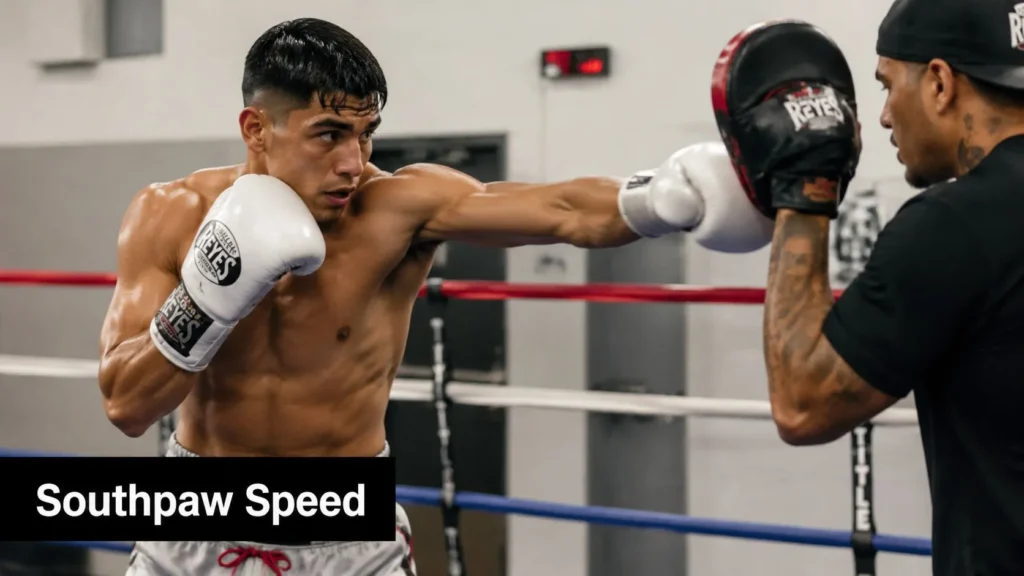
What Lewis contributed to heavyweight history
Lewis also brought a distinctly international shape to heavyweight championship culture. He looked comfortable as both a technician and a unifier, which mattered at a time when boxing’s top division needed coherence. His ability to avenge defeat is another important part of the case. Greatness isn’t only about avoiding setbacks. It’s also about correcting them decisively.
- Technical Skill: He used the jab, positioning, and clinches with unusual heavyweight discipline.
- Dominance: On his best nights, he looked almost impossible to outthink.
- Cultural Impact: He helped define an internationally credible heavyweight title picture.
- Longevity: He retired with enough left that his standing still invites counterfactuals.
Lewis sits below Holmes because Holmes’s signature mastery feels more elemental. He ranks above Canelo Álvarez because heavyweight supremacy, when achieved with this degree of method, still carries a special historical gravity.
10. Canelo Álvarez – The Modern Pound-for-Pound Star
Canelo Álvarez rounds out the list because he is the clearest bridge between old boxing criteria and modern boxing economics. His case combines refined counterpunching, body attack, defensive composure, and broad commercial relevance. Unlike some stars whose fame runs ahead of their craft, Canelo’s technical development has been visible in real time. He has become a more complete fighter under scrutiny, not less.
His strongest pillars are Technical Skill and Cultural Impact. He works from a stable base, slips compactly, and punishes openings with discipline rather than hurry. That makes him distinctly modern. He doesn’t need to dominate every second to control the terms of a fight. He also operates in a media environment that rewards sustained visibility, which makes his box-office presence part of the total greatness conversation.
Why he already belongs in this company
Victories over names such as Gennady Golovkin and Miguel Cotto gave his résumé immediate weight across generations of fans. His rise to undisputed super middleweight champion, noted in the background material, gave him a clean historical marker that’s easy to place in a broader legacy conversation. He’s also a useful reminder that modern greatness is judged in public, continuously, and across global audiences.
What holds Canelo at tenth rather than higher is simple. Time. The men above him have had longer to prove that their peaks weren’t isolated chapters but durable parts of boxing history. Still, if someone updates the greatest boxers of all time a decade from now, Canelo is one of the few active-era figures who already looks secure in the argument.
Top 10 Greatest Boxers Comparison
| Boxer | Skill / Style Complexity | Training / Resource Needs | Expected Outcomes / Strengths | Ideal Use Cases / Matchups | Key Advantages |
|---|---|---|---|---|---|
| Sugar Ray Robinson | Extremely high technical and tactical complexity | Intensive speed, footwork, and conditioning work | Consistent dominance across multiple lighter weights; technical superiority | Best against diverse styles requiring timing and movement | Unmatched hand speed, footwork, versatility |
| Muhammad Ali | High complexity with showmanship and psychology | Emphasis on footwork, speed, mental preparation, media strategy | Athletic excellence plus cultural influence; outmaneuvers opponents | High-profile bouts; opponents susceptible to mobility/psychological tactics | Lateral movement, hand speed, charisma |
| Joe Louis | Moderate-to-high technical focus driven by power | Power generation, balance, and consistent conditioning | Long-term heavyweight dominance; efficient power punching | Sustained title defenses; dismantling top contenders | Devastating power, efficiency, consistency |
| Floyd Mayweather Jr. | Very high defensive and tactical complexity | Specialized defensive drills, ring IQ training, promotion skills | Control fights through defense and counters; undefeated outcomes | Tactical matchups where defense and ring generalship win | Elite defense, countering, business acumen |
| Manny Pacquiao | High-speed offensive complexity (southpaw) | Speed, agility, power conditioning across weights | Rapid combinations, multi-division success, high entertainment | Aggressive offensive matchups; volume punching strategies | Hand speed, southpaw angles, adaptability |
| Sugar Ray Leonard | High technical and adaptive complexity | Blend of speed, timing, tactical sparring, recovery | Tactical victories across weight classes; successful comebacks | Fights requiring mid-fight adjustments and ring IQ | Combination boxing, footwork, tactical versatility |
| Marvelous Marvin Hagler | High-power, pressure-driven complexity | Strength, durability, conditioning for sustained pressure | Dominant middleweight control; relentless aggression | Close-range brawls; opponents weakened by pressure | Chin, power, work rate, stance switching |
| Larry Holmes | Moderate complexity centered on fundamentals | Jab development, endurance, positional training | Long-term control of heavyweight bouts; jab-based domination | Outboxing taller or slower heavyweights; pace control | Legendary jab, ring intelligence, longevity |
| Lennox Lewis | High technical heavyweight complexity | Size-speed integration, tactical sparring, power work | Unified heavyweight success; tactical, measured performances | Strategic heavyweight matchups; power with technical skill | Size plus timing, powerful jab, ring IQ |
| Canelo Álvarez | High modern technical and adaptive complexity | Advanced technical drills, strength, nutrition, promotion | Multi-division modern dominance; box-office draws | Contemporary elite opponents; tactical counterpunching fights | Technical refinement, counterpunching, commercial appeal |
The Final Bell: The Enduring Legacy of Boxing’s Greats
The hardest part of ranking boxing legends isn’t choosing names. It’s deciding what greatness should reward. This framework helps because it shows that the sport has never had one single path to immortality. Sugar Ray Robinson stands at the top here because his case remains the most balanced. He pairs verified achievement with technical brilliance and a legacy that still shapes how the sport defines excellence. But the fighters behind him matter for different reasons, and those differences are what make boxing history so rich.
Muhammad Ali proves that cultural significance can deepen athletic greatness rather than distract from it. Joe Louis shows how a champion can become a stabilizing national figure through consistency and composure. Floyd Mayweather Jr. demonstrates that defense, timing, and business control can form a complete modern greatness model. Manny Pacquiao and Sugar Ray Leonard reveal two different forms of adaptation, one built on speed and pressure, the other on interpretation and tactical revision.
Further down the list, Marvin Hagler, Larry Holmes, Lennox Lewis, and Canelo Álvarez remind us that greatness often becomes clearer with distance. Fans tend to romanticize dramatic knockouts and rivalries first. Historians eventually return to the mechanics. How did this fighter solve problems? How long could he stay elite? Did he change what future champions tried to become? Those are better questions than simple win-loss tribalism.
The supplied market evidence around boxing content offers an interesting parallel. Digital engagement with greatest-boxers rankings is reported as 37% higher on platforms that integrate historical fight data, according to boxing content analysis on archival engagement. Separate benchmark data also states that platforms using structured archival data such as fight date, location, and opponent see a 28% increase in user retention in this forum summary on archival boxing records. That doesn’t tell us who the greatest fighter is. It does tell us that readers want context, verifiable history, and evidence that survives nostalgia.
That’s the core lesson of this ranking. Debate is part of the sport, but debate improves when the standards are visible. A boxer’s legacy isn’t just the memory of a famous night. It’s the total record of skill, command, influence, and endurance. By that standard, these ten fighters remain the clearest reference points for anyone trying to understand boxing at its highest level.
If you want to bring some of that ring energy into a live event, you can even rent a boxing simulator for a more playful version of the sweet science.
If you enjoy sports analysis that connects history, performance, culture, and clear writing, visit maxijournal.com for more independent coverage across boxing and beyond.
Discover more from Maxi Journal
Subscribe to get the latest posts sent to your email.