When people ask for the biggest rodeo in the world, they usually expect a single name. That sounds tidy, but rodeo has never been a tidy sport.
One event dominates by total attendance. Another owns the outdoor scale argument. A third carries the aura of a championship final, where the best competitors chase the sport’s most coveted year-end titles. If you care about tradition, logistics, spectacle, or pure competitive prestige, you may end up choosing a different winner.
That’s what makes this question worth asking. “Biggest” in rodeo isn’t one crown. It’s a category dispute.
What Is the Biggest Rodeo in the World
Ask a first-time traveler, and they may point to the event with the largest crowds. Ask a ranch family, and they might favor the rodeo with the broadest agricultural footprint. Ask a competitor, and the answer often shifts toward the championship that means the most inside the sport.
Three names sit at the center of that debate. Houston Livestock Show and Rodeo leads the conversation on total attendance. Cheyenne Frontier Days holds the title of the world’s largest outdoor rodeo. National Finals Rodeo stands apart as the sport’s championship showcase, with a record that still defines what a single rodeo can draw at peak intensity.
Those aren’t interchangeable claims. They describe different kinds of scale.
Houston feels like a city-sized festival that happens to include a rodeo at its heart. Cheyenne feels like Western culture spread across open ground, where the outdoor setting is part of the identity. NFR feels compressed, elite, and high-pressure, with every performance carrying the weight of a season.
The most useful answer isn’t one rodeo name. It’s a better question: biggest by what measure?
That question matters because travelers don’t all want the same experience. Some want the broadest fairgrounds energy and big-name entertainment. Others want history, dust, and open sky. Some want the sport at its sharpest edge.
The biggest rodeo in the world depends on whether you’re counting people, acreage, money, or meaning.
Defining Biggest in the World of Rodeo
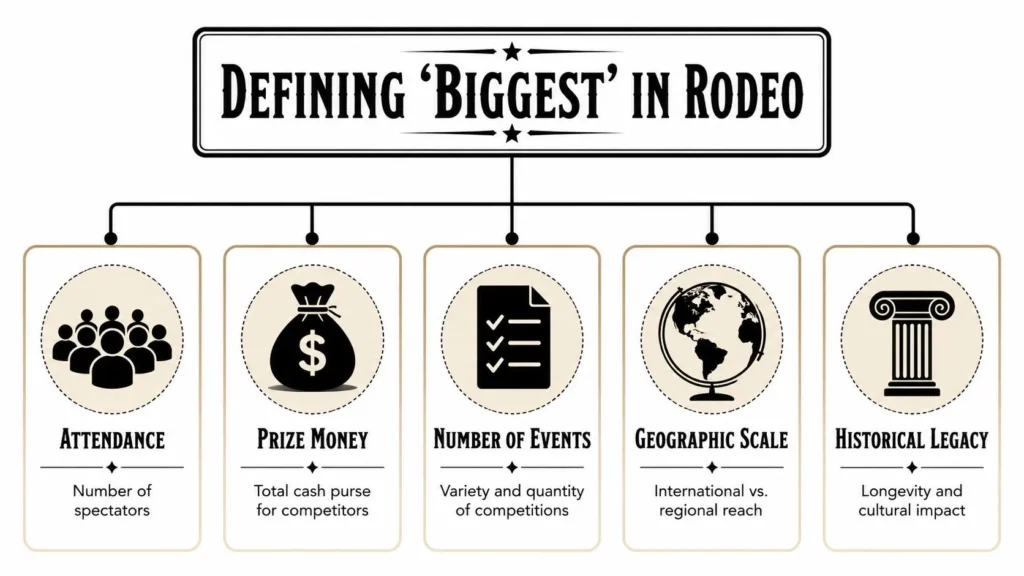
“Biggest” sounds objective until you try to measure it. Rodeo forces you to choose your yardstick first.
Total attendance
This is the easiest metric for the public to understand. It asks a simple question. How many people came through over the life of the event?
By that standard, Houston has a compelling claim. Attendance works like measuring a city by population. It captures reach, ticket demand, and broad public appeal. It also favors events that run longer and offer more than the rodeo competition alone.
That doesn’t make it a weak metric. It just makes it one metric among several.
Physical scale
Physical scale asks something different. How large is the event in space, especially as a live outdoor environment?
Cheyenne Frontier Days is central here. It’s described as the world’s largest outdoor rodeo and Western celebration, and one account attributes over $227 million in annual economic impact and 35,000 volunteers each year to the event in Wyoming, while also tying its identity to the largest livestock show in the United States within that setting (analysis of Cheyenne Frontier Days and its regional footprint).
Rodeo, in this context, resembles city planning more than box office counting. One place may fit more people over time. Another may occupy a grander setting and demand a more complex on-the-ground operation. For readers who like comparing event frameworks, this is similar to benchmarking performance indicators. The result depends on which indicator you rank first.
Prize money and prestige
For competitors, “biggest” often means the event that matters most to a career. That’s not always the one with the broadest public footprint.
Championship rodeos carry a different kind of weight. They attract top qualifiers, deliver compressed drama, and concentrate media attention. In that world, prestige matters as much as crowd size. Fans may remember one winning ride for years, even if the event itself is smaller in physical area than a sprawling fairground rodeo.
Cultural footprint and legacy
Some rodeos are giant because they’ve become symbols. Their names carry beyond the arena.
A rodeo with deep tradition, global recognition, and a durable public image can feel bigger than raw metrics suggest. Legacy shapes expectations before a visitor even buys a ticket. It also changes the mood on site. A place with a long Western identity doesn’t just host a rodeo. It stages a ritual people feel they already know.
Why one answer falls short
If you collapse all of this into one winner, you lose the texture that makes rodeo culture interesting. A festival giant, an outdoor giant, and a championship giant can all be “biggest” in honest ways.
That’s why the smartest way to compare rodeos isn’t to chase one label. It’s to decide which kind of bigness you care about first.
The Titans of Attendance and Scale
If your version of the biggest rodeo in the world starts with public turnout and physical presence, the debate narrows quickly to Houston Livestock Show and Rodeo and Cheyenne Frontier Days.
They aren’t rivals in the simple sense. They’re different models of enormity.
Houston and the power of cumulative attendance
Houston wins the attendance argument with unusual force. The Houston Livestock Show and Rodeo drew more than 2.7 million visitors across its 20-day season in 2025, which makes it the largest rodeo in the United States by overall attendance according to Sports Planning Guide’s roundup of North America’s top rodeos.
That figure tells you something more than popularity. It suggests a rodeo designed as a long-running civic season, not just a sports event. Houston blends rodeo competition with concerts, livestock exhibition, and the larger rhythms of a major metropolitan gathering. Visitors can enter the event through different doors. Some come for the arena action. Some come for agriculture. Some come for entertainment and discover the rodeo around it.
Its agricultural credibility matters too. The same source notes that Houston’s junior market show auctions generated $35,217,099 in sales in 2026, a reminder that the event isn’t only a crowd magnet. It’s also a major marketplace.
Practical reading of the numbers: Houston’s size comes from duration, diversity, and repeat visitation across a long season.
Cheyenne and the meaning of outdoor scale
Cheyenne Frontier Days makes a different claim, and it’s not a lesser one. Reuters identifies it as the world’s largest outdoor rodeo, a title that has long defined the Wyoming event’s place in rodeo culture (Reuters on leading rodeos around the world).
That wording matters. “Outdoor” isn’t a footnote. It’s the core of Cheyenne’s identity.
Where Houston can feel expansive because it keeps drawing people over many days, Cheyenne feels expansive because the setting itself is part of the show. The grounds, the Western celebration around the competition, and the old frontier branding all work together. You don’t only watch Cheyenne. You inhabit it.
Attendance vs scale in one view
| Metric | Houston Livestock Show & Rodeo | Cheyenne Frontier Days |
|---|---|---|
| Defining claim | Largest U.S. rodeo by overall attendance | World’s largest outdoor rodeo |
| Core strength | Volume of visitors over a long run | Physical outdoor identity and Western celebration |
| Verified scale marker | More than 2.7 million visitors across a 20-day season in 2025 | Largest outdoor rodeo designation |
| Distinctive economic marker | Junior market show auctions generated $35,217,099 in 2026 | Strong regional identity tied to large-scale outdoor operations |
| Best for | Travelers who want a broad, festival-style rodeo experience | Travelers who want traditional open-air rodeo atmosphere |
Why the comparison matters
Houston and Cheyenne answer different travel desires.
Houston suits the visitor who wants options. If your group includes people with mixed interests, that scale works in your favor. A family can split a day between livestock exhibits, food, entertainment, and the rodeo itself without feeling that anyone compromised.
Cheyenne suits the visitor who wants a more concentrated Western atmosphere. It feels less like an event appended to a city and more like a city rearranged around one event. That difference is emotional as much as logistical.
Which one feels bigger on the ground
Many travelers are often surprised. The event with the larger attendance total won’t always feel bigger in a personal, sensory way.
Houston can feel immense because of human flow. Cheyenne can feel immense because of land, sky, and the theatrical power of an outdoor gathering that has built its identity around space. If you judge by bodies over time, Houston wins. If you judge by the lived sensation of an outdoor Western spectacle, Cheyenne may leave the larger imprint.
That’s why “biggest rodeo in the world” keeps producing more than one credible answer.
The Champions of Prize Money and Prestige
The public often measures size by crowd numbers. Competitors and serious rodeo followers use a different scale. They ask where the pressure is highest, where titles carry the most weight, and where every ride feels like it could alter a career.
That’s where the conversation turns to National Finals Rodeo and, in a different way, Calgary Stampede.
National Finals Rodeo and the championship model
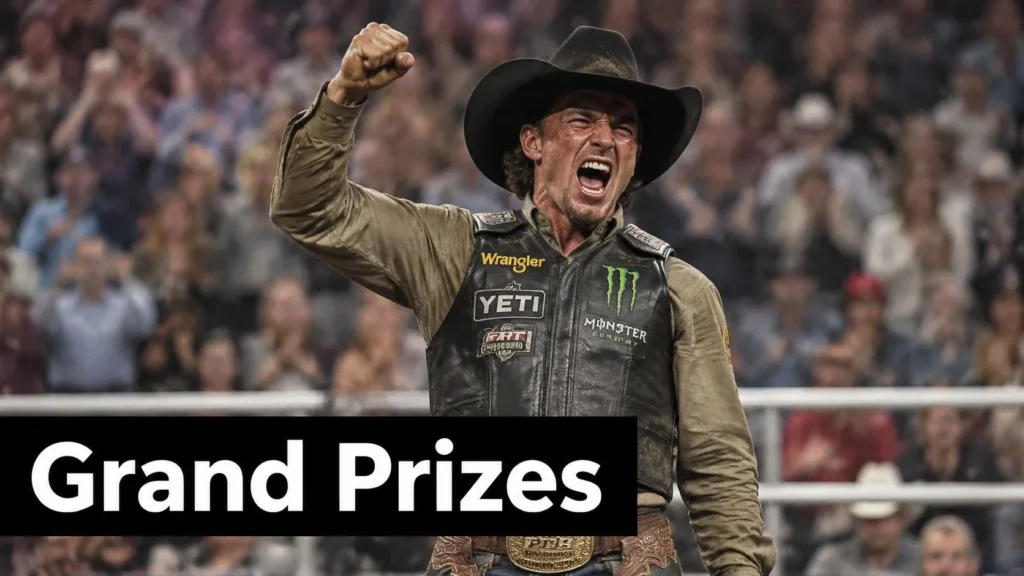
The National Finals Rodeo, organized by the PRCA and WPRA, holds the Guinness World Record for the largest single-rodeo attendance in history, with 171,414 paid attendees across ten performances in 1991, according to Guinness World Records’ record entry on rodeo attendance.
That record matters because NFR is built differently from Houston or Cheyenne. It isn’t trying to be the broadest public festival. It’s a championship finale. The structure concentrates elite competition into a short, intense run. The result is a different form of scale. Less sprawling, more compressed. Less county-fair abundance, more season-ending pressure cooker.
The same verified source notes that this concentrated model results in the highest gross revenue per rodeo globally. Even without adding uncited figures, the implication is clear. NFR’s bigness comes from density. High stakes, top qualifiers, repeated performances, and a crowd that understands exactly what’s on the line.
For many rodeo insiders, the biggest event isn’t the one with the broadest footprint. It’s the one where the buckle means the most.
Why prestige changes the definition
Prestige is harder to quantify than attendance, but it shapes behavior in obvious ways. Fans travel differently for a championship. Competitors prepare differently. Media attention sharpens. Every section of the arena feels more charged because the audience knows it’s watching a conclusion, not just another stop on the calendar.
That’s why NFR often feels larger than its physical size. Importance can amplify scale.
A visitor who wants the sport at maximum intensity should place NFR near the top of the list. You go there less for a relaxed Western fair atmosphere and more for the sensation that every performance matters.
A quick look at the arena energy helps explain why this event occupies such a distinct place in rodeo culture.
Calgary and the international festival effect
Calgary belongs in this conversation even without a verified number set here, because its reputation rests on a combination of elite competition, festival scale, and international visibility. It’s one of the rodeos people mention when they mean rodeo as a global cultural performance, not only as a regional sport.
That matters if your definition of the biggest rodeo in the world includes worldwide recognition. Calgary has long occupied that borderland between championship rodeo and citywide celebration. It attracts visitors who may not follow the sport closely but want the pageantry, and it also attracts people who understand exactly what they’re watching in the arena.
NFR versus Calgary
This isn’t a battle over which one is more important in the abstract. It’s a question of what kind of importance you value.
- Choose NFR if you want the concentrated championship experience, where prestige is inseparable from the season-ending format.
- Choose Calgary if you want a rodeo tied to broader international festival identity.
- Choose neither as your sole answer if your idea of “biggest” begins with total attendance or physical outdoor scale instead of competitive gravity.
NFR proves that the biggest rodeo in the world can also be a matter of pressure. Not acreage. Not duration. Not even total visitors across a long season. Just the force created when the sport gathers its best and asks them to settle everything in one defining stretch.
How to Plan Your Visit to a Rodeo Titan
One of the least satisfying parts of rodeo travel advice is how quickly it turns vague. People know these events are huge, but they still struggle with a basic planning question. How do you attend without turning the trip into a logistical headache?
A healthcare travel article about Cheyenne noted that this question often goes unanswered because there isn’t one unified, data-backed guide comparing accessibility across the top events, especially as crowd pressure rises (UCHealth on visiting Cheyenne Frontier Days and the planning gap many travelers face). That’s exactly why you should plan by event type, not by generic rodeo advice.
Match the rodeo to the traveler
Start by choosing the experience, not the headline.
- For families and mixed-interest groups: Houston is often the easiest fit because the event offers more than one lane of enjoyment. Not everyone has to be a hard-core rodeo fan.
- For rodeo purists: NFR is the obvious magnet. If what you want is competitive meaning, don’t dilute the trip by choosing a general festival instead.
- For history-minded travelers: Cheyenne offers the strongest old-West atmosphere among the major names discussed here.
- For visitors who want a citywide festival with international flavor: Calgary usually makes the most sense.
This first decision saves more stress than any packing trick.
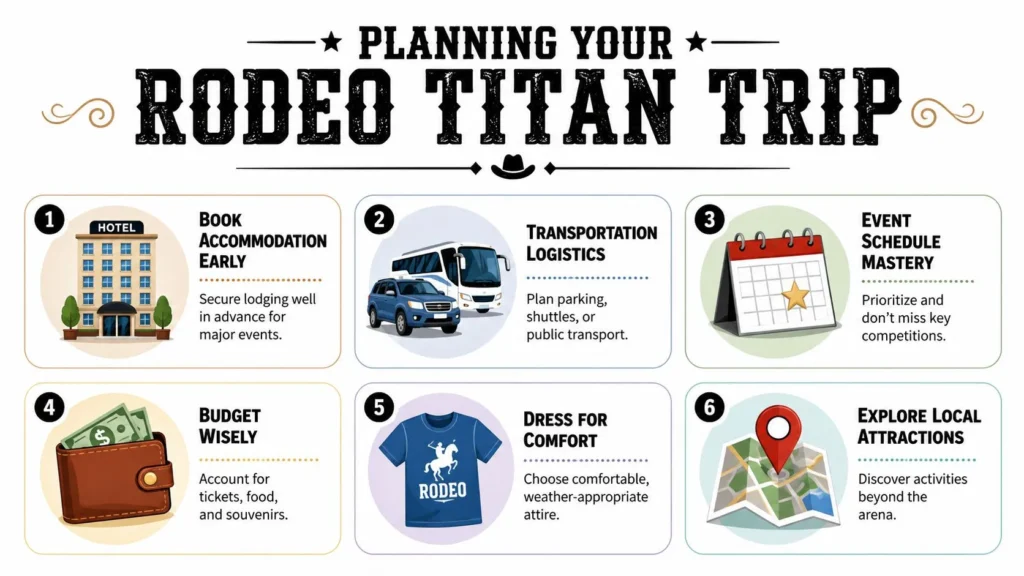
Book the scarce pieces first
Big rodeos create bottlenecks in the same places every time. Tickets, hotel rooms, and transportation windows tighten before travelers expect.
The order matters.
- Lock in the event date first. Big rodeos run across multiple days, but not every date offers the same energy or convenience.
- Buy key tickets before building the rest of the trip. This matters most for championship-style events.
- Reserve lodging immediately after. Waiting for a “better deal” often backfires during major event periods.
- Only then compare flights, rental cars, or shuttle options.
If you’re trying to save money on the travel side, broad deal-hunting habits from guides like these practical travel deal strategies can help, but the rodeo rule is simple. Never postpone the event-specific bookings that are hardest to replace.
Planning rule: The bigger the rodeo, the less useful last-minute optimism becomes.
Build a day that has breathing room
Travelers often overpack rodeo days. That’s a mistake, especially at the largest events.
Leave room for walking, lines, food stops, and the inevitable detour that becomes the most memorable part of the trip. A giant rodeo is part sport, part fairground, part people-watching. If you schedule every hour, the place starts to feel like an airport.
A better rhythm looks like this:
- Pick one anchor event you won’t miss.
- Add one secondary goal such as livestock exhibits, a concert, or a parade.
- Keep the rest flexible so the day can absorb delays or discoveries.
Dress and move like a repeat visitor
First-timers often dress for the fantasy version of rodeo travel. Repeat visitors dress for distance, weather, and long hours on their feet.
Choose comfortable boots or broken-in shoes. Carry layers if the venue is outdoors. Assume you’ll spend more time moving between zones than you first imagined. At giant rodeos, comfort isn’t cosmetic. It’s strategy.
The best fit is the easiest trip
If a rodeo matches your priorities, the planning gets simpler fast. You stop trying to force one event to be something else.
Cheyenne doesn’t need to function like Las Vegas to be worthwhile. Houston doesn’t need to feel intimate. NFR doesn’t need sprawling fairgrounds to justify the trip. The right rodeo solves half the logistics because it aligns with the reason you wanted to go in the first place.
So Which Rodeo Is Truly the Biggest
The honest answer is that there isn’t one permanent winner.
Houston Livestock Show and Rodeo owns the attendance case. Cheyenne Frontier Days owns the outdoor scale identity. National Finals Rodeo owns a championship version of bigness, where prestige and concentrated demand define the event more than open land or season-long volume. Calgary Stampede remains essential if your idea of size includes international reach and festival reputation.
That’s the nuance hidden inside the search for the biggest rodeo in the world. People ask for one name, but the better answer is a shortlist shaped by values.
If you want the broadest public spectacle, choose Houston. If you want the Western outdoors at full scale, choose Cheyenne. If you want the sport in its most intense competitive form, choose NFR. If you want a rodeo that feels globally recognizable as a civic celebration, Calgary belongs on your map.
If you’re turning the rodeo trip into a larger journey, it also pairs well with the kind of scenic planning found in American road trip route ideas.
The biggest rodeo in the world isn’t just the biggest. It’s the one that feels biggest to you for the right reason.
If you enjoy sharp, approachable writing on travel, sports, culture, and everything in between, visit maxijournal.com for more independent magazine-style coverage and fresh perspectives.
Discover more from Maxi Journal
Subscribe to get the latest posts sent to your email.