You’re probably here because a skillet isn’t cutting it anymore. Pancakes are coming off in rounds instead of all at once, bacon is curling into the edges of a frying pan, and smashed burgers for more than two people turn into a relay race. A stovetop griddle fixes that, but only if it fits the way your stove delivers heat.
That’s the part most buying guides gloss over. They spend pages on cast iron versus nonstick, then barely mention the cooktop underneath. In practice, the best stovetop griddle isn’t just the one with the nicest finish or the biggest surface. It’s the one that matches your burner layout, your heat source, and the way you cook on a busy morning.
The End of Crowded Pans and Cooking in Shifts
A crowded breakfast usually fails in the same way. The first batch is ready too soon, the second cooks unevenly, and by the time the last pancakes hit the plate, the eggs are cold. The problem isn’t usually your technique. It’s that a standard skillet runs out of room fast.
A good stovetop griddle changes the flow of cooking. Instead of juggling batches, you get one broad, flat surface that lets you spread food out, flip cleanly, and keep the heat where you need it. That matters for pancakes and bacon, but it matters just as much for grilled sandwiches, quesadillas, seared vegetables, and weeknight burgers.
I’ve found that people often buy the wrong griddle for the right reason. They want more capacity, but they pick based on a material trend or a brand name and ignore the stove. Then they end up with a pan that rocks on glass, overheats in the center, or never really wakes up on induction.
That mismatch is why some griddles become daily tools and others end up in a cabinet.
If you’re already planning bigger breakfasts or trying to streamline weekday cooking, the same thinking that helps with healthy meal prep ideas applies here too. More usable surface means fewer interruptions, less batch cooking, and better timing across the whole meal.
Decoding the Best Stovetop Griddle Key Features
The best stovetop griddle usually comes down to four things: material, size, heat behavior, and design details. Ignore any one of them, and you’ll feel it the first time you try to cook for more than one person.
| Feature | What to Look For | Why It Matters in Real Cooking |
|---|---|---|
| Material | Cast iron, carbon steel, or cast aluminum | Changes searing power, preheat time, and cleanup |
| Size and shape | Single-burner or two-burner layout | Determines whether you cook in batches or all at once |
| Heat behavior | Even spread plus enough retention | Affects browning, hot spots, and recovery after flipping |
| Design details | Stable handles, grease channel, flat base | Impacts comfort, safety, and stove compatibility |
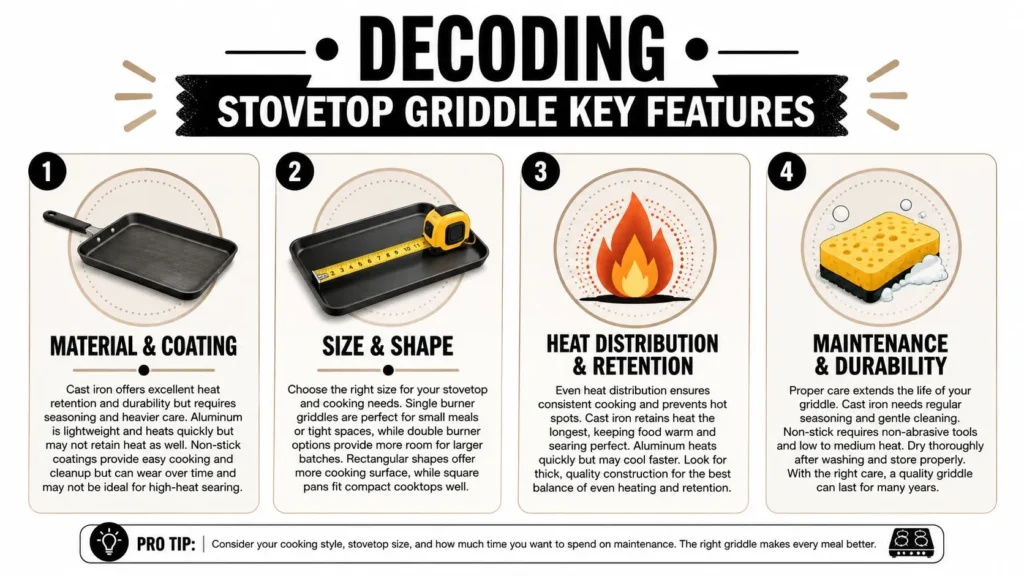
Material matters more than marketing
Cast iron is still the classic for a reason. Once it’s hot, it holds heat well and gives excellent browning on burgers, sausages, and thicker proteins. The trade-off is weight, slower preheating, and more care after cooking.
Carbon steel feels more agile. It’s usually lighter than cast iron, heats faster, and can develop a strong cooking surface with seasoning. It’s a strong fit for cooks who want a more responsive pan and don’t mind maintenance.
Cast aluminum is the practical middle ground for many kitchens. It tends to heat quickly and can spread heat well across a two-burner format. According to Nordic Ware’s stovetop griddle guide, a two-burner cast aluminum stovetop griddle is often the strongest all-around choice for home cooks because it maximizes usable cooking area while still heating evenly across two burners, which reduces the need to cook in shifts for pancakes, seared meats, and other batch foods.
Buying rule: If you cook more pancakes and sandwiches than steaks, faster and more even heating usually matters more than raw heat retention.
Size and shape decide how often you’ll use it
A single-burner square griddle can work for one or two servings, especially in a small apartment kitchen. But many home cooks buy a griddle because they’re tired of cooking in shifts. For that job, a two-burner griddle usually makes more sense.
Rectangular formats make better use of side-by-side burners. They also give you room to create zones, with one side running hotter for searing and the other a little gentler for finishing.
Heat management separates good from frustrating
Every griddle promises even heat. Fewer deliver on that promise on a home stove.
What you want is a pan that not only gets hot, but gets hot predictably. Thin pans often develop a hot strip over the burner and leave the edges lagging behind. Very large pans can create the opposite problem. They offer more surface than the burners can support evenly.
A griddle should match the stove’s real heating footprint, not just its measurements on paper.
Design details you’ll notice immediately
The small things become big things after a month of use:
- Handles that stay manageable: Wide loop handles are easier to grab with towels or mitts than shallow cutouts.
- A flat base: This matters on smooth-top electric and induction cooktops, where poor contact wrecks performance.
- Grease control: A modest grease well helps with bacon and burgers. It’s less important for pancakes.
- Reversible layouts: These can be useful, but many people use one side far more than the other. Don’t pay for the grill side if you know you want a flat top.
The 2026 Stovetop Griddle Showdown
When I compare stovetop griddles, I don’t start with brand slogans. I start with archetypes. Most models fall into a few patterns, and once you understand those patterns, shopping gets easier.
Stovetop Griddle Archetype Comparison
| Griddle Type | Material | Best For | Heat Retention | Maintenance Level |
|---|---|---|---|---|
| Reversible workhorse | Cast iron | Searing, burgers, long cooking sessions | High | High |
| Everyday convenience | Cast aluminum with nonstick-style ease | Pancakes, eggs, sandwiches, family breakfasts | Medium | Low to medium |
| Pro-style fast mover | Carbon steel | Quick preheat, lighter handling, strong browning | Medium to high | Medium |
| Extra-large specialty option | Large-format metal construction varies by brand | Batch cooking on the right stove | Varies | Varies |
The reversible cast iron workhorse
This is the old-school choice, and it still makes sense for cooks who prioritize crust and staying power. Cast iron rewards patience. Give it a proper preheat and it handles smashed burgers, bacon, and thick sandwiches with authority.
The downside shows up before the food does. It’s heavy, slower to respond, and less forgiving on smooth glass tops if the bottom isn’t perfectly flat. It also asks you to care about seasoning and drying after cleanup.
For gas burners, that’s often worth it. On weaker or less evenly matched stoves, a big cast iron slab can become a hot-center, cool-corner pan unless you learn its quirks.
What works: Cast iron shines when you want a dark sear and don’t mind preheating slowly.
The lightweight aluminum daily driver
This is the archetype I recommend most often to busy home cooks. It heats quickly, feels easier to move, and usually makes the least fuss during cleanup. If your griddle life is mostly pancakes, French toast, tortillas, grilled cheese, and cutlets, this style gets a lot right.
It’s also the least intimidating for people who won’t keep up with seasoning. That matters because the best pan is the one you’ll pull out on a Tuesday.
Its weakness is brute force. If you want steakhouse-style searing or heavy heat retention after loading the pan with cold food, aluminum won’t behave like cast iron.
The pro-style carbon steel option
Carbon steel sits in a very useful middle zone. It can develop excellent browning, but it’s often easier to handle than cast iron. In a comparative test covered by Prudent Reviews, the Made In carbon steel model measured 148 square inches of cooking surface and weighed only 2 pounds. That’s a good example of why carbon steel appeals to home cooks who want usable area without the bulk.
That same comparison also noted that the Hestan model offered the largest cooking surface but didn’t heat evenly on some stoves across the full base. That’s the trade-off too many people discover after buying big. More space sounds better until your stove can’t support it.
The oversized specialty griddle
Some cooks want the biggest surface they can find. Sometimes that works. Often it doesn’t.
An oversized griddle only earns its footprint if your stove can supply heat across enough of the base. On many home ranges, especially with modest burners or uneven burner spacing, giant griddles develop dead zones that make batch cooking slower rather than faster.
A smaller, better-matched griddle often outperforms a larger premium one in actual use.
- For breakfast batches: Choose the widest griddle your burners can heat evenly.
- For burger nights: Favor mass and stability over sheer width.
- For quick cleanup: Lighter aluminum or carbon steel usually wins.
- For occasional use only: Don’t buy a specialty giant that needs ideal conditions to perform.
Matching Your Griddle to Your Cooktop
The choice of the best stovetop griddle becomes personal. A griddle that performs beautifully on gas can disappoint on a smooth-top electric range. The stove isn’t background equipment. It’s half the system.
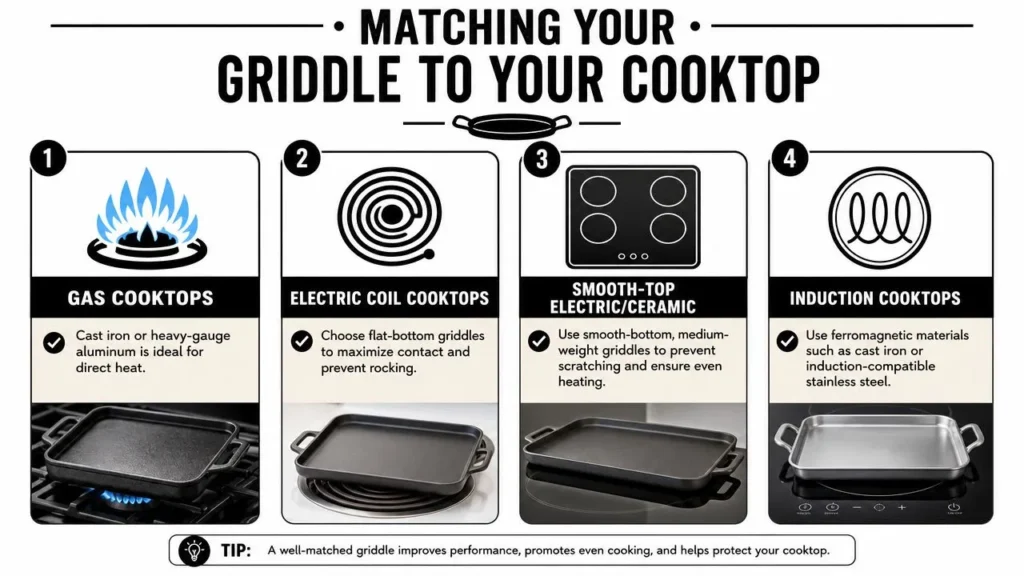
Gas cooktops
Gas gives you visible, adjustable heat and tends to pair well with heavier griddles. Cast iron works especially well here because open flame can support that mass and help recover heat after cold food hits the surface.
Gas also tolerates slight imperfections better. If the pan isn’t flawlessly flat, the flame still wraps around the base enough to keep things moving.
Electric coil ranges
Electric coils reward flat-bottom griddles that sit securely without rocking. If the pan bridges poorly or lifts in spots, heating becomes patchy fast.
Medium-weight griddles are often the sweet spot here. Too light, and hot spots get sharper. Too heavy, and preheat feels sluggish unless your burners are strong.
If you cook on coils, base contact matters almost as much as material.
Smooth-top electric and ceramic
These stoves are the least forgiving. They want a griddle with a smooth, stable, flat underside. Heavy cast iron can work if it’s flat and you handle it carefully, but rough bottoms and sliding motions are asking for trouble.
I usually favor a well-made aluminum or steel griddle here. The right one heats more predictably and feels less risky to move on the surface.
Induction cooktops
Induction demands magnetic compatibility first. That rules out many aluminum options unless they include an induction-ready base. But compatibility alone doesn’t guarantee strong performance.
The pan also needs enough flat contact to engage the field well and spread heat effectively. Cast iron often works, but not every large induction-compatible griddle is equally efficient. Some activate fine yet still cook unevenly if the base shape and burner zone don’t line up.
From Breakfast to Dinner Inspiring Griddle Recipes
The fastest way to justify a griddle is to stop thinking of it as a pancake tool. A good one earns cabinet space because it handles breakfast, lunch, and dinner without drama.
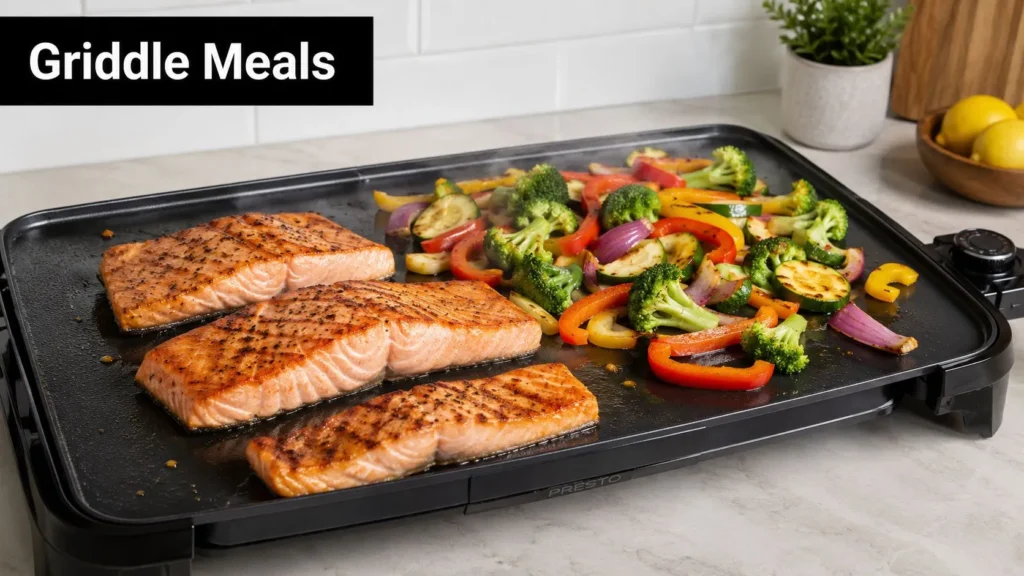
Breakfast that actually lands together
A two-burner griddle makes breakfast feel organized. Pancakes cook in a clean grid instead of in rotating singles, sausage browns beside them, and French toast gets enough room to flip without crowding. If you like building a more filling morning plate, these high-protein breakfast ideas pair naturally with a broad cooking surface.
Eggs can be part of the mix too, but I usually leave one cooler zone for them. That’s especially helpful on cast iron, where the hottest section can overdo delicate items.
Dinner is where a griddle becomes indispensable
Smashed burgers are one of the strongest arguments for owning a stovetop griddle. The flat surface gives the beef full contact, so you get a deep crust without fighting the curved walls of a skillet. Grilled cheese for a crowd works the same way. You can line them up, rotate them, and control browning with much less fuss.
Vegetables are another overlooked win. Bell peppers, onions, zucchini, asparagus, and mushrooms all benefit from direct surface contact. They char in spots, stay a little structured, and don’t steam the way they often do in an overcrowded sauté pan.
Oil choice matters more than people realize when you’re cooking on a broad hot surface, especially for burgers, fish, or vegetables that need strong contact. If you want a simple breakdown of options, the OrganizEat cooking oil guide is a useful reference for high-smoke-point choices.
For a visual on griddle-friendly meal ideas, this quick video is worth a look:
A few favorites that prove the point
- Salmon fillets: Great on a well-oiled flat top where skin or flesh can sear without sticking to grill bars.
- Quesadillas and flatbreads: Easy to brown evenly, then cut and serve immediately.
- Chicken cutlets: A griddle gives better spacing and easier turning than a crowded frying pan.
- Seared fruit: Pineapple or peaches pick up color beautifully on a hot, lightly oiled surface.
Our Top Picks and Situational Recommendations
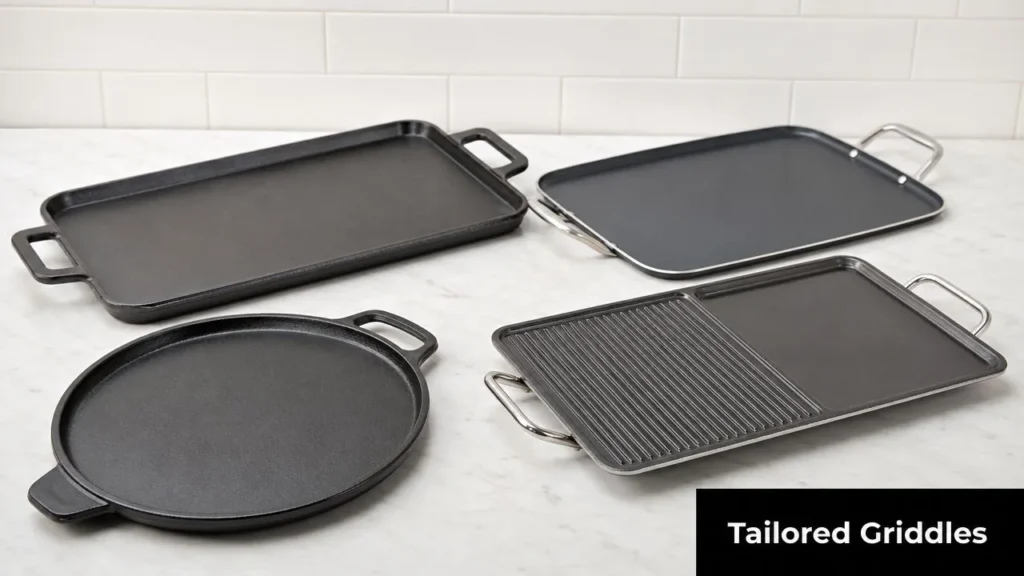
There isn’t one best stovetop griddle for every kitchen. There are better fits for different cooks, stoves, and habits. That’s how I’d buy.
For the family chef
Pick a two-burner cast aluminum griddle if your cooking is mostly pancakes, sandwiches, bacon, and batch meals for several people. It’s the easiest all-around answer for many households because it adds real surface area without demanding cast iron habits.
This is the griddle I’d hand to someone who wants better results right away, not a project piece they have to learn to maintain.
For the gas-range sear fanatic
Choose a heavy cast iron griddle, especially if burgers, sausages, chops, and hard-seared vegetables are your regular rotation. Gas supports the weight well, and cast iron rewards longer preheats with excellent browning.
If you like premium heavy-duty options and want a sense of what serious reversible cast iron looks like, these premium Yoder griddles are a useful benchmark for build style and format.
For the induction user
Go with a flat, induction-compatible griddle and treat base design as non-negotiable. Material alone won’t save a pan that doesn’t sit well or engage your burner zone efficiently.
For induction, I’d rather own a moderately sized griddle that contacts perfectly than a huge one that technically works but cooks unevenly.
For the convenience-first everyday cook
A quality lighter griddle makes the most sense if you value quick preheating, easier lifting, and simpler cleanup. That could be aluminum or a manageable carbon steel model depending on how much seasoning work you’re willing to do.
This is the right lane for apartment kitchens, weeknight use, and anyone who hates hauling a heavy slab out of a lower cabinet.
For the occasional outdoor cook or camping enthusiast
Durability and flexibility matter more than finish. A rugged cast iron griddle earns its keep because it can move between stove, camp setup, and even some grill applications. Weight matters less when the goal is toughness.
If you’re also comparing kitchen gear more broadly before you buy, this guide to the best places to shop can help you think through where specialty cookware is worth buying versus where convenience is enough.
Buy for your stove first, then for your favorite foods. That order prevents most griddle regrets.
Frequently Asked Questions About Stovetop Griddles
How do I keep a stovetop griddle from warping
Don’t shock it with heat. Start lower than you think, especially on empty preheat, and let the pan warm gradually across both burners if it’s a two-burner model. Rapid temperature swings are hard on lighter pans, and moving a hot griddle under cold water is one of the fastest ways to create permanent distortion.
What’s the best way to clean tough messes off cast iron
Clean it while it’s still warm, not blazing hot. Use hot water, a scraper or stiff brush, and enough force to remove stuck bits without soaking the pan for long periods. Dry it thoroughly, then apply a very light film of oil before storing. If the seasoning looks dull after a messy burger night, a brief stovetop reheating after oiling usually helps reset the surface.
Are single-burner square griddles worth it
Yes, if you cook for one or two people and you mostly want a wider landing zone for pancakes, tortillas, eggs, or sandwiches. No, if your main frustration is cooking in batches for a family. In that case, a single-burner griddle often feels like a sideways move from a skillet rather than a real upgrade.
Why does food brown better on some griddles than others
It usually comes down to contact and heat stability. A griddle that stays hot when food hits it will brown better than one that drops temperature fast. Surface smoothness also matters. The flatter and more consistent the contact, the more even the crust.
If you enjoy practical buying guides, kitchen advice, and approachable articles across food, health, technology, travel, sports, arts, and more, visit maxijournal.com for fresh daily reading and commentary.
Discover more from Maxi Journal
Subscribe to get the latest posts sent to your email.