You’ve got brass showing through again, or maybe your bright copper has already slipped into a duller version of itself after a few washes. That’s the moment you might reach for color depositing shampoo, hoping it’ll act like a quick dye fix without the commitment. It can help a lot, but only if you understand what it does and, just as important, what it can’t do.
What Color Depositing Shampoo Actually Is
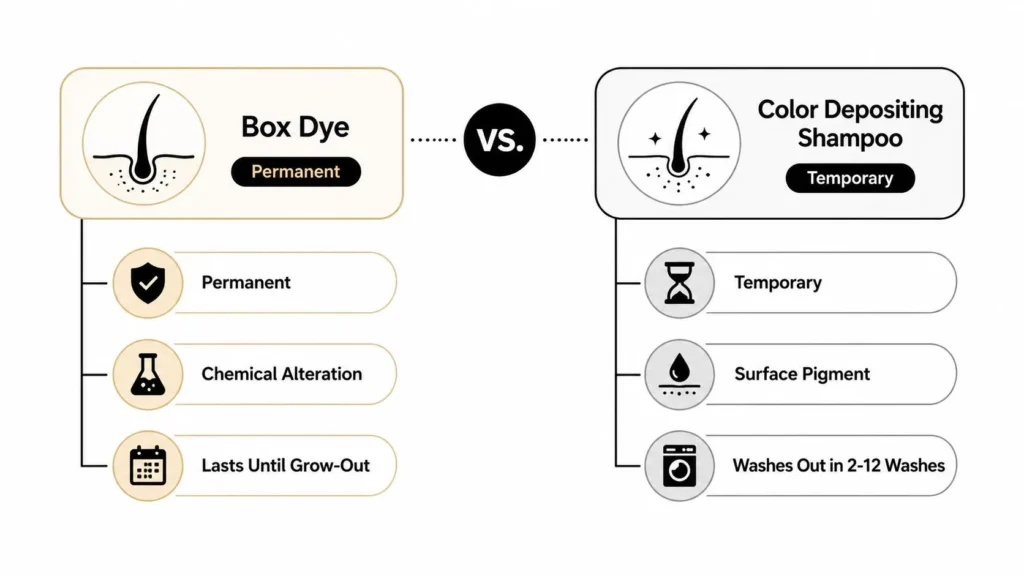
A lot of shoppers think color depositing shampoo is just a softer version of box dye. It isn’t. It’s a temporary, pigment-based hair cleanser that lays direct dye onto the outer cuticle instead of using peroxide or ammonia to permanently alter the hair shaft, so the result is built for tone refresh, not transformation, as explained in Vogue’s beauty overview of color-depositing shampoo.
That matters the first time you use it on faded blonde, warm brown, or a fashion shade that’s losing its punch. The shampoo can help reduce brassiness, revive a pastel, or subtly deepen a tone between appointments, but it does that on the surface. Because it doesn’t rebuild your color from the inside, it has a built-in performance ceiling, and that’s the point.
The best mental model is maintenance, not reinvention. If you want to keep a salon result looking fresher for longer, this product fits. If you want to go from dark brunette to copper, or cover resistant gray like a permanent dye would, you’re asking the wrong tool to do the job.
If you want broader beauty context on routines that support color upkeep, you can also discover beauty advice at Maximum Health Products.
Practical rule: if the color needs to grow out, it’s closer to dye. If the color needs refreshing, it’s a shampoo job.
How the Pigments Bond to Hair
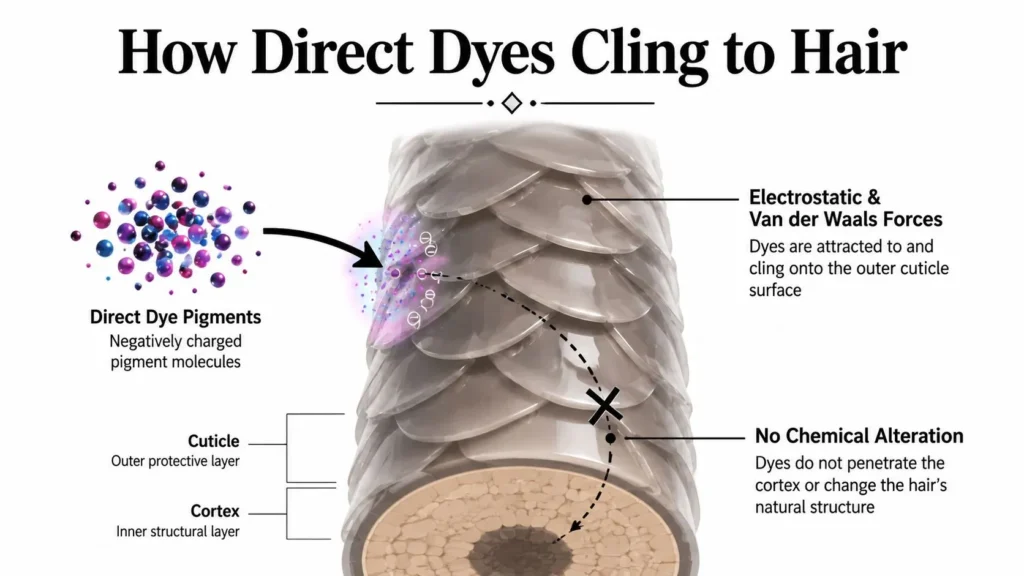
Hair behaves a little like a layered surface with tiny overlapping scales. Direct dyes cling to that outer layer, which is why they can shift tone without forcing a permanent chemical change inside the strand. They sit on the surface, hold for a period of time, then wash out little by little.
Why the color grabs fast or slowly
Porosity changes the result more than the bottle does. Hair with more open cuticle space gives pigment room to enter quickly, while hair with a tighter cuticle may seem unchanged at first even when the formula is working as intended.
That is why the same shade can behave differently from one head to another. A cool purple formula may look soft on healthy brown hair and much stronger on bleached lengths. The same pattern shows up with blue or copper shades, because the surface condition of the hair helps decide how much pigment stays behind.
Pigment systems are also described in different ways. Some formulas use cationic direct dyes, some use anionic acid dyes, and some rely on cationic-anionic hybrids often found in purple and blue shampoos. For a shopper, the useful takeaway is straightforward, the charge in the formula and the porosity of your hair shape how quickly color deposits and how bold the result looks.
Practical insight: dry, porous, or lightened hair does not simply “take color better,” it often takes it faster and more unevenly.
Read ingredient lists with that in mind, not just the front label. A formula made for stronger toning usually deposits faster. A gentler upkeep formula gives a softer finish that behaves more like a wash-in refresh than a full color event. For a practical usage example, this expert guidance on colour shampoo application shows how dwell time and moisture level change the deposit so much.
Who It Works Best For by Hair Type and Color
A single bottle can look almost magical on one head of hair and barely move the needle on another. That difference comes from chemistry and starting color, not hype. The best way to choose is to match the formula to your base shade and hair condition, not to the model on the package.
Virgin hair, color-treated hair, and bleached hair
Virgin hair usually shows the softest result. Because the cuticle is still intact and your natural pigment is doing most of the visual work, a depositing shampoo often acts more like a tint or gloss than a major color change. On dark virgin hair, the result can be so subtle that it feels almost invisible.
Color-treated, non-bleached hair is where this type of shampoo often earns its place in a routine. If your shade has started to fade, or if unwanted warmth is showing up in brunette or red lengths, the shampoo can help refresh tone without another full color service. That is the maintenance role it handles best.
Bleached or highlighted hair tends to show the strongest effect, and it is also the easiest to overdo. Lightened hair is more porous, so it can catch pigment quickly and sometimes unevenly. Blondes, highlights, and fashion shades usually see the clearest payoff, but they can also pick up too much color if the formula sits too long. A helpful brush for wet hair can make distribution more even before rinsing, especially on longer or tangled lengths.
The easiest way to predict the result is to think in stages. After one wash, you may see a light tint or a small shift in tone. With repeated use, the pigment can build and linger longer between shampoos, which is why the same product can feel mild on virgin hair and much stronger on bleached strands.
For readers comparing upkeep options for lighter shades, this guide to shampoo choices for silver hair is a useful companion.
A Practical Step-by-Step Routine That Works
The best results come from treating color depositing shampoo like a controlled color service, not just another wash. The way you apply it matters more than many shoppers expect, especially on porous, highlighted, or pre-lightened hair.
The routine colorists trust
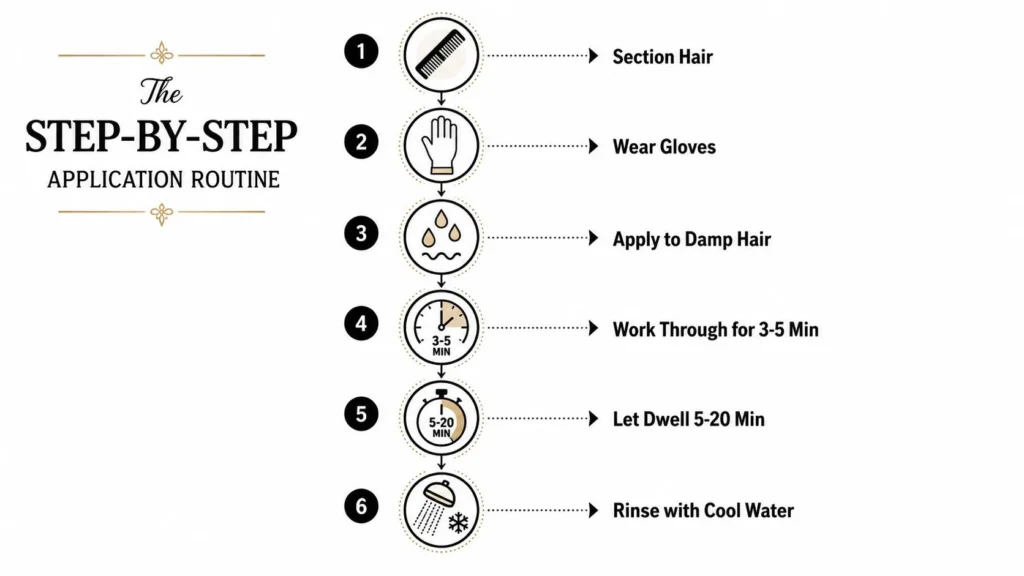
Start with clean hair and put on gloves before you open the bottle. Sectioning matters because it helps the pigment go on evenly, especially around the back of the head where people often miss spots. If your hair is very textured or dense, make the sections smaller than you think you need.
Apply the product to damp hair if you want a gentler, more even deposit. Apply it to dry or slightly damp hair if you want a stronger payoff, because less water usually leaves more pigment sitting at the surface. That moisture choice is one of the biggest reasons two people can use the same shampoo and get very different outcomes.
The timer matters too. A quick rinse gives you a light refresh. A longer dwell time, especially in the 10 to 20 minute range, usually creates a stronger tonal change, and many beauty guides recommend 1 to 2 uses per week rather than daily cleansing for maintenance use, with some guidance noting 3 to 5 minute leave-on times as a common starting point in routine use, according to the category forecast from IndexBox.
Best practice: cooler rinse water helps you avoid stripping the fresh deposit right away.
Finish with a cool rinse, then check the result in daylight before you decide whether it worked. If you want more control while applying, a tool like this wet-hair brush guide can help you spread the product more evenly, especially on long or tangled lengths.
For a visual walkthrough, this short embed is useful after you’ve read the steps.
The Gray Coverage Question Most Articles Sk
Gray is where a lot of shoppers get misled. People want to know whether color depositing shampoo can fully cover grays, and the honest answer is that it usually can’t. It can soften and blend, but it doesn’t behave like a developer-based dye that penetrates the cortex.
That difference shows up fast. After 1 wash, you may notice a gray strand looks less stark or a little more integrated into the surrounding color. After 3 washes, repeated pigment can make the blend look more intentional. After repeated use, the tone can deepen, but that still isn’t the same thing as permanent coverage.
That’s why the product is best for people who want gray blending, not people who need opaque root coverage. If your gray hair is resistant, wiry, or very bright at the front hairline, this is usually not the tool that will give you salon-style concealment. A developer-based color service is what creates that level of coverage.
A lot of shopping pages skip that distinction, which is where disappointment starts. If your goal is to soften the contrast while keeping the gray visible as part of the look, this product can help. If your goal is to make every gray disappear, don’t buy this expecting a miracle.
Color Depositing Shampoo vs Toners, Dyes, and Conditioners
People group these products together because each one shifts tone, but they serve different purposes. Color depositing shampoo is for maintenance, toner is for correction, semi-permanent direct dye is for a bigger color change, and tinted conditioner is the lightest touch of the four.
A color depositing shampoo works best when you want to keep an existing shade looking fresher between salon visits or at home. It is the upkeep tool, while toner, dye, and conditioner sit on a wider scale of color intensity.
The easiest way to sort them out
Purple or blue toners are usually used to cancel unwanted warmth, especially on blonde or highlighted hair. They often work with more corrective strength than a tinting shampoo, but the goal is still tone refinement, not a dramatic new shade.
Semi-permanent direct dyes behave more like color in a tube or bottle. They are stronger, they stay around longer, and they make more sense when the goal is to look like a different color rather than just a fresher version of the same one.
Tinted conditioners sit at the softest end of the spectrum. They can help keep tone from fading between washes, but they usually put down less pigment than a shampoo made for color deposit.
That means the decision is usually simple. If you want to refresh what is already there, shampoo makes sense. If you want to change the shade more clearly, dye does the heavier lifting. For readers comparing upkeep products for color-treated brunettes, Sphagnum Botanicals color-safe scalp care is useful context, and this silver-hair shampoo guide helps show where toning fits in a maintenance routine.
How to Choose the Right Formula and Fix Common Problems
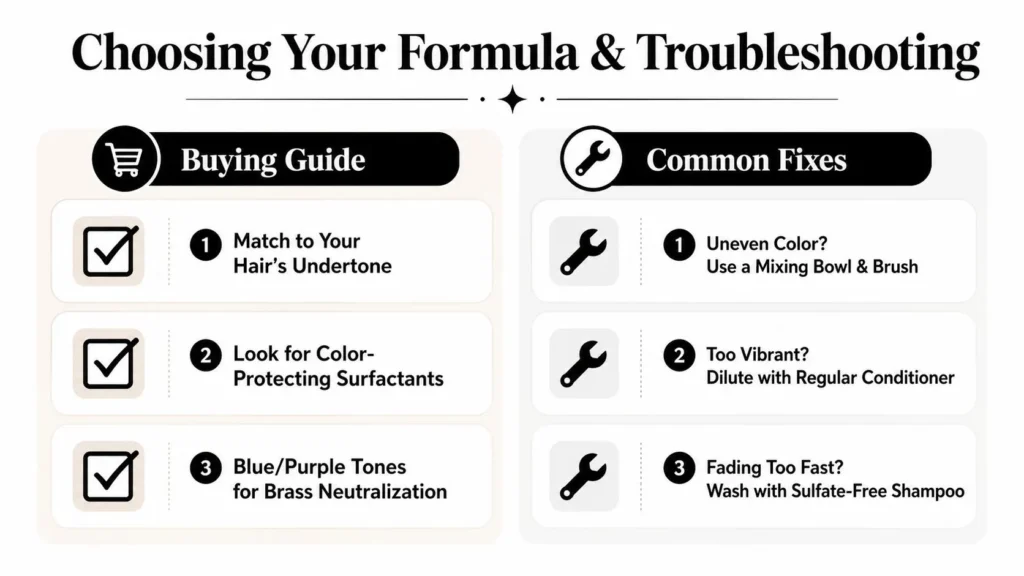
Choosing the right formula starts with your undertone, not the trend shade on the label. A blue or purple formula is meant to neutralize brass, while warmer pigments like copper or red are meant to restore warmth or intensity. If you pick the wrong family, the result can look muddy, too cool, or barely visible.
Buying cues that actually matter
Look for color-protecting surfactants and formulas described as color-safe, especially if you’re trying to preserve salon work. If the product looks highly pigmented in the bottle, expect more deposit. If it looks translucent or conditioner-like, expect gentler payoff.
- Match to your undertone: choose cool toning for brass, warmer deposit for faded warmth.
- Look for color-protecting surfactants: these are more likely to support maintenance than strip it away.
- Use blue or purple tones for brass neutralization: that’s their actual job, not a general color refresh trick.
Common problems and the fastest fix
Patchy results usually mean uneven saturation or porosity differences. Use smaller sections, work product through more evenly, and if needed, apply with a brush or mixing bowl for control.
Skin or scalp staining usually means too much product near the hairline or leaving it on the skin too long. Clean the edges quickly and use gloves from the start.
Fading after a few washes is normal for a temporary pigment system. Switch to a sulfate-free routine and stop expecting the product to behave like permanent color.
Too much purple or blue usually means over-deposit on porous hair. Dilute with regular conditioner next time, or shorten the dwell time.
For readers building a broader at-home routine around color upkeep, this premium salon hair color strategy piece can help with shade thinking, and this conditioner guide is useful when you need a gentler follow-up wash.
Quick Answers and Realistic Expectations
How often should I use color depositing shampoo? Using it 1 to 2 times per week as a maintenance habit, rather than as a daily cleanser, is often more effective. That keeps the pigment useful without piling it on too aggressively.
Does it damage hair? It’s generally used as a temporary maintenance product, not a structural changer. The bigger risk is over-deposit, staining, or uneven tone on porous hair, not the kind of chemical alteration you’d see with permanent dye.
Can it replace salon color? No. It can keep a salon color looking fresher, but it can’t do the job of permanent coverage or a full shade shift.
What about hard water? Hard water can make color maintenance harder in general because mineral buildup interferes with even tone. If your result seems dull quickly, the shampoo may not be the only issue.
The clean takeaway is simple, color depositing shampoo is a precision tool for refreshing tone, not a shortcut around a color appointment. It works best when you know your starting hair, your goal, and your ceiling.
If you want more grounded hair-care explainers like this, plus practical articles that help you compare products without the marketing noise, visit maxijournal.com. You’ll find clear, reader-friendly guides that make beauty choices easier to understand and simpler to use at home.
Discover more from Maxi Journal
Subscribe to get the latest posts sent to your email.