Your First Steps to a Well-Behaved Companion
Bringing a new dog into your home is exciting right up until the first week gets messy. The dog jumps on visitors, grabs socks, ignores their name, and somehow turns a simple walk into a tug-of-war. Most beginners don’t need more commands at that point. They need a better foundation.
That’s where good dog training tips for beginners matter. Not the flashy tricks, not the loud corrections, and not the endless stream of conflicting advice online. What helps is a small set of principles you can apply every day, even when you’re tired and your dog is distracted.
This guide keeps it practical. You’ll get 8 essentials that shape how your dog learns: reward timing, consistency, short sessions, prevention, motivation, and calm exposure to the world. Those are the pieces that make basic obedience work in real life.
If you’re also working through home setup and confinement, this guide on effective senior dog crate training is useful beyond seniors too, because the same management principles often help new owners with adult rescues.
1. Start with Positive Reinforcement and Reward-Based Training
Your dog hears the front door, gets excited, and jumps. A beginner’s first instinct is often to say “no” louder or push the dog away. Training gets easier once you switch the question from “How do I stop this?” to “What do I want the dog to do instead?”
Start there. Reward-based training works because it gives the dog a clear answer. Sit for greetings. Four paws on the floor. Eye contact instead of lunging. Calm behavior before the leash goes on. Dogs repeat behavior that pays off, and beginners make faster progress when they spend less time correcting and more time reinforcing the right choice.
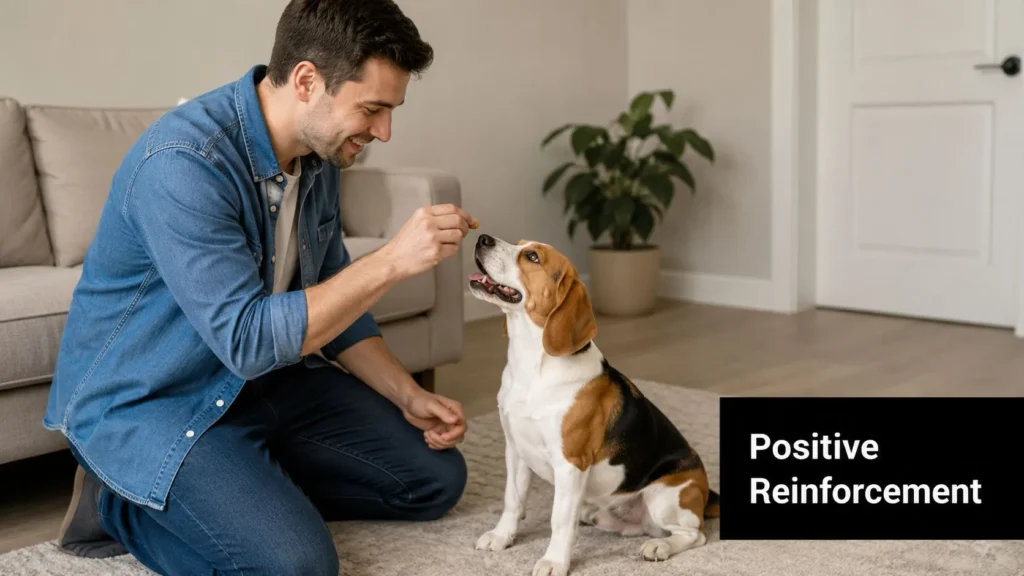
Here is the basic pattern:
- Give one clear cue, such as “sit.”
- The moment your dog does it, mark it with “yes” or a click.
- Pay right away with something the dog wants.
- Reset and repeat.
That sequence matters more than people expect. If the reward comes late, the dog may connect it to standing up, pawing, or looking at the treat in your hand instead of the sit itself. Good training is less about collecting commands and more about building clean repetitions the dog can understand.
What to reward first
Beginners often aim for polished obedience too early. I get better results by rewarding the smallest correct choice first, then asking for more as the dog understands the game.
Use this order:
- Start with the behavior you can catch easily. Mark and reward the instant your dog sits, looks at you, or keeps paws on the floor.
- Build repetition before duration. Get several quick wins before asking the dog to hold the behavior longer.
- Raise criteria in small steps. One second of calm becomes three. A sit in the kitchen becomes a sit at the door.
- Pay well for hard situations. Distractions, visitors, and outdoor work usually require better rewards.
Why beginners do better with rewards than correction
Correction can interrupt behavior. It rarely teaches a beginner dog what to do next.
That trade-off matters. If you punish jumping, barking, or pulling without teaching an alternative, you often get a dog that is frustrated, conflicted, or waiting for the next chance to try again. Punishment often backfires with beginners for the same reason. Timing is sloppy, emotions run high, and the dog gets information about what not to do without getting a workable replacement behavior.
A dog who learns “sit gets attention” has a job. A dog who only learns “jumping gets me in trouble” is still left guessing.
That mindset carries through the rest of training. Prevention beats correction. Set up the environment so the dog can succeed, reward the right choice quickly, and build habits before unwanted behavior gets rehearsed. If you want a broader overview of reward-based methods for new dog owners, that guide pairs well with this approach.
2. Establish Clear and Consistent Command Protocols
Your dog hears “down,” jumps off the couch, then gets praised one day and corrected the next. That confusion slows training more than stubbornness ever does.
Beginners often focus on teaching more commands. The better move is to tighten the system around the commands you already use. Clear cues, clear rules, and the same response from every person in the house give the dog a fair shot at success.
Set one cue, one meaning, one outcome
A cue should mean one specific action. Keep it that clean.
If “down” means lie down, never use it to mean get off people, get off furniture, or stop jumping. Use “off” for four paws on the floor and save “down” for the formal behavior. Dogs learn faster when each word points to one job.
I also recommend choosing the full protocol, not just the cue word:
- Cue word: “Sit,” not “sit down”
- Hand signal: One motion, used the same way each time
- Release word: “Free” or “break”
- Handler response: Reward, praise, access, or reset
- House rule: The behavior is expected from everyone, not just one person
That last part is where beginner training usually breaks down.
Inconsistent rules create persistent problems
Intermittent success keeps unwanted behavior alive. If jumping sometimes gets attention, the dog keeps trying jumping. If door rushing works when someone is late for work, the dog learns that pushing through the threshold can pay off.
This is why prevention beats correction in real life. A clear protocol removes the guessing game before the bad habit gets rehearsed hundreds of times.
For example, if the dog charges the front door, pick one replacement behavior. “Sit and wait” works well for many households. Then make the rule simple:
- Ask for “sit.”
- Open the door only if the dog holds position.
- Close the door if the dog breaks.
- Try again.
- Release the dog with the same word every time.
The trade-off is convenience. Consistency is slower in the first two weeks and much faster by week six, because you stop reteaching the same lesson.
Build a household rulebook people will actually use
Skip the formal training binder unless you enjoy that kind of thing. A note on the fridge, a shared phone note, or a whiteboard by the door works better for most homes.
Include:
- the exact cue words
- the release word
- the behaviors that earn attention
- the behaviors that never pay
- the rules for greetings, furniture, feeding, and doors
Keep it short enough that a tired family member or dog walker can follow it without interpretation.
Dogs also read body language fast. If one person says “sit” while leaning forward, patting their leg, and crowding the dog, and another stands still and gives a clean hand signal, those look like different exercises. Learn the basics of dog body language and handler signals so your cues stay readable from the dog’s perspective.
Common protocol mistakes beginners make
A few patterns cause trouble again and again:
- Repeating the cue. “Sit, sit, sit” teaches the dog that the first cue is optional.
- Changing words midstream. “Come,” “here,” and “come here buddy” should not all mean the same thing.
- Asking for behaviors you cannot enforce. Do not give a cue if you are not in position to follow through.
- Letting urgency break the rule. Rushed mornings often undo careful evening practice.
- Allowing one family member to freelance. The dog notices.
A clean protocol gives you a foundation for the rest of training. It also fits the bigger beginner mindset shift. Do less, but do it with more clarity. One well-defined cue is worth more than five sloppy ones.
3. Master the Art of Timing and Reward Delivery
You call your dog, he turns toward you, takes three good steps, then drifts off to sniff the grass. You finally get the treat out when he wanders back on his own. That delay is enough to blur the lesson.
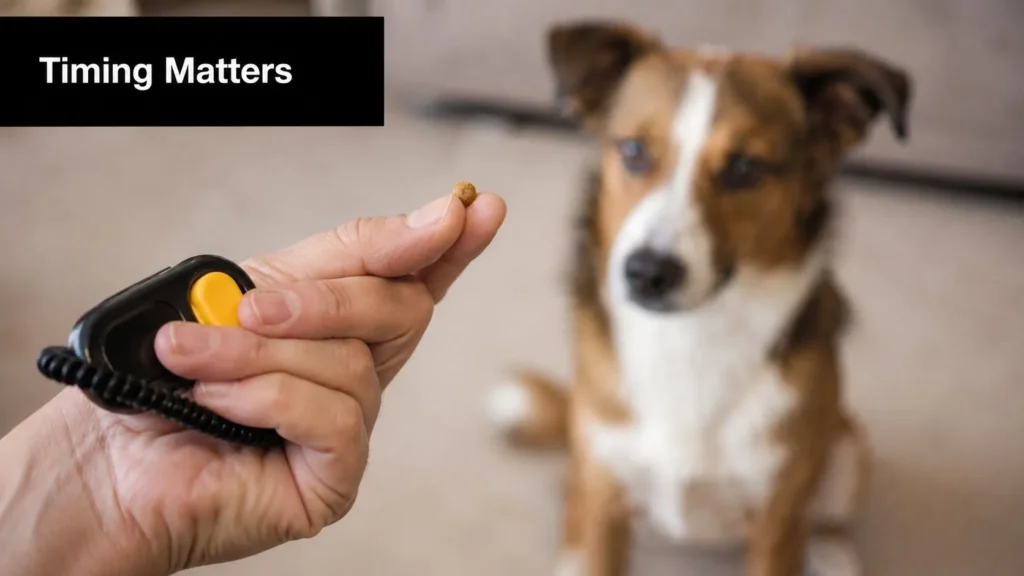
Timing is one of the beginner skills that changes everything. Dogs learn from consequences tied to a specific moment. If the marker or reward comes late, the dog links it to whatever happened last: pausing, jumping, sniffing, or checking out. Good training depends less on giving more cues and more on getting clear about exactly what earned the reward.
That is part of the bigger mindset shift behind beginner training. Prevent confusion first. Then reinforce the right choice fast enough that the dog can repeat it.
Mark first, then deliver the reward
A marker gives you precision. A clicker works well. A short word like “yes” also works if you use it the same way every time.
The sequence matters:
- Give the cue once.
- Watch for the exact behavior you want.
- Mark that moment.
- Deliver the reward right after.
The marker is the snapshot. The treat is the paycheck.
For recall, many new owners wait until the dog is fully in front of them before marking. That can work, but it is often too late in the learning phase. Mark the commitment to come, such as the head turn and first step toward you, then pay well when the dog arrives. That builds speed and confidence instead of hesitation.
What good timing looks like in practice
Use these standards:
- Reward readiness: Have treats in hand or easy to reach before you start.
- Fast feedback: Mark the behavior the instant it happens.
- Clear criteria: Know whether you are rewarding eye contact, movement, position, or duration.
- Clean repetition: Reset between reps instead of chatting, fumbling, or repeating the cue.
Beginners often struggle here because they are trying to do three jobs at once. Handle the leash. watch the dog. find the treat. That is why simple setups matter. Train in a quiet space first, keep rewards accessible, and lower the difficulty until your mechanics improve.
Your body also affects timing. A dog can read hesitation, pressure, and invitation from your posture before you say a word. Learn the basics of reading dog body language and handler signals so you can spot confusion early and avoid rewarding the wrong moment.
A simple drill that sharpens timing fast
Practice without the dog for two minutes.
Toss a coin or set a timer with random beeps. Click or say “yes” at the exact instant the coin lands or the beep sounds. It feels basic, but it exposes sloppy timing fast. I use drills like this with new handlers because the problem is usually not motivation. It is late feedback.
Common trade-offs beginners should know
Precision matters, but so does flow.
- Clicker pros: Sharper timing, consistent sound, easier for new handlers to improve.
- Clicker cons: One more tool to carry, awkward if your hands are full.
- Marker word pros: Always available, practical on walks and around the house.
- Marker word cons: Tone drifts, timing often gets less precise.
Pick one marker system and use it cleanly. Switching back and forth before the dog understands the game usually slows progress.
This short visual explains marker timing well:
When timing improves, training often feels easier within a few sessions. The dog is not suddenly smarter. The message is finally clear.
4. Establish a Structured Daily Training Schedule
Training shouldn’t live in random bursts of motivation. It should live in your day.
Most beginners do too much on one day, then nothing for three days, then try to catch up with a long weekend session. Dogs generally learn better with short, frequent practice. Veterinary and pet care guidance recommends limiting beginner sessions to about 5 to 10 minutes, with young puppies staying closer to 5 minutes and older dogs capped around 10 minutes, as described in this overview of short daily dog training sessions.
That short-session rule matches what trainers see in real homes. Attention drops. Repetition gets sloppy. The dog starts guessing. Then people say the dog is bored or stubborn, when the session went on too long.
A routine that actually fits normal life
Use moments you already have.
- Before meals: Brief obedience practice works well because food motivation is usually higher before dinner or breakfast.
- During walks: Ask for eye contact, loose-leash position, or a sit at curbs.
- At home transitions: Practice “place,” “wait,” or calm greetings when people enter a room.
A simple day could look like this:
- Morning: Name response, sit, and hand target before breakfast
- Afternoon: Loose-leash practice for a few minutes on a quiet stretch
- Evening: Recall games in the hallway or yard before dinner
End while the dog still wants more.
That last part matters. If every session ends after the dog gets tired, distracted, or corrected, training starts to feel like work. If it ends after one clean repetition and a reward, the dog stays eager for the next round.
Routine also helps the human. You stop asking, “When should I train?” and start attaching practice to existing habits. That’s what keeps progress moving after the first burst of enthusiasm wears off.
5. Use High-Value Treats and Motivation Systems Strategically
Not all treats are equal, and not all dogs agree on what counts as a reward.
This is one of the biggest gaps in beginner advice. A lot of guides say “use treats” as if a dry biscuit has the same value as roasted chicken in a busy park. It doesn’t. Current trainer discussions point to a missing skill in many beginner programs: building a reward hierarchy, sometimes called a treat value ladder, and testing what the dog will choose in different settings, as described in this trainer discussion of treat value and reward calibration.
Build your dog’s reward ladder
At home, in a low-distraction room, test a few options. Offer one, then another, and watch what your dog reaches for first and with the most enthusiasm. Repeat on different days.
A practical ladder might look like this:
- Low value: Kibble, plain store treats
- Medium value: Soft training treats, freeze-dried pieces
- High value: Chicken, cheese, beef, tug toy, ball, or real play
Then match the reward to the difficulty. Don’t pay a hard behavior with a weak reward if the environment is distracting. Asking for a calm check-in while another dog passes is a high-difficulty moment for many dogs. That often deserves your best payment, not the leftovers in your pocket.
Motivation is more than food
Some dogs light up for toys. Some work best for praise after food has built the behavior first. Some dogs like a quick chase game or permission to sniff as a reward. The principle stays the same. Reward the behavior with something the dog values.
A real-world example: a dog who ignores kibble in the backyard may look “untrainable” to a beginner. Switch to tiny pieces of chicken, shorten the session, and lower the distraction, and the same dog often starts responding immediately.
The trade-off is simple. Higher-value rewards improve focus, but they also need management. Keep pieces small. Save your best rewards for your hardest asks. And don’t expect one treat to work for every dog, every room, and every situation.
6. Practice Impulse Control and Leave It Commands
A beginner usually wants “sit” first. I’d argue “leave it” and basic impulse control are just as important, sometimes more.
Why? Because impulse control shows up everywhere. It matters when your dog spots dropped food, rushes a doorway, snatches a sock, fixates on a pigeon, or barrels toward a guest. A dog that can pause and wait is safer and easier to live with than a dog that knows a dozen cues but can’t stop themselves.
Start small. Put a low-value treat in your closed fist. Let the dog investigate. The moment they back off, even for a second, mark and reward from your other hand. The dog learns that disengaging makes good things happen.
What beginners often get wrong
They move too fast. They start with a steak-level temptation when the dog hasn’t learned the game. Or they repeat “leave it, leave it, leave it” while the dog rehearses lunging.
Use a progression:
- Closed fist
- Treat visible in open hand
- Treat on floor with your foot ready to cover it
- Moving objects or real-life temptations
Rewarding self-control is some of the best money you’ll ever spend in training.
Add a release word too. If the dog never knows when they’re allowed to take something, frustration builds. “Take it” or “get it” solves that. Now the lesson is cleaner: ignore it when asked, engage when released.
A practical scenario: your dog spots trash on a walk. If you’ve practiced impulse control at home, you have a real shot at getting a pause and a head turn back to you. If you’ve only ever used “leave it” in a panic outdoors, you’re asking for a behavior the dog doesn’t own yet.
Impulse control training isn’t flashy. It pays off constantly.
7. Socialize Your Dog Properly During Critical Developmental Periods
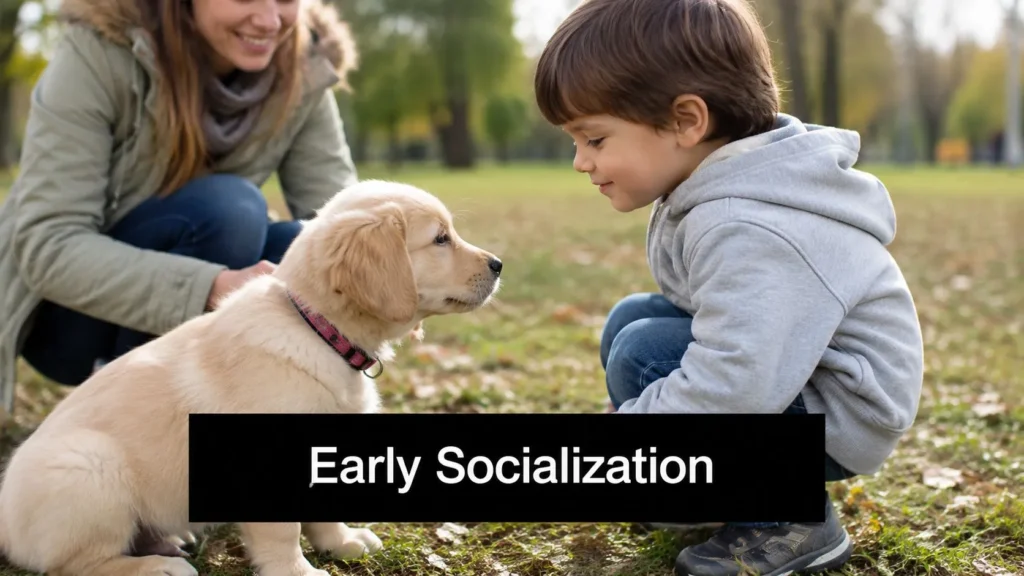
Socialization isn’t flooding your dog with excitement. It’s teaching them that the world is safe, predictable, and manageable.
For puppies and young dogs, that means careful exposure to people, dogs, sounds, surfaces, vehicles, handling, and routine life. For older rescues, it means the same principle with more caution and less intensity. The mistake beginners make is assuming socialization means forced interaction. It often works better as calm observation at a distance.
One topic that deserves more attention for nervous dogs is physical positioning. The IAABC Foundation Journal notes that changing the handler’s angle and distance from a trigger, instead of moving straight closer, is critical for keeping fearful or reactive dogs below threshold, which you can explore in this article on angles of approach in dog training.
Calm exposure beats forced greetings
If your puppy sees a skateboard and gets a treat while staying relaxed, that’s useful socialization. If your dog gets cornered into greeting strangers until they freeze or bark, that’s not useful. That’s overwhelm.
Good socialization often looks boring:
- Watching people from a comfortable distance
- Hearing city sounds without panic
- Walking on gravel, tile, grass, and metal grates
- Being touched gently on paws, ears, and collar
- Seeing another dog and staying able to eat treats
For anxious dogs, angle matters. If a direct approach toward another dog raises tension, arc away slightly. Increase distance. Work diagonally instead of head-on. That change alone can keep a dog thinking instead of reacting.
A real-world example: if your dog stiffens when a jogger passes, don’t drag them closer to “get used to it.” Move off the path, create space, feed, and let the dog watch without pressure. That’s how confidence gets built.
8. Manage and Prevent Problem Behaviors Before They Start
Prevention is easier than cleanup. Always.
Many beginners wait for a problem behavior to become a habit, then try to train it away. It’s far smarter to set the environment so the dog can’t rehearse the wrong behavior in the first place. That means gates, crates, leashes indoors when needed, covered trash, shoes out of reach, and chew toys ready before the dog finds the table leg.
This matters even more now because many owners are teaching themselves. MarketIntelo reports that the global dog training platform market was valued at $1.2 billion in 2025 and is projected to reach $2.1 billion by 2034, while only 5% of U.S. dog guardians use professional trainers for behavioral concerns and 60% rely on friends, family, or online sources for advice, according to this dog training platform market overview. When beginners self-educate, management errors become common because people focus on cues and ignore setup.
Set up the house for success
If your dog steals laundry, stop giving them laundry access. If they counter surf, control kitchen access and clear the counters. If they shred cushions when overstimulated, don’t leave them loose and unsupervised after a chaotic walk.
Useful management tools include:
- Baby gates: Limit access without constant conflict
- Crates and pens: Create rest, safety, and structure
- Leashes indoors: Prevent rehearsal of dashing and chasing
- Chew stations: Redirect chewing to legal items
This is especially important with new adoptions. A dog coming from a shelter or unstable background often needs structure before freedom. If that’s your situation, this guide on how to train a rescue dog fits well with a prevention-first approach.
Outdoor setup matters too. A defined, secure potty and exercise area cuts down on wandering, distraction, and repeated mistakes. For small breeds, Modern Yard Landscapes custom small dog runs show the kind of contained setup that can support training routines at home.
Prevention isn’t avoiding training. It is training. Every time your dog rehearses the right behavior, life gets easier.
8-Point Comparison: Beginner Dog Training Tips
| Training approach | Implementation complexity | Resource requirements | Expected outcomes | Ideal use cases | Key advantages |
|---|---|---|---|---|---|
| Start with Positive Reinforcement and Reward-Based Training | Low–moderate; needs consistent timing and practice | Treats/toys, praise, optional clicker, regular time | Faster learning, better retention, stronger owner-dog bond | Beginners, all ages, building basic obedience | Humane, science-backed, high engagement |
| Establish Clear and Consistent Command Protocols | Moderate; requires household alignment and discipline | Written cues/protocols, rehearsal time, family coordination | Reduced confusion, quicker command acquisition | Multi-person households, formal training programs | Predictability, easier troubleshooting |
| Master the Art of Timing and Reward Delivery | High; precise 1–3s timing and focused attention | Clicker or marker word, quick-access treats, practice tools/apps | Precise behavior associations, accelerated learning | Clicker training, refining specific cues, reactive dogs | Prevents accidental reinforcement, very effective |
| Establish a Structured Daily Training Schedule | Moderate; requires routine and daily commitment | Time blocks (5–15 min), treat pouch, tracking tool | Consistent progress, sustained focus, long-term retention | Busy owners needing realistic plans, puppy training | Sustainable, prevents burnout, regular reinforcement |
| Use High-Value Treats and Motivation Systems Strategically | Low–moderate; requires testing and portion control | High-value treats/toys, rotation system, portion management | Increased eagerness, better performance on hard tasks | Dogs with low food interest or high distraction | Customizable motivation, maintains novelty |
| Practice Impulse Control and ‘Leave It’ Commands | Moderate–high; slow, repetitive progression | Varied rewards, controlled scenarios, time and patience | Improved safety, self-control, fewer problem behaviors | Safety-critical contexts, off-leash training, resource guarding | Prevents dangerous behaviors, builds lasting control |
| Socialize Your Dog Properly During Critical Developmental Periods | High during puppy window; careful planning needed | Puppy classes, supervised exposures, time and judgment | Confident, adaptable adults; reduced fear/aggression | Puppies (3–14 weeks), rescues needing rehabilitation | Prevents long-term behavioral issues, high preventive ROI |
| Manage and Prevent Problem Behaviors Before They Start | Moderate; ongoing vigilance and system setup | Crate/gates, enrichment, exercise plan, environment design | Fewer bad habits, less corrective training, safer home | Beginners, busy households, newly adopted dogs | Cost-effective, reduces stress, proactive approach |
Your 8-Week Path from Beginner to Confident Trainer
Knowing the principles is helpful. Putting them into a sequence is what changes your day-to-day life with your dog.
Start with the mindset shift that matters most. Don’t chase perfection in week one. Build clarity, routine, and success. A beginner usually makes faster progress by teaching a few behaviors well and preventing mistakes than by adding lots of commands too early.
Weeks 1 and 2
Focus on positive reinforcement and management.
Reward the behaviors you want constantly. Calm sits, eye contact, going to the crate, chewing the right item, following you, settling on a mat. At the same time, set the house up to prevent common problems. Use gates, leashes, pens, and closed doors. Don’t test your dog’s self-control before you’ve trained it.
A useful target in these first two weeks is simple: your dog should start to understand that good choices predict good outcomes.
Weeks 3 and 4
Put training on a schedule and clean up your cue system.
Run short sessions daily. Keep them within the beginner-friendly 5 to 10 minute window that veterinary and pet care guidance recommends, and tie them to predictable moments like before meals or after potty breaks. Choose your household cues and stick to them. This is also a good window to build “sit,” “down,” name response, hand target, and the first steps of “leave it.”
If you live with other people, get everyone aligned now. Most home training stalls because one person is training and three people are improvising.
Weeks 5 and 6
Sharpen timing and expand your dog’s world carefully.
Use a clicker or marker word more precisely. Reward faster. Ask for small wins instead of waiting for perfect repetitions. Start working in slightly more distracting places only if your dog can still think, respond, and take rewards.
This is also the right time for thoughtful socialization. Let your dog see more of the world without forcing interaction. If your dog is cautious, use distance and better angles instead of pressure.
Weeks 7 and 8
Generalize the behaviors.
Practice known cues in new locations, with mild distractions, and at different times of day. If “sit” only works in the kitchen, the dog hasn’t fully learned it yet. If recall only works in the hallway, keep building before you test it in a park.
Don’t rush the hard settings. Change one variable at a time. A new place is enough challenge on its own. A new place, another dog, and a weak reward is how beginners convince themselves training “stopped working.”
By the end of this progression, you should have more than a dog who knows a few cues. You should have a routine, a reward system, a clear communication style, and a prevention-first setup that keeps problems from taking over your home. That’s the primary goal. Good dog training tips for beginners aren’t about memorizing commands. They’re about learning how dogs learn, then making that process easier for both of you.
If you want more practical guides like this, visit maxijournal.com for approachable writing on pets, health, science, lifestyle, and everyday problem-solving. It’s also a solid place to explore fresh commentary and publication opportunities if you enjoy smart, accessible online magazines.
Discover more from Maxi Journal
Subscribe to get the latest posts sent to your email.