You brought your rescue dog home, set down the leash, and probably expected one of two things. Instant gratitude, or instant chaos. What many adopters get instead is something harder to read. A dog who paces, hides, freezes, ignores treats, stares at the door, or seems “stubborn” when asked to do something simple.
That dog usually isn’t giving you a hard time. That dog is having a hard time.
If you’re learning how to train a rescue dog, the first skill isn’t teaching sit. It’s learning to tell the difference between disobedience and overwhelm. Rescue dogs often need safety before they can learn, predictability before they can trust, and space before they can connect. When people skip that part, training feels frustrating for everyone. When they get it right, progress gets much smoother.
The First 72 Hours Your Decompression Plan
The first few days after adoption should feel quiet, boring, and safe. That sounds underwhelming, but it works. A widely used adjustment framework called the Rule of 3 suggests about 3 days to decompress, 3 weeks to learn the household routine, and 3 months to feel more settled and show more of the dog’s true personality (Rule of 3 guidance for rescue dogs).
That framework changed how many handlers approach rescue dogs. Instead of demanding quick obedience, the focus shifts to emotional recovery, trust, and routine. In practice, that means your first days home are about management and observation, not performance.
Set up one safe zone first
Pick one calm area before the dog arrives. A corner of the living room, a quiet bedroom, or a gated section of the house works well. Add a bed or blanket, water, and a crate that’s large enough for the dog to stand, turn, and lie down comfortably. Keep the crate open at first unless the dog already settles well in it.
Dog-proof the area. Put away shoes, chargers, medications, trash, children’s toys, and anything fragile or tempting to chew. Too much freedom too soon creates stress for the dog and mistakes for you to manage.
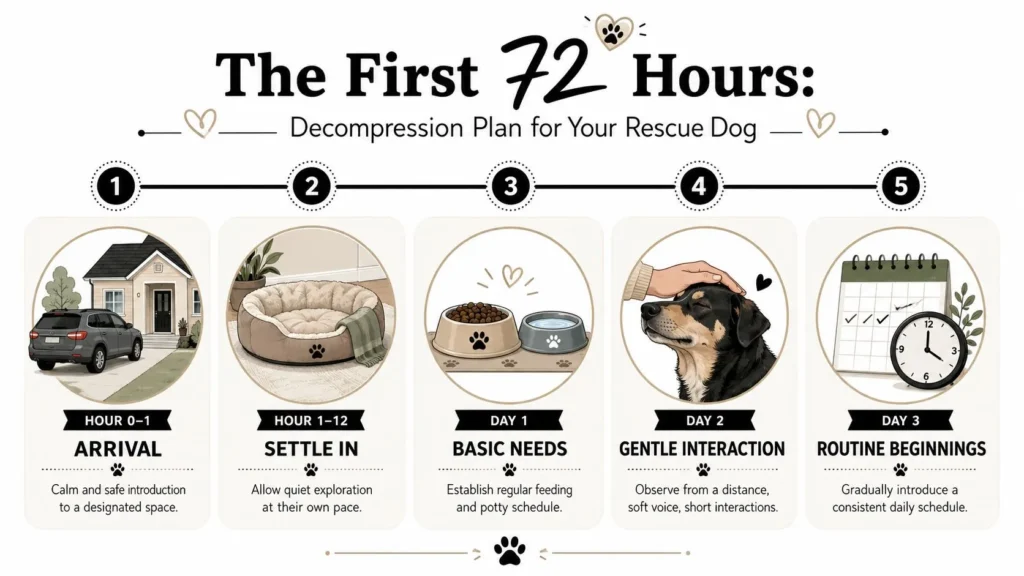
Practical rule: In the first 72 hours, your job is to make the environment easy, not to test what the dog knows.
Follow a calm schedule
Rescue dogs settle faster when life becomes predictable. Feed at regular times. Offer water in the same place. Take the dog out first thing in the morning, after meals, and before bed, then reward outdoor potty success immediately with treats and praise, following the rescue-dog training guidance above.
A simple pattern helps:
- Morning potty trip: Keep it quiet and direct.
- Breakfast: Serve it in the same area each day.
- Rest period: Let the dog sleep or observe without interruption.
- Potty breaks after meals: Don’t wait for a clear signal if the dog is still unsure of the home.
- Evening wind-down: Lower noise and foot traffic if you can.
If there’s an accident indoors, clean it with an enzymatic cleaner later in the routine-building stage. Don’t scold. Punishment often teaches a new rescue dog that eliminating near you is risky, not that the location was wrong.
Watch for stress before asking for anything
Many new adopters miss the quiet signs. Shutdown can look polite. A dog that won’t move, won’t take food, won’t make eye contact, or curls up in a corner may be overwhelmed, not “calm.” Other dogs show stress by pacing, panting, lip-licking, or scanning every sound in the house.
Learning dog body language and calming signals will help you spot the difference early. Pay close attention to freezing, whale eye, avoiding eye contact, and sudden stillness around people. Those signs tell you to reduce pressure.
What helps and what doesn’t
A few things work well right away:
- Soft voices: Keep greetings plain and low-key.
- Short exposure: Let the dog explore at their own pace.
- Controlled space: Use gates or closed doors to limit access.
- Choice: Let the dog approach you instead of looming over them.
What usually backfires:
- Crowded welcomes: Friends and family can wait.
- Constant touching: Even friendly petting can feel like pressure.
- Rapid command practice: The dog doesn’t know you yet.
- Correcting fear: You can’t punish a dog into feeling safe.
Building Foundational Routines and Trust
Once the dog is eating, resting, and moving around the home with less tension, daily habits matter more than formal drills. Daily habits serve to build trust. Not through speeches, but through repeated experiences that make sense to the dog.
The best routines are simple enough that everyone in the house can follow them the same way.
House training with timing and supervision
Most rescue dogs don’t arrive with a reliable understanding of your household rules. Some were never house trained. Some were, but now they’re stressed and can’t hold their routine together. Treat this like teaching from scratch.
Use close supervision indoors. If you can’t watch the dog, limit access with baby gates, a crate, or closed doors. The fewer chances the dog has to wander off and make a mistake, the clearer the lesson becomes.
Try this sequence:
- Take the dog out on leash to the same general potty area.
- Stand. Don’t chatter.
- The moment the dog finishes, reward right away with praise and a treat.
- Give a few minutes of relaxed freedom afterward if the dog handled it well.
If accidents happen, they’re information. They usually mean the dog had too much space, too little supervision, or too much stress.
Make the crate mean rest, not isolation
A crate can be useful for many rescue dogs, but only when it stays positive. Never use it as punishment. If the crate predicts anger, scolding, or forced confinement every time the dog is stressed, it stops feeling safe.
Leave the door open and scatter a few treats inside. Feed meals near it or in it if the dog is comfortable. Toss a treat in, let the dog step in, and let them come back out. That back-and-forth matters. It teaches the dog they have choices.
A crate works best when it feels like a bedroom, not a jail cell.
Some dogs love the den-like feeling. Others need more time. If your dog panics when the door closes, don’t push through it. Slow down and build comfort first.
Introduce collar, harness, and leash indoors
A lot of adopters assume the first walk should happen right away. Sometimes that’s fine. Sometimes it’s too much. Hallway noises, traffic, strangers, and other dogs can flood a nervous rescue dog before trust exists.
Start inside. Let the dog sniff the harness. Reward interest. Put it on briefly, then take it off. Clip the leash on for a few quiet minutes indoors and let the dog drag it under supervision or walk with you from room to room if they’re comfortable.
This is also a good time to review vet-recommended dog food brands and feeding basics if appetite is inconsistent. Food quality won’t solve fear, but regular meals and digestive stability support better routines.
The trade-off most people resist
Freedom feels kind. For many rescue dogs, structure is kinder.
A dog who can roam the entire house, meet every visitor, and react to every sound doesn’t feel liberated. They often feel responsible. Limited space, a steady schedule, and low-pressure interactions help the dog hand that responsibility back to you.
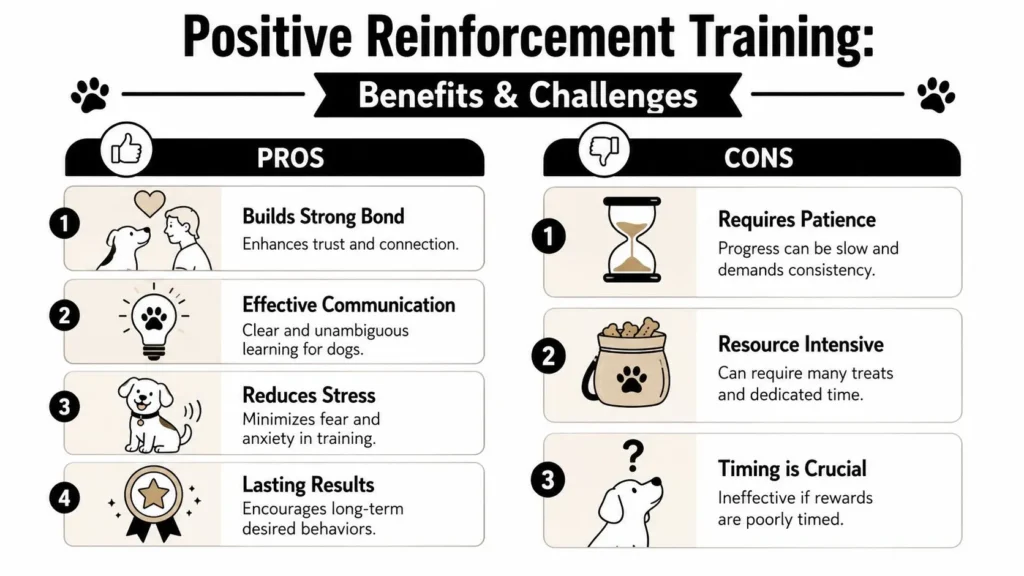
Introducing Positive Reinforcement Training
Formal training should feel like a conversation the dog wants to join. If it feels like pressure, you started too early or moved too fast.
Early rescue-dog training sessions should stay about 5 to 10 minutes or shorter, depending on the dog’s attention span, and they should rely on treats, praise, and play rather than scolding or physical punishment (guidance on training a rescue dog with short sessions). That short format matters because many rescue dogs arrive with fear, anxiety, or unclear past experiences, and long sessions can increase stress and interfere with learning.
Start with rewards that matter to your dog
Not every dog works for the same thing. Some light up for tiny soft treats. Some prefer kibble in a quiet room. Some care more about a toy, a tossed piece of food, or cheerful praise paired with movement.
Your first job is to find what the dog values when they’re relaxed. If the dog won’t take food, don’t force training. That usually means the environment is still too hard.
A simple reward guide:
| Situation | Better choice | Poorer choice |
|---|---|---|
| Dog is timid indoors | Soft treat tossed nearby | Leaning over to hand-feed if the dog flinches |
| Dog is distracted | Higher-value treat in a quiet room | Repeating cues louder |
| Dog likes play | Brief toy interaction | Long exciting play that tips into overarousal |
Use a marker word for clarity
A marker word tells the dog, “Yes, that was the right choice.” It can be “yes” or “good,” said the same way each time. The point isn’t the exact word. The point is timing.
If the dog sits and you say the marker at the exact moment their rear touches the floor, the dog learns faster. If you fumble for a treat first and mark late, the message gets muddy.
Start with easy wins:
- Sit: Lure gently with a treat if needed, then mark and reward.
- Watch me: Reward brief eye contact.
- Come: Use it at short distance inside the home, then reward generously.
- Stay: Ask for only a moment at first, then release.
This short demonstration can help you visualize reward timing and pacing in real sessions.
What works and what stalls progress
Positive reinforcement isn’t permissive. It’s precise. You still need boundaries, but you teach the dog what to do instead of punishing what you don’t like.
What helps:
- Low-distraction setup: Start in the easiest room in the house.
- One cue at a time: Don’t stack sit, stay, come, and down all at once.
- Fast rewards: Reinforce the exact behavior you want repeated.
- Stopping early: End while the dog is still engaged.
What usually fails:
- Repeating cues: “Sit sit sit sit” teaches the dog to wait you out.
- Long sessions: Mental fatigue looks like stubbornness.
- Training after stress: A dog who just got spooked is not ready to learn.
- Correcting mistakes harshly: Fear slows learning and chips away at trust.
Small wins count. A rescue dog who offers one second of eye contact is already participating.
Navigating Common Rescue Dog Behaviors
The most useful question with rescue behavior isn’t “How do I stop this?” It’s “What feeling is driving this?” That question changes everything.
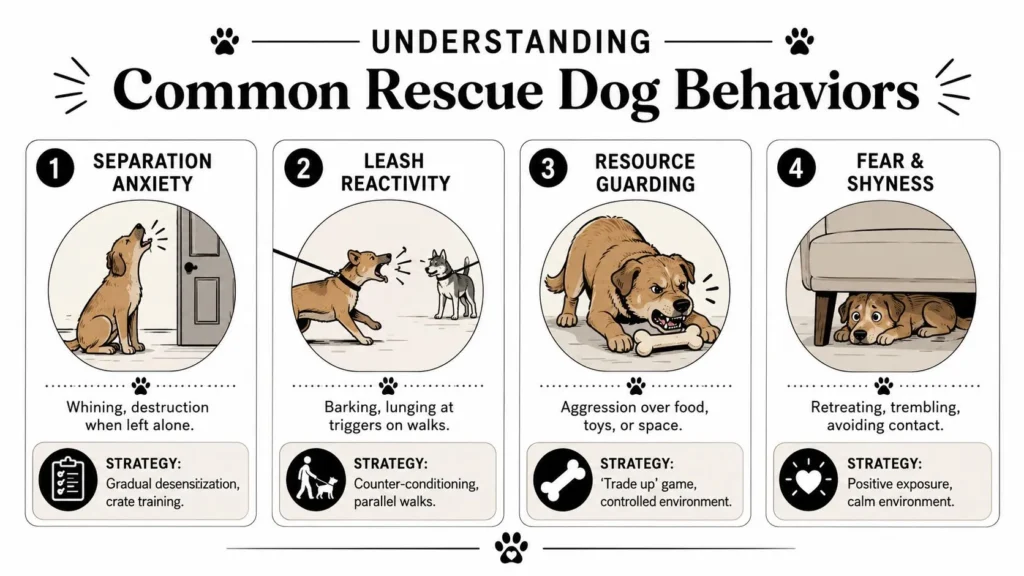
A dog who barks when you leave may be panicking, not demanding. A dog who stiffens over a food bowl may be afraid of losing access, not trying to be dominant. A dog who freezes on a walk may be overloaded, not refusing to cooperate. Behavioral guidance for shelter and rescue dogs emphasizes watching for signs like pacing, freezing, and whale eye, and knowing when to stop training and focus on decompression instead (fear-based shutdown signals in shelter dogs).
When fear looks like disobedience
One newly adopted dog may spend all day pacing from window to hallway, unable to settle. Another may flatten themselves to the floor when the leash appears. Another may turn their head away, lick their lips, and go still when someone reaches to pet them.
Those are not the moments to insist.
If the dog is freezing, avoiding eye contact, or showing whale eye, stop asking for performance and make the situation easier.
That can mean stepping farther from a trigger, ending the session, lowering your voice, or guiding the dog back to a quiet room. Dogs learn well when they feel safe enough to process what’s happening. They learn very little when they’re bracing.
Common problems and the gentler response
Here’s the pattern I see most often:
- Separation distress: The dog follows you constantly, vocalizes when you leave, or panics when isolated. Start with very short absences, keep departures quiet, and avoid making the crate the automatic answer if the dog is already distressed there.
- Resource guarding: The dog stiffens around food, toys, beds, or stolen items. Don’t punish. Manage the environment, keep children away, and teach a calm trade for something better.
- Leash reactivity: The dog barks or lunges at people, dogs, bikes, or cars. Increase distance first. Don’t drag the dog closer to “get used to it.”
- Fearful withdrawal: The dog hides, startles, or avoids touch. Reduce social pressure and let the dog approach on their own terms.
If leash reactivity is part of your picture, these proven reactive dog strategies give practical handling ideas you can adapt without turning walks into a battle.
Management first, training second
People often worry that management is “giving in.” It isn’t. Management prevents rehearsal of the behavior while you build new skills.
A baby gate can prevent door rushing. A quiet feeding area can reduce tension around meals. A covered crate or a separate room can help a dog who gets overwhelmed by household activity. Management buys you calm enough to train.
What doesn’t help is trying to overpower the behavior. Yelling at barking adds noise to stress. Forcing greetings adds pressure to fear. Snatching bowls from a guarding dog can make the dog more defensive next time.
Thoughtful Socialization and Confidence Building
Socialization is often misunderstood, especially with adult rescues. It doesn’t mean taking your dog everywhere and hoping they adjust. It means helping the dog form safe, positive associations with the world, one manageable experience at a time.
A crowded patio, busy pet store, or chaotic dog park can look like “exposure.” For many rescue dogs, it’s just flooding.
Quality beats quantity
A good socialization outing is often boring to the human. The dog sees one new thing, stays under threshold, gets reinforced for calm behavior, and leaves before stress rises. That might mean sitting in a parked car and watching people at a distance. It might mean one calm visitor tossing treats without trying to pet the dog.
A poor outing usually has the opposite pattern. Too many strangers. Too much noise. Too little distance. The dog stops taking food, scans constantly, pulls to escape, or shuts down.
Try this comparison:
| Better introduction | Worse introduction |
|---|---|
| One calm guest ignores the dog at first | Several people approach at once |
| Short sniff-and-leave walk in a quiet area | Busy sidewalk at peak traffic |
| Controlled distance from another dog | Nose-to-nose forced greeting |
| Brief success followed by rest | Staying out until the dog melts down |
Read the dog in front of you
Confidence grows when the dog feels they have options. Let them look, retreat, sniff, and observe. If the dog moves closer on their own, that’s useful information. If they pause, hard-stare, crouch, or try to leave, respect it.
Dog parks deserve extra caution with rescue dogs who are still settling. If you’re weighing that option, this overview of what the science reveals about dog parks is a helpful reminder that excitement and stress can look similar if you’re not watching closely.
Build confidence in ordinary ways
You don’t need dramatic adventures. Many dogs gain confidence through small, repeatable successes:
- walking on different surfaces
- sniffing in a quiet new location
- eating near a mildly novel sound
- learning a simple cue and getting it right
- relaxing while a visitor moves calmly through the house
That’s how to train a rescue dog for real life. Not by proving how much they can tolerate, but by showing them the world is predictable and safe.
Your Long-Term Training Toolkit and Resources
Rescue-dog training doesn’t end when the dog learns sit, sleeps through the night, or stops having accidents. It becomes an ongoing practice of observation, prevention, and skill building. That’s good news. You don’t need perfection. You need a workable system and the willingness to adjust it.
The strongest adopters I know aren’t the ones who solve every issue alone. They’re the ones who get help before frustration turns into conflict.
Know when to bring in a professional
A qualified force-free trainer or veterinary behavior professional can save months of confusion when a dog shows persistent fear, escalating guarding, panic when left alone, handling sensitivity, or reactions that feel unsafe. Waiting too long often lets the dog rehearse the same emotional pattern over and over.
Look for a professional who talks about body language, management, and gradual behavior change. Be cautious with anyone who promises quick fixes, relies on intimidation, or labels a fearful dog as stubborn without discussing stress.
A few signs you shouldn’t just “wait and see”:
- Biting or near-bites: Even if no skin was broken.
- Severe shutdown: The dog regularly freezes, hides, or won’t function in daily life.
- Panic behaviors: Escape attempts, self-injury risk, or frantic crate distress.
- Guarding that spreads: From food to toys, furniture, or people.
Keep the dog learning
Training shouldn’t become a list of corrections. It should keep giving the dog constructive outlets. Basic classes can help if the environment is calm and the instructor understands rescue dogs. Some dogs love nose work, food puzzles, scatter feeding, and simple search games around the house. Others benefit from structured relaxation and mat work before anything more exciting.
If you’re budgeting for support, this guide to dog training costs and what affects pricing can help you compare your options realistically before you commit.
The long view matters
A rescue dog may never become the kind of dog who loves every stranger, every dog, or every crowded event. That’s fine. Success isn’t turning your dog into a social butterfly. Success is helping your dog feel secure, communicate clearly, and live well in your home.
The best training plan is the one that protects trust while building skill.
If you stay patient, keep sessions kind, and respond to stress early instead of late, you’ll usually see the relationship deepen first. Skills follow that. They don’t replace it.
If you enjoy practical, plain-English guides like this one, visit maxijournal.com for more approachable writing on pets and other everyday topics, or explore how to contribute if you’re a writer with something useful to share.
Discover more from Maxi Journal
Subscribe to get the latest posts sent to your email.