You’re probably here because you saw one. Fluffy coat. Mischievous face. Maybe bright blue eyes. Maybe a rescue listing called the puppy “great with families” and “ready for adventure.” A husky mix puppy can look like the best of all worlds.
That’s exactly why people get blindsided.
The hard part isn’t falling in love with a husky mix. The hard part is living with the dog that puppy is likely to become. A lot of mixes get marketed around looks, novelty, or the fantasy of getting “husky beauty” with an easier personality. Sometimes that happens. A lot of the time, it doesn’t. What you bring home may be athletic, noisy, independent, crafty, mouthy, and far more work than the cute photos suggest.
If you want the honest version, here it is. A husky mix can be a brilliant companion for the right person. It can also overwhelm an unprepared home fast. The difference usually isn’t love. It’s preparation, routine, and whether your daily life can handle a smart dog with stamina and opinions.
The Allure and Reality of a Husky Mix Puppy
The appeal is obvious. Huskies bring striking looks, expressive faces, and a playful presence that makes almost any crossbreed stand out. Add another popular breed into the mix, and it’s easy to assume you’re getting a more manageable version of a husky.
Often, that assumption gets people into trouble.
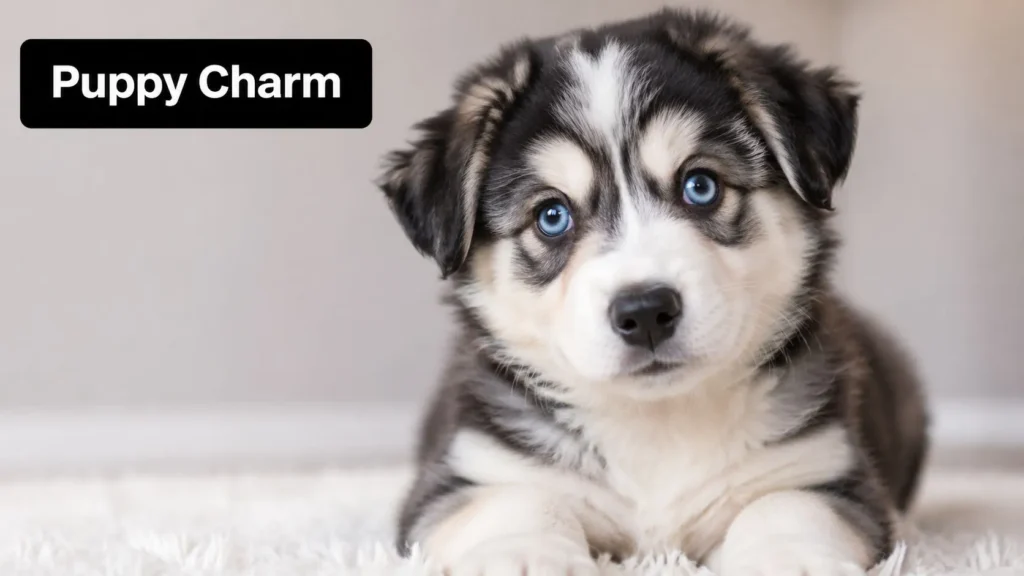
One of the biggest blind spots in husky mix coverage is the gap between the cute presentation and the practical reality. As Bark’s guide to breeds mixed with husky points out, many first-time owners search for a friendly family puppy without being warned that a husky mix may need substantially more daily enrichment and security management than the other parent breed suggests.
That matters more than coat color, ear shape, or whether your puppy looks “wolfy.”
What people expect
People often expect a dog that will:
- Settle after a normal walk
- Listen because it’s smart
- Do fine in an apartment if it’s still young
- Stay in the yard if the fence looks decent
- Outgrow wild puppy behavior without much structure
What they often get
They often get a dog that:
- Gets bored fast
- Learns quickly but doesn’t always care what you want
- Tests doors, gates, crates, and fencing
- Needs both physical work and mental work
- Finds its own entertainment if you don’t provide any
A husky mix puppy doesn’t become “easy” just because the second parent breed seems calmer on paper.
That doesn’t mean every husky mix is chaos. It means you should stop asking only “Is this puppy cute and friendly?” and start asking, “What will this dog need from me every single day?”
That question is the true starting line.
Decoding Your Puppy’s Genetic Lottery
Mixed breeds aren’t build-a-dog projects. You don’t get to choose half the coat from one parent, half the temperament from the other, and skip the difficult traits. A husky mix puppy is closer to a shuffle than a recipe.
Husky ancestry gives you a strong baseline. Siberian Huskies are known for stamina, intelligence, independence, vocal behavior, prey drive, and a knack for making their own decisions. Those traits can blend neatly with the other parent breed, or they can collide in ways that surprise you.
Start with the husky side
The size benchmark helps people visualize what “medium to large, athletic dog” can really mean. The American Kennel Club lists adult Siberian Huskies at 21 to 23.5 inches and 45 to 60 pounds for males, and 20 to 22 inches and 35 to 50 pounds for females in its Siberian Husky breed profile.
That same AKC-backed growth reference is useful when you’re staring at a fluffy pup and wondering what comes next. A husky-like growth path can put a puppy around 30 to 40 pounds by 6 months, which is a strong clue that you’re raising a dog with real size and real exercise needs.
Why mixes vary so much
It’s akin to mixing paint. You know the two original colors. You don’t know the exact final shade until it dries.
A husky crossed with a retriever might produce a friendlier, more biddable dog. It might also produce a dog with retriever enthusiasm and husky independence, which can feel like a lot. A husky crossed with a smaller breed may shrink the body size, but not the drive, the noise, or the cleverness.
Here’s where people get confused. Smaller doesn’t always mean easier. A compact husky mix can still act like a full-size sled dog in a small package.
Traits that commonly show up
Some puppies lean hard into the husky side in ways owners don’t expect:
- Escape behavior. Testing weak fencing, slipping collars, pushing through half-latched doors.
- Selective listening. Understanding a cue, then deciding whether it’s worth responding.
- Prey interest. Strong focus on squirrels, cats, birds, or anything fast-moving.
- Big opinions. Whining, talking, protesting, and dramatic body language.
- Motion needs. Not just wanting activity, but seeming to need it to stay balanced.
Practical rule: Train the dog in front of you, but prepare for the husky genetics you can’t see yet.
What your puppy may look like later
A tiny, fluffy puppy can mislead people badly. Legs lengthen. Chests deepen. Endurance builds before emotional maturity catches up. That’s why owners are often shocked when a puppy that seemed manageable at first becomes a teenage athlete with poor judgment.
If your puppy is already filling out fast and carrying that husky frame, believe what you’re seeing. Don’t plan for the easier version.
A Look at Popular Husky Mixes
Popular husky crosses often get sold through nicknames and cute photos. That’s the worst way to evaluate them. What matters is what daily life looks like once the novelty wears off.
If you want a broader sense of classic husky temperament before comparing mixes, it helps to explore Siberian Huskies in a breed-specific overview and then measure each cross against that baseline.
Common Husky Mix Comparison
| Mix Name (Parents) | Typical Adult Size | Energy Level | Primary Temperament Notes |
|---|---|---|---|
| Pomsky (Pomeranian + Husky) | Small to medium, but variable | High | Cute factor is high. So is the potential for sass, noise, grooming work, and big-dog attitude in a smaller body. |
| Goberian (Golden Retriever + Husky) | Medium to large | High | Often social and people-oriented, but can combine husky stamina with retriever exuberance and mouthy puppy behavior. |
| Horgi (Corgi + Husky) | Small to medium, often long-bodied | Moderate to high | Funny, charming, and busy. Can be vocal, stubborn, and surprisingly demanding despite the shorter legs. |
| Shepsky (German Shepherd + Husky) | Medium to large | High | Usually intense. Often smart, trainable, and protective, but can be a lot of dog for a casual owner. |
Pomsky
This is the mix that most often tempts people into underestimating what they’re getting. They see a fox-like face and compact size, then assume apartment-friendly companion.
Sometimes the body is smaller. The mindset may not be.
A Pomsky can still be sharp, loud, independent, and busy. Grooming can be substantial, and frustration tolerance can be low if the dog isn’t taught how to settle. Owners who expected a portable cuddle dog often end up with a smart little comedian who needs structure.
Goberian
This mix sounds ideal on paper. Golden sweetness plus husky beauty. It can be lovely. It can also be exhausting.
You may get a highly social dog that wants to be involved in everything and has the physical drive to keep going long after you’re done. If that dog also inherits husky independence, training can feel inconsistent. The dog isn’t confused. It just has its own agenda some days.
Horgi
People laugh when they first see a Horgi, and fair enough. The look is memorable. But this mix can be more work than expected because both parent breeds often come with strong personalities.
Corgi traits can add alertness, bossiness, and herding-style nipping or control behaviors. Add husky cleverness and motion sensitivity, and you may get a dog that notices everything and comments on all of it.
Shepsky
The ‘mixed breed equals easier’ myth truly crumbles. A Shepherd-Husky cross can be impressive, athletic, and strongly bonded to its people. It can also be intense, suspicious, over-aroused, and difficult for inexperienced owners to manage.
This mix often thrives with people who enjoy training as a hobby, not just as a short puppy phase.
The more capable a husky mix looks, the more honest you need to be about whether you can meet that dog’s brain and body where they are.
Managing High Energy and Intelligence
This is the part people try to negotiate with. They hope love will cover the gap. It won’t.
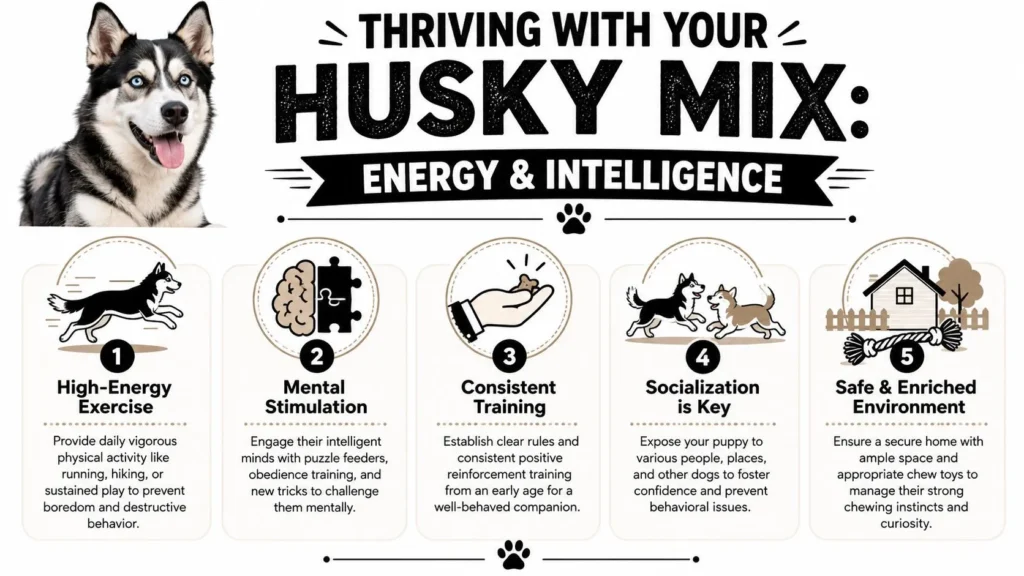
A husky mix puppy needs more than a stroll around the block and a few toys tossed on the floor. Physical activity matters, but mental work matters too. If you handle only one side, the other side will show up as chaos.
What exercise really means
For this kind of dog, exercise isn’t just “did we go outside?” It means purposeful activity that changes the dog’s emotional state. A quick leash loop may check your box, but it often won’t take the edge off a husky mix with real drive.
Useful outlets include:
- Brisk structured walks where the dog has to stay engaged with you
- Fetch or flirt pole sessions if your dog enjoys chase in a controlled way
- Hiking or trail time for dogs mature enough and physically ready for it
- Tug with rules so excitement stays connected to training
- Play dates with stable dogs if your puppy socializes well and doesn’t get overwhelmed
A lot of owners make one mistake here. They create an athlete but ignore self-control. Your puppy should learn how to move hard and how to come down afterward.
The mental side people skip
An intelligent dog without daily mental work becomes a self-employed dog. That’s when you get shredded cushions, obsessive window patrol, howling, fence running, counter surfing, and creative theft.
Good mental outlets include:
- Puzzle feeders instead of serving every meal in a bowl
- Sniffing games with treats hidden in boxes, towels, or around a room
- Short obedience sessions with sits, downs, recalls, hand targets, and place work
- Trick training for spin, touch, bow, or toy cleanup
- Chew time with safe, appropriate long-lasting options
Here’s a useful mindset shift. Don’t ask, “How do I stop my husky mix from being naughty?” Ask, “Where is this dog supposed to put its energy and brain today?”
Later in your routine, use video guidance if that helps you stay consistent. A solid starting point is this practical walkthrough on how to train your dog, especially if you need help turning random effort into a repeatable system.
This visual gives a good snapshot of what that balanced routine should feel like.
Why force usually backfires
With many husky mixes, heavy-handed training creates resistance, conflict, or shutdown. These dogs often respond better when training feels like a game with clear rewards and clear limits.
Use:
- Short sessions so the dog stays engaged.
- High-value rewards that matter to your puppy.
- Clean timing so the dog knows what earned the reward.
- Consistency at home so rules don’t change by the hour.
Don’t confuse intelligence with eagerness to please. A lot of husky mixes are smart enough to learn fast and independent enough to negotiate everything.
Train for cooperation, not submission. You’re building a teammate, not trying to win an argument.
Apartment life can work, but only with effort
People always ask whether a husky mix can live in an apartment. Yes, some can. But the apartment itself isn’t the deciding factor. The owner is.
If you’re gone long hours, hate walking in bad weather, and don’t enjoy training, apartment life with this type of dog usually becomes stressful. If you’re committed to outdoor routine, indoor enrichment, and careful management of noise and arousal, it can be done.
A bored husky mix doesn’t care that your lease says quiet hours.
Grooming, Diet, and Health Essentials
Daily life with a husky mix gets easier when you stop treating care as a reaction and start treating it as a routine. That matters most with coat care, feeding, and preventive health.
Grooming without fighting your dog
Many husky mixes inherit a thick coat or dense undercoat. Even when the final coat texture comes from the other parent, owners are often surprised by how much loose fur they’re dealing with. You don’t need a salon-grade setup, but you do need basic tools and regular handling.
A practical home kit usually includes:
- An undercoat rake for dense seasonal shedding
- A pin brush for regular maintenance
- A slicker brush if your dog’s coat texture calls for it
- Dog nail clippers or a grinder
- Ear cleaner approved by your veterinarian
- A gentle dog shampoo for occasional bathing
Brush before the dog is matted, not after. Start while your puppy is small, when handling is easier and habits are still forming. Short, calm sessions beat wrestling matches once a week.
Puppies don’t automatically accept grooming. They learn it because owners make the process predictable and rewarding.
Feeding for steady growth
Food discussions get weird fast, so keep it simple. Choose a quality puppy food that fits your dog’s size, activity, and digestion. Then watch the dog, not the marketing.
A husky mix puppy should stay lean, energetic, and eager to eat without becoming soft or heavy. Overfeeding “because the puppy is active” is common, especially when owners confuse growth spurts with constant hunger. If your puppy is wildly active, your veterinarian can help you judge body condition and feeding adjustments.
Use meals as training opportunities whenever possible. Hand-feed part of breakfast during recall work. Put dinner into puzzle toys. Turn calories into structure.
Health questions to ask early
No one can promise a mixed puppy will avoid inherited issues. What you can do is ask better questions. On the husky side, owners should stay alert to common concerns such as hip dysplasia and eye conditions, then research the other parent breed’s common issues too.
If you’re getting a puppy from a breeder, ask what health testing was done on both parents and why those tests matter. If you’re adopting, ask the rescue or shelter what they know and schedule a vet visit early so you can establish a baseline.
Vaccination timing is one area where new owners often feel overwhelmed. If you want a straightforward overview, Pet Magasin’s expert vaccination advice is a useful companion read, and this guide to the DHPP dog vaccine can help you understand one of the core vaccines your puppy will likely receive.
Build a routine your dog can predict
A good weekly rhythm usually includes:
- Regular coat checks after walks and play
- Frequent brief brushing instead of marathon sessions
- Meal routines that support training and calm behavior
- Weight and body condition awareness
- Early vet partnership so you’re not scrambling when something changes
The less drama you attach to basic care, the easier your husky mix will be to live with.
Finding Your Puppy The Right Way
A trendy mix attracts bad sellers fast. That’s why the way you find your husky mix puppy matters almost as much as the puppy itself.
Red flags that should stop you
Walk away if a seller:
- Pushes for a deposit before answering questions
- Won’t show where the puppies are raised
- Can’t explain the parents’ temperaments
- Sells only on appearance, especially eye color or unusual markings
- Acts annoyed when you ask about health testing or early socialization
- Offers multiple designer mixes at once with a salesy, interchangeable pitch
That last point matters. A person who talks like they’re selling handbags usually isn’t focused on producing stable, well-started dogs.
What a responsible source looks like
A reputable breeder screens you too. They ask about your schedule, fencing, training plans, and past dog experience. They don’t just want a sale. They want a fit.
They should be able to discuss:
- Why they chose those two parent dogs
- What the puppies experience before going home
- What traits they expect in the litter
- What support they offer after placement
- What health information they can document
If they tell you every puppy is perfect for every family, they’re not being honest.
Don’t overlook adoption
A lot of husky-type dogs lose homes because people underestimate the work. That makes adoption a strong option if you’re open to an older puppy or young adult. In many cases, a rescue dog gives you a clearer picture of size, coat, and daily temperament than a very young puppy does.
Breed-specific rescues and broad adoption sites can both be useful. Ask detailed questions about energy, handling, crate behavior, dog sociability, and escape habits. If you have kids, don’t rely on vague labels. Ask what the dog has done in foster care.
If your home includes children and you’re still comparing fit across breeds, this family-focused guide to top dog breeds for families can help you think more broadly before you commit.
Common Questions About Husky Mix Puppies
A few questions come up in almost every serious conversation about a husky mix puppy.
Are husky mix puppies good family dogs
They can be, but “good with families” is too vague to be useful. A better question is whether the dog’s energy, mouthiness, noise level, and training needs fit your household. A thoughtful family with routine, supervision, and realistic expectations may do great. A busy home that wants an easygoing dog may struggle.
Can a husky mix puppy live with cats
Sometimes yes, sometimes absolutely not. Prey drive varies a lot. Early exposure helps, but it doesn’t erase instinct. Management matters, and some individuals should never be trusted loose with small animals no matter how sweet they seem in other contexts.
Do husky mixes calm down with age
Most mature with time, but maturity isn’t magic. Dogs rehearse habits. If your puppy spends months learning to drag you, scream in the crate, and invent games with furniture, age alone won’t fix that. Structure and training shape the adult dog.
Are they hard to train
They can be challenging, especially for people who expect automatic obedience. Many are very trainable. They just tend to ask, in their own way, why they should care. If you enjoy consistency, rewards, and repetition, you may love that process. If you want instant compliance, you probably won’t.

Is a husky mix puppy right for me
Ask yourself four blunt questions:
- Do I enjoy active dogs, or just admire them
- Can I commit to training past the cute puppy stage
- Will I manage doors, leashes, crates, and fencing seriously
- Can I give this dog a real routine even when life gets busy
If your answer is yes, a husky mix can be funny, athletic, loyal, and profoundly rewarding. If your answer is “maybe, if the dog is easy,” keep looking. This type of dog usually punishes wishful thinking.
If you like practical pet advice without fluff, visit maxijournal.com for more clear, approachable guides on dogs, health, education, and everyday questions that deserve straight answers.
Discover more from Maxi Journal
Subscribe to get the latest posts sent to your email.