You’ve probably seen one already. A fluffy, bright-eyed “Shepadoodle” on social media, at a breeder’s page, or maybe at the park, looking like the answer to every dog wish at once. Smart, cute, athletic, family-friendly, and maybe even easier on allergies. That combination is powerful.
But a shepherd poodle mix isn’t a preset package. It’s a cross between two serious working dogs with different strengths, different instincts, and a wide range of possible outcomes. One puppy may grow into a curly-coated family shadow that wants training games all day. Another may look more shepherd-like, shed more, and act like a watchdog with a strong opinion about strangers.
That doesn’t make this mix a bad choice. It makes it a dog you need to understand before you bring one home.
Is a Shepherd Poodle Mix Right for Your Family?
A first-time owner often asks the wrong opening question. They ask, “Are Shepadoodles good dogs?” The better question is, “Am I ready for the kind of dog this mix is likely to be?”
The shepherd poodle mix tends to attract people who want one dog to do everything. Be calm in the house, playful with kids, easy to train, low shedding, protective but not too protective, active but not demanding. That’s the dream. Real dogs don’t work that neatly.
What daily life usually feels like
Living with this mix often feels less like owning a decorative pet and more like sharing your home with a clever coworker. This dog usually notices patterns fast. It can learn routines quickly, but it can also learn your weak spots just as fast.
A bored shepherd poodle mix may invent its own projects. That can mean stealing socks, barking at window activity, pacing, or turning your backyard into an excavation site. A well-managed one can be highly enjoyable. It often wants to be involved in whatever the family is doing.
Practical rule: If you want a dog that’s content with a short stroll and then naps most of the day without much input, this mix probably isn’t your best match.
Good fit and poor fit
This mix tends to suit homes where people enjoy training, routine, and active companionship. It can work well for families, couples, or single owners who want a dog to engage with, not just care for.
It’s a tougher fit for people who travel often, dislike grooming upkeep, or expect behavior to “settle on its own” without structure.
A quick self-check helps:
- You may be a good match if you like teaching skills, going outdoors, and building a dog into your daily routine.
- You may struggle if your schedule changes constantly and the dog would spend long stretches under-stimulated.
- You should pause and think if you’re choosing this mix mainly because it looks like one of the top dog breeds for families, rather than because you’re prepared for a highly variable working cross.
The right family for a shepherd poodle mix usually isn’t the family that wants the easiest dog. It’s the family that wants an involved dog and means it.
Understanding the Shepherd Poodle Heritage
The shepherd poodle mix makes more sense when you stop thinking of it as a fixed breed and start thinking of it as a recipe. The two main ingredients are the German Shepherd and the Poodle, and neither one is a lightweight in the dog world.

Why this mix exists
The Shepadoodle belongs to the modern designer-dog wave. According to A-Z Animals’ overview of the Shepadoodle, this type of cross grew out of the designer dog movement that accelerated after the first Labradoodle was bred in the 1980s, and the American Kennel Club doesn’t recognize the Shepadoodle as an official breed. That means there are no official standards for appearance or temperament.
That one point clears up a lot of confusion. When people ask, “What is a Shepadoodle supposed to look like?” the honest answer is that there isn’t one approved blueprint.
The two parent breeds shape the possibilities
The German Shepherd side often brings focus, loyalty, alertness, and a stronger guarding tendency. Many people love that steady, devoted quality. It can also mean the dog watches everything and may need careful socialization so caution doesn’t tip into overreaction.
The Poodle side often adds sharp learning ability, athleticism, and coat traits that people associate with doodles. But Poodles aren’t delicate lap dogs in this context. They’re highly capable working dogs with plenty of drive and stamina.
Think of the mix like combining two skilled musicians from different genres. You may get a brilliant performance, but you can’t assume the song will sound the same every time.
Why buyers get surprised
A lot of disappointment comes from expecting a label to predict a dog perfectly. With a shepherd poodle mix, the label only tells you the parents. It does not guarantee the final package.
The safest way to understand this dog is to expect range, not uniformity.
That mindset helps with everything that follows. Size, coat, sociability, sensitivity, and even household manners can vary more than many first-time owners expect.
Decoding Shepadoodle Size and Appearance
If you ask five owners what a full-grown shepherd poodle mix looks like, you may get five different answers. That’s not because people are confused. It’s because this mix is broad in build, coat, and outline.
Why the range is so wide
The simplest way to explain polygenic inheritance is to think about mixing paints, except the result doesn’t blend into one smooth middle color. Instead, many small genetic inputs affect size, coat, ears, and body shape all at once.
That’s why two puppies from the same general type of cross can look surprisingly different. One may inherit more of the shepherd frame and face. Another may pull harder toward a curlier coat and a softer expression. The name stays the same, but the dog can look quite different.
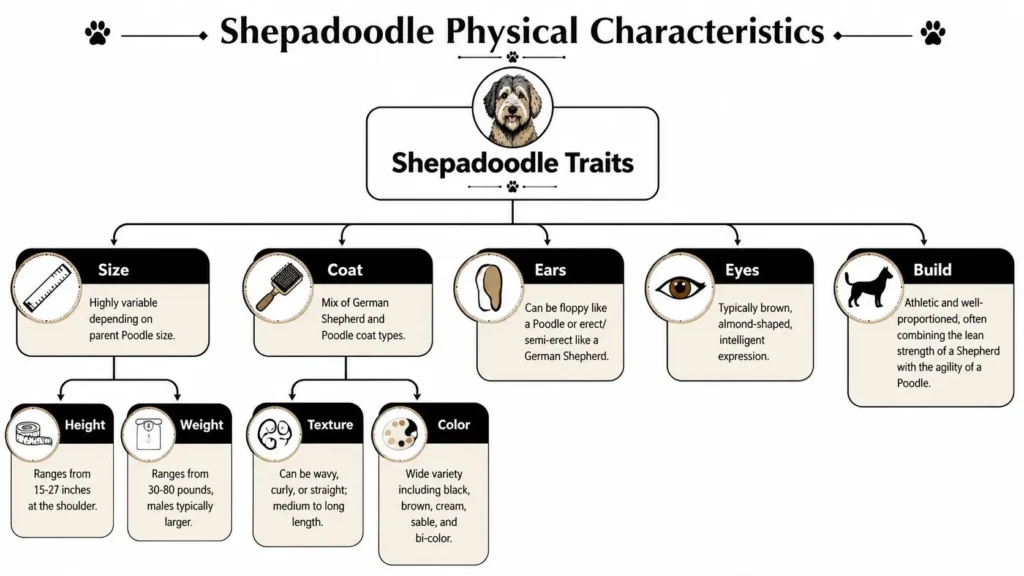
Dog Academy’s German Shepherd Poodle mix guide reports a broad adult range of 25 to 90 pounds and 13 to 28 inches tall, depending on the specific German Shepherd and Poodle parents used in the cross.
What people usually notice first
The coat gets the most attention, but it isn’t the only variable. Ears may be floppy, semi-erect, or more upright. The body may look lean and athletic, or slightly fuller and more teddy-bear-like. The face can swing from refined and poodley to more shepherd-shaped.
A practical point matters here. If you’re trying to predict adult size, don’t rely on the word “Shepadoodle” alone. Ask about the actual parents.
| Trait | Description |
|---|---|
| Type | A hybrid cross, not a standardized breed |
| Adult size | Highly variable and tied to the parent dogs |
| Weight | Reported around 25 to 90 pounds in broad references |
| Height | Reported around 13 to 28 inches in broad references |
| Build | Often athletic, with a mix of shepherd substance and poodle agility |
| Coat | May be straight, wavy, or curly |
| Ears | Can be floppy, semi-erect, or more upright |
| Overall look | Can range from strongly shepherd-like to strongly poodle-like |
Size labels can mislead
People often talk about standard, medium, or mini doodle types as if those labels settle everything. They don’t. The poodle parent size matters, but so does the exact pairing, and mixed-breed inheritance doesn’t read marketing terms.
That’s why one family may expect a moderate dog and end up with a large, powerful adult. Another may expect a classic shaggy doodle look and get a straighter-coated dog with a more shepherd-like outline.
If appearance is a deal-breaker for you, this may not be the right mix. With a shepherd poodle mix, flexibility matters.
The best mindset is to choose the dog for its likely needs and temperament, not just the puppy coat and face you see at one moment in time.
The Intelligent and Loyal Shepadoodle Temperament
The shepherd poodle mix is often appealing for one big reason. People want a dog that’s both brainy and devoted. This cross can absolutely offer that. It can also be more emotionally and mentally demanding than many owners expect.

What the personality tends to look like
Breed references commonly describe this mix as intelligent, trainable, active, and family-affectionate. That pattern fits the cross itself. Both parent breeds were developed as working dogs that learn tasks and respond closely to people.
In plain language, this is usually a dog that wants to do things with you. It often isn’t content being scenery in the living room. It watches, learns, anticipates, and forms strong attachments.
That can feel wonderful. Your dog may pick up cues before you even realize you’ve created them. It may be the kind of dog that waits by the door when it knows a walk usually happens, or runs to the training mat when it hears the treat pouch.
The upside and the challenge
The same mind that makes this dog fun to train can also create problems when life is inconsistent. A sensitive, bright dog may react strongly to tension in the house, weak routines, or unclear rules.
Common patterns owners notice include:
- Fast learning with both good habits and bad ones
- Strong bonding with one or more family members
- Alert behavior around visitors, noises, or movement outside
- A need for engagement that goes beyond petting and casual walks
A shepherd poodle mix can be excellent with families when raised well. It may be gentle, affectionate, and eager to participate. But “good with families” doesn’t mean self-managing. Kids running, guests arriving, and constant stimulation can be exciting or stressful for a dog with strong working-breed instincts.
What first-time owners miss
Many people hear “smart” and picture “easy.” In dogs, smart often means you have to participate more. This dog may learn obedience nicely, but it may also notice every inconsistency. If one person allows jumping and another scolds for it, the dog gets mixed information.
That’s why steady training matters. For owners who need a starting point, these dog training basics for everyday life are useful because this mix responds best when expectations are clear and repeated.
A shepherd poodle mix usually does best when you treat training like part of daily life, not a short puppy phase.
Some dogs from this cross may also lean into herding or guarding behavior. That doesn’t make them aggressive by default. It means owners should pay attention early to greetings, visitor manners, leash skills, and calm recovery after excitement.
Keeping Your Smart Dog Happy and Healthy
A shepherd poodle mix usually doesn’t need “more exercise” in the vague way people say that phrase. It needs a real outlet. If you don’t provide one, the dog often creates its own.
Physical effort is only half the job
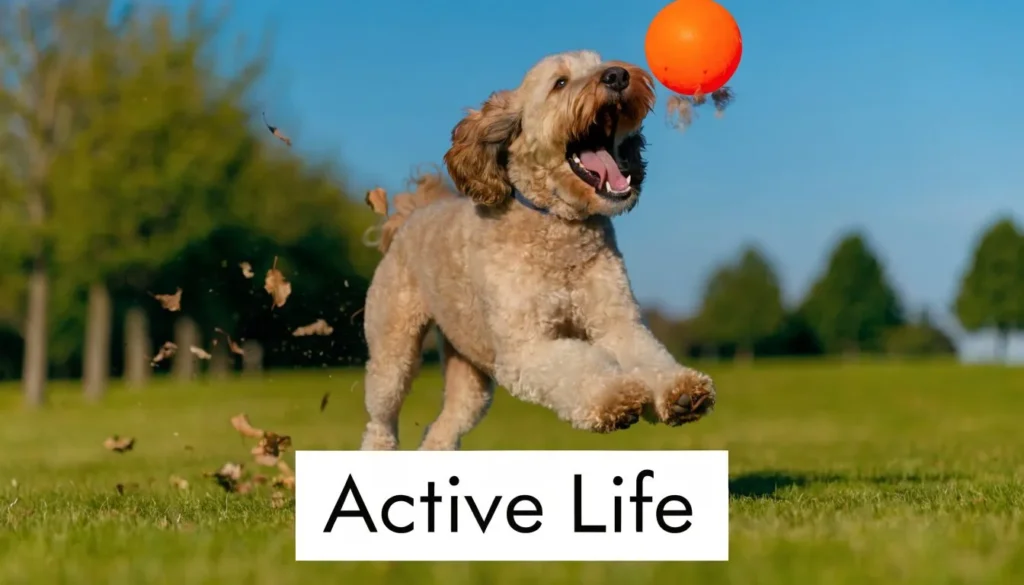
A simple neighborhood walk may be fine for some dogs on some days, but this mix often needs more purpose than that. Many enjoy brisk walks, hikes, retrieving games, structured play, or jogging with a conditioned adult owner.
The key word is structured. Random chaos in the yard usually doesn’t satisfy a dog bred from working stock as well as interactive activity does. Fetch with rules, recall games, and leash walks with training built in often do more for the dog’s brain.
Owners usually succeed when they think in categories, not one magic routine:
- Movement outside such as walking routes, trail time, or games of fetch
- Task-based play like carrying a toy, searching for treats, or practicing cues between throws
- Social exposure that teaches the dog how to settle around normal life instead of reacting to everything
Mental work prevents household problems
This mix often needs a job, even if that job is small. You don’t need a farm or a competition field. You do need regular chances for the dog to think.
Useful options include:
- Puzzle feeders and stuffed toys for meals instead of always using a bowl
- Basic obedience sessions with short practice bursts through the day
- Nose work games like hiding treats in boxes or around a room
- Place training so the dog learns how to settle while life happens
- Skill hobbies such as agility foundations or trick training
A dog that has to solve problems appropriately is less likely to make bad ones.
Owner mindset: Don’t ask, “How do I tire this dog out?” Ask, “What healthy work did I give this dog today?”
That shift changes everything. Exhaustion isn’t the only goal. Balance is.
A short video can help you picture the kind of active engagement this type of dog enjoys:
A realistic daily rhythm
Most owners do better with repeatable habits than grand plans. A shepherd poodle mix often thrives when the day has shape.
A practical routine may include morning movement, a midday chew or food puzzle, and a short evening training session. That doesn’t have to be complicated. Five focused minutes of recalls, stays, hand targets, or mat work can matter more than a lot of distracted activity.
Watch for signs your dog needs more support:
- Restless pacing after nominal exercise
- Demand barking for attention
- Chewing or digging that ramps up indoors or in the yard
- Overreacting to sights and sounds because the dog never fully settles
When those signs show up, the answer usually isn’t punishment first. It’s better structure, clearer outlets, and more consistent training.
Shepadoodle Grooming and Common Health Issues
Many people need the biggest reality check. The phrase “poodle mix” makes buyers assume low shedding, easy coat care, and cleaner living. A shepherd poodle mix may give you some of that. It may also give you the opposite.
The hypoallergenic myth needs context
A common doodle marketing line is that these dogs are hypoallergenic. That claim is too simple for this mix.
As noted in this discussion of Shepadoodle coat variation, shedding can vary a lot. Coats that lean more toward the German Shepherd side are usually straighter and tend to shed more. Coats that lean more toward the Poodle side may shed less, but they often require extensive grooming.
That trade-off catches people off guard. Less visible shedding doesn’t mean low maintenance. A curly or dense coat can trap loose hair, dirt, and tangles. If owners skip brushing, the dog may mat close to the skin.
What grooming really looks like
You should expect coat care to depend on the individual dog, not the label. Some need frequent brushing and combing to prevent tangles behind the ears, in the armpits, and around the legs. Others may shed more steadily and need more cleanup in the home.
If your household includes someone with allergies, don’t assume the mix name protects you. Spend time with the actual dog if possible. That matters more than marketing language. If you’re comparing this cross with other supposedly easier-coat options, this guide to low-shedding dog expectations and trade-offs can help frame the decision realistically.
Coat predictability is one of the weakest promises in the shepherd poodle mix world.
A few practical grooming questions to ask before bringing one home:
- What does the puppy’s current coat feel like right now, straight, wavy, or curly?
- What do the parent dogs’ coats look like and how much maintenance do they need?
- Are you willing to brush routinely, not just when the dog looks messy?
- Can your budget handle professional grooming if the coat turns out dense and high-maintenance?
Health and lifespan
Because this is a cross rather than a standardized breed, owners often hear broad claims that mixed dogs are automatically healthier. Real life is more nuanced. A shepherd poodle mix can inherit strengths from either side, but it can also inherit vulnerabilities from either side.
That’s why responsible breeding and veterinary follow-up matter. A mixed dog is not shielded from inherited issues by its mixed background.
PetMD describes the Shepadoodle as a cross of the German Shepherd and the Standard Poodle and notes that, without a formal breed standard, owners should expect variation in size, coat, and temperament. PetMD also lists parent-breed life expectancy as 12 to 14 years for German Shepherds and 10 to 18 years for Poodles, which places the expected lifespan of the mix within that same broad span in practical terms, as explained in PetMD’s Shepadoodle breed page.
Potential inherited concerns are usually discussed qualitatively by breeders and veterinarians because this mix can draw from both parent lines. That’s one more reason to ask detailed health questions and work with professionals who are transparent, not vague.
Your Top Shepadoodle Questions Answered
By the time readers reach this point, their questions get very practical. Not “Is this mix cute?” but “Can I live well with this dog?”
Quick answers that help with decisions
| Question | Answer |
|---|---|
| Are Shepadoodles good for first-time owners? | They can be, but only if the owner is ready for training, exercise, grooming, and a dog that needs mental engagement. This isn’t usually the easiest beginner dog. |
| Are they good with children? | They often can be affectionate family dogs, but success depends on socialization, supervision, and teaching both the dog and children how to interact calmly. |
| Do they get along with other pets? | Many can, especially when raised with other animals and introduced thoughtfully. Individual temperament still matters. |
| Can they live in an apartment? | Sometimes, but only if the owner consistently meets the dog’s physical and mental needs. Space matters less than routine, enrichment, and the dog’s individual temperament. |
| Do they shed? | Some do quite a bit, while others shed less but need much more grooming. The mix name doesn’t guarantee a specific coat outcome. |
| Are they protective? | Some are watchful and loyal, especially if they lean shepherd-like. Early training and socialization help keep that trait manageable and appropriate. |
What about cost?
The biggest mistake here is asking for an average price and treating that number like the whole story. Cost depends on whether you adopt or buy from a breeder, where you live, and what support the dog needs after coming home.
Adoption usually has a different cost structure than buying from a breeder. Breeder prices can vary widely, and ongoing expenses often matter more anyway. For this mix, actual long-term costs commonly show up in:
- Training support, especially early on
- Grooming, if the coat turns out curlier or denser
- Quality food and routine vet care
- Equipment and enrichment, such as crates, brushes, puzzle feeders, long lines, and chew items
What matters most before saying yes
A shepherd poodle mix usually works best when the home is honest about trade-offs. If you want a highly engaged companion and you’re willing to meet that dog halfway, this cross can be rewarding. If you want predictability above all else, another breed or mix may fit better.
Ask yourself these final questions:
- Can I live with uncertainty in coat, size, and temperament?
- Do I have time to train, not just feed and walk?
- Am I choosing this dog for reality, not for the doodle fantasy?
If your answers are thoughtful and realistic, you’re already starting from the right place.
If you enjoy clear, practical guides like this one, visit maxijournal.com for more approachable articles on pets and everyday decision-making.
Discover more from Maxi Journal
Subscribe to get the latest posts sent to your email.