Finding bald patches on your dog or cat, then watching them scratch until they can’t settle, is the kind of problem that sends people searching for mange home remedies late at night. The urgency is understandable. Mange looks miserable, and some forms can spread quickly or become complicated by skin infection. Most owners want to do something right away, even before they can get a veterinary appointment.
That instinct helps when it leads to safe support. It hurts when it leads to folk cures that burn skin, delay treatment, or give mites more time to spread. Mange is caused by microscopic mites, and the hard truth is that most popular kitchen-cabinet fixes don’t reliably kill them.
The useful way to think about at-home care is simple. Some measures are supportive and low-risk. Some are old-school but vet-used. Some are experimental and not appropriate for casual home use. And some are flatly bad ideas.
This guide sorts common mange home remedies by risk, likely benefit, and when they cross the line from “worth discussing with your vet” to “skip it.” If your pet has relentless itching, hair loss, crusting, pain, or sores, keep reading, but plan on a veterinary exam. Home care can help comfort and hygiene. Definitive treatment usually comes from prescription therapy.
1. Apple Cider Vinegar Baths and Rinses
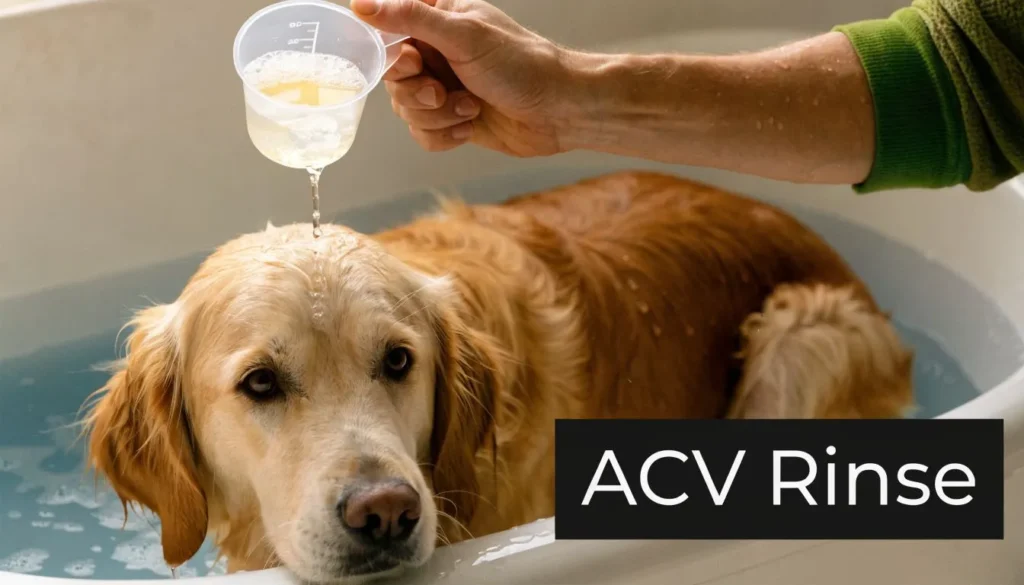
Apple cider vinegar is one of the most common mange home remedies people try first. I understand why. It’s cheap, easy to find, and familiar from skin-care advice aimed at humans. But for mange itself, it doesn’t have the kind of evidence or veterinary support that would make me call it an effective mite treatment.
The biggest issue is that irritated skin and vinegar don’t mix well. A pet with active mange often has raw, inflamed, or even broken skin from scratching. Vinegar can sting badly on those areas, which turns a “natural” rinse into a stress event for the animal.
Risk versus benefit
If you strip away the hype, the possible benefit is limited to mild surface cleansing and maybe a temporary sense that the coat feels cleaner. That’s not nothing, but it isn’t the same as killing mites. The risk is skin irritation, especially if the pet already has sores, crusts, or secondary infection.
Apple cider vinegar may feel like action, but it isn’t a substitute for antiparasitic treatment.
A realistic home scenario is a dog with light dandruff and mild itch where the owner isn’t yet sure what’s going on. In that case, a very diluted rinse might be tolerated by some pets. But once you’re dealing with visible hair loss, scabs, or intense scratching, vinegar usually becomes more irritating than helpful.
- Possible upside: Some owners use diluted rinses as a grooming step when skin isn’t broken.
- Main downside: It can sting inflamed skin and may make a pet resist future bathing.
- Best use case: Only after your vet says the skin barrier is intact and the rinse won’t interfere with treatment.
If you’re set on asking about it, ask your veterinarian first and keep the goal modest. Think “coat rinse,” not “mange cure.”
2. Coconut Oil Treatment
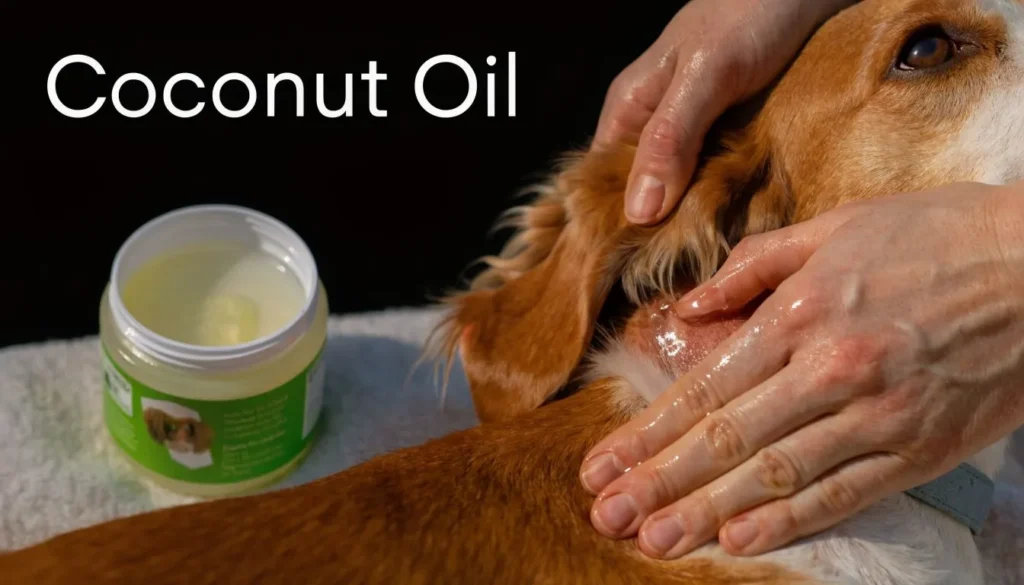
A dog with mange often feels rough, flaky, and uncomfortable, so it is easy to see why owners reach for coconut oil first. The problem is that skin relief and mite control are not the same job. Coconut oil can sometimes help dry skin feel less tight, but it does not replace diagnosis or antiparasitic treatment.
Veterinary guidance from the ASPCA on mange in dogs supports the larger point here. Mange needs proper identification and treatment, because different mites and different levels of skin damage call for different care. That places coconut oil in the supportive-care category, not the treatment category.
Risk versus benefit
Used sparingly on dry, intact skin, coconut oil may reduce scaling and improve comfort for a pet that is already under veterinary care. That is the realistic upside.
The downside is practical. A thick layer can mat fur, collect dirt, and hide changes in the skin that owners and veterinarians need to monitor. If the skin is infected, oozing, or heavily crusted, oil can make home care messier without addressing the underlying problem. Pets that lick constantly create another trade-off, because the product may disappear from the skin quickly and can upset the stomach.
I am most comfortable with coconut oil only after a diagnosis is established and the vet has confirmed the skin is suitable for a light moisturizer.
Practical rule: Use coconut oil only as limited comfort care on dry, intact skin. Do not use it as a mite treatment.
A common safe-use scenario is a dog already on prescription therapy that still has a few dry patches on the elbows, ear edges, or trunk. In that case, a very thin application may be reasonable if licking is minimal. A poor-use scenario is coating widespread irritated skin because the pet is still scratching hard and losing hair. That delays proper care and makes the skin harder to assess.
- Possible benefit: Temporary moisturizing for dry, non-open areas.
- Main limitation: No reliable mite-killing effect.
- Main risk: Greasy buildup, debris sticking to the coat, and problems if the pet licks it off.
- Best use case: Only as a vet-approved add-on after diagnosis and treatment have started.
Coconut oil has a narrow role. It may soothe. It does not cure mange.
3. Sulfur Powder and Lime Sulfur Dips
A pet with patchy hair loss, crusting, and relentless itching often pushes owners toward whatever home fix sounds strongest. Lime sulfur is different from the usual internet suggestions. It has a real place in mange treatment, but it only works well when the diagnosis is correct and the dip is used exactly as directed.
Veterinarians have relied on sulfur-based therapy for mange for many years. Historical veterinary references describe sulfur preparations as longstanding treatments for parasitic skin disease, long before newer drug options were widely available, as noted in the University of Pennsylvania’s history of mange treatment. Current guidance from Merck is more practical for owners. It states that lime sulfur dips at 7-day intervals are highly effective and safe for young animals in mange treatment.
Why this remedy deserves a different label
Lime sulfur belongs in the vet-approved category, not the comfort-care category. That distinction matters. Apple cider vinegar, oils, and pastes may change how the skin feels for a short time. Lime sulfur is used because it can help control the underlying mite problem.
The trade-offs are real. The smell is harsh. It can stain fabrics, collars, and light-colored surfaces. Application takes time, and poor coverage reduces the value of every session. In practice, the failure point is usually technique. Owners often treat the spots they can see and miss the less obvious affected areas, especially around skin folds, feet, tail base, and ear margins.
A common appropriate-use scenario is a young dog or shelter pet sent home with a veterinary diagnosis, a dip schedule, and bathing instructions. In that setting, lime sulfur can be a reasonable at-home treatment because the home part is following a medical plan, not improvising.
Before the video, one practical point matters. Coverage determines whether a dip has a fair chance to work.
Risk-benefit summary
- Benefit: One of the few remedies on this list with established veterinary use against mange mites.
- Limitation: Requires full-body application, repeat treatments, and close adherence to instructions.
- Risks: Eye irritation, staining, strong odor, and mistakes in dilution or application if owners improvise.
- Best use case: Vet-diagnosed mange, especially when a veterinarian has specifically prescribed or approved lime sulfur dips.
- Poor use case: Undiagnosed itching, broken skin that may need additional treatment, or households unable to handle repeated bathing and careful application.
Use lime sulfur as medicine. If the pet seems painful, develops odor or pus, worsens after treatment, or no one is certain which type of mange is involved, home dipping should stop until a veterinarian reassesses the case.
4. Honey and Oatmeal Paste
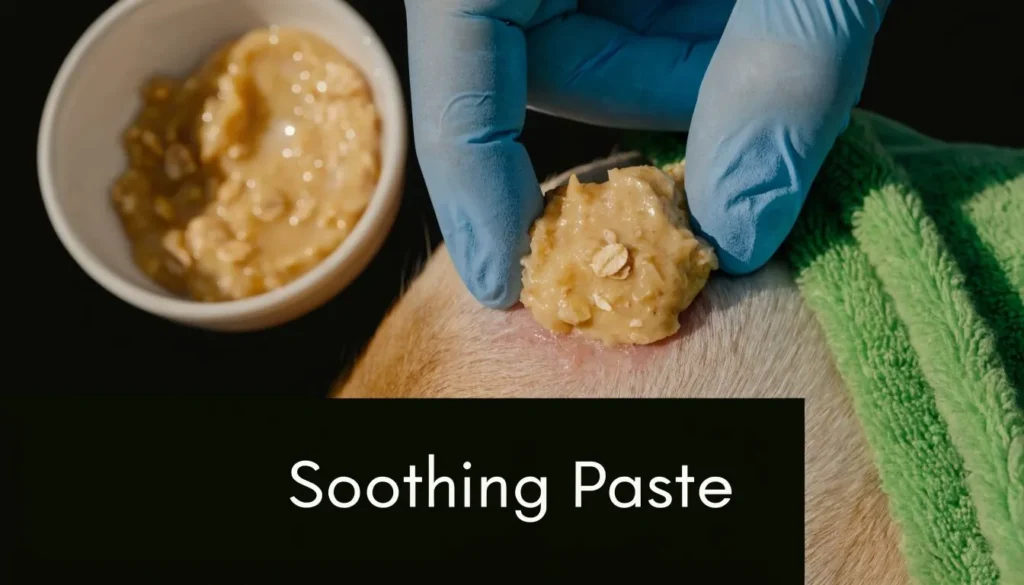
Honey and oatmeal can soothe irritated skin, but they don’t belong in the mite-killing category. This combination makes more sense for comfort than cure. If a pet’s skin is dry, itchy, and angry, oatmeal may calm the surface, and honey may help protect small irritated spots. That’s useful, but only when the skin isn’t severely infected and the pet can’t lick it off immediately.
The practical problem is mess and misuse. Sticky topicals on itchy pets tend to end up on furniture, in the coat, and in the mouth.
When this can be reasonable
Think of a dog who has already been diagnosed, started on appropriate medicine, and still seems miserable from surface irritation. In that setting, a veterinarian may approve a soothing wash or short-contact topical designed to calm the skin. Honey and oatmeal fit that logic better than they fit the “natural cure” marketing language you often see online.
They fit especially poorly for cats or for dogs that obsessively lick. The more a pet licks, the less useful any paste becomes.
- Potential benefit: Temporary itch relief and surface soothing.
- Big limitation: Doesn’t address the cause of mange.
- Watch closely for: Increased redness, damp skin, or signs the product is trapping moisture in folds or dense coat.
A realistic home example is a short-coated dog with a few itchy, non-open patches after starting medication. That’s very different from a dog with widespread crusting, pus, odor, or pain. The second dog needs veterinary recheck, not a pantry paste.
Keep “soothing” and “treating” separate in your mind. Mange care gets safer when you don’t confuse the two.
5. Neem Oil Treatment
Neem is where the conversation gets more nuanced. Unlike many folk remedies, neem has at least some scientific interest behind it. A 2023 review of plant-derived acaricides reported that in pigs, 25% aqueous neem fruit extract performed better against mites than a commercial 12.5% amitraz-based acaricide. That finding is interesting. It does not mean a bottle of neem oil from a pet store or health shop is a proven at-home mange cure for dogs or cats.
That’s the key trade-off. Neem is more credible than internet myths, but still not a replacement for veterinary diagnosis and approved medication.
How to think about neem responsibly
The best way to view neem is as an experimental or complementary option to discuss with a veterinarian, not as a first-line DIY answer. Product quality varies. Concentration varies. Skin tolerance varies. And a formulation used in a study isn’t automatically the same thing as whatever a consumer buys online.
A real-world example is the owner who wants a lower-chemical approach and asks whether a neem shampoo can be added to a vet’s treatment plan. That’s a reasonable conversation. An unreasonable version is trying neem alone on a pet with advancing hair loss and severe itch.
- Reasonable role: Supplementary skin care only if your veterinarian approves.
- Risk: Delayed treatment if owners treat research on plant compounds as proof for household use.
- Hard stop: Don’t apply concentrated oils to raw, cracked, or heavily inflamed skin without veterinary guidance.
Neem isn’t nonsense. It just isn’t enough on its own.
6. Dietary Supplementation with Omega Fatty Acids
Omega fatty acids are often oversold in mange discussions. They don’t kill mites, and they won’t clear an active infestation. What they can do is support skin barrier recovery and overall coat condition while the actual antiparasitic treatment does its job.
That makes them useful, but only in the right lane.
Best use as supportive care
A pet with mange often has damaged skin long after the mites are being treated. Hair has to regrow. Dryness has to settle. Scratching may linger for a while because inflamed skin doesn’t calm down overnight. Nutritional support may help as part of a broader plan.
I like omega supplementation best in two scenarios. The first is the pet recovering from diagnosed mange with lingering flaky skin. The second is the pet whose veterinarian has identified broader skin-health support as part of ongoing care.
- Likely benefit: Support for coat quality and skin recovery.
- What it won’t do: Eliminate mites or replace prescribed medicine.
- Worth discussing with your vet: Product type, dose, and whether your pet’s diet already supplies enough fat.
A common example is the older dog whose coat quality has slipped after a bad skin episode. Another is a rescue dog coming out of treatment with visibly dry skin that needs time and nutritional support to normalize.
This category matters because owners often search “mange home remedies” hoping for one product that fixes everything. There usually isn’t one. Mange tends to improve fastest when you separate treatment into three jobs: kill mites, control itch and infection, and help the skin recover. Omega support belongs only in the third job.
7. Borax and Peroxide Solution Rinse
A dog with red, crusted skin is scratching nonstop, and an online post promises a cheap borax and peroxide rinse that people can mix at home. That is the point where many owners lose time on a remedy with a poor safety margin and no reliable place in standard mange care.
I place this one in the risky-fad category. The appeal is obvious. The ingredients are inexpensive, easy to buy, and described online in a way that sounds technical enough to feel credible. In practice, the trade-off is poor. You take on irritation risk, licking risk, and the risk of delaying treatment that targets mites.
Why this rinse is a poor bet
Hydrogen peroxide can irritate damaged skin. Borax is also not something I want sitting on inflamed skin, around the mouth, or on paws that will be licked clean. Mange often leaves the skin raw, cracked, and vulnerable. A homemade rinse applied to that kind of surface can make a bad situation harder to control.
There is also a diagnosis problem here. Mange is not one single look-alike rash. Sarcoptic mange, demodectic mange, flea allergy, ringworm, bacterial skin infection, and yeast overgrowth can overlap. If an owner starts with a harsh homemade rinse, the pet may arrive at the clinic days later with more irritation and less clear exam findings.
The broader veterinary message is consistent. Folk or unsupported remedies for mange can waste time and sometimes cause harm. The Merck Veterinary Manual advises that effective treatment depends on identifying the type of mite and using appropriate veterinary therapy rather than relying on unproven home treatment approaches: Merck Veterinary Manual guidance on mange diagnosis and treatment.
A remedy that sounds practical is not the same as a remedy that is safe on diseased skin.
I have the strongest concerns in pets with open sores, facial lesions, heavy self-grooming, or households with other animals that lick each other. In those cases, supervision has to be nearly perfect, and home care rarely is.
- Possible upside: Low cost and easy to mix.
- Main downside: Unclear benefit, real irritation risk, and delayed diagnosis.
- My recommendation: Avoid it. Put the effort into a vet exam, skin scraping or other testing, prescribed mite treatment, and basic nursing care such as washing bedding and limiting spread when your veterinarian advises it.
This remedy does not earn a place beside vet-supported options or gentle supportive care. It belongs in the category of ideas that spread online faster than they hold up in practice.
Mange Home Remedies, 7-Method Comparison
A side-by-side comparison only helps if it reflects what these remedies can and cannot do. For mange, the main question is simple: does this method kill mites, support the skin while proper treatment is underway, or add risk without enough benefit to justify trying it?
| Remedy | Practical difficulty | What it may realistically do | Where it fits | Main concern | Bottom line |
|---|---|---|---|---|---|
| Apple Cider Vinegar Baths and Rinses | Low to moderate | May sting inflamed skin. No reliable mite-killing effect. | Generally not recommended for mange treatment | Irritation, worsened discomfort, delayed proper care | Poor risk-benefit choice |
| Coconut Oil Treatment | Low | Can soften dry skin and reduce friction on crusted areas. Does not treat the mite problem. | Supportive care only, and only if licking can be controlled | Greasy coat, licking, stomach upset if ingested in quantity | Limited comfort measure, not a treatment |
| Sulfur Powder and Lime Sulfur Dips | Moderate to high | Lime sulfur is a recognized veterinary option for some mange cases. It can help kill mites when used correctly. | Vet-directed treatment used at home or in clinic | Messy application, strong odor, staining, misuse risk | One of the few methods here with real treatment value |
| Honey and Oatmeal Paste | Low | May briefly soothe irritated skin. Does not kill mites. | Occasional comfort care on small areas, if a veterinarian says the skin is suitable | Sticky residue, licking, trapping debris on damaged skin | Comfort only, with narrow use |
| Neem Oil Treatment | Moderate | Uncertain benefit for mange. May irritate sensitive skin if diluted poorly or overused. | Not a first-choice option | Skin irritation, ingestion risk, variable product quality | Weak evidence and too many variables |
| Dietary Supplementation with Omega Fatty Acids | Low | Can support skin barrier recovery and help reduce inflammation over time. Does not replace antiparasitic treatment. | Useful adjunct during recovery or chronic skin support | Slow payoff, product quality varies, oversold as a cure | Good supportive tool, not a standalone fix |
| Borax and Peroxide Solution Rinse | Moderate | No dependable, safe role in mange care. Can damage already inflamed skin. | Avoid | Chemical irritation, toxicity if licked, delayed diagnosis and treatment | High risk, poor choice |
The pattern is clear. Only lime sulfur dips belong in the “treats the cause” category, and even then they work best under veterinary direction. Omega fatty acids and, in selected cases, simple skin-soothing care can support recovery. The rest fall into the category of low-value or risky DIY ideas.
If I were ranking these by real-world use, the order would be: veterinary mite treatment first, vet-approved lime sulfur if prescribed, supportive omega fatty acids, then cautious skin comfort measures if the pet is not likely to lick or react badly. Vinegar rinses, neem experiments, and borax-peroxide mixes sit at the bottom because the downside is more predictable than the benefit.
That is the practical test owners should use. If a remedy cannot reliably kill mites and also carries a meaningful chance of irritating damaged skin, it should not compete with diagnosis and targeted treatment.
Beyond Remedies Your Next Steps for a Healthy Pet
The biggest mistake people make with mange home remedies is treating all “home care” as if it belongs in one bucket. It doesn’t. There are veterinary treatments you may use at home, like prescribed dips. There are supportive measures that can make a pet more comfortable, like gentle skin care or nutritional support. Then there are myths and risky DIY mixtures that cost time and can make the skin worse.
That distinction matters because mange isn’t just a cosmetic issue. It can bring relentless itching, hair loss, pain, and secondary bacterial infection. That’s one reason consumer veterinary guidance says affected animals should be evaluated by a veterinarian for targeted therapy rather than treated at home with folk remedies, as noted earlier.
Start with the practical basics. Wash bedding and soft surfaces your pet uses. Clean grooming tools. Follow your veterinarian’s instructions about isolating pets, treating housemates, and repeating medications or dips on schedule. Good hygiene doesn’t kill all mites by itself, but it lowers confusion and helps prevent reinfestation or spread in the home.
Watch the skin closely during treatment. Improvement usually looks like less frantic scratching, fewer new bald spots, less redness, and skin that starts to look drier in a good way rather than raw and wet. Worsening looks like spreading lesions, crusting, odor, pain, pus, or a pet who can’t rest because the itch is so intense.
Call your veterinarian promptly if your pet is getting worse, if the diagnosis was never confirmed, or if anyone in the house is worried about a contagious mite problem. Also call if your pet is very young, elderly, immunocompromised, or already dealing with another illness. These cases can unravel faster.
If I had to rank the options in this article by confidence, lime sulfur sits at the top because it has real veterinary footing. Supportive care such as omega supplementation or simple skin-soothing measures can have a place after diagnosis. Apple cider vinegar, borax-peroxide mixes, and other internet fixes don’t deserve the same trust. Neem is interesting, but still belongs in a veterinarian-led conversation, not a self-directed experiment.
The goal isn’t to do everything. It’s to do the right things in the right order. Confirm the cause. Start effective treatment. Use low-risk support where it helps. Skip the remedies that only feel proactive.
maxijournal.com publishes approachable, carefully written coverage across pets, health, science, technology, culture, travel, sports, business, fashion, games, and entertainment. If you want more practical guides like this, or you’re interested in contributing your own thoughtful writing, visit maxijournal.com.
Discover more from Maxi Journal
Subscribe to get the latest posts sent to your email.