You wake up with a symptom that doesn’t fit your normal pattern. Maybe it’s a cough that should’ve gone away by now. Maybe it’s a new pain, a fever, dizziness, or just the uneasy sense that something is off. People don’t struggle because they ignore their body. They struggle because they don’t know how to sort “watch this at home” from “call today” from “go now.”
That uncertainty is common, even in a system where preventive care is already part of routine life for many people. In the United States, 85.2% of adults reported seeing a doctor or other health professional in the past year in 2024, according to the CDC physician visits data. Even so, there isn’t one perfect schedule for every healthy person. Some guidance suggests yearly visits for adults over 50, while some healthy adults under 50 may need checkups less often.
The more useful question isn’t only “How often should I go?” It’s how to decide when a symptom changes the plan.
That decision gets easier when you stop thinking in terms of giant symptom lists and start using a simple triage framework. Ask three things. How severe is it right now? How long has it lasted? What makes this person higher risk than average? That same logic also helps when a doctor orders tests. If you’ve ever wondered what is a comprehensive metabolic panel, for example, it’s one of several tools clinicians may use after symptoms or routine screening suggest a closer look is needed.
You don’t need to diagnose yourself at home. You just need a calm way to judge the next step.
That Unsettling Feeling When Something Is Not Right
A lot of health decisions begin in very ordinary moments. You’re standing in the kitchen, wondering whether that cough is just lingering. You’re checking your child’s temperature for the third day. You’re noticing your parent seems more tired, less steady, less like themselves. None of these situations comes with a flashing sign telling you what to do.
What helps is changing the question from “Is this serious?” to “What pattern is this following?”
Start with the pattern, not the fear
Most short-lived problems improve in a predictable way. A minor viral illness often feels rough, then slowly eases. A strained muscle usually hurts, then becomes more manageable with time and rest. When symptoms aren’t following that expected path, that’s when clinicians pay closer attention.
Three clues matter most:
- Severity right now means how intense the symptom is and whether it’s affecting breathing, movement, thinking, hydration, or basic function.
- Duration means whether the problem is lasting longer than you would reasonably expect.
- Personal risk means age, pregnancy, chronic illness, immune problems, or a recent change that makes a “small” symptom less small.
Practical rule: If a symptom is severe, rapidly worsening, or changing how the body functions, don’t keep treating it like a minor inconvenience.
Think in levels of concern
It helps to picture symptoms in three buckets.
| Level of concern | What it usually means | Next step |
|---|---|---|
| Watchful waiting | Mild, improving, no red flags | Home care and monitor |
| Medical review soon | Persistent, worsening, unusual, or recurrent | Contact a clinician |
| Urgent or emergency | Severe, sudden, or affecting breathing, circulation, brain function, or hydration | Seek prompt in-person care |
This framework puts you back in control. You’re not trying to become your own doctor. You’re trying to make a safe decision with the information you have.
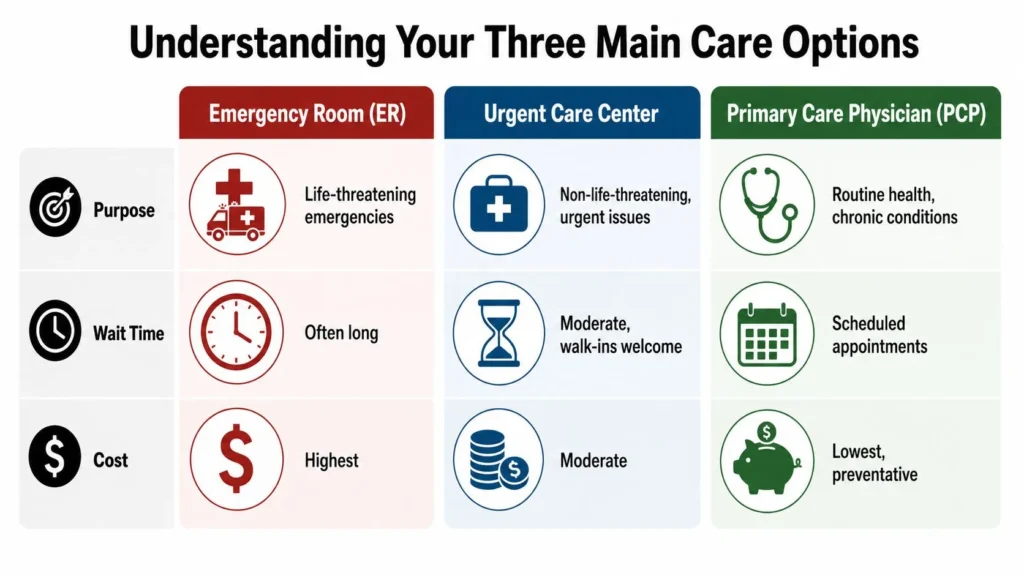
Understanding Your Three Main Care Options
When people aren’t sure where to go, they often choose between waiting too long and going to the wrong place. It helps to think of the health system the way you’d think about car trouble.
A blown engine on the roadside needs a tow truck. A flat tire needs quick service. Routine maintenance belongs with the mechanic who knows your car. Health care works much the same way.
When the emergency room is the right place
The Emergency Room is for problems that may threaten life, limb, brain function, or a major organ if you wait. That’s where you go for sudden severe chest pain, serious breathing trouble, stroke-like symptoms, severe dehydration, major bleeding, or severe pain with a concerning cause.
The ER is built for rapid testing, imaging, monitoring, and treatment when the body may be unstable.
When urgent care makes sense
Urgent care fits the middle ground. You’re sick enough that waiting days isn’t ideal, but the situation doesn’t look life-threatening. This might include a painful ear infection, a minor injury, a bad sore throat, a urinary symptom, or a cough that needs assessment but isn’t causing severe breathing distress.
Urgent care can be useful when:
- You need same-day help and your regular clinic can’t see you.
- You may need an exam or simple testing such as a throat swab, basic X-ray, or urine test.
- Your symptoms are acute but stable, meaning you’re uncomfortable but not in danger.
Here is a quick visual overview before we go deeper.
Why primary care is different
Your primary care clinician is the best place for prevention, medication review, recurring symptoms, chronic conditions, and “something isn’t right but I’m not sure why” visits. They can compare today’s problem with your baseline, which matters more than people realize.
A new headache in a person with a long migraine history may be handled differently than a first-ever severe headache in someone without that history. A primary care doctor is also the person most likely to connect the dots among fatigue, sleep, blood pressure, weight change, medications, and stress.
The right site of care isn’t just about speed. It’s about matching the symptom to the place best equipped to judge it.
A simple mental flowchart
Use this fast check:
- Could this threaten life or major function if I wait? Go to the ER.
- Do I need help today, but I seem stable? Consider urgent care.
- Is this ongoing, preventive, medication-related, or non-urgent? Start with primary care.
Choosing the right setting saves time, stress, and often unnecessary escalation. More importantly, it gets you to the team most suited to the problem in front of you.
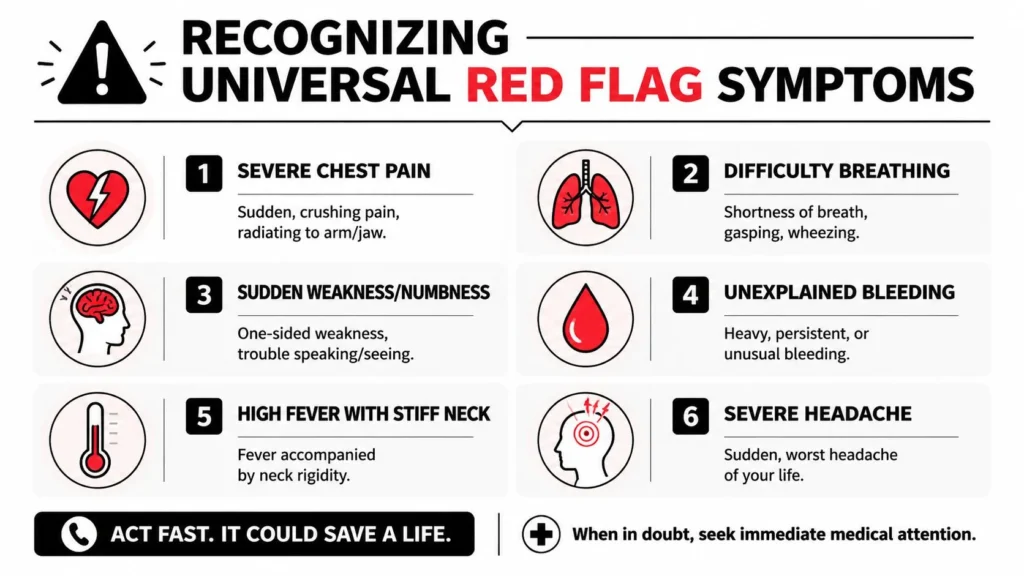
Recognizing Universal Red Flag Symptoms
Some symptoms deserve less debate. They may not always turn out to be dangerous, but they are concerning enough that waiting at home is the wrong move.
Seek emergency care immediately
These symptoms call for prompt in-person evaluation, often in an emergency setting:
- Chest pain that is persistent or severe especially if it feels like pressure, comes with sweating, nausea, or pain spreading to the arm, back, or jaw.
- Shortness of breath or breathing difficulty including gasping, struggling to speak, or a clear drop in normal breathing comfort.
- Sudden weakness, numbness, confusion, or trouble speaking especially on one side of the body.
- Black or bloody stools because they can signal bleeding in the digestive tract.
- Persistent vomiting with signs of dehydration such as inability to keep fluids down, weakness, dizziness, or decreased urination.
- Sudden severe pain that is intense, unexplained, or rapidly worsening.
Medical guidance also treats changes in objective signs seriously. If a person looks pale, faint, confused, unusually sleepy, or clearly unstable, that matters even if you don’t know the diagnosis yet.
Schedule a doctor’s visit soon
Other symptoms may not need an ambulance, but they shouldn’t be brushed aside if they linger or worsen. The Merck Manual guidance on when to see a doctor gives helpful thresholds:
- A cough lasting more than 2 or 3 weeks
- A fever lasting more than 3 days
- A fever above 103°F (39.4°C)
- Symptoms lasting more than 7 to 10 days without improvement
- Symptoms that are getting worse instead of better
Those time markers are useful because they turn vague worry into action. A sore throat for a day is one thing. A symptom that hangs on, changes character, or keeps returning deserves a proper review.
Watch for the direction of travel: a mild symptom that’s clearly improving is different from one that’s stalled, spreading, or becoming harder to manage.
Red flags that people often underestimate
A few symptoms confuse people because they can seem minor at first:
- Unexplained weight loss
- Recurring pain that keeps coming back after improving
- Ongoing fatigue that doesn’t fit your usual pattern
- New neurologic symptoms, even if they come and go
- Fever plus stiff neck
- A severe headache that feels sudden or very unusual
Environmental exposure matters too. If cold exposure is part of the story, this guide to signs and treatment of hypothermia can help you recognize when low body temperature becomes a medical issue rather than simple discomfort.
Sometimes poor sleep clouds the picture because everything feels worse when you’re run down. But sleep loss shouldn’t become an excuse to dismiss symptoms that are persistent, progressive, or accompanied by warning signs. If sleep itself is becoming part of the problem, practical changes in this guide on how to improve sleep quality may help you separate exhaustion from illness.
Special Health Guidance for Your Family
The same symptom can mean very different things in different people. A low appetite in a healthy younger adult may be a nuisance. In an older adult, it may be the first clue that something systemic is wrong. Mild dizziness in one person may be manageable. In a pregnant patient, it may deserve quicker attention if it comes with other symptoms.

Children and infants
Children can worsen faster than adults because they have less reserve. They also can’t always explain what they’re feeling, so behavior becomes part of the assessment.
Pay attention to:
- Breathing changes such as fast breathing, working harder to breathe, or unusual sleepiness
- Poor fluid intake or signs of dehydration
- Persistent fever, especially if the child looks ill, isn’t acting normally, or isn’t improving
- Behavior changes such as limpness, confusion, unusual irritability, or difficult-to-wake sleepiness
In children, “not acting like themselves” is useful information. Parents often notice that before a thermometer or test tells the full story.
Older adults
Older adults may show illness in less obvious ways. Instead of dramatic pain or fever, you may see confusion, weakness, falls, poor appetite, or a sudden drop in function. A person who normally manages stairs, meals, and medications but suddenly can’t do those things needs attention.
Look closely at:
- New confusion or sudden mental changes
- Falls or worsening balance
- Marked weakness
- Reduced eating or drinking
- Symptoms after a recent illness that aren’t following the expected course
When a person’s usual baseline changes quickly, that change itself is a symptom.
Pregnancy and fertility-related concerns
During pregnancy, it makes sense to use a lower threshold for calling a clinician when symptoms are new, intense, or paired with bleeding, severe pain, shortness of breath, dizziness, severe headache, or reduced normal well-being. Pregnancy involves two patients in practical terms, and body systems change in ways that can make symptoms harder to interpret at home.
Questions about timing aren’t limited to pregnancy itself. Many families also struggle with when to move from waiting to evaluation during the fertility journey. If that’s part of your situation, this resource on understanding male fertility timelines may help frame when specialist input makes sense.
Use a lower threshold when risk is higher
Even outside these groups, some people should call sooner than others. That includes people with chronic lung disease, heart disease, diabetes, immune suppression, cancer history, or recent major surgery. In those situations, the safest question is not “Can I tough this out?” It’s “Is this symptom outside my usual pattern enough that I need another layer of review?”
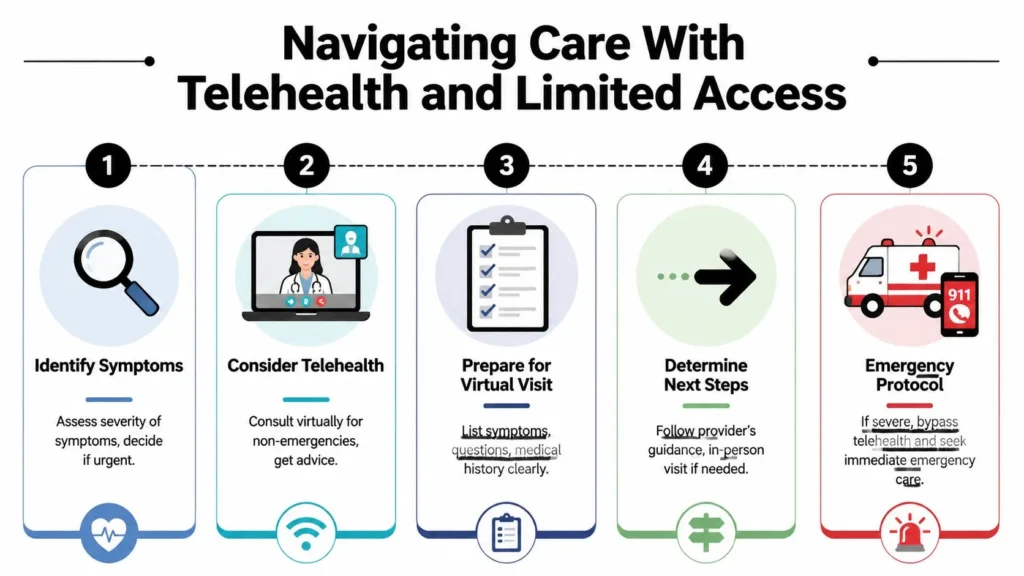
Navigating Care With Telehealth and Limited Access
A lot of advice about when to see a doctor assumes you already have one, can get an appointment quickly, and can travel easily. Many people can’t. Access problems are real, and they’re not just about convenience. Policy research suggests that even targeted efforts to increase doctor supply in underserved areas produce only modest gains, about 0.65 more doctors per county, as described in this analysis of physician practice in underserved areas.
That means practical triage has to include how you access care, not just whether you need it.
When telehealth is a smart first step
Telehealth works well when you need professional judgment but not necessarily hands-on examination right away.
Good telehealth uses include:
- Medication questions such as side effects, refill issues, or whether a symptom may be treatment-related
- Mild to moderate symptoms that are persistent but not severe, like fatigue, sinus symptoms, skin concerns, or a lingering cough without major breathing distress
- Follow-up decisions when you’re not sure whether today’s symptom needs urgent care, home care, or a scheduled office visit
A telehealth clinician can often help you sort the next move. They may recommend home care, prescribe treatment when appropriate, or tell you clearly that you need in-person evaluation.
When telehealth is not enough
Virtual care has limits. A clinician can’t listen to lungs directly through your phone, feel an abdomen, or measure certain changes the way an in-person team can.
Choose in-person care sooner if:
- The symptom is severe or fast-changing
- You may need an exam, imaging, or procedure
- You’re getting weaker, dizzier, more dehydrated, or more short of breath
- The symptom keeps recurring after short-lived improvement
Telehealth is best used as a triage doorway, not as a substitute for emergency care.
If you don’t have a regular doctor
You still have options. Start with the resource that gives you the fastest safe assessment:
- Telehealth visit first for non-emergency symptoms that need guidance.
- Urgent care clinic if you likely need an exam the same day.
- Community health clinic or local primary care office for ongoing issues, medication management, and continuity.
- Nurse advice line through your insurance or local health system if you’re stuck between watchful waiting and in-person care.
- Emergency care if the symptom meets any red-flag criteria.
When access is limited, the goal isn’t perfect efficiency. It’s safe progression. Get the first qualified set of eyes on the problem, then follow the next step they recommend.
How to Prepare for a Productive Doctor Visit
Once you’ve decided to seek care, preparation makes the visit better. Doctors and nurses can help more quickly when the story is clear.
Bring the symptom story in a simple format
Write down the basics before the appointment:
- When it started and whether it began suddenly or gradually
- What it feels like such as sharp, dull, pressure, burning, cramping, spinning, or heavy
- What has changed including worse pain, spreading symptoms, or new associated problems
- What makes it better or worse including food, movement, rest, time of day, or medication
- What you’ve already tried such as acetaminophen, ibuprofen, fluids, heat, ice, or rest
A brief timeline is often more useful than a long story. “Started Monday, fever by Tuesday, cough worse at night, now short of breath on stairs” helps a clinician quickly organize the problem.
Bring the information doctors actually need
Don’t rely on memory if you’re stressed. Make a list of:
- Prescription medicines
- Over-the-counter products
- Vitamins and supplements
- Allergies or past medication reactions
- Relevant medical history
- Recent test results if you have them
If you’re trying to read up before the visit, use reliable health references rather than random search results. This guide on how to find credible sources for research can help you sort trustworthy information from noise.
Ask direct questions
You don’t need perfect medical language. Ask the questions that affect your next decision:
- What do you think is most likely going on?
- What warning signs should make me seek help sooner?
- If this doesn’t improve, when should I follow up?
- Do I need tests, or is watchful waiting reasonable?
- What change would make you worry more?
Good visits don’t depend on sounding impressive. They depend on giving a clean history and leaving with a clear plan.
Becoming Your Own Best Health Advocate
Knowing when to see a doctor comes down to a few steady habits. Look at severity, not just discomfort. Track duration, not just the first day. Notice whether the symptom is improving, stalling, or worsening. Factor in personal risk, because age, pregnancy, chronic illness, and baseline function change the threshold for concern.
Trust patterns. Trust changes. Trust the uneasy feeling that comes from seeing a symptom behave in a way that doesn’t fit the usual script.
You don’t need to panic over every cough or ache. You also don’t need to talk yourself out of care when warning signs are piling up. The safest middle ground is informed action.
For ongoing health reading, stick to dependable organizations such as the CDC, NIH, major health systems, and established medical references. If keeping notes helps you think more clearly, a personal log can make patterns easier to spot over time. A simple health and wellness journal can help you track symptoms, questions, medications, and follow-up plans in one place.
When in doubt, ask for help sooner. Reassessment is not overreacting. It’s part of good care.
If you enjoy clear, practical articles on health and everyday decision-making, visit maxijournal.com. It publishes approachable writing across health, science, technology, education, business, travel, arts, entertainment, and more for readers who want useful information without the jargon.
Discover more from Maxi Journal
Subscribe to get the latest posts sent to your email.