Rock never left the market. It changed the battlefield. In the U.S., on-demand streaming generated about 84% of total recorded-music revenue in 2023, according to the RIAA discussion cited here. That matters because any serious list of the best new rock bands now has to read streaming behavior, playlist circulation, scene identity, and live reputation together, not treat radio or album sales as the only signs of life.
That shift also explains why modern discovery feels messier and more interesting than old genre gatekeeping. Mainstream coverage of “new” rock often mixes genuinely emerging acts with artists already well into their careers, as shown by uDiscover Music’s broad “Best New Rock Bands” framing. So the useful question isn’t just who’s good. It’s what each band reveals about where rock is going.
This list treats ten acts as case studies in the genre’s current evolution. Some revive hard-rock spectacle. Some turn post-punk into literary reportage. Some dissolve the borders between metal, indie, glam, noise, and spoken word. If you want a companion list with adjacent modern guitar acts, Paul Robins Promotions’ artist picks are a smart side route.
1. Greta Van Fleet
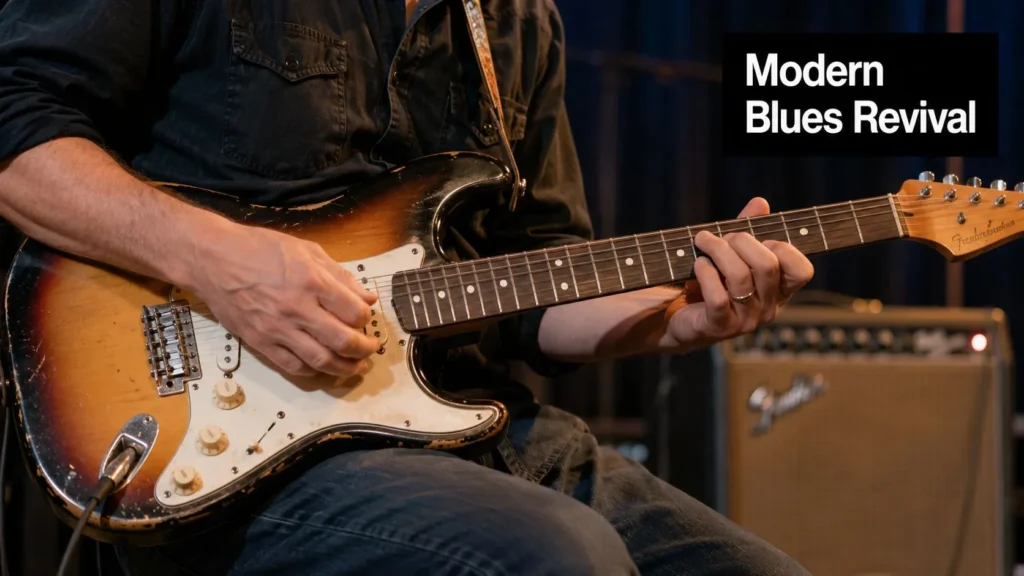
Greta Van Fleet represents the most debated trend in modern rock. The return of big-riff classicism as a discovery engine for younger listeners who didn’t inherit seventies hard rock firsthand. That matters because revivalism usually gets dismissed as nostalgia, yet this band has shown that a familiar sonic vocabulary can still feel new when it reaches audiences through streaming, short-form clips, and festival circulation rather than old-format rock radio.
Their core case is simple. They treat blues-rock not as museum preservation but as high-drama performance. The guitar tone is oversized, the vocals are theatrical, and the arrangements chase lift-off instead of understatement. For listeners entering rock through playlists rather than family record shelves, that directness can work like a gateway drug.
Why they matter now
Greta Van Fleet also clarifies what “new” means in rock right now. A band can sound rooted in the past and still be structurally modern in how fans find them. If you’re building your own system for finding similar acts, this guide to the best ways to discover new music is useful because it mirrors how guitar bands now spread across platforms and scenes.
Practical rule: Treat Greta Van Fleet less as a purity test and more as evidence that classic hard rock still converts attention when the songs are big enough.
A real-world listening scenario helps. Put Greta Van Fleet next to legacy stadium-rock playlists, then next to newer algorithmic hard-rock mixes. The interesting part isn’t whether they “beat” the older bands. It’s that they belong in both environments. That crossover is why they remain one of the clearest examples of modern blues-rock revival with actual audience pull.
2. Måneskin
Måneskin is the clearest proof that rock’s global pathway no longer depends on Anglo-American gatekeepers. Their appeal starts with glam attitude, but the deeper story is distribution. They arrived as a visually legible, internationally exportable rock band in an era when image, performance clips, and streaming replay all amplify each other.
They don’t sound like a heritage act trying to preserve a canon. They sound like a band that understands rock as pop theater without surrendering its bite. The riffs are sharp, the hooks are immediate, and the styling is part of the musical argument. That combination has made them one of the easiest bands to recommend to listeners who think rock has become too self-serious or too inward-looking.
The trend they represent
Måneskin stands for rock as transnational spectacle. Their success suggests the genre still rewards flamboyance when it arrives with conviction and songs that travel across language and scene boundaries. For independent artists studying that path, this profile of independent music artists gives useful context on how visibility builds outside the old major-label mythology.
The practical takeaway is that glam isn’t just a style reference anymore. It’s a usability advantage. In crowded feeds, a band with a clear silhouette, strong front-person identity, and immediate choruses has a better chance of breaking through than one that asks for slow, scholarly decoding.
- Best lens for hearing them: Listen for how punk energy and fashion-conscious staging reinforce each other.
- Best audience entry point: Fans who like rock with pop-scale directness usually get them quickly.
- Best critical takeaway: They show that accessibility doesn’t have to flatten a band’s personality.
Måneskin isn’t just a recommendation. They’re a case study in how modern rock can still be flashy, physical, and broadly legible.
3. Black Midi
Black Midi occupies the opposite pole from conventional rock spectacle. They make difficulty part of the attraction. Where many newer bands aim for instant emotional recognition, Black Midi invites fascination through instability. Rhythms lurch, songs mutate, and performances feel engineered to keep the listener slightly off balance.
That doesn’t make them an art-school cul-de-sac. It makes them important. Every healthy rock era needs bands that widen the grammar of the form, not just restate its most durable moves. Black Midi does that through precision rather than haze. Their music is packed with abrupt turns, technical aggression, and a kind of organized absurdity that recalls progressive rock, noise rock, and math rock without settling neatly into any one lane.
The value of friction
Their role in the ecosystem is to prove that experimental rock still has social life. Fans don’t only encounter music through polished singles anymore. They also meet bands through live footage, clips of chaotic performances, and recommendation chains built around curiosity. Black Midi thrives in that environment because the band gives people something worth arguing about.
For a sense of their volatility onstage and on record, watch this performance clip.
They matter because they reject the idea that modern rock must choose between intelligence and force.
A real-world use case is simple. If your playlist has become too smooth, too optimized, too sonically polite, Black Midi resets your ears. They’re one of the best new rock bands because they don’t merely fit the current musical environment. They stress-test it.
4. IDLES
IDLES has become one of the defining examples of post-punk as public speech. Their songs hit with blunt-force rhythm, but the band’s larger significance lies in how they frame rock as a social form. Anger, vulnerability, masculine self-critique, class pressure, and political anxiety all move through their work without turning the music into a lecture.
That balance is harder than it looks. Plenty of bands can write slogans. Fewer can write songs that feel physically urgent while still holding contradictory emotions. IDLES often works because the music sounds built for collective release, yet the lyrics resist simple triumph. They don’t present rock as detached cool. They present it as confrontation with consequences.
A band built for communal impact
IDLES also embodies a practical modern truth. Discovery increasingly happens in multi-artist ecosystems, not just through lone critical endorsements. Spotify’s “20 Modern Rock Bands 2023” playlist includes acts such as Dirty Honey, Electric Mob, Rival Sons, and Hannah Wicklund. That kind of playlist presence matters because it places bands in a recurring circulation loop where listeners encounter them beside peers, not in isolation.
For readers tracking the next wave of guitar acts, this roundup of up-and-coming music artists fits naturally alongside IDLES because it emphasizes career momentum rather than nostalgia.
- What they represent: Post-punk that treats the audience as participants, not spectators.
- What to listen for: The tension between punishing rhythm and emotionally exposed writing.
- Where they land best: Live rooms, protest-adjacent playlists, and late-night listening when polished indie feels too bloodless.
IDLES shows that rock can still sound necessary when a band understands that urgency is musical, not just rhetorical.
5. Wet Leg

Wet Leg’s achievement is easy to underestimate because wit often gets mistaken for lightness. But their rise says something important about indie rock now. A band doesn’t need solemnity to build authority. It can work through timing, understatement, conversational detail, and hooks that make dry humor feel inseparable from emotional intelligence.
They arrived at a moment when many guitar bands were leaning toward severity, atmosphere, or retro seriousness. Wet Leg cut through by sounding amused, catchy, and casually exact. That doesn’t mean the songs are disposable. It means they understand that irony and feeling can coexist without canceling each other out.
Why their tone matters
In practical terms, Wet Leg represents the return of personality as a differentiator. When listeners scroll through endless sameness, a band with a recognizable voice gains an edge. Their music works at parties, on headphones, and in recommendation chains because the songwriting feels quotable without becoming novelty.
A memorable rock band doesn’t only have a sound. It has a social texture. Wet Leg gets repeated because people enjoy living with the songs.
A useful listening test is to place Wet Leg beside post-punk bands built on tension and austerity. What emerges is contrast. Wet Leg doesn’t reject sharpness. They redirect it into deadpan melody and awkward-detail observation. That makes them one of the most persuasive examples of indie rock regaining cultural nimbleness.
They’re one of the best new rock bands because they remind critics and listeners that cleverness, when paired with strong songcraft, is still a serious artistic asset.
6. Fontaines D.C.
Fontaines D.C. represents post-punk’s literary turn at its most durable. Their songs don’t rely on clever surfaces alone. They build atmosphere through cadence, place, and emotional abrasion. The result is music that feels both urban and inward, tightly coiled yet open to ambiguity.
Their importance goes beyond style. Fontaines D.C. helped normalize the idea that a younger rock band can be intellectually ambitious without losing crowd energy. That’s not a small thing. Too often, guitar music gets split into false choices: poetic or visceral, thoughtful or immediate, local or exportable. Fontaines D.C. keeps those categories in contact.
Poetry without softness
The band’s Dublin identity matters because scene geography still shapes how rock is understood. Locality gives the songs contour. You hear streets, social pressure, and self-mythology colliding inside the writing. Yet the music also travels because alienation and pride are hardly local feelings.
A real-world example of their strength is sequencing. If you listen to a run of tracks rather than cherry-picking a single, the band’s pacing becomes the point. They know how to move from tension to release without flattening mood. That album-thinking instinct makes them stand out in an age dominated by fragmented listening.
- Best descriptor: Post-punk with novelist instincts.
- Best listener fit: Anyone who wants guitar music with verbal density and emotional restraint.
- Best reason to care: They’ve made seriousness feel alive again, not academic.
Fontaines D.C. shows that modern rock can be both sharply written and physically compelling. That combination keeps them central to any serious conversation about the best new rock bands.
7. Spiritbox

Spiritbox illustrates one of the most important developments in heavy music. The wall between metal extremity and mainstream accessibility has become more porous. Their songs can pivot from atmospheric melody to punishing impact without sounding like compromise. Instead, the contrast is the identity.
That matters because a lot of newer heavy bands still organize themselves around tribe signaling. Spiritbox sounds more fluid than that. They borrow from alternative metal, progressive structures, and modern production aesthetics while keeping emotional immediacy at the center. The songs don’t ask listeners to choose between catharsis and craft.
Heavy music for the playlist era
Spiritbox also benefits from the logic of contemporary listening. In the current market, discovery often moves through cross-genre adjacency, not rigid subcultural borders. Globally, rock remains a huge catalog business. ChartMasters’ analysis places the Beatles at 525 million equivalent album sales and notes that 27 other rock bands have crossed the 100 million mark in equivalent sales, a useful reminder of the scale of audience appetite that newer acts enter into in this ChartMasters rock-sales analysis.
That legacy doesn’t make Spiritbox retro. It clarifies the opportunity. There is still a vast audience for guitar-driven intensity when a band can translate it into modern listening habits.
Signal to watch: When a heavy band works for metal diehards and casual algorithm listeners, it usually means the songwriting is carrying more weight than the genre tag.
Spiritbox stands out because they make heaviness feel expansive rather than exclusionary. That’s why they belong on any forward-looking list of the best new rock bands.
8. Squid
Squid thrives in the zone where post-punk stops being a genre label and becomes a method. Their songs feel assembled from tension, repetition, interruption, and nervous propulsion. Instead of delivering clean payoff, they often build a structure that keeps wriggling away from conclusion.
That restlessness is the point. Squid represents a branch of modern rock that treats instability as realism. In a fragmented media environment, songs that sound too resolved can feel oddly false. Squid leans into agitation, clutter, and shifting focus. The result is art punk that reflects contemporary overstimulation without merely imitating chaos.
Controlled disorder as style
One reason they matter is that they preserve the band format while loosening what a rock song has to do. Basslines stalk rather than anchor. Drums push scenes into motion. Vocals often sound less like a frontman claiming space and more like a narrator trying to survive it. That ensemble logic makes the music feel collective in a way many solo-centered projects don’t.
Try them in a real setting where background music usually fails. Commutes, crowded cafes, fast walks through city centers. Squid’s music doesn’t disappear into the room. It changes the room’s pressure.
- Subgenre case study: Art punk for listeners bored by polished indie.
- Musical signature: Repetition used as escalation, not comfort.
- Critical importance: They show that experimentation can remain rhythmic and bodily, not just cerebral.
Squid belongs here because they map a future where rock stays weird without losing momentum.
9. The Armed
The Armed is what happens when heavy rock fully absorbs the aesthetics of the information age. Their music is dense, overloaded, sometimes intentionally disorienting. Yet underneath the sensory attack sits a sharp compositional intelligence. They don’t just make noise. They choreograph excess.
That makes them more than an industrial-rock recommendation. They’re a case study in how contemporary bands use production itself as subject matter. Compression, distortion, layering, and digital sheen aren’t decorative choices in The Armed’s world. They’re part of the emotional message. The songs feel like bodies pushed through systems that won’t stop accelerating.
Why their extremity is useful
The Armed matters because they answer a question many rock bands avoid. How should guitar music sound when daily life already feels algorithmic, crowded, and semi-virtual? Their answer isn’t retreat into analog warmth. It’s escalation with design discipline.
A practical listening scenario helps. Play The Armed after a run of conventional hard rock. Suddenly the old verse-chorus architecture feels exposed. The Armed floods the frame, then reveals how many newer listeners are comfortable with intensity if the arrangement rewards repeat listening.
The Armed doesn’t revive industrial textures. They update them for listeners raised on clipping signals, visual overload, and permanent online noise.
They’re one of the best new rock bands because they push heaviness beyond genre loyalty into something closer to contemporary sensory critique.
10. Yard Act
Yard Act turns spoken-word cadence into a rock asset rather than a novelty. That distinction matters. Plenty of bands flirt with talk-singing as a pose. Yard Act builds whole songs around the dramatic possibilities of narration, timing, and social observation. The vocals don’t sit on top of the music. They steer its pace.
Their emergence also confirms that post-punk remains one of the most adaptable forms in modern rock. It can absorb satire, class anxiety, media absurdity, and everyday menace without becoming shapeless. Yard Act succeeds because the band understands that language itself can create groove. A raised eyebrow, a clipped phrase, a sudden rush of detail. Those become rhythmic tools.
The future of voice in rock
What they represent is larger than one band. Rock vocals no longer need to signal authenticity through classic belting or punk abrasion alone. They can speak, mutter, narrate, and still command attention. That opens the field to different kinds of front-person charisma.
In real-world use, Yard Act works best when you give the lyrics room. Walk with the record. Drive with it. Let the observations stack. Their songs often feel like short stories tightened into grooves, which is why they tend to linger after flashier bands burn off.
- Distinctive trait: Spoken delivery used as propulsion, not ornament.
- Best trend example: Post-punk as social satire with danceable tension.
- Why they matter: They expand the acceptable vocabulary of rock frontmanship.
Yard Act closes this list because they point toward a future where voice, narrative, and rhythm interact more freely than old genre rules allowed.
Top 10 New Rock Bands Comparison
| Artist (Style) | Musical Complexity | Production & Resource Needs | Expected Outcomes (Reach & Reception) | Ideal Use Cases | Key Advantages |
|---|---|---|---|---|---|
| Greta Van Fleet, Modern Blues Rock Revival | Moderate, classic hard/blues rock structures, virtuosic solos | High, arena/festival sound, touring, polished production | High mainstream streaming and festival headlining | Large festivals, radio, arena tours | Broad cross-generational appeal, strong live energy |
| Måneskin, Modern Rock with Glam Attitude | Moderate, punk/glam-infused rock, direct songforms | High, theatrical staging, fashion-forward presentation | Very high global reach and streaming, mainstream visibility | International festivals, TV appearances, stadiums | Massive global exposure, charismatic performances |
| Black Midi, Math Rock Innovation | Very high, complex time signatures, experimental arrangements | Medium, studio experimentation, specialist mixing; smaller touring scale | High critical acclaim, cult following; limited mainstream streams | Indie venues, experimental festivals, critical audiences | Distinct originality, influential in underground scenes |
| IDLES, Post-Punk Political Rock | Medium, aggressive but accessible post‑punk structures | Medium, energetic live setup, consistent touring | Strong critical praise and engaged fanbase; moderate mainstream | Political/DIY venues, energetic festival slots, activist events | Politically resonant songwriting, consistent album quality |
| Wet Leg, Indie Rock with Comedic Edge | Low–Medium, catchy indie pop/rock, straightforward forms | Low, lo-fi aesthetics, compact touring footprint | High commercial & viral success for an indie act | Indie festivals, radio, online viral campaigns | Relatable humor, strong viral and youth appeal |
| Fontaines D.C., Dublin Post‑Punk Poetry | Medium, minimalist post‑punk with literary focus | Medium, touring internationally, intimate staging | High critical respect, steady international touring audience | Theaters, literary festivals, post‑punk lineups | Poetic lyricism, respected among critics and peers |
| Spiritbox, Modern Metal‑Alternative Fusion | Medium–High, progressive elements, dynamic arrangements | High, heavy production values, elaborate live sound | High crossover potential between metal and mainstream | Rock/metal festivals, radio-friendly heavy sets | Accessible heavy sound, strong female-fronted representation |
| Squid, Art Punk Experimentation | High, non‑traditional song structures, varied instrumentation | Medium, diverse instrumentation (sax, layers), creative staging | Strong critical appreciation; niche but growing audience | Art/experimental venues, indie festivals | Experimental innovation, strong critical credibility |
| The Armed, Industrial Rock Evolution | High, aggressive, production‑heavy, techno-rock fusion | High, sophisticated production, electronics-heavy shows | Respected in experimental/industrial scenes; niche reach | Industrial/experimental festivals, clubs with audiovisual capacity | Cutting-edge production, evolving heavy-electronic hybrid |
| Yard Act, Spoken Word Post‑Punk | Medium, rhythmic spoken-word delivery over post‑punk backing | Low–Medium, minimal staging, focused vocal delivery | Growing critical and commercial attention; limited radio fit | Intimate venues, theatrical sets, indie festivals | Unique vocal approach, sharp social commentary |
Where Rock Goes From Here
The strongest argument for rock’s health isn’t that it has returned to some imagined monoculture. It’s that the genre now supports multiple futures at once. Greta Van Fleet and Måneskin show that spectacle still works. Black Midi, Squid, and The Armed prove that abrasion and experimentation still attract committed listeners. IDLES, Fontaines D.C., and Yard Act keep post-punk flexible enough to carry politics, poetry, and satire without collapsing into a single formula. Wet Leg and Spiritbox, in very different ways, show how sharply defined personality cuts through crowded listening environments.
That diversity matters more than a single chart narrative. Rock doesn’t need one approved sound to remain relevant. In fact, the current situation suggests the opposite. The genre is healthiest when scenes, subgenres, and listening habits overlap without dissolving into sameness. Some fans arrive through playlists. Some arrive through local buzz. Some still arrive through criticism, touring, and word of mouth. The important point is that these routes reinforce each other.
There’s also a market logic behind that resilience. Streaming now shapes the commercial field more than older gatekeeping models did, and that has changed what a breakout rock act looks like. A band can build meaning through repeat listening, scene loyalty, and portable identity. It doesn’t need to dominate one centralized culture machine to matter. That’s good news for artists with sharper edges or more specific aesthetics.
The harder question is what listeners should do with that abundance. My view is simple. Don’t treat lists like this as final rankings. Treat them as a map. Follow the branch that matches your instincts, then keep going sideways. If you love IDLES, test Yard Act and Fontaines D.C. If you start with Måneskin, try Greta Van Fleet and then move toward heavier theatrical acts. If Black Midi opens a door, walk deeper into art punk and math-rock territory. The best new rock bands aren’t isolated recommendations. They’re junction points.
For readers interested in the business side of how artists get noticed in the first place, the real story of A&R is worth your time because it clarifies how discovery, development, and market positioning still shape careers.
Rock’s next chapter won’t be written by consensus alone. It’ll be written by listeners who replay songs, show up early, buy tickets, share links, and keep scenes alive. Start with one band from this list. Then follow the noise.
If you want more approachable music commentary, culture writing, and discovery-focused features, visit maxijournal.com. It’s a strong place to find fresh articles on music and far beyond, and it’s also worth bookmarking if you enjoy independent voices covering arts, entertainment, science, business, travel, and everyday culture with a clear editorial style.
Discover more from Maxi Journal
Subscribe to get the latest posts sent to your email.