You’re standing in the makeup aisle, one hand on a BB cream, the other on a CC cream, and both tubes promise an easy, polished face. The labels sound similar, the claims blur together, and the simple question is: which one fits your skin today?
The cleanest way to think about BB vs CC cream is this, BB cream is the lighter, more skin-first multitasker, while CC cream is the more corrective option built to even tone. That difference started with the K-beauty wave, where BB cream arrived first as an all-in-one shortcut and CC cream came later as a more targeted answer for discoloration and uneven tone, according to the historical overview from She’s In The Glow.
| Attribute | BB Cream (Blemish Balm) | CC Cream (Color Corrector) |
|---|---|---|
| Coverage | Sheer to light | Medium to fuller |
| Main goal | Daily all-in-one wear | Tone correction |
| Finish | Dewier, more natural | More matte or semi-matte |
| Best for | Hydration and a barely-there look | Redness, dark spots, and uneven tone |
Decoding the Blemish Balm and Color Corrector
The easiest mistake is treating BB and CC cream like two versions of the same thing. They’re related, but they were built to solve different problems, and that history still shapes how they work now.
Why BB cream came first
BB cream stands for beauty balm or blemish balm, and it grew out of the Korean beauty movement as a product meant to replace several steps at once. The idea was practical, one tube that could combine moisturizer, primer, sunscreen, and tint, so your routine felt faster without looking heavy. That original purpose still explains why BB cream is usually described as the lighter-coverage multitasker in today’s beauty aisle.
Why CC cream became its own category
CC cream came later as a more focused answer to a different need, color correction. It’s often described as color corrector or complexion corrector, which fits its job better, because the point isn’t just to tint the skin. It’s to visually reduce redness, dark spots, sallowness, and other unevenness with more pigment and more targeted correction than BB cream usually offers.
That shift matters because it shows how complexion products evolved from broad “do-it-all” formulas into more specialized hybrids. If you’re comparing options at a glance, BB cream is the generalist and CC cream is the problem-solver. For a broader ingredient and finish perspective, Why choose Youngblood Cosmetics is a useful read to pair with this history, especially if you’re sorting out what a polished base should feel like on skin.
Practical rule: If you want the product to disappear into skin with a light touch, start with BB cream. If you want the product to visibly change the look of tone, start with CC cream.
A Detailed Comparison of Core Attributes
The most useful comparison isn’t the marketing language on the front of the tube. It’s how the formula behaves once it’s on your face.
Formulation and finish
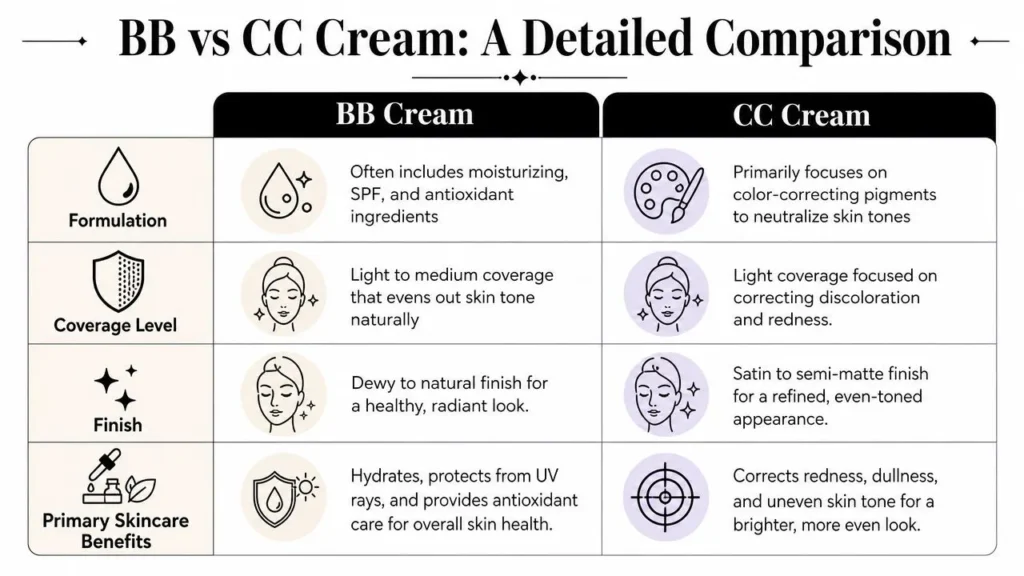
BB creams are generally described as richer, dewier, and more moisturizing, which is why they often suit dry skin and people who want a soft, lived-in glow. CC creams are usually lighter, more matte or semi-matte, and built with color-correcting pigments that shift the appearance of redness or discoloration. That difference shows up fast on the skin, BB tends to blur and freshen, while CC tends to even and refine.
The finish follows the formula. A BB cream often looks closer to a tinted moisturizer because it prioritizes comfort and hydration. A CC cream usually feels a little more intentional, because the pigment load is doing more visible work on tone.
Coverage and skincare feel
BB cream usually gives sheer to light coverage, so freckles, texture, and natural skin still show through. CC cream usually gives medium or fuller coverage, which is why it can cover redness or dark spots more effectively without jumping all the way to foundation.
That’s also why these products still sit in separate categories across major beauty retailers. BB cream is the daily, low-coverage, skin-first option. CC cream is the tone-correcting, slightly higher-coverage option. The distinction remains useful because the end result on skin is noticeably different, even when both products claim hydration and skincare benefits.
| Attribute | BB Cream | CC Cream |
|---|---|---|
| Coverage | Sheer to light | Medium to fuller |
| Main effect | Smooths and freshens | Corrects and evens tone |
| Finish | Dewier, more natural | Matte or semi-matte |
| Best use | Everyday minimal base | Targeted discoloration coverage |
| Skin feel | More moisturizing | Often lighter and less rich |
If you want a quick rule, BB cream behaves like a tinted skin comfort product, while CC cream behaves like a corrective base with skincare-style extras. That’s the core difference most shoppers feel after a few hours of wear.
Choosing the Right Cream for Your Skin Type
Skin type matters because texture changes how makeup wears, settles, and disappears over the day. A formula that looks fresh on one person can slide, cling, or look flat on someone else.
Dry and normal skin usually favors BB cream
BB creams tend to be richer and dewier, which can be a better match for dry skin that needs comfort and a smoother surface. If your base makeup often looks tight, patchy, or powdery, that extra moisture can make a real difference. A BB cream can also help normal skin when you want a softer, less-made-up finish.
If you’re still figuring out your skin type, Skinsation’s guide to determining skin type is a helpful companion, because the right base starts with knowing how your skin behaves across the day.
Oily and combination skin often leans CC cream
CC creams are commonly lighter with a matte or semi-matte finish, which often suits oily skin better. If your base makeup breaks apart fast in the T-zone, the more controlled finish can help your face look more even for longer. CC cream also makes sense when you want correction without adding the richer feel that some BB creams bring.
Sensitive skin needs ingredient awareness, not just a category label
Sensitive skin doesn’t automatically belong to either category. Texture matters, but so does the formula behind it. A lighter cream can still irritate if the ingredient list doesn’t agree with your skin, while a richer cream can feel soothing if it’s built well.
A category label can guide you, but your skin’s response decides the final answer.
If you’re trying to support a sensitive, acne-prone routine with simpler base layering, it can also help to think about what sits underneath your makeup. This moisturizer guide for acne-prone sensitive skin is worth a look if your base products tend to pill or feel too heavy.
Targeting Your Main Skin Concerns
Skin type tells you how a product feels. Skin concern tells you what it needs to do.
Redness and uneven tone usually call for CC cream
If redness is your main issue, CC cream is usually the stronger choice because it’s built around correction, not just coverage. That extra pigment load helps visually neutralize areas that BB cream often only softens. The same logic applies to dark spots, sallowness, and post-blemish marks, where a more corrective formula can change the look of the face more decisively.
Dullness and tired skin often look better in BB cream
If your skin looks flat rather than uneven, a BB cream can be the better pick because its dewier finish adds life without looking masked. That makes it useful when you want your skin to look rested, not transformed. It’s a good match for people who want a quick morning product that reads as fresh rather than polished.
Acne-prone skin needs a careful split
Acne-prone skin is where people often get stuck, because they want coverage but don’t want the face to look heavy. A BB cream can be enough when you’re dealing with general redness or a few small marks. A CC cream is more helpful when the visible issue is post-acne discoloration, because the corrective pigments do more work.
A good way to think about it is this, BB cream blends in, while CC cream targets out. That makes CC cream better for specific color problems and BB cream better for a softer all-over refresh.
For people who also care about calm, skin-supportive routines around acne, beta-glucan skin care guidance is a smart follow-up, because base makeup performs better when the skin underneath feels steady.
Application Tips for a Natural Finish
Good application changes the whole result. The same cream can look barely there or obviously on the face, depending on how you place it.
Use your fingers for BB cream
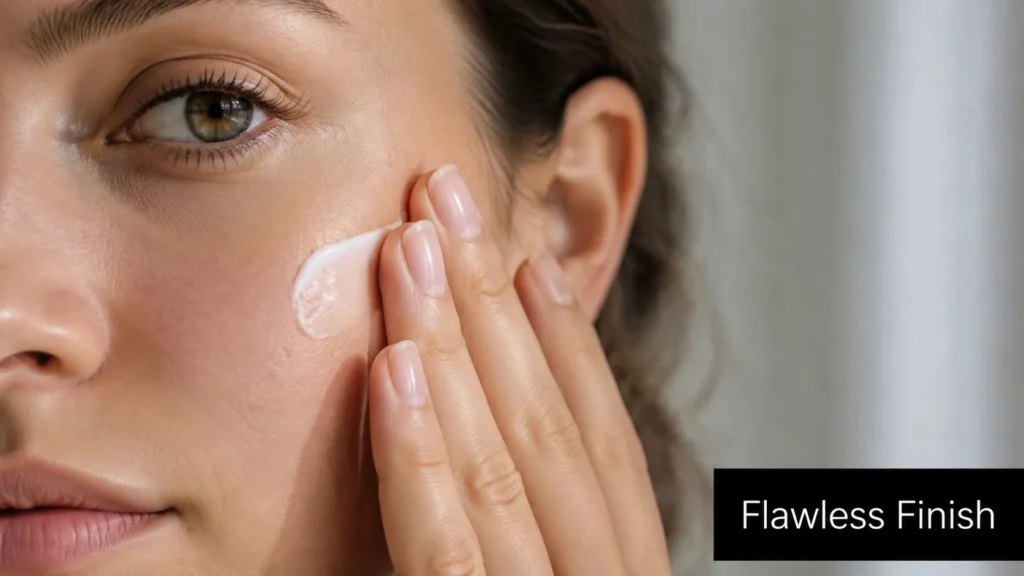
Finger application works well for BB cream because the warmth helps the product melt into skin. That’s useful when you want an even, natural finish without emphasizing texture. Start with a small amount, then press and blend it outward so the coverage stays sheer and flexible.
Use a sponge or brush carefully for CC cream
CC cream often benefits from a damp sponge when you want to press coverage into areas that need correction without streaking. A brush can work too, especially if you want more placement and a little more coverage, but it can also make the pigment look heavier if you overwork it. For redness around the nose or discoloration on the cheeks, tap instead of swiping.
Match your tool to your finish goal
If you want skin to look like skin, don’t overload either product. Apply in thin layers, then build only where you need it. That matters more with CC cream, because its extra pigment can move from “corrected” to “obvious” fast if you use too much.
For a visual walkthrough of complexion prep and blending habits, the embedded guide below can help.
If you’re choosing a base because other acids or actives make your skin feel reactive, it also helps to be deliberate with exfoliation. This glycolic acid guide can help you think about balance, so your makeup doesn’t sit on top of irritated skin.
Real World Performance and Myth Busting
The most useful question isn’t which cream sounds better on the box. It’s which one still looks good after a full day, in heat, humidity, or on a skin type that changes fast.
BB and CC creams often promise a lot, but their real-world behavior depends on formula, skin prep, and how much you apply. A BB cream’s richer texture can feel comfortable on dry skin, but on oilier skin it may separate sooner if the finish is too emollient. A CC cream may hold tone better on redness or discoloration, but if you overapply it, the coverage can read heavier than you wanted.
The SPF myth deserves a reset
Many BB and CC creams include SPF, but that doesn’t automatically mean they should be your only sun protection. These products are best treated as makeup with added UV support, not as the full answer to daily sunscreen. If sun protection matters, use a proper broad-spectrum sunscreen underneath and treat the cream as a finishing step, not the main shield.
Why the category question still matters
A lot of beauty talk now overlaps BB cream, CC cream, and skin tint, especially in Western markets where the labels get used loosely. That confusion is real, and it’s why the distinction can feel blurry in practice. Still, the original logic hasn’t disappeared, BB cream remains the lighter, more casual option, while CC cream still does more visible tone correction.
If you need your base to survive a long day, test it in the conditions you actually live in, not under store lighting.
The bottom line is simple. BB and CC creams still matter if you care about coverage, finish, and tone correction, but they’re not magic categories. The best one is the one that performs on your skin, in your climate, with your routine.
Your Final Decision Making Checklist
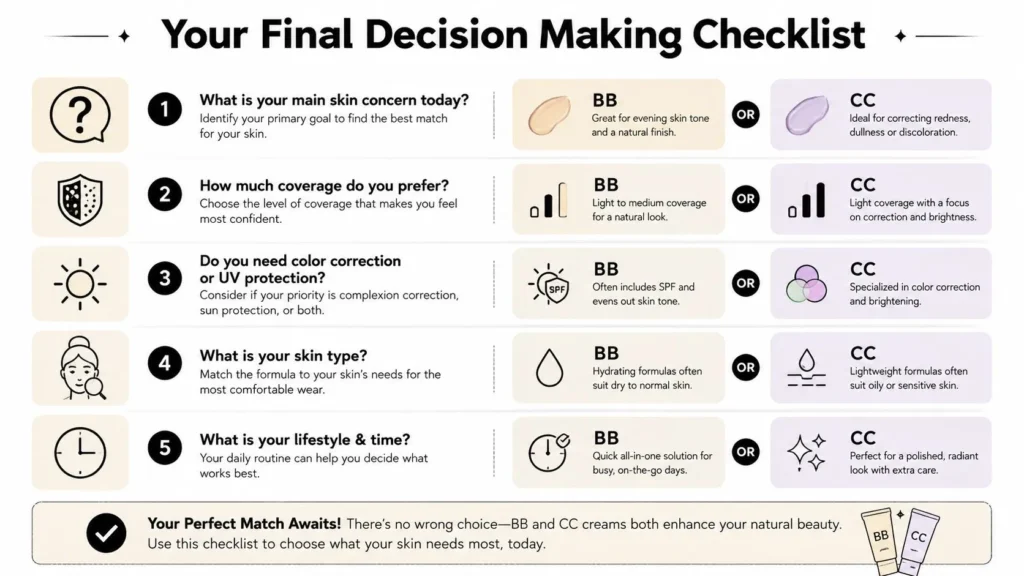
Start with the result you want, not the label on the tube.
- Do you want a barely-there, everyday look? BB cream is usually the better match.
- Do you need visible tone correction for redness or dark spots? CC cream is the stronger choice.
- Is your skin dry or craving comfort? BB cream’s richer, dewier texture often fits better.
- Is your skin oily or combo and prone to shine? CC cream’s lighter, more matte finish usually wears better.
- Do you want more skin-like coverage, or more correction? That answer points you straight to BB or CC.
If you still feel stuck, think about your main goal in one sentence. If the answer is “I want my skin to look fresh,” BB cream is probably enough. If the answer is “I want my skin tone to look more even,” CC cream usually makes more sense.
The decision doesn’t have to be perfect, it just has to match what your skin needs most often. Try one product on a normal weekday, wear it through your real routine, and judge it by how it looks after a full day’s wear, not just in the mirror right after application.
If you want more clear, practical beauty guidance like this, visit maxijournal.com and keep exploring the kind of skincare and makeup advice that helps you choose with confidence.
Discover more from Maxi Journal
Subscribe to get the latest posts sent to your email.