You’re probably here because your dog already grabbed a piece of raw chicken off the counter, or because you’ve been reading raw-feeding advice that makes it sound either perfectly natural or recklessly dangerous.
Both reactions miss the core issue. Dogs eat raw chicken all the time without immediate disaster, but “can” and “should” are not the same question. The practical question is this: what risk is your dog taking, what risk is your household taking, and is there a safer way to get the same feeding goal?
I look at raw chicken the same way I look at any high-risk pet care choice. First, identify the type of risk. Then ask which dogs tolerate that risk poorly, which homes shouldn’t accept it at all, and what handling steps reduce harm if someone goes ahead anyway. That approach is more useful than a blanket argument.
The Raw Chicken Debate for Dogs Explained
Raw feeding attracts people for understandable reasons. Chicken is familiar, inexpensive compared with some proteins, and easy to picture as a “real food” option. Many owners also hope for better digestion, a shinier coat, cleaner teeth, or relief from processed-food fatigue.
Veterinary professionals tend to push back for equally understandable reasons. Raw chicken isn’t just meat. It’s also a potential source of bacterial contamination, an occasional source of mechanical injury from bones, and a poor stand-alone diet if it isn’t carefully balanced.
Why opinions split so sharply
Part of the conflict comes from experience. One owner says, “My dog has eaten raw chicken for years and done fine.” Another has dealt with vomiting, a cracked tooth, diarrhea, or a family member exposed to contaminated bowls and floors. Both are describing something real. Neither single story settles the issue.
The bigger problem is that raw feeding discussions often collapse very different questions into one:
- Can a dog digest raw chicken? Usually, yes.
- Can raw chicken carry pathogens? Yes.
- Can bones cause injury? Yes.
- Can a raw chicken diet be nutritionally complete on its own? Not reliably.
- Can some dogs handle the risk worse than others? Absolutely.
Raw feeding isn’t one decision. It’s a bundle of decisions about bacteria, bones, balance, and household exposure.
A practical way to think about it
When owners ask me about raw chicken, I don’t start with ideology. I start with the dog in front of me.
A healthy adult dog in a low-risk home is different from a toy breed that gulps food, a senior with digestive issues, or a home with a toddler crawling near the dog’s feeding area. The same raw chicken meal creates different risk depending on the dog’s chewing style, immune status, size, and environment.
That’s why broad claims such as “raw is best” or “raw is poison” don’t help much. What helps is a risk-assessment framework. Look at microbial risk, physical risk, nutritional adequacy, and household vulnerability. Then decide whether raw chicken still makes sense for your dog.
Unpacking the Bacterial Risks of Raw Chicken
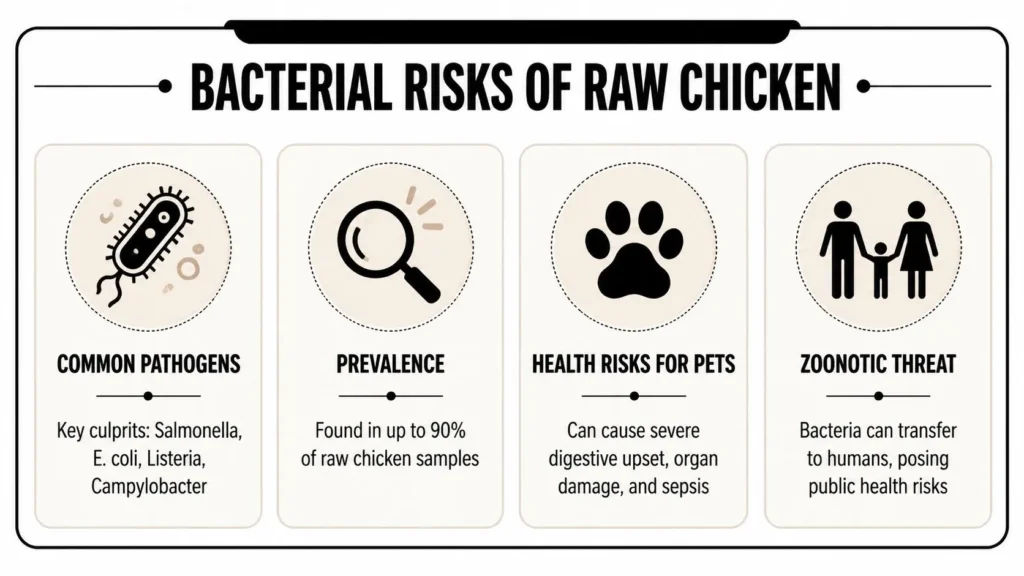
The strongest case against raw chicken is microbiological. This isn’t just about an occasional upset stomach. It’s about pathogens that may sicken the dog, pass through the dog without obvious illness, or spread around the home through saliva, bowls, paws, and stool.
What testing has found in raw diets
A preliminary BARF diet study published in the Journal of the American Veterinary Medical Association found that 80% of tested raw diet samples, 16 out of 20, were positive for Salmonella, while none of the 30 commercial extruded dog food samples tested positive. In the same study, 30% of the dogs fed that raw diet shed Salmonella in stool, showing how a dog can become an asymptomatic household source after eating contaminated food, as reported in the JAVMA raw diet assessment archived by PubMed Central.
That’s the point many owners miss. A dog doesn’t have to look sick for the feeding choice to create risk.
The pathogens people worry about most
Commercial raw pet foods don’t get a free pass because they come packaged and branded. Cornell’s Riney Canine Health Center summarizes FDA findings showing that consumers of commercial raw pet foods face about a 1-in-3 chance of exposure to pathogens such as Salmonella, Listeria, or toxigenic E. coli, according to Cornell’s evidence-based raw food guidance.
That matters for two reasons:
- The dog may get sick. Signs can include vomiting, diarrhea, lethargy, fever, or worse.
- The dog may carry and shed the organism. That shifts the problem from “my dog seems okay” to “my house may not be.”
The overlooked neurological concern
Bacteria aren’t only about GI disease. One of the more serious concerns linked to raw chicken is Campylobacter and its association with acute polyradiculoneuritis, often shortened to APN.
A 2018 study linked raw chicken consumption, especially chicken necks, to APN, a paralyzing neurologic condition similar to Guillain-Barré syndrome in people. In that study, raw chicken exposure increased APN risk by over 70 times, based on the summary discussed at Lawndale Veterinary Hospital’s review of raw diet risks.
Household warning: The absence of vomiting or diarrhea doesn’t mean the raw meal was harmless. A dog can look normal and still spread pathogens.
Why the household risk is real
When owners hear “zoonotic risk,” it can sound abstract. In real life, it means this: the dog eats raw chicken, licks the floor, drinks from a bowl, goes outside, comes back in, then a child touches the fur or a person handles the bowl.
The contamination pathway is ordinary household life.
The highest-risk homes are the ones where contact is close and constant. Think shared couches, kitchen-floor feeding, face licking, and imperfect cleanup after stool. If you’re feeding raw chicken, you’re not just managing a dog’s meal. You’re managing a contamination event every time that meal is prepared and every time the dog eliminates afterward.
Beyond Bacteria Physical Dangers of Raw Chicken
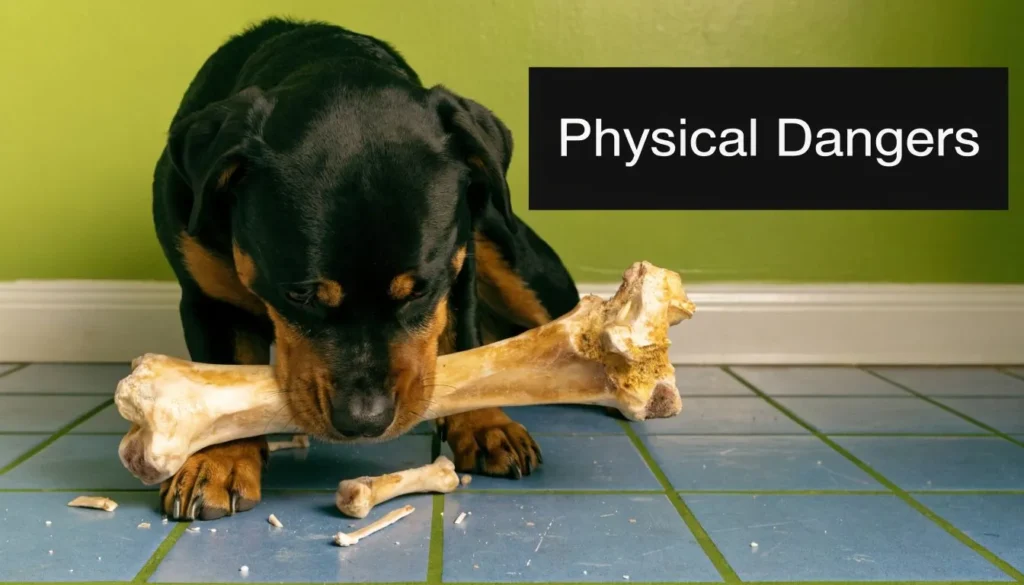
Raw chicken can hurt dogs in ways that have nothing to do with microbes. Bones, skin, and chunks of meat create a separate category of risk. This one is mechanical, immediate, and sometimes dramatic.
Choking and obstruction are the first concerns
Many dogs don’t chew methodically. They gulp. That matters with raw chicken wings, necks, backs, and rib sections. A small dog may try to swallow a piece whole. A large dog may crunch twice and inhale it.
That creates two different emergencies. The first is choking, where the bone lodges before it can be swallowed. The second is obstruction, where the piece passes into the digestive tract and gets stuck later.
Raw bones are not safe just because they aren’t cooked
It’s true that cooked chicken bones are generally more brittle and more likely to splinter. That doesn’t make raw bones harmless. Raw poultry bones can still crack teeth, lodge in the esophagus, scrape the stomach, or obstruct the intestines.
The risk is higher in dogs with these habits:
- Fast eaters who swallow before they fully chew
- Resource guarders who bolt food when anyone comes near
- Toy and small breeds that get pieces sized badly for their mouths
- Power chewers that fracture bone with force rather than gnawing gradually
Chicken necks deserve special caution
Chicken necks often get sold as a convenient raw item because they’re small and easy to portion. They’re also exactly the kind of item many dogs can swallow with poor chewing. They combine bacterial risk with a physical one.
The APN concern makes necks even harder to justify. The same 2018 study summarized earlier linked raw chicken, especially chicken necks, with a markedly higher risk of APN. If your dog shows sudden weakness, trouble standing, or an odd, stiff gait after eating raw poultry, pay close attention to posture and movement changes. Understanding subtle stress and pain signals also helps, and a guide to reading canine posture and behavior can make owners better observers before a problem becomes obvious.
A bone doesn’t have to splinter to cause harm. Whole pieces can be just as dangerous if the dog swallows them badly.
What works better in practice
If an owner wants chicken in the diet, boneless cooked chicken is far easier to control. You eliminate the bone hazard and lower the pathogen burden compared with raw handling. It still isn’t a complete diet by itself, but it’s a much more predictable ingredient.
That’s the key distinction. “Natural” isn’t the same as “low risk.” In day-to-day pet care, predictable usually wins.
Weighing the Purported Benefits Against Nutritional Realities
A dog can look great on a new feeding routine for a few weeks and still be eating an unbalanced diet. I see this mistake most often when raw chicken gets credit for improvements that really came from a different change, such as cutting out greasy table food, feeding more consistently, or switching away from a formula that never suited the dog in the first place.

That distinction matters.
Why owners think raw chicken helps
Owners usually start raw chicken for a practical reason, not ideology. They want better stool quality, fewer suspected trigger ingredients, more enthusiasm at mealtime, or a diet that feels less processed.
Some dogs do seem to improve at first. A simpler menu can reduce dietary clutter. Higher moisture can help some dogs. Chewing and food novelty can also increase interest in meals.
But short-term improvement is not the same as long-term adequacy. A diet can calm one problem while creating another that shows up months later as poor muscle condition, coat changes, low energy, constipation, or orthopedic strain in growing dogs.
Where chicken-heavy DIY diets fall short
Raw chicken is an ingredient, not a complete feeding plan. Muscle meat alone does not provide balanced calcium, trace minerals, fatty acids, and vitamins in the right proportions. Once owners start adding bone to “fix” that problem, they can overshoot minerals and still miss other nutrients.
The risk profile also changes by dog. Small dogs have less margin for chronic deficiencies because intake is lower and minor formulation errors add up fast. Large-breed puppies and young dogs are a different concern. Too much bone or poorly balanced calcium-to-phosphorus ratios can create growth problems that are hard to undo.
This is one reason homemade raw diets worry veterinary nutritionists. Reviews of homemade diet formulations, including raw versions, regularly find that many are incomplete or unbalanced unless they were built by a qualified professional and followed closely. Cornell’s evidence-based review of raw foods for dogs summarizes that problem clearly.
Claimed benefits versus what holds up in practice
| Claimed Benefit | What the trade-off looks like in real life |
|---|---|
| Shinier coat | Coat can improve if the previous diet was poor, but raw chicken by itself does not reliably cover the micronutrients and fats needed for skin and coat health. |
| Better digestion | Some dogs produce smaller or firmer stools on meat-heavy diets. That does not prove the diet is balanced, and excess bone can push stool quality too far toward dry, hard stools. |
| Simpler ingredients | A limited ingredient approach can help during food trials, but raw chicken is still a poor shortcut if the full diet is not complete. |
| More natural feeding | “Natural” does not tell you whether the diet is safe, balanced, or appropriate for that dog’s age, size, medical history, and household risk. |
A bowl can look clean and simple while missing nutrients your dog needs every day.
Better ways to reach the same goals
If the goal is easier digestion, an elimination trial or a properly formulated limited-ingredient diet usually gives cleaner answers than guessing with raw chicken. If the goal is fresh food, balanced cooked diets are easier to control. If the goal is variety, it is safer to add small amounts of appropriate toppers to a complete base diet than to let one raw ingredient take over the bowl.
For owners comparing carbohydrate options while rebuilding a diet, this guide on whether potatoes are safe for dogs in a balanced diet can help frame the bigger question. Ingredient choice matters, but total formulation matters more.
The practical test is simple. Ask whether the diet is complete, appropriate for your dog’s life stage, and realistic for your household to handle safely every single day. If the answer is unclear, raw chicken has not earned its place yet.
How to Handle Raw Chicken Safely in Your Kitchen
You set a package of raw chicken on the counter, answer a text, move the dog’s bowl, then grab the fridge handle. That is how household exposure happens. The biggest kitchen mistake is not feeding raw chicken itself. It is treating pet prep like a small exception to normal food-safety rules.
If you are going to feed raw chicken, set up the kitchen so bacterial risk and physical risk stay as contained as possible. In practice, that means two separate jobs. Keep raw juices off people-food surfaces, and prevent the dog from turning the meal into a trail of contamination or a rushed chewing problem.
Build a separation system
A dedicated setup lowers the odds of cross-contact.
Use:
- One cutting board and knife reserved for raw pet food
- One bowl and storage container that never return to human food use
- One prep area that you can clean immediately after use
- Soap and hot water within reach, so hand washing happens right away instead of “in a minute”
I also recommend choosing a feeding spot that is easy to disinfect. Tile, sealed floor, or a washable mat is easier to manage than carpet, upholstery, or bedding.
Timing matters too. Prepare raw chicken when the kitchen is quiet. A busy kitchen with children, open snacks, and multiple cooks creates too many chances for accidental spread.
Handle thawing and portioning with control
Counter thawing creates a mess fast. Thaw in the refrigerator in a sealed container that can catch drips.
Portion the chicken before the dog is circling your feet. Smaller, pre-measured servings reduce splatter, shorten handling time, and make it easier to watch how the dog eats. That last part matters for dogs that gulp food, drag it away from the bowl, or try to swallow awkward pieces without enough chewing.
If the chicken includes bone, stay present for the meal. Kitchen hygiene is only half the job. The other half is watching for unsafe chewing behavior.
Follow a post-meal cleanup routine
Many owners clean the bowl and forget the dog’s mouth, paws, and path through the house. Those are common points of spread.
Use this sequence after feeding:
- Pick up the bowl promptly. Dried residue is harder to remove and easier to overlook.
- Wash bowls, utensils, and prep surfaces immediately. Do not stack them in the sink beside dishes for the family.
- Clean the floor around the feeding area. Include any spot where the dog dropped, pawed, or carried food.
- Wash your hands thoroughly after cleanup. Then touch phones, cabinet pulls, and fridge handles.
- Limit licking right after meals. A dog that just ate raw chicken should not be licking faces, hands, or a baby’s toys.
A short visual refresher helps some owners keep the routine consistent:
Small habits that reduce trouble
These habits do more work than people expect:
- Store raw chicken below human food in the refrigerator so leaks do not drip onto ready-to-eat items.
- Use sealed containers for leftovers instead of loosely wrapped trays.
- Do not rinse raw chicken in the sink. That spreads droplets.
- Feed where you can observe the dog and step in if chewing gets frantic or the food gets carried off.
- Wash washable mats, towels, and nearby fabrics if they were in contact with the meal.
No kitchen routine removes risk completely. It lowers it. That is the practical standard here. Owners who choose raw chicken need a system they can repeat every single day without shortcuts.
Dogs and Households That Must Avoid Raw Diets
A common real-life scenario goes like this. The dog seems healthy, raw chicken is fed without obvious problems for weeks, then a toddler starts crawling through the feeding area, or an older dog cracks a tooth on a bone, or a family member begins chemotherapy. The question is no longer whether some dogs can eat raw chicken. The better question is whether this dog, in this home, can carry the risk safely.
That is the deciding factor. Raw feeding is not one uniform risk. It changes a lot depending on the dog’s age, medical history, chewing style, and the people sharing the home.
Dogs that should stay off raw chicken
Raw chicken is a poor choice for:
- Puppies, because immature immune and digestive systems are less predictable
- Senior dogs, especially dogs with chronic disease, dental wear, or reduced resilience after GI upset
- Dogs with immune compromise, including dogs on steroids, chemotherapy, or other immune-suppressing drugs
- Dogs with previous pancreatitis, chronic enteritis, or other significant digestive disease
- Dogs that gulp food, guard food, or chew badly, because bone-related injuries happen faster in these dogs
- Very small breeds, where an obstructing fragment or dental fracture can become an emergency quickly
- Dogs with neurologic weakness, poor coordination, or a history of odd gait changes, because raw poultry has been discussed in connection with acute polyradiculoneuritis in some cases, even though the exact risk for an individual dog is still being studied
In practice, the biggest mistakes happen when owners focus only on bacteria and ignore the physical dog in front of them. A careful chewer with no medical issues is one situation. A toy breed that swallows first and chews later is another.
Households where raw feeding makes little sense
Household risk matters just as much as canine risk. Veterinary and public health guidance has consistently treated raw animal proteins as a higher-risk choice in homes with vulnerable people, because exposure does not stay neatly in the bowl. It can spread through saliva, paws, floors, and shared surfaces after meals.
Raw diets are a poor fit in homes with:
- Infants or young children
- Older adults
- Pregnant family members
- Anyone with a weakened immune system
- Multi-pet homes with shared water bowls, tight indoor spaces, or frequent face-licking and close contact
This is also where owner habits matter. If the dog sleeps in bed, licks faces, carries food from room to room, or eats near family traffic, the margin for error gets small very quickly.
A clear guideline
If the dog or the household already has a higher downside from infection, choking, obstruction, dental injury, or neurologic complications, raw chicken is the wrong hill to die on. Use a safer feeding plan instead, whether that means a cooked diet, a veterinary-formulated homemade recipe, or one of the dog food brands recommended by vets.
Caution here is not overreaction. It is basic risk assessment.
Exploring Safer Alternatives to Raw Chicken
Most owners considering raw chicken want one of three things: better ingredient quality, less processing, or a simpler diet that feels more species-appropriate. You can pursue those goals without taking on the full bacterial and bone risk.
One safer route is cooked chicken used as an ingredient, not as a complete diet by itself. Another is a complete and balanced fresh-cooked diet, especially one formulated with veterinary nutrition guidance. Commercial fresh foods can also be a reasonable middle ground if they meet nutritional standards and fit your dog’s medical needs.
Safer paths that still respect the goal
A practical shortlist looks like this:
- Balanced cooked diets: Useful for owners who want whole-food ingredients with lower pathogen risk.
- Veterinary-formulated homemade plans: Best for dogs with sensitivities, but only if the recipe is complete.
- Quality commercial foods: Often the simplest option when consistency matters.
- Freeze-dried or less processed products: These may appeal to raw-leaning owners, but they still need scrutiny for handling and nutritional adequacy.
The broader veterinary consensus has leaned away from raw animal-source proteins because the risks aren’t just about the dog’s stomach. They extend to the household and to preventable emergencies.
If you’re trying to upgrade your dog’s diet, start with options that improve quality while preserving predictability. A well-chosen commercial food or a properly formulated cooked plan usually gets you much closer to that goal than raw chicken does. For owners comparing vetted feeding options, this guide to dog food brands often recommended by vets is a useful next step.
If you want more clear, practical pet articles without the hype, visit maxijournal.com for approachable writing on dog health, nutrition, behavior, and everyday care.
Discover more from Maxi Journal
Subscribe to get the latest posts sent to your email.