What makes a Pokémon the best of all time? Most rankings dodge the hard part. They blend battle strength, mascot status, nostalgia, anime fame, and card value into a single list, then act as if those traits are interchangeable. They aren’t.
A Pokémon that dominates a stat sheet isn’t automatically the one that defines the franchise. A Pokémon that sells cards and headlines films isn’t automatically the one you’d trust in a serious battle. The gap between those ideas is where most “best Pokémon” lists break down.
That’s why this ranking separates two tests of greatness. First, competitive value: raw stats, strategic flexibility, role compression, typing, and how reliably a Pokémon wins games or shapes teambuilding. Second, cultural impact: recognizability, narrative presence, merchandise gravity, and the way a Pokémon becomes bigger than the cartridge it came from.
That split changes the results in useful ways. It explains why Charizard belongs near the top even though its raw stat total trails many legendary and pseudo-legendary options. It also explains why Arceus, despite being the definitive statistical answer in standard core-series play, isn’t automatically the most culturally dominant pick. Greatness in Pokémon has never been one thing.
So instead of pretending there’s a single clean formula, this list treats greatness like analysts should. It weighs what happens in battle and what lasts outside it. The result is a more honest answer to the question fans keep asking: who are the best Pokémon of all time?
1. Charizard The Iconic Fire-Flying Powerhouse
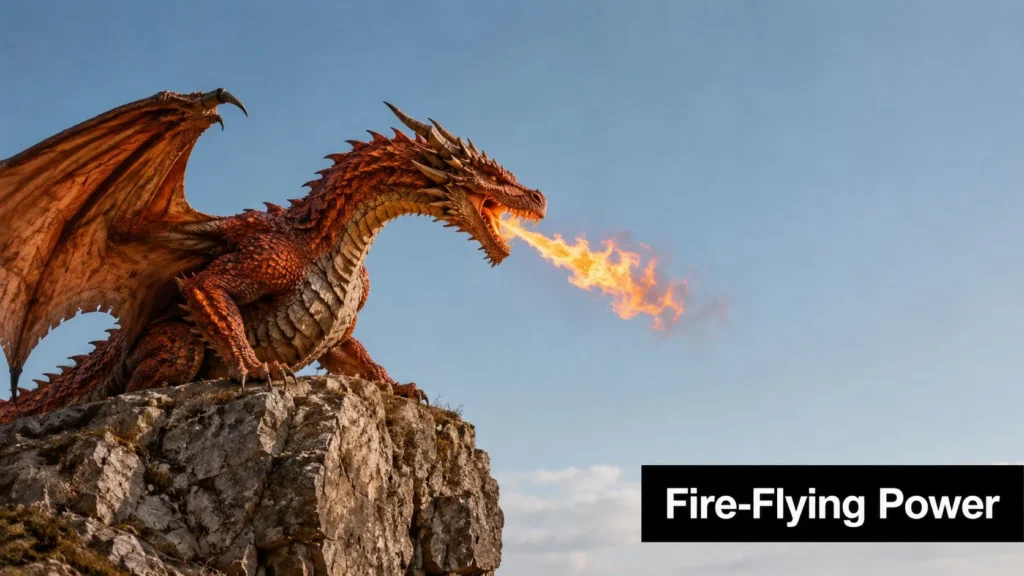
Charizard is the clearest proof that “best” can’t be reduced to one spreadsheet. On a pure stat basis, it sits at a base stat total of 534, far below the franchise’s top-end legends, yet it still appears near the top of major popularity rankings because fans treat it as a symbol of Pokémon itself, as discussed in Polygon’s best Pokémon ranking. That split between numeric power and emotional pull is exactly why Charizard deserves the top spot on a balanced list.
In battle, Charizard has always been defined by ceiling rather than safety. Its typing gives it dangerous offensive coverage and equally dangerous liabilities, especially when entry hazards are in play. That tension is part of its identity. Charizard rarely feels automatic. It feels explosive.
Why Charizard still ranks this high
Charizard’s greatness comes from range. It can be a story-mode ace, a nostalgia magnet, a card-market giant, and a real tactical threat when built correctly.
- Cultural durability: Charizard remains one of the franchise’s most persistent fan favorites across games, cards, anime, and films.
- Competitive upside: Different forms and sets have let it function as a breaker, cleaner, or setup sweeper depending on the format.
- Visual clarity: Few Pokémon communicate power as instantly as Charizard does.
For team-building, its weaknesses matter as much as its strengths. If you use Charizard seriously, start by understanding common Flying-type weaknesses, then build support around hazard control and favorable switch-ins.
A battle-focused reminder fits here.
Practical rule: Charizard performs best when you treat it as a planned win condition, not a general-purpose pivot.
Later generations strengthened its competitive identity by giving players more ways to specialize it. That matters because many iconic Pokémon survive on reputation alone. Charizard keeps finding formats where it can still pressure teams.
A short visual refresher helps explain why it remains such a central Pokémon in fan memory.
2. Alakazam The Psychic-Type Strategic Genius
Alakazam earns its place by doing something many fan-favorite Pokémon never manage. It turns a simple role into a lasting strategic identity. For generations, it has embodied the glass-cannon ideal: come in, threaten immediate damage, and force the opponent to respect your speed and special pressure.
Its analytical case starts with one hard number. Alakazam’s base 135 Special Attack is the highest among non-legendary Pokémon, a fact that anchors its reputation as one of the cleanest special sweepers ever designed. That number alone doesn’t make it an all-time great, but the way it converts pressure into tempo does.
What Alakazam does better than bulkier stars
Alakazam punishes hesitation. It doesn’t need to tank hits if it dictates the sequence.
- Immediate threat: High Special Attack means even neutral hits matter.
- Role clarity: Players know exactly what it’s for, which makes planning around it easier.
- Strategic flexibility: Utility options can punish predictable switches, not just score knockouts.
The difference between an average Alakazam and a dangerous one is optimization. Smart training decisions change specific matchups, so players who want to sharpen one should understand how EV training works in practice.
Its cultural case is smaller than Charizard’s or Pikachu’s, but that nonetheless helps its ranking. Alakazam isn’t here because it became a mascot. It’s here because it taught generations of players how speed control and special offense could shape a battle.
Alakazam is one of the best examples of Pokémon design matching battlefield function. It looks sharp, fragile, and cerebral, and it plays that way too.
That kind of coherence lasts. Even when formats change, players still recognize what Alakazam represents: precision over brute force.
3. Dragonite The Pseudo-Legendary Dragon Champion
Dragonite matters because it established a model the series kept returning to. It’s the original pseudo-legendary benchmark: a late-game reward that feels worth the effort, offers broad utility, and can swing from bulky attacker to setup sweeper without losing its core identity.
Its greatness isn’t tied to having the single highest number in any one category. It comes from efficiency. Dragonite’s stat spread supports offense and survivability at the same time, which makes it easier to slot into many kinds of teams than more specialized dragons.
Why Dragonite ages so well
Some Pokémon peak in one generation. Dragonite tends to reappear because its toolkit scales with player skill.
It rewards sequencing. If hazards are managed and setup windows are found, Dragonite can close games with frightening speed. If the matchup is rough, it can still trade effectively with priority or sheer bulk.
That versatility also helps its cultural profile. Dragonite is one of the rare dragon Pokémon that feels both powerful and approachable. It can be an Elite Four ace, a friendly courier in side media, or a competitive closer. Few dragons cover that much emotional territory.
- Prototype status: Dragonite set expectations for what a pseudo-legendary should feel like.
- Battle flexibility: It can threaten from multiple angles without needing gimmicks.
- Cross-audience appeal: Casual players and competitive players both understand why it’s good.
Dragonite’s edge over flashier dragons is reliability. You don’t pick it because it’s the newest answer. You pick it because its strengths are durable.
4. Mewtwo The Legendary Game-Changer
If this list ranked only narrative power and raw aura, Mewtwo might be first. It arrived as the franchise’s ultimate engineered threat, and it still carries that sense of forbidden strength better than almost any legendary.
Its competitive case starts from the same place as its story role. Mewtwo is overwhelming by design. It has long represented the kind of stat profile and movepool depth that pushes formats to bend around it rather than absorb it normally. Even when a metagame restricts it, that restriction says something important. The game often has to protect itself from Mewtwo more than the other way around.
The Mewtwo standard
Mewtwo’s influence is easiest to see by comparison. Many legendary Pokémon are strong. Mewtwo feels format-defining.
That’s partly because it combines immediate offensive threat with broad move access. Opponents don’t just prepare for a single line. They prepare for uncertainty. That pressure is a competitive weapon in itself.
Its cultural case is even stronger. The first movie cemented Mewtwo as more than a boss battle. It became one of Pokémon’s most recognizable expressions of ambition, ethics, and consequence. It also transitions well across media because its concept is dramatic: a created being powerful enough to challenge its creators.
The best legendary Pokémon don’t just look rare. They change the emotional temperature of the room. Mewtwo does that instantly.
Mewtwo ranks below Charizard here because its cultural reach, while huge, doesn’t extend into everyday mascot territory in the same way. But if the question is which Pokémon most successfully fused lore, power, and long-term relevance, Mewtwo has almost no competition.
5. Pikachu The Franchise Mascot and Cultural Icon
What should count more in a “best Pokémon of all time” list: peak battle output or the ability to define the franchise for decades? Pikachu forces that question because its case depends far more on cultural impact than on raw metagame performance.
On competitive merit alone, Pikachu would not rank this high. Its stats are modest, and it has rarely held a stable place near the top of serious singles or doubles play. Even so, it has had niche strategic use through speed-based pressure, item-dependent damage spikes, and format-specific support. That matters here, but only as a secondary metric.
Its primary argument is scale. Pikachu is the clearest example of a Pokémon whose cultural value exceeds its battle value by such a wide margin that excluding it would distort the category itself. It is the anime’s most visible companion, the franchise’s default visual shorthand, and the character that lets Pokémon reach audiences who have never touched the main games or studied a tier list.
That distinction matters for this ranking’s logic. The strongest battlers shape metagames. Pikachu shaped the audience.
For players who meet Pokémon in social or casual settings, shared formats such as two-player Pokémon game options are part of the same accessibility story. Pikachu appears at the center of those experiences because it is immediately recognizable, easy to understand, and closely tied to the series’ identity.
Why Pikachu still makes an analytical top 10
Pikachu ranks fifth because this list separates competitive dominance from enduring cultural force rather than blending them into one vague standard. By the first measure, it falls short of the elite battlers above it. By the second, it is arguably unmatched.
- Competitive ceiling: Limited compared with top-tier staples, but not entirely irrelevant in specialized builds.
- Cultural reach: The franchise’s most persistent mascot across games, anime, merchandise, and public recognition.
- Historical importance: One of the few Pokémon that can attract new fans before they understand type charts, team roles, or metagame trends.
Pikachu is not one of the most oppressive Pokémon ever used in battle. It is one of the few that made the entire series larger than the battle system. That is a different kind of greatness, but it still belongs in any serious all-time ranking.
6. Tyranitar The Rock-Dark Titan
Tyranitar earns its place through control. Some Pokémon win by hitting harder. Tyranitar wins by changing the conditions of the fight and forcing the opponent to play inside them.
That begins with role compression. Tyranitar can threaten offensively, soak specific hits, trap or pressure key targets in some formats, and support entire archetypes through weather. Pokémon that alter both matchup flow and team construction have outsized value even when they aren’t the fastest thing on the field.
Why Tyranitar feels bigger than one moveset
Its design and gameplay align unusually well. Tyranitar looks like a walking disaster, and in battle it often behaves like one. Switching into it is rarely comfortable because the opponent has to account for immediate damage, long-game chip, and possible support implications at once.
The weather element is the key separator. When a Pokémon influences not just its own turn but the battlefield’s general texture, it becomes a teambuilding question before it becomes a moveset question. Tyranitar has had that effect repeatedly.
- Field influence: It changes more than direct damage calculations.
- Archetype support: Sand-based structures become more coherent around it.
- Threat ambiguity: Defensive and offensive variants ask different questions.
Culturally, Tyranitar isn’t as universal as Charizard or Pikachu, but it is one of the franchise’s most respected power designs. Competitive players trust it. Casual players remember it. That overlap is rarer than it looks.
7. Garchomp The Dragon-Ground Sweeper
Garchomp is one of the best examples of modern competitive excellence. It doesn’t need unusual mythology or mascot status to justify a top slot. Its case is cleaner than that. It combines speed, power, useful typing, and practical consistency in a package that opponents always have to account for.
The reason Garchomp feels so oppressive at its best is that it pressures both offense and balance. Faster teams don’t want to give it setup windows. Bulkier teams don’t want to absorb repeated high-value hits from its STAB combination. That broad pressure gives it a higher baseline than many Pokémon that rely on narrower matchup wins.
A model of efficient dominance
Garchomp rarely wastes stats. That sounds simple, but it’s one of the best indicators of lasting viability. Every part of its profile contributes to a coherent job: threaten progress quickly and punish poor positioning hard.
Its cultural profile benefits from the same clarity. Cynthia’s Garchomp helped define champion-level menace for an entire generation of players. That matters because memorable boss associations often harden a Pokémon’s reputation faster than raw data ever could.
When players remember a champion’s team years later, they usually remember the Pokémon that ended runs. For many players, that Pokémon was Garchomp.
Garchomp ranks above Tyranitar because its pressure is often more immediately transferable across formats and team styles. Tyranitar shapes environments. Garchomp attacks them directly. Both traits are elite. Garchomp’s broad offensive usability gives it the edge here.
8. Gengar The Ghost Trickster

Gengar belongs on any thoughtful list of the best Pokémon of all time because it combines identity, utility, and personality better than almost any other non-legendary. It doesn’t just fill a role. It shapes how players imagine Ghost-types.
Its competitive draw has always come from tempo. Gengar threatens quick offense, disruptive options, and awkward decision trees for the opponent. Even when it isn’t the bulkiest or most forgiving pick, it creates pressure by making normal play feel unsafe.
Why Gengar remains a benchmark
Gengar’s value starts with unpredictability. A straightforward attacker is dangerous. An attacker that also threatens utility, status, or trick-based disruption can reshape an entire sequence.
That’s why Gengar has stayed relevant in fan memory for so long. It’s not merely strong. It feels mischievous, and players remember Pokémon whose battle patterns match their character.
- Archetype definition: For many players, Gengar is the Ghost-type reference point.
- Tactical disruption: It threatens more than direct damage.
- Strong media presence: It translates well to anime, cards, and promotional art because the design is instantly readable.
Its flaw is that it can be fragile and matchup-sensitive. But fragility isn’t disqualifying when the reward is this high. Gengar asks for sharp piloting, and in return it gives players one of the most expressive offensive tools in the series.
9. Salamence The Dragon-Flying Destroyer
Salamence ranks this high because it turns raw offensive threat into a persistent identity. It feels like a closer. Even before you calculate damage, the design tells you what it wants to do: find a window and take over the game.
That alone doesn’t make a Pokémon elite. What does is how well Salamence pairs that pressure with flexibility. Depending on the format, it can act as a setup sweeper, immediate breaker, or fast offensive check with the right support. Pokémon that can credibly wear several offensive hats stay relevant longer.
The case for Salamence over flashier options
Salamence’s biggest strength is not subtle. It punishes passive turns. If an opponent gives it room, it can convert one opening into an avalanche.
Its cultural case is solid too, even if it’s less universal than Dragonite’s. Salamence looks like the fantasy of dragon power fully realized. That matters in Pokémon because iconic designs often retain fan loyalty even when the metagame shifts around them.
- Explosive ceiling: Salamence can flip a game quickly.
- Memorable silhouette: The design has lasting visual power.
- Cross-format viability: It has repeatedly found roles in stronger fields.
Salamence lands below Gengar because its cultural identity is a little narrower and its role expression, while potent, is less distinctive than Gengar’s trickster pressure. Still, as a pure offensive dragon with long-term respect, Salamence belongs comfortably in the top 10.
10. Blissey The Defensive Standard
Blissey closes the list because all-time greatness isn’t only about who attacks best. Sometimes the Pokémon that define a metagame are the ones that force everyone else to answer them first.
Its profile is built around specialization, and the specialization is extreme. Blissey has base 255 HP and base 135 Special Defense, numbers that made it the franchise’s classic special wall and shaped defensive teambuilding for years. Those stats are part of why players still use Blissey as shorthand for “you need a real plan for special attackers.”
Why a wall belongs among icons
Defensive Pokémon often get underrated in popularity-driven rankings because their value is less cinematic. But Blissey’s impact is analytical, not flashy. It changes move choices, item decisions, and roster construction.
That kind of influence is a mark of greatness. A Pokémon that forces adaptation has already won part of the argument.
- Metagame pressure: Teams need answers specifically for Blissey-like walls.
- Role excellence: It remains one of the clearest examples of defensive specialization.
- Distinct identity: Few Pokémon are this associated with one strategic job.
Blissey’s cultural footprint is smaller than the rest of this list, which is why it appears last. But in competitive terms, it represents something indispensable. Not every all-time great needs to be glamorous. Some become legendary by refusing to break.
Top 10 Pokémon Comparison
| Pokémon | Setup Complexity | Support / Resources | Expected Outcome | Ideal Use Cases | Key Advantages |
|---|---|---|---|---|---|
| Charizard | Medium, requires Mega or specific sets for peak performance | Mega Stone (X/Y) or Choice/Life Orb; teammates to handle Stealth Rock and Water/Rock threats | Versatile special/physical attacker and potential sweeper | Hyper-offense teams, promotional/collector appeal, mixed offensive roles | High Special Attack/Speed, diverse movepool, strong franchise recognition |
| Alakazam | Low–Medium, fragile so needs protection and item/ability support | Mega Stone or Magic Guard ability; Wish/Protect partners and specific EVs | Glass-cannon special sweeper / revenge killer | Fast-attack singles teams, priority-reliant strategies | Extremely high Special Attack and Speed; Magic Guard utility |
| Dragonite | Medium, relies on Dragon Dance and Multiscale protection | Multiscale ability, Dragon Dance, Stealth Rock removal (Rapid Spin) | Bulky setup sweeper capable of late-game cleaning | Endgame cleaner, bulky offensive cores, pseudo-legend builds | Multiscale survivability, broad movepool, balanced offensive stats |
| Mewtwo | High, top-tier investment and format-restricted usage | Mega Stones (X/Y), heavy EV/IV investment; limited availability in many formats | Overwhelming special/physical powerhouse and game-changer | High-tier competitive play where allowed; single-player boss roles | Best-in-class stats, massive movepool, flexible Mega options |
| Pikachu | Low, very accessible but limited by base stats | Light Ball for huge damage boost; team support vs Ground types | Iconic mascot with niche competitive viability | New-player teams, promotional appearances, doubles novelty sets | Unmatched cultural recognition, accessibility, Light Ball synergy |
| Tyranitar | Medium–High, team-dependent due to Sandstream mechanics | Sandstream ability; sand-team teammates, water-resistant partners, Assault Vest options | Weather-controlling tank and offensive pivot | Sand teams, stallbreakers, mid-field hazard control strategies | Sandstream team synergy, strong physical bulk, versatile movepool |
| Garchomp | Medium, benefits from Mega or setup boosts (Swords Dance) | Mega Stone or Swords Dance/Sweeper support; hazard entry damage aided by Stealth Rock | Fast physical sweeper and powerful late-game cleaner | Offensive teams, priority-breaching sweepers, pseudo-legend cores | High Attack and Speed, excellent coverage, Rough Skin defensive chip |
| Gengar | Medium, fragile but high reward; needs protection or Mega | Mega Stone or Focus Sash; hazard management and Nasty Plot support | Extremely fast special attacker and revenge cleaner | Special-offense teams, Ghost-type metagames, priority removal roles | Very high Special Attack/Speed, Levitate/immunity (older gens), strong movepool |
| Salamence | Medium, Mega Dragon Dance optimizes sweeping potential | Mega Stone for Dragon Dance; Rapid Spin partners to clear hazards | Powerful Dragon Dance sweeper with great mobility | Offensive sweep teams, doubles/VGC when Mega allowed | Balanced physical power, Flying STAB, Mega-enabled Speed boosts |
| Blissey | Medium, specialized defensive role requiring team support | Heal Bell/Cleric moves, large HP/SpD EV investment, partners for physical defense | Ultimate special-defense wall and team sustain provider | Stall/defensive teams, long-game support and cleric roles | Unmatched HP and Special Defense, team-wide healing and status removal |
Beyond the Rankings Your Pokémon Legacy
What should “best Pokémon of all time” measure. The strongest battle record, or the widest and longest cultural reach?
Those are separate tests, and this list works better once they stay separate. Competitive greatness is relatively easy to define. It shows up in stat profiles, movepool depth, role compression, metagame longevity, and how often a Pokémon forces opponents to prepare for it. Cultural greatness follows a different standard. Mascot value, anime presence, recognizability outside the core games, merchandising, and long-term fan attachment matter there.
The split explains why a purely statistical answer never fully resolves the argument. Arceus stands as the cleanest example of raw designed power, with the highest standard base stat total in the main series, according to Serebii’s base stat listings. Eternamax Eternatus goes even further in a restricted boss-only context rather than ordinary competitive formats, as discussed in Pokémon Database’s stat-wise breakdown.
That distinction matters.
A Pokémon can rank lower in pure battle terms and still place higher in an all-time conversation because cultural influence compounds across decades. Charizard is the clearest case. It has had stretches of top-level relevance, but its real advantage is range. It performs in games, anchors marketing, dominates card art, and remains one of the first names casual fans mention. Pikachu is even more extreme. Its competitive value has usually been limited, yet its cultural position is unmatched. Mewtwo sits closer to the middle, combining elite in-universe status with serious competitive respect in formats that allow it.
Competitive players and general audiences already treat these as different questions, even if online debate often mixes them together. A popular competitive discussion on YouTube reflects that divide. Viability depends on format rules, matchups, and team context. Popularity depends on recognition and emotional memory, which operate by different logic.
A stronger ranking method asks two questions. Which Pokémon gives the highest chance to win in serious play. Which Pokémon still matters after the battle ends?
The rare names that score well on both axes become the franchise’s real all-timers. That is why this list can place Charizard, Mewtwo, and Pikachu near the top without pretending they dominate for the same reasons as Garchomp, Alakazam, or Blissey. One group earns status through repeatable strategic value. The other earns it through reach, recall, and permanence in the wider culture. The overlap is where legacy becomes harder to dismiss and more interesting to analyze.
If you want more gaming rankings, Pokémon commentary, and accessible analysis, visit maxijournal.com.
Discover more from Maxi Journal
Subscribe to get the latest posts sent to your email.