Rosemary is generally non-toxic for dogs in small amounts, and one pet-food ingredient review notes that rosemary extract appears in 30% of dog food formulas. If you’re standing in your kitchen with a sprig in one hand and your dog staring up at you, the safest answer is yes for most healthy dogs, but the form and amount matter most.
Maybe you dropped a few rosemary leaves while cooking chicken. Maybe your dog licked a plate with roasted potatoes and herbs. Or maybe you noticed rosemary extract on a bag of kibble and wondered whether it belongs there at all. Those are sensible questions, because “safe” can mean very different things depending on whether you’re talking about a fresh herb, a dried seasoning, an extract in commercial food, or an essential oil.
That difference is where people often get tripped up. A small pinch of chopped rosemary in food is not the same as concentrated rosemary oil. A dog who tolerates a little dried herb may still do poorly with too much plant material, especially if they have a sensitive stomach or a seizure history.
A Sprinkle of Green in Your Dog’s Bowl
You’re chopping herbs for dinner, and your dog is parked beside the cutting board in that hopeful, unblinking way dogs have. A little rosemary falls. You pause. Can dogs eat rosemary, or is this one of those herbs that seems harmless to people but causes trouble for pets?
For most healthy dogs, a tiny amount of rosemary leaf isn’t a poisoning emergency. The bigger question is what kind of rosemary your dog got. Fresh leaves, dried leaves, rosemary extract in kibble, and rosemary essential oil don’t behave the same way in the body.

What owners usually mean by “safe”
Few are planning to feed their dog a bowl of rosemary. They’re asking one of three things:
- A few leaves fell into dinner: Is this dangerous, or should you call right away?
- The ingredient label lists rosemary extract: Is that normal in dog food?
- You use herbal products at home: Is all rosemary equally safe around pets?
The answer changes with the form. That’s the part many simple yes-or-no guides skip.
A useful rule: Think of rosemary like a seasoning, not a snack. Small amounts of the herb are very different from concentrated preparations.
If your dog stole a bite of food with a light dusting of plain rosemary, most of the time the next step is simple observation. If your dog got into rosemary oil, chewed woody stems, or has a seizure disorder, the situation deserves more caution.
The Official Verdict on Rosemary Safety
The strongest baseline fact comes from the ASPCA. The ASPCA rosemary listing identifies rosemary (Rosmarinus officinalis) as “Non-Toxic to Dogs,” “Non-Toxic to Cats,” and “Non-Toxic to Horses.”
That classification matters because it helps separate rosemary from dangerous plants. If a dog nibbles a little rosemary, the main concern usually isn’t acute poisoning. It’s whether the amount, the texture, or the dog’s own sensitivity leads to irritation or an upset stomach.
What “non-toxic” actually means
“Non-toxic” doesn’t mean unlimited. It means the plant itself isn’t typically associated with the kind of poisoning emergency you worry about with more hazardous substances.
In practical terms, that means:
- Small accidental exposure is usually low risk: A few fresh or dried leaves are not the same as ingesting a known poison.
- Moderation still matters: Large amounts can still upset the digestive tract.
- Your dog still matters: One dog may ignore it completely, while another gets loose stool or vomits after trying something new.
Why owners still see warnings online
Those warnings often come from mixing together very different rosemary products. A whole herb in tiny amounts is one category. A concentrated oil is another. A fibrous stem that can be swallowed whole creates a separate concern because that becomes a choking or obstruction issue, not a plant-toxicity issue.
Non-toxic doesn’t mean risk-free. It means the herb itself is not usually the reason for a poison-control emergency.
That distinction can lower panic without encouraging carelessness. If your healthy dog licked a plate with a little plain rosemary, that’s usually very different from eating a heavily seasoned dish, getting into a bottle of oil, or chewing through a bundle of stems.
Potential Health Benefits of Rosemary
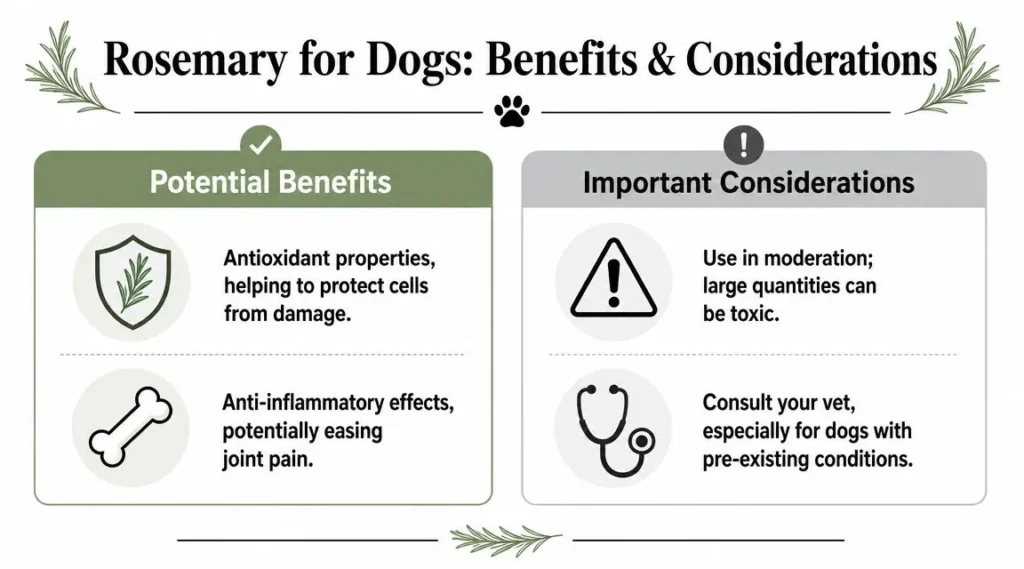
Rosemary can help a dog’s food in a quiet, behind-the-scenes way. The biggest point is the form. A tiny amount of rosemary herb or a food-grade rosemary extract used in pet food serves a very different purpose than a concentrated oil sitting in a bottle.
Why rosemary shows up in pet foods
In many commercial foods, rosemary is not there to provide major nutrition the way protein, fat, or vitamins do. It is often included because certain forms, especially rosemary extract, can help protect fats from breaking down too quickly. That matters because fats are one of the first parts of food to lose freshness.
You can picture it like putting a lid on leftovers. The lid does not make the meal healthier by itself, but it helps keep the food in better condition. Rosemary extract can play a similar supporting role in some formulas.
Owners also hear rosemary discussed for its antioxidant and antimicrobial properties. Those terms sound technical, so here is the plain-English version:
- Antioxidant activity: may help slow oxidation in food, which supports freshness
- Antimicrobial activity: may help limit growth of some unwanted microbes in certain formulations
- Supportive role: works as a minor ingredient, not a main source of nutrition
That distinction matters. Fresh rosemary in a homemade topper, dried rosemary in a biscuit, and rosemary extract in kibble are related, but they are not interchangeable. The potential benefit often depends less on the plant name and more on how the rosemary has been prepared and how much is used.
For owners interested in herbs as part of a broader wellness plan, professional guidance is the safest route. Pet Acupuncture & Wellness herbal services offers a useful example of how veterinarians or trained wellness providers can match herbal support to an individual dog instead of relying on guesswork.
Here’s a short video if you want a visual overview before trying any herb at home.
Keep the benefits in perspective
A pinch of rosemary does not act like a supplement with a dramatic effect you can easily see at home. For most dogs, any benefit is modest and indirect. In many cases, it is more about preserving the quality of the food than improving the dog’s health in a noticeable way.
That is why I tell owners to treat rosemary like a supporting actor, not the star of the bowl.
If you like comparing plant ingredients one by one, this guide on whether dogs can eat cranberries safely in different forms shows how the form of a food often changes the answer just as much as the ingredient itself.
Understanding the Risks and When to Avoid It
A common real-life problem looks like this. A dog does fine with a tiny amount of rosemary in food, then gets an upset stomach after chewing a whole garden sprig or licking a product made with concentrated oil. The ingredient name stayed the same, but the form changed, and that changes the risk.
For healthy dogs, rosemary usually causes trouble through irritation, not poisoning. Too much fresh or dried rosemary can bother the stomach and lead to vomiting, diarrhea, or reduced appetite. Some dogs also react with skin irritation after contact with rosemary-containing grooming products or sprays.
The dogs I worry about most are not the average healthy adult dog.
Dogs with epilepsy, a past seizure, or unexplained shaking or neurologic episodes deserve extra caution. Rosemary is one of those ingredients that may be tolerated by many dogs but still be a poor choice for a dog with a seizure history. If that sounds like your dog, ask your veterinarian before offering rosemary in homemade treats, toppers, supplements, or flavored products.
Pregnant dogs and very small puppies also call for a more conservative approach. Their bodies are less forgiving, and there is rarely a good reason to experiment with aromatic herbs unless your veterinarian has a specific plan.
The form matters more than many owners realize
Fresh leaves, dried leaves, extracts, and essential oils should not be lumped together. Fresh and dried rosemary used in tiny food amounts are the mildest forms for most dogs. Concentrated products are different because they deliver much more of the plant’s active compounds in a much smaller amount.
Rosemary essential oil sits in the highest-risk category. Dogs can be irritated by it through the mouth, skin, or even heavy inhalation. That is one reason plant oils and fragrant herbs can be confusing for owners. If you are comparing similar household plants and scented products, this guide on whether lavender is toxic to dogs explains another case where the form of the plant changes the safety picture.
Some rosemary problems are mechanical
Sometimes the issue has nothing to do with the herb’s chemistry. Rosemary stems are woody and fibrous, almost like little twigs. A dog that gulps down a whole sprig may gag, cough, retch, or struggle to pass the material, especially small dogs and fast eaters.
Watch for these signs after exposure:
- Vomiting or diarrhea
- Gagging, coughing, or repeated swallowing
- Pawing at the mouth
- Itching, redness, or rash after skin contact
- Unusual agitation or neurologic signs in a seizure-prone dog
If your dog shows mild stomach upset, stop offering rosemary and monitor closely. If your dog has trouble breathing, keeps gagging, seems painful, or shows any seizure-like behavior, contact a veterinarian right away.
One more point often gets missed. Dogs do not only meet rosemary in the food bowl. They may brush against treated garden beds, chew landscaping, or pick up residues from lawn and yard products. If your dog seems to react after time outside, look beyond the herb itself and review pet-friendly pest control solutions as part of the bigger safety picture.
How to Safely Prepare and Serve Rosemary
If you decide to offer rosemary, the safest home approach is conservative. Use the leaf, not the oil. Use a small amount, not a heavy coating. Mix it into food, don’t hand over a whole sprig and hope for the best.
The main practical lesson is simple: fresh and dried rosemary are not the same as rosemary essential oil.
The forms that are safest and least safe
Veterinary guidance warns that rosemary essential oils are a separate exposure category from the herb. According to Rover’s rosemary guidance, experts at Dogs Naturally and Rover advise against using undiluted rosemary oil internally or externally on dogs, especially dogs with seizure disorders or dogs who are pregnant.
That means the answer to can dogs eat rosemary depends heavily on which version you mean.
| Form | Safety Level | Serving Guidance |
|---|---|---|
| Fresh rosemary leaves | Generally safer for most healthy dogs in tiny amounts | Finely chop and use a small pinch mixed into food |
| Dried rosemary | Generally safer for most healthy dogs in tiny amounts | Use a light sprinkle only, and avoid seasoning blends with other additives |
| Rosemary extract in commercial dog food | Usually acceptable when already formulated into the food | Follow the product as labeled rather than adding more yourself |
| Whole rosemary stems | Use caution | Avoid offering whole because the texture can be hard to chew and swallow |
| Rosemary essential oil | Avoid for home feeding or topical use without veterinary direction | Do not give by mouth, and don’t use undiluted on the skin |
A simple home method
If your dog is healthy and you want to try it, keep it plain.
- Choose plain rosemary only: No garlic blends, no onion seasoning, no salty herb mixes.
- Use very little: A tiny pinch is enough for a first trial.
- Chop fresh leaves finely: That makes them easier to mix and less poky to swallow.
- Mix into a normal meal: Don’t serve rosemary by itself.
- Watch your dog afterward: Loose stool, vomiting, or scratching means it didn’t agree.
Start with less than you think you need. Dogs don’t need a strong herbal flavor to “get the benefit.”
Human foods seasoned with rosemary can be risky for reasons that have nothing to do with the herb itself. Butter, rich oils, onion, garlic, and heavy salt are often the bigger issue. The same goes for side dishes many owners share casually. If that sounds familiar, this article on whether dogs can eat potatoes is a useful reminder that preparation changes everything.
Healthy and Safe Herb Alternatives
Sometimes the best answer is to skip rosemary altogether. That’s especially true if your dog has a seizure history, a touchy stomach, or a habit of grabbing whole plants and chewing first.
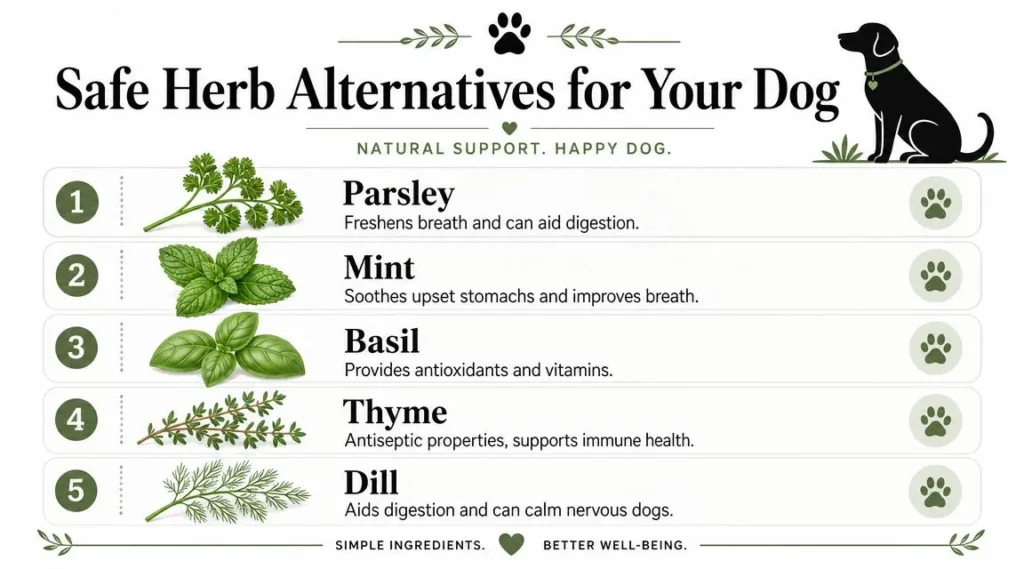
The good news is that rosemary isn’t the only herb owners consider. If you want variety in your dog’s bowl, a gentler option may fit better.
Options owners often prefer
- Parsley: Often chosen for fresher breath and general meal variety.
- Mint: Some owners use small amounts for breath, though strong mint products are a separate issue.
- Basil: A mild culinary herb that many dogs tolerate well in tiny amounts.
- Thyme: Another cooking herb that can be easier to work with in small food portions.
- Dill: Sometimes used in very light amounts for flavor.
How to choose between rosemary and another herb
If your dog is healthy, eats a stable diet, and you want a tiny herbal garnish once in a while, rosemary may be fine. If your dog has a complicated medical history, it makes sense to choose a simpler herb or skip extras entirely.
Look at your dog, not just the ingredient.
- For dogs with sensitive digestion: Start with the mildest possible addition, or none.
- For dogs with neurologic concerns: Avoid rosemary unless your veterinarian says otherwise.
- For owners who want “natural” support: Keep the plan boring and safe. Plain herbs beat concentrated oils and trendy blends every time.
Can dogs eat rosemary? Usually yes, in small amounts and in the right form. But the best herb for your dog is the one that fits your dog’s health history, not the one that sounds most impressive.
If you enjoy clear, practical pet guides like this one, visit maxijournal.com for more approachable articles on everyday questions about dog nutrition, safety, and life with pets.
Discover more from Maxi Journal
Subscribe to get the latest posts sent to your email.