Neosporin can technically be used on a dog’s minor, superficial wound, but only in a thin layer and only if you can prevent licking. It contains three antibiotics, and neomycin carries particular safety concerns, so it isn’t appropriate for deep, dirty, puncture, bite, or sensitive-location injuries.
Your dog may have caught a paw on a fence, scraped a leg on rough concrete, or returned from the yard with a small raw patch and slight bleeding. You reach for the familiar tube because doing something feels better than watching your dog fuss with the injury. The important question isn’t only whether Neosporin touches canine skin safely. It’s whether this wound is suitable for home care, and whether your dog can leave the ointment alone.
A superficial scrape on clean skin is a very different problem from a puncture wound hidden under fur. If you’re unsure which one you’re looking at, treat uncertainty as a reason to contact your veterinarian rather than as permission to apply an over-the-counter product.
When Can You Use Neosporin on Dogs Safely
The narrow situation where it may be reasonable
Neosporin may be considered for a small, superficial scrape or abrasion that affects only the outer skin, has minimal bleeding, and isn’t contaminated with dirt, plant material, or other debris. The wound should be easy to see and monitor, and your dog should otherwise be behaving normally.
Start by gently rinsing the area. Don’t smear ointment over soil, gravel, dried blood, or discharge. Once the surface is clean and dry, a very thin layer is the most that should be considered. Guidance from the American Kennel Club on Neosporin for dogs also emphasizes preventing licking and stopping if redness, itching, or a rash develops.
That last condition is where many home-care attempts fail. A product can be tolerated on the skin and still become a poor choice if your dog immediately licks it away. In that situation, the exposure is no longer limited to the wound surface, and repeated licking can irritate the stomach while increasing contact with ingredients that aren’t intended to be swallowed.
Injuries that need a veterinarian
Don’t use Neosporin as a substitute for an examination if the injury is deep, gaping, punctured, caused by a bite, or located near the eye, ear, nose, mouth, or genitals. These areas are harder to clean safely and may involve structures that need more careful treatment.
Call a veterinary clinic if bleeding continues, the wound contains embedded material, your dog is in marked pain, or the injury becomes hot, swollen, foul-smelling, or draining. A wound can look small at the surface while bacteria and damaged tissue sit underneath. Topical antibiotics have limited penetration into deeper tissue, so they can’t replace veterinary cleaning or other treatment when the problem extends below the skin, as described in guidance on using antibiotics from BacteriaFAQ.com.
A rash around the wound can also change the plan. Irritation, allergy, infection, and self-trauma can look similar at home, so use the dog rash care guide as general reading, not as a reason to delay veterinary advice when the skin is worsening.
Understanding the Ingredient Risks for Dogs
Neosporin isn’t one single antibiotic. The standard triple-antibiotic formulation contains bacitracin, polymyxin B, and neomycin. That matters because veterinarians generally regard the first two as relatively safe for topical animal use, while neomycin has been linked to hearing loss and deserves more caution, particularly when exposure isn’t limited to a small area of intact or superficial skin.

Why the formulation changes the decision
The concern is stronger with oral or injected exposure, but that doesn’t make topical use automatically risk-free. Dogs often groom irritated areas, and a product placed on a paw, lower leg, belly, or flank may be removed by the tongue before it has any chance to stay on the skin.
Neomycin’s risk is one reason a blanket answer to “can you put Neosporin on a dog” can mislead. “Safe on the surface” doesn’t mean “safe inside the body,” and it certainly doesn’t mean “appropriate for a deep wound.” The depth, location, size, cleanliness, and accessibility of the injury all matter.
A dog can also develop a local reaction to a topical product. Watch for increased redness, itching, bumps, swelling, or a rash after application. If those signs appear, remove residue gently if you can do so without causing more trauma, prevent further licking, and ask your veterinarian what to use instead.
Read the label, then consider the dog
Different products sold as antibiotic ointments may have different active ingredients, added pain relievers, anesthetics, preservatives, or other compounds. Don’t assume that every tube labeled “antibiotic” has the same safety profile as the product you intended to use.
Before applying anything, check:
- The active ingredients: Confirm exactly what the product contains.
- The wound location: Avoid areas where licking is inevitable or accidental contact with the eyes and mouth is likely.
- The exposure route: A dog that will ingest the ointment repeatedly isn’t a good candidate for unsupervised topical treatment.
- The skin response: Stop if irritation appears instead of adding more product.
If the concern is recurring itching rather than a single scrape, ointment won’t address the underlying cause. A general resource on dog skin allergy treatment prices can help you understand why persistent skin problems may require a proper veterinary workup rather than repeated self-treatment.
Veterinary Guidelines Versus Common Home Remedies
People often reach for the same products they use on their own cuts. That instinct is understandable, but canine wound care is more conservative. A major veterinary hospital system advises against applying ointments, creams, disinfectants, or other chemicals to an open wound unless a veterinarian directs it, because these products can interfere with healing.
That doesn’t mean every topical product is forbidden in every situation. It means the default should be gentle cleaning and careful observation, with an ointment used only when the wound and the dog make that choice reasonable.
Veterinary Guidance vs. Home Intuition
| Common Home Approach | Veterinary Recommendation | The Reasoning |
|---|---|---|
| Cover every scrape with a thick coat of ointment | Use only a thin surface layer, and only for a suitable superficial wound | Heavy application can keep the area excessively moist, interfere with healing, and encourage licking |
| Pour strong disinfectant into an open wound | Rinse gently and ask a veterinarian about anything beyond basic cleaning | Harsh chemicals can injure delicate tissue and complicate the healing environment |
| Pack antibiotic cream into a hole or puncture | Don’t fill deep wounds with topical ointment at home | Topical agents have limited penetration and cannot clean damaged tissue beneath the surface |
| Let the dog lick because the product is “pet safe” | Prevent access to the treated area | Ingestion can cause digestive upset and increases exposure to the formulation |
| Keep treating because the wound looks small | Reassess if pain, heat, swelling, discharge, or behavior changes develop | Surface appearance doesn’t always reveal the depth or contamination of an injury |
Why more product doesn’t mean better care
Topical antibiotics are most useful for localized, superficial wounds. Veterinary wound-care references explain that they may delay epithelialization when overused, and they don’t replace wound lavage, removal of damaged tissue, or systemic treatment when infection extends deeper. The VCA guide to caring for open wounds in dogs provides the relevant veterinary framework.
Your goal isn’t to make the wound look coated. Your goal is to keep it clean, stop the dog from traumatizing it, and notice promptly if healing isn’t moving in the right direction. That may mean no ointment at all.
Don’t substitute household remedies just because they sound natural. Products recommended for people can still irritate canine skin, trap contamination, or conceal a worsening injury. The same caution applies to advice about home remedies for mange, since a chronic skin disease requires a different assessment from a fresh scrape.
Proper Steps for Cleaning and Applying Ointment
If the injury appears minor and superficial, keep the process simple. Gather clean water or sterile saline, a clean cloth or gauze, the product label, and a way to prevent licking before you start. If you can’t manage the dog safely, stop and call the clinic rather than wrestling over a painful wound.
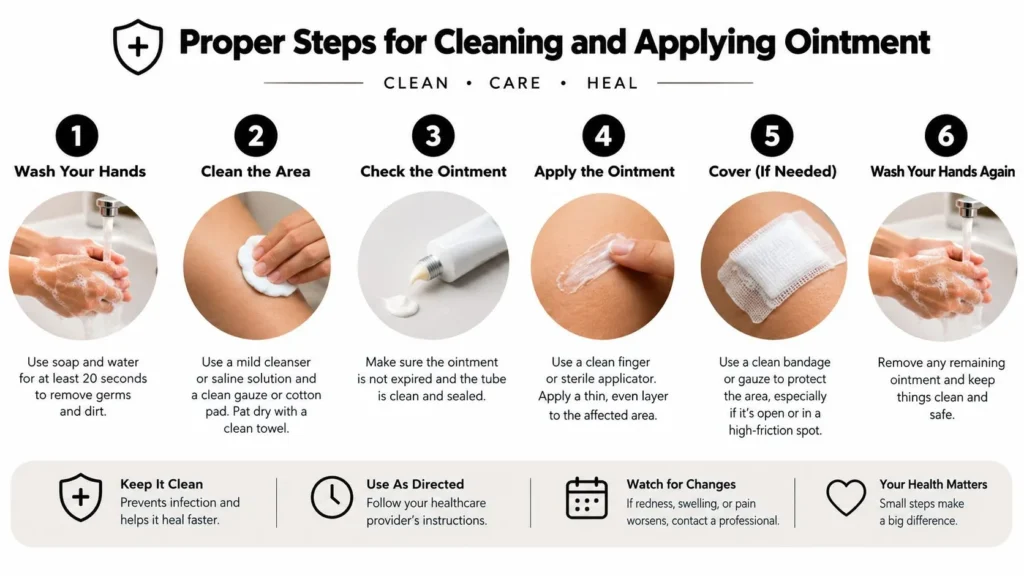
A practical home-care sequence
Control movement. Have someone calmly hold your dog, or use a leash if that keeps the dog settled. Don’t force examination if your dog may bite because of pain.
Inspect without digging. Look for depth, gaping edges, puncture marks, foreign material, and bleeding. If you see a deep opening or something embedded, leave it in place and contact a veterinarian.
Rinse the surface. Use sterile saline or clean water to flush away loose contamination. Mild soap and water may be appropriate around the area, but don’t scrub aggressively or push cleanser into an open wound.
Pat dry. Use clean gauze or a fresh cloth. Rubbing can reopen the surface and make a minor injury more painful.
Apply very little. If veterinary guidance or the wound’s limited nature supports using Neosporin, spread a thin film over the surface only. Don’t pack ointment into a puncture, pocket, or deep cut.
Block access and monitor. Use a suitable cone, protective garment, or veterinary-directed bandage. Check the area for worsening redness, itching, swelling, discharge, or renewed bleeding.
The choice of product still matters. If you’re comparing triple-antibiotic formulations, review the ingredients and intended use, such as the triple-antibiotic ointment information from DME Superstore, rather than assuming every product is interchangeable.
What not to do
Don’t apply a thick layer, scrub until the wound is raw, seal a dirty injury under an airtight covering, or keep reapplying ointment because your dog licked it off. If the wound looks worse after cleaning, the dog becomes increasingly painful, or you can’t tell how deep it is, home treatment has reached its limit.
Preventing Licking and Managing Ingestion Risks
A dog that removes the ointment within seconds hasn’t received effective wound care. The repeated licking also creates the exact problem that makes Neosporin a questionable choice: the product moves from the skin into the mouth, and the dog may keep ingesting small amounts while irritating the wound with the tongue.
This is common with paw injuries. The dog notices a new smell, licks the area, gets temporary relief from the sensation, and then returns to it whenever the ointment is reapplied. A thin layer doesn’t solve that cycle by itself.
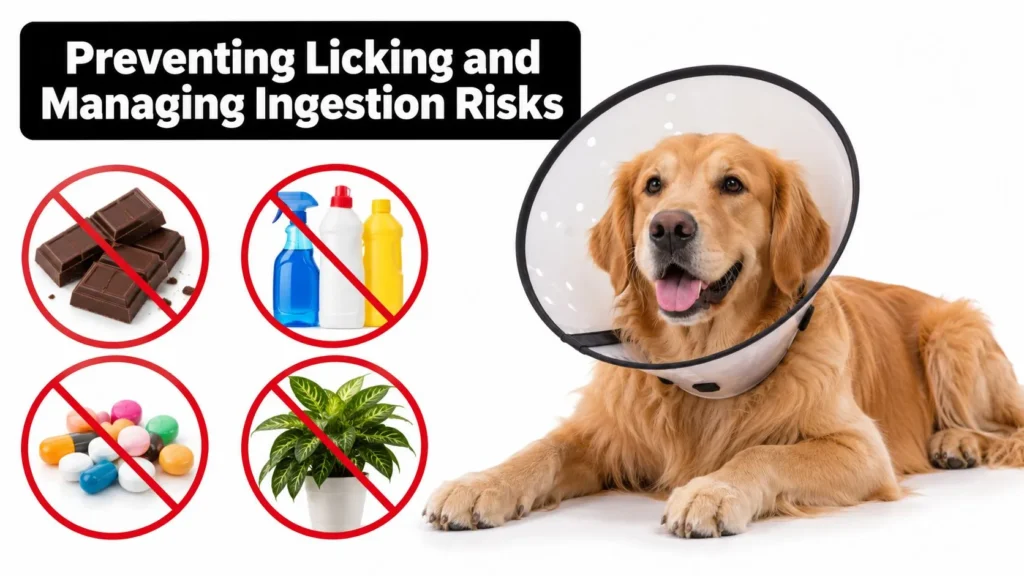
Match the barrier to the wound
An Elizabethan collar is often the most dependable option because it prevents the mouth from reaching many areas without putting medication directly against the skin. A properly fitted medical recovery suit can help with some trunk wounds, while a bandage may protect a paw or limb if a veterinary professional has shown you how to apply and monitor it.
Bandages aren’t automatically safer. A wrap that’s too tight can damage circulation, and a damp or dirty covering can create another problem. Keep the barrier clean and dry, inspect exposed toes for swelling or discoloration, and ask a clinic for instructions if the wound needs ongoing coverage.
Practical rule: If you can’t physically stop your dog from licking the ointment, don’t keep adding more ointment. Change the plan and ask a veterinarian what barrier or treatment fits the wound.
If your dog licks once, don’t panic. Wipe away excess product if you can do so gently, offer water, and monitor for vomiting, diarrhea, unusual weakness, or other changes. Larger or repeated ingestion, signs of illness, or concern about the formulation warrant prompt veterinary advice. Don’t induce vomiting unless a veterinary professional specifically tells you to.
Keep medications and tubes out of reach after use. If licking is driven by intense itch rather than the wound itself, don’t improvise with human medication. Guidance about Benadryl dosing for dogs is not a substitute for checking the cause of the itch or confirming that a medication is appropriate for your dog.
The decision may be simple: if the location makes self-grooming likely and a cone or suitable covering isn’t practical, Neosporin is a poor choice altogether. A product that can’t remain on the intended surface isn’t providing controlled topical care.
Safer Alternatives and When to Call the Vet
For a minor scrape, the safest first step is often gentle cleaning and observation rather than automatically reaching for an antibiotic. Ask your veterinarian whether a plain, non-antibiotic barrier such as petroleum jelly is suitable for the particular wound. It may be preferable when the concern is surface protection and there is no reason to expose the dog to an antibiotic formulation, but it still shouldn’t go on a deep, contaminated, or infected injury without professional direction.
Don’t choose an alternative just because it is available in the bathroom. Avoid products with added pain relievers, anesthetics, fragrances, or other ingredients unless your veterinarian has approved them for your dog. The wound’s depth and location matter more than the brand on the tube.
Stop home care and call promptly if
- The wound is deep or punctured: Bite wounds and narrow punctures can hide damage and contamination beneath a small surface opening.
- Bleeding won’t stop: Apply gentle pressure with clean gauze while contacting a clinic. Don’t keep lifting the gauze to check every moment.
- The location is sensitive: Injuries near the eyes, ears, nose, mouth, or genitals need professional guidance.
- The wound is worsening: Heat, swelling, pus, foul odor, spreading redness, or increasing pain are reasons to stop experimenting at home.
- Your dog seems seriously affected: Marked pain, weakness, unusual behavior, or inability to settle deserves veterinary assessment.
- Licking can’t be controlled: Ongoing ingestion changes the risk calculation, even if the original scrape looked minor.
The useful decision isn’t “Is Neosporin safe for dogs?” in isolation. It’s “Is this a superficial wound, is this formulation appropriate, and can I prevent my dog from swallowing it?” If any answer is uncertain, clean only as directed, protect the area from further trauma, and contact your veterinarian.
Maxi Journal publishes approachable pet-health and dog-care articles, including practical guidance on behavior, skin checks, and everyday care decisions. Visit maxijournal.com to read more clear, useful information before a small home-care question becomes an urgent problem.
Discover more from Maxi Journal
Subscribe to get the latest posts sent to your email.