You’re rubbing your dog’s belly, everything seems normal, and then your fingers find it. A red patch. Tiny bumps. A warm, irritated area under the fur. Your dog starts licking when you touch it, and suddenly your mind goes everywhere at once. Is it an allergy? Fleas? Something serious?
That reaction is completely understandable. Skin problems are one of the most common reasons dogs end up at the clinic. In one survey of first-opinion small-animal practices, dermatological disorders accounted for 17.0% of all dogs examined (221/1,299), which shows how often owners and veterinary teams deal with these issues in everyday practice (survey data on common veterinary skin complaints).
The reassuring part is that a rash in dogs often becomes less mysterious once you stop thinking of it as one single problem. Most rashes are a clue, not a final answer. And many are really two problems happening together. First, something triggers the skin. Then scratching, chewing, and licking damage that skin enough for yeast or bacteria to move in and make everything worse.
That’s why one rash can look simple on day one and much messier a few days later.
That Unsettling Moment You Find a Rash on Your Dog
A lot of owners tell me the same story. Their dog was fine at breakfast, fine on the walk, fine at bedtime. Then during a cuddle, grooming session, or bath, they notice redness on the belly, armpit, groin, neck, or paws. Sometimes it looks angry and obvious. Sometimes it’s just a faint patch under the coat, but the dog keeps licking it like something is bothering them.
That uncertainty is what makes skin issues stressful. You can see the problem, but you can’t always tell what started it.
One dog might get a rash after rolling in grass. Another may be reacting to flea bites. Another may have underlying allergies and the rash is just the latest flare. All three can look surprisingly similar at first glance.
Practical rule: Don’t judge a rash only by color. Pay attention to your dog’s behavior too. Licking, scratching, rubbing the face, chewing the feet, and scooting all add useful clues.
Owners also get tripped up by timing. If the rash appeared suddenly, you naturally think about a sudden cause, like a sting, plant, shampoo, or medication. If it keeps coming back in the same places, that leans more toward an ongoing issue, such as allergy or parasites. Neither pattern tells the whole story by itself, but both matter.
The good news is that you don’t need to solve it instantly. You just need a calm, safe plan. Start by noticing where the rash is, what your dog is doing, whether it’s getting worse, and whether your dog seems otherwise normal. Those observations help more than people realize.
Understanding What a Dog Rash Actually Is
A rash in dogs isn’t a diagnosis by itself. It’s more like a check-engine light. It tells you the skin is reacting, but it doesn’t tell you why.
Veterinary references describe a rash as a clinical sign of skin inflammation rather than a diagnosis, and the most frequent drivers are allergies, insect bites or stings, contact irritants, and parasites (Merck’s overview of hives and rashes in dogs). Different causes can trigger the same basic inflammatory response, which is why so many skin problems blur together early on.
What inflammation looks like on skin
When skin gets inflamed, you may notice:
- Redness because blood flow to the area increases
- Swelling or puffiness
- Heat when the area feels warmer than nearby skin
- Itchiness that drives scratching, licking, or chewing
- Bumps, welts, flakes, or crusts depending on how the skin is reacting
That’s the body’s alarm system turning on. The skin is saying, “Something here isn’t right.”
Why the skin barrier matters
I often explain the skin barrier as a brick wall. The skin cells are the bricks. Natural oils and protective material between them act like mortar. When that wall is healthy, it helps keep irritants, allergens, and microbes where they belong.
When the wall gets weak, things slip through.
A dog with a skin problem may start with a primary trigger, like pollen, a flea bite, or a harsh product on the skin. Once the dog scratches and licks, that brick wall gets chipped and cracked. Then the area becomes easier for yeast and bacteria to colonize, which adds a second layer of trouble.
The rash you see is often the skin’s distress signal. The harder question is whether you’re looking at the original problem, the complication that followed, or both.
That’s why “What can I put on it?” usually isn’t the first question. The better question is, “What set this off, and what’s keeping it going?”
The Five Main Triggers Behind Most Dog Rashes
When owners ask what causes rash in dogs, I usually start with five buckets. These categories don’t cover every rare disease, but they catch most of the common reasons a dog’s skin becomes red, itchy, bumpy, or inflamed.
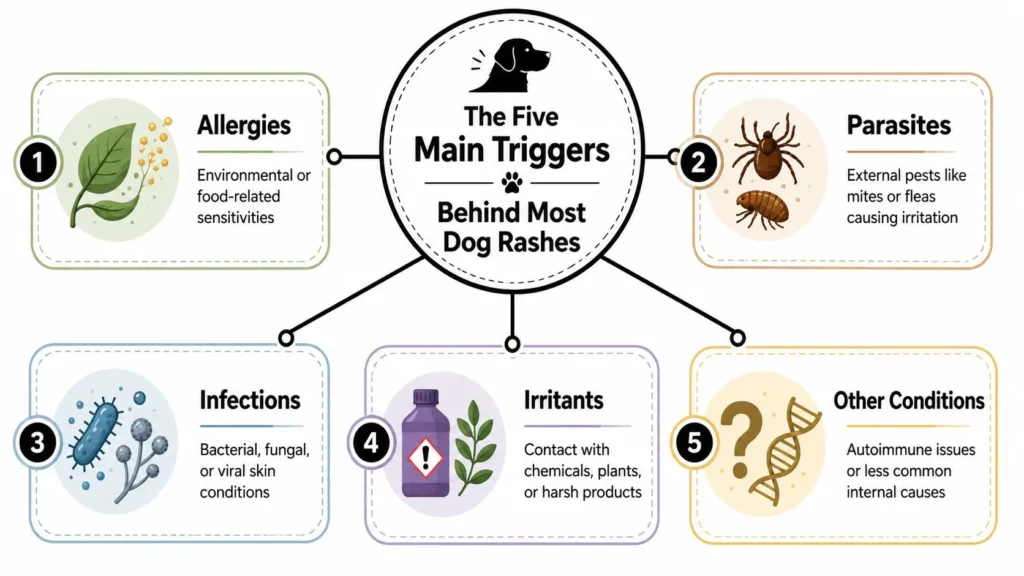
Allergies
Allergies are a major piece of the puzzle. Canine atopic dermatitis is one of the most common allergic skin conditions and has an estimated prevalence of 3% to 15% in the general dog population (review on canine atopic dermatitis prevalence). That doesn’t mean every itchy dog has atopy, but it does explain why vets investigate allergy so often.
An allergy is basically an overreaction. The immune system treats something ordinary, such as pollen or another environmental trigger, like a threat. The skin becomes the battleground.
Common patterns include itchy paws, recurrent ear irritation, belly redness, and seasonal flare-ups. Food can also play a role, but owners often assume “food allergy” too quickly when environmental allergy is also possible.
Parasites
Parasites are simple to describe and frustrating to live with. Fleas, mites, and other external pests can irritate the skin directly, and some dogs react strongly to the bite itself.
A common point of confusion is that a dog may have only a few fleas and still be miserable if the skin reacts intensely. If fleas are part of the picture, home and yard control matter too. For owners trying to understand the bigger environmental side of the problem, this guide on dealing with widespread flea infestations gives useful context.
Infections
Bacterial and yeast infections can be the starting problem, but often they’re the second act. The dog scratches because of allergy, parasites, or irritation. The skin barrier breaks down. Then microbes take advantage of damaged skin.
That’s why some rashes become smelly, sticky, crusty, or suddenly much more inflamed. The surface problem and the underlying trigger can overlap.
Contact irritants
Some dogs react after direct skin contact with something irritating. Think certain shampoos, cleaning products, lawn chemicals, rough surfaces, or plants. These cases often show up on body parts with more contact exposure, such as the belly, feet, chin, or armpits.
The clue here is often timing. You changed a product, visited a new area, used a wipe, washed bedding with a new detergent, or applied something topical. Then the skin changed.
Other conditions
Not every rash is caused by allergy or fleas. Less common causes include immune-mediated disease, hormone-related problems, and reactions to medications or topical treatments. If the pattern doesn’t fit the usual suspects, or if the rash doesn’t improve the way it should, your veterinarian may widen the search.
Here’s a simple way to think about these five groups:
| Trigger group | What it often does |
|---|---|
| Allergies | Creates recurrent itch and inflammation |
| Parasites | Causes bites, irritation, and sometimes intense itching |
| Infections | Adds odor, discharge, pustules, or greasy skin |
| Irritants | Produces localized redness where skin touched the trigger |
| Other conditions | Causes unusual patterns or poor response to routine care |
How to Recognize Different Types of Dog Rashes
A rash doesn’t always look like one thing. Sometimes it’s hives. Sometimes it’s moist, raw skin from nonstop licking. Sometimes it’s flaky and mild-looking, but the dog is severely uncomfortable.
The appearance matters, but the order of events matters too.
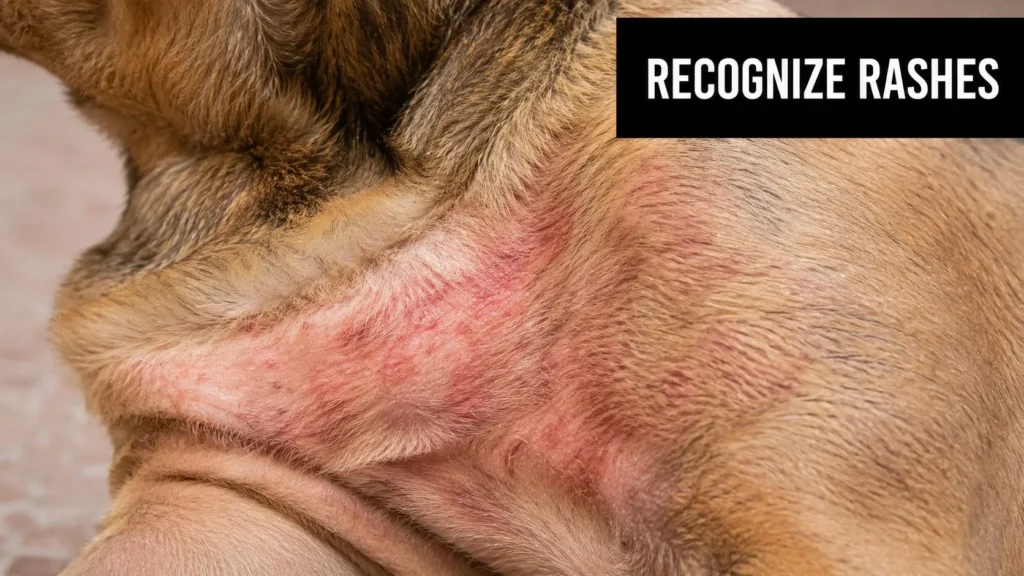
A useful diagnostic clue is whether itching started before the visible rash or whether the skin lesions showed up first. In many allergy cases, pruritus begins before visible lesions appear, while in other conditions the rash may come first. That detail helps veterinarians sort out primary allergies from secondary infection patterns (clinical guidance on diagnosing common skin conditions).
Hives and sudden welts
Hives usually appear fast. They can look like raised bumps or puffy welts under the coat. Owners often notice them after an outdoor exposure, bite, sting, medication, or another sudden trigger.
These are the rashes that make people say, “It came out of nowhere.”
Hot spots and raw, wet patches
Hot spots are usually hard to miss. The skin looks red, moist, and painful, and the dog often won’t leave it alone. These commonly form when a dog licks and chews one area over and over.
The key point is that the hot spot may not be the first problem. The first problem may have been a flea bite, ear irritation, or allergy itch that drove the licking.
Pimples, pustules, and crusts
Small pus-filled bumps, crusts, or scabby patches can suggest a bacterial component. They often show up after the skin has already been irritated for a while.
A dog with this pattern may have started with allergy or parasites, then developed a secondary infection because the skin barrier got damaged.
If the skin suddenly smells stronger, looks greasy, or develops pustules and crusts, don’t assume it’s “just the same rash getting bigger.” That often signals infection joining the picture.
Flaky, scaly, or darkened skin
Dry flakes and scaly patches can look minor, but they shouldn’t be ignored if they keep returning. Chronic rubbing and inflammation can also make skin thicken or darken over time.
That change tells you the skin has been under stress for longer than it looks.
A quick visual walkthrough can help you compare patterns before your appointment:
Location gives clues
Where the rash appears can help narrow things down.
- Feet and between toes often raise suspicion for allergy, irritation, or yeast involvement
- Base of the tail and rump can make fleas more likely
- Belly and groin may reflect contact irritation, allergy, or hives
- Ears plus skin issues together often suggest a broader allergic pattern
- Face and muzzle swelling can point toward an acute reaction and deserves prompt attention
No single pattern gives a perfect answer. But when you combine what it looks like, where it is, and what happened first, the story usually gets much clearer.
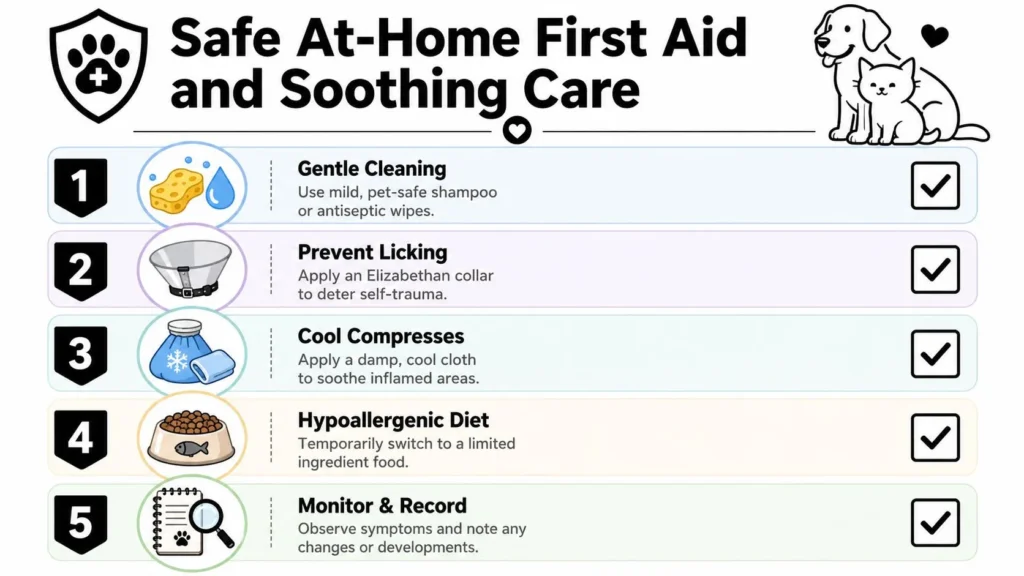
Safe At-Home First Aid and Soothing Care
When you first spot a rash, your job isn’t to play dermatologist. It’s to protect the skin, reduce self-trauma, and avoid making things worse before your dog can be properly assessed if needed.
What you can safely do
Start with simple, low-risk care:
- Use a cool compress on a small irritated area for a few minutes at a time. This can calm heat and itch.
- Keep the area clean and dry if the rash is superficial. If the skin is damp, trapped moisture can make irritation worse.
- Prevent licking and chewing with an e-collar or recovery cone if your dog won’t leave the spot alone.
- Try a gentle oatmeal bath if the rash is mild and widespread, and if your dog tolerates bathing without extra stress.
- Take clear photos once or twice daily in the same lighting. That helps you tell whether the rash is spreading, drying up, or changing character.
If your concern is mites or a similar skin condition, this article on mange home remedies can help you understand why supportive care at home should still be paired with the right diagnosis.
What to avoid
Owners mean well, but problems often arise.
Don’t reach for random human creams, leftover antibiotics, pain relievers, or whatever worked for another pet. Dogs lick. Products that seem harmless on the skin can be irritating, ineffective, or unsafe once ingested. Thick ointments can also trap moisture and make infected areas worse.
Avoid scrubbing, picking crusts, or washing the area repeatedly with harsh soap. Inflamed skin is already damaged. Too much cleaning can strip away what little barrier protection remains.
A good first-aid step should do one of three things. Cool the skin, protect the skin, or stop the dog from traumatizing the skin further.
A useful home checklist
Before you decide whether to monitor or call the vet, jot down:
- When it started
- Whether itch came first
- Any new foods, shampoos, detergents, treats, meds, or outdoor exposures
- Whether the dog is acting normal otherwise
- Whether the area is dry, moist, smelly, crusted, or painful
That short history often ends up being just as helpful as the photo.
When to Call the Vet and What to Expect
Some rashes can be watched briefly at home. Others need professional help sooner because the skin is only part of the problem.
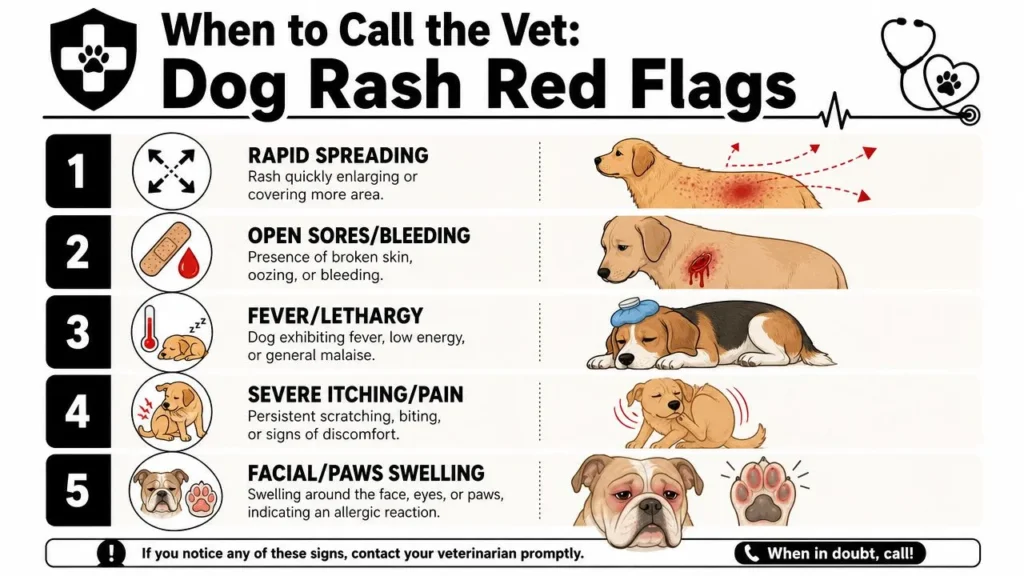
A good rule is this. If the rash is spreading, painful, recurrent, or paired with a dog who seems unwell, don’t wait it out.
Red flags that deserve a call
Contact your vet promptly if you notice any of the following:
- Rapid worsening when a small patch becomes widespread or more inflamed
- Open sores or discharge including weeping, bleeding, or pus
- Strong odor or greasy skin which can suggest infection
- Ear involvement especially if the dog is shaking the head or scratching the ears
- Facial swelling, trouble breathing, or sudden hives because acute allergic reactions can escalate
- Low energy, vomiting, poor appetite, or fever concerns along with the rash
If you’re unsure whether your dog might be running a fever, these dog temperature guidelines are a practical reference before you call.
Bond Vet notes that scratching and licking damage the skin barrier and make secondary bacterial or yeast overgrowth a very common complication, which is why veterinarians often use skin or ear swabs to look for these organisms during a rash workup (clinical overview of swabs and secondary infection in dog rashes).
What the appointment may include
Most skin visits start with a detailed history and a close physical exam. Your vet may ask when the itching started, whether the rash appeared first, whether other pets are itchy, and what preventives, shampoos, or medications your dog has had recently.
Then they may recommend tests such as:
- Skin cytology or swabs to look for yeast and bacteria
- Skin scrapes to check for mites or other parasites
- Ear cytology if the ears are involved
- A broader workup if the pattern suggests something less routine
Sometimes owners feel nervous because these tests sound complicated. Most are straightforward and done right in the clinic.
Don’t self-medicate the unknown
One of the most common mistakes is giving an over-the-counter medication before knowing what kind of rash you’re dealing with. If you were already thinking about antihistamines, read this guide on how much Benadryl for dog before giving anything. Even commonly discussed medications aren’t right for every dog or every kind of skin problem.
The faster a vet identifies whether the rash is primary inflammation, secondary infection, parasites, or a mix of all three, the faster the skin usually settles down.
Preventing Future Rashes and Managing Chronic Issues
Once a rash clears, most owners want the same thing. They don’t want to go through it again next month.
Prevention works best when you think in layers. Protect the skin from parasites. Support the skin barrier. Catch small flare-ups before they turn into a cycle of itch, licking, and infection.
Consistent parasite control
Even if your dog spends most of the time indoors, parasite prevention still matters. Fleas and mites don’t need a special invitation. If you’re comparing products or trying to understand how these preventives fit into a bigger plan, this overview of flea and tick collars is a useful starting point.
Skin-friendly routines
Good grooming isn’t about making the coat look nice. It helps you notice subtle changes early.
A practical routine includes:
- Regular brushing so you can spot hidden redness, flakes, or bumps
- Gentle bathing only as needed with products your vet approves for your dog’s skin type
- Thorough drying after baths or swimming, especially in skin folds and around ears
- Clean bedding and paws after heavy outdoor exposure if your dog reacts to environmental triggers
Managing chronic skin dogs
Some dogs don’t have one-off rashes. They have a chronic skin condition with flare-ups. These dogs often need a long-term plan rather than a one-time fix.
That plan may include ongoing allergy management, targeted treatment when secondary infection appears, diet changes recommended by a veterinarian, and regular rechecks. The goal isn’t always perfect skin every day. It’s fewer flares, shorter flares, and less discomfort for the dog.
Frequently Asked Questions About Dog Rashes
| Question | Answer |
|---|---|
| Can a dog rash go away on its own? | A mild, short-lived rash sometimes can, especially if the trigger was brief. But if it persists, spreads, smells, or your dog keeps licking it, it needs veterinary attention. |
| Is every rash an allergy? | No. Allergy is common, but parasites, irritants, infections, and medication reactions can all look similar at first. |
| Why does the rash keep coming back? | Recurrence usually means the original trigger wasn’t fully addressed, or your dog has an ongoing issue such as allergy with secondary infection. |
| Can I use human anti-itch cream? | It’s safer not to unless your vet specifically tells you to. Dogs lick treated skin, and some products can irritate or be unsafe. |
| What should I bring to the vet visit? | Bring photos, a timeline, a list of foods and treats, recent products or medications, and notes on when the itching started. |
If you enjoy clear, practical pet care articles like this one, visit maxijournal.com for more approachable reading across pets, health, science, education, travel, entertainment, and everyday questions readers have.
Discover more from Maxi Journal
Subscribe to get the latest posts sent to your email.