For the core in-clinic euthanasia procedure, most dog owners will see a price somewhere around $100 to $300. In many clinics, the base fee itself is often lower, but the final bill can rise once sedation, an IV catheter, medications, aftercare, and the setting are added.
When researching the cost to put a dog to sleep, it’s typically not an ordinary day. This information is sought while weighing a difficult decision, observing a dog no longer comfortable, or preparing before a crisis mandates swift action. Clear numbers help, but so does understanding what those numbers mean.
The most useful way to think about this isn’t only, “What does euthanasia cost?” It’s also, “What kind of goodbye can I afford, and what matters most to me and my dog?” Sometimes the least expensive option is also the right one. Sometimes paying more changes the experience in ways families never forget. Both can be loving choices.
Making This Difficult Decision Easier
You may be sitting on the floor next to your dog, watching them rest, and trying to answer two hard questions at once. Is it time, and what can I afford? Those questions belong together. Asking about cost does not make this decision cold. It helps you plan a gentler goodbye and avoid rushed choices made in crisis.

Price matters, but value matters just as much. A lower-cost clinic visit may be the right choice for a dog who handles travel well and for a family that wants medical support close at hand. Paying more for an at-home visit may buy a quieter setting, less stress getting into the car, and a memory that feels more peaceful afterward. Both are caring choices.
The first number you hear is often only a starting point because euthanasia is rarely one line item in practice. The visit may include a pre-appointment discussion, sedation for comfort, help carrying a large dog, time in a private room, aftercare arrangements, or travel to your home. Two families can describe the price as reasonable and still be talking about very different services.
A good question to ask is, “What is included in this fee, and what commonly adds to the total?” That usually gets you better information than asking for the cheapest price alone.
If you need support for the emotional side of this decision, especially with children or family members who are struggling to find words, these quotes for pet parents grieving may help. If you are still trying to judge whether your dog is anxious, withdrawn, uncomfortable, or asking for space, this guide to understanding dog body language in dogs who may be stressed or tired can help you read what you are seeing more clearly.
Before you start calling clinics or mobile veterinarians, focus on three practical points:
- Your dog’s comfort: A dog who panics in the car, struggles to stand, or has uncontrolled pain may benefit more from the setting than from the lowest fee.
- Your spending limit: Set a number before emotions and urgency make every option feel impossible to compare.
- The experience you want to remember: Some families want the privacy of home. Others prefer the structure, staff support, and clear process of a clinic.
The deeper question is usually about environment, comfort, and what support you will need in the moment. In my experience, families often feel better about the decision afterward when the setting matched their dog’s needs and their own limits, rather than choosing only the lowest available price.
One more practical point deserves attention. If cost is the main barrier, do not assume your only choices are delay or debt. Many families qualify for payment options, humane society services, nonprofit help, or lower-cost veterinary providers, and those options are often overlooked until the last minute.
The Baseline Cost for the Procedure Itself
When clinics quote euthanasia, they may mean the base procedure fee only. That fee usually refers to the veterinarian’s professional service and the essential medication used to perform the euthanasia in a standard clinical setting.
In major U.S. markets, the base clinical fee is reported around $120 to $139, with published ranges of about $100 to $253, according to CareCredit’s overview of dog euthanasia costs. That’s the cleanest number to use when you’re trying to understand the starting point before extras enter the picture.
What that base fee usually covers
In most clinics, the base fee commonly includes:
- Veterinary time: The doctor examines the situation, confirms consent, and performs the procedure.
- Core medication: The euthanasia solution itself is generally part of the procedure fee.
- Basic clinical setup: Use of the room, routine supplies, and staff assistance during the appointment.
What it often does not fully capture is the more individualized part of the visit. If a dog is anxious, painful, fragile, or difficult to place an injection for, the appointment may require more hands-on care and more supplies.
Why this number matters
Owners often hear one price over the phone and feel blindsided later. Usually, that happens because the quote was for the procedure itself, not the full end-of-life appointment. Knowing the baseline helps you compare providers more fairly.
A lower base fee isn’t automatically better. Sometimes it reflects a straightforward, in-clinic service with fewer add-ons. Sometimes it’s a clinic’s pricing style, with other charges listed separately. Neither approach is wrong, but they aren’t equivalent if you’re comparing total value.
Practical rule: Ask for the “procedure fee only” and the “estimated total with likely add-ons.” That separates the core charge from the real-world bill.
What else you may need to ask about
Use this short checklist when you call:
| Question | Why it matters |
|---|---|
| Is this the procedure fee only? | It tells you whether the quote is a starting point or a total. |
| Is sedation included? | Some clinics recommend it routinely, others bill it separately. |
| Is there a separate office or exam fee? | This can change the total even when the euthanasia fee looks low. |
| Are aftercare arrangements separate? | Cremation and body care are often outside the base charge. |
After the appointment, families often need clear information on cremation or memorial handling. If you want a plain-language overview of what cremation providers may offer, the Cremation.Green pet cremation guide is a useful reference for the kinds of choices that may come after the veterinary visit.
Key Factors That Influence the Final Price
Two families can receive very different quotes for what sounds like the same appointment, and both quotes can be reasonable. The difference usually comes from how much support the dog needs before the final injection, how the clinic structures its fees, and whether the visit is calm and planned or urgent and medically complicated.
The procedure itself is only one part of the cost. The rest often reflects the work required to make the experience peaceful.
Comfort measures often add the most value
Sedation is one of the biggest price variables because it changes the appointment in a meaningful way. A dog who is painful, panicked, or unable to settle may benefit from medication first so breathing, handling, and placement of the injection are less stressful. That adds medication cost, staff time, and monitoring, but it can also spare your dog a final struggle.
An IV catheter can affect the total for similar reasons. Some veterinarians place one routinely. Others use it selectively, especially for dogs with poor circulation, severe weakness, anxiety, or a history of resisting restraint. You are not only paying for a catheter. You are paying for a more controlled process.
That distinction matters. The lower quote is not always the better value if it leaves out the measures that make the visit gentler.
The dog’s condition and timing can change the bill fast
A scheduled appointment for a frail but stable dog is usually more straightforward than an urgent visit after a collapse or breathing crisis. In urgent cases, the team may need to stabilize pain, reduce distress, or work around dehydration and poor vein access before euthanasia can proceed safely.
Several factors commonly affect the final price:
- Location: Fees are often higher in areas with higher operating costs.
- Dog size: Larger dogs may need more medication.
- Medical condition: Fear, pain, dehydration, or severe weakness can require more support.
- Appointment timing: Same-day, emergency, weekend, or after-hours care often costs more.
- Clinic fee structure: Some hospitals bundle services together. Others itemize sedation, catheter placement, exam fees, and body care separately.
If you have ever compared routine procedures and noticed how different quotes can be depending on what is included, the same pricing logic applies here. A basic explainer on the difference between spay and neuter shows how veterinary fees often reflect both the procedure and the level of care around it.
Ask what the quote includes, not just the total
The least helpful question is, “How much does it cost?” Clinics may answer that in completely different ways. One may quote the euthanasia injection alone. Another may include sedation and exam time. A third may leave out aftercare and mention it only at the end.
A better approach is to ask these four questions:
- Does this quote include sedation, if my dog needs it?
- Is an IV catheter included, optional, or only used in certain cases?
- Is there an exam or urgent-care fee on top of the procedure?
- What comfort or support services would raise the total in my dog’s situation?
That gives you a clearer picture of value, not just price. For many families, the right choice is the option that reduces fear, allows enough time, and avoids avoidable stress, even if the bill is somewhat higher.
Comparing At-Home vs In-Clinic Euthanasia
For many families, this is the actual decision. Not “Can I do this?” but “Where should it happen?” Cost matters, but the deeper question is usually about environment, stress, privacy, and memory.
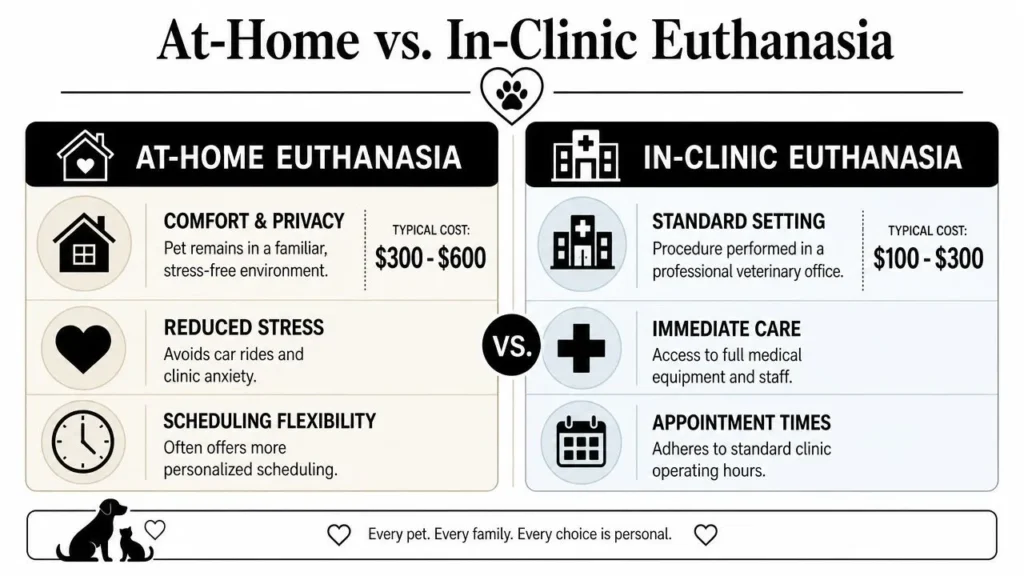
An in-clinic euthanasia often works well for owners who want immediate access to staff, medical supplies, and a controlled setting. At-home euthanasia usually appeals to owners who want their dog to stay in a familiar place, avoid a final car ride, and allow the family to move at a more personal pace.
Value isn’t the same thing as the cheapest option
A clinic visit is often the more affordable path. It can also be the right one. Many dogs still do very well in a quiet exam room with compassionate staff, especially if the clinic handles end-of-life appointments thoughtfully.
At home offers a different kind of value. The dog can rest on a favorite bed, hear familiar voices, and avoid the stimulation that sometimes makes anxious or painful pets struggle. Families often care less about “luxury” than about preserving a calm final memory.
Some of the best end-of-life decisions aren’t about spending more. They’re about removing the part your dog would have hated most.
Here is a simple side-by-side comparison.
| Factor | In-Clinic Euthanasia | At-Home Euthanasia |
|---|---|---|
| Cost | Usually lower overall | Usually higher because travel and personalized time are involved |
| Pet comfort | Good for many dogs, especially calm patients | Often best for dogs who fear car rides or clinics |
| Family privacy | More limited, though some clinics provide private rooms | Greater privacy and more control over who is present |
| Scheduling | Tied to clinic hours and availability | May offer a more personal visit, but local availability varies |
| Medical support | Full clinic team and equipment nearby | Mobile veterinarian brings what is needed, but not a full hospital setting |
| Memory of the experience | Structured, professional, often efficient | More personal, slower paced, familiar environment |
A short video can also help if you’re trying to picture the difference in setting and feel before making the call.
When clinic care is the better fit
Clinic euthanasia is often the best fit when:
- You need prompt scheduling: Some families can’t wait for a mobile service.
- Your dog is medically unstable: Immediate clinical support may matter if the pet is in distress.
- Budget is tight: The lower price may allow you to choose better comfort add-ons or aftercare.
When home may be worth the extra cost
At-home care tends to be worth it when the setting itself solves a major problem. Dogs who panic in cars, slip on clinic floors, or become distressed around unfamiliar smells may have a gentler passing at home. For families, privacy can matter just as much. Grief is easier for some people in their own living room than under fluorescent lights.
This is the part many owners don’t realize until afterward. The cost difference isn’t only about the veterinary act. It’s about whether the final hour feels rushed and medical, or quiet and personal. Neither is necessarily better. The better choice is the one that fits your dog, your family, and what you can live with afterward.
Understanding Aftercare Costs and Options
After the euthanasia itself, owners still need to decide what happens next. This part often catches families off guard because it involves emotional choices at a time when decision-making is already hard.
The main point is to separate the euthanasia appointment from aftercare. They may be arranged through the same clinic, but they are not the same service. Ask about them separately so you know what you’re authorizing.
The two most common paths
Most clinics offer some version of these options:
- Communal cremation: Your dog is cremated with other pets, and ashes are not returned.
- Private cremation: Your dog is cremated individually, and the ashes are returned to you.
The difference isn’t just sentimental. It’s also logistical. Private cremation requires individual handling, tracking, and return arrangements, so it generally costs more than communal cremation. If a clinic uses a third-party crematory, timing and packaging may also affect the fee.
Questions worth asking before you sign
When owners are upset, they often focus on the appointment and leave aftercare undecided until the last minute. That usually makes the day harder. A few simple questions can prevent confusion.
Ask:
- Will my dog’s ashes be returned to me?
- Is cremation handled by the clinic or an outside provider?
- Can I take my dog home instead, if local rules allow it?
- When do I need to decide?
If you think you might want ashes returned, say so early. Waiting until the appointment is underway can make a painful decision feel rushed.
Home burial and other choices
Some families prefer home burial where local ordinances allow it. That option can feel personal and comforting, but it isn’t legal or practical everywhere. Land ownership, local rules, soil conditions, and neighborhood restrictions all matter. Your veterinarian may not be able to advise on every local law, so checking city or county guidance yourself is worth the effort.
Some owners also want keepsakes such as paw prints, fur clippings, or memorial urns. These can be meaningful, but they may be offered by the clinic, the crematory, or not at all. Ask before the procedure if a keepsake matters to you. Staff can usually arrange it more smoothly when they know in advance.
The best approach is simple. Decide whether your priority is return of ashes, the lowest aftercare cost, or handling arrangements yourself. Once you know that, the rest becomes much easier.
How to Find Financial Assistance and Lower-Cost Services
When money is tight, many owners assume a private veterinary clinic is the only option. It often isn’t. Some of the lowest-cost euthanasia services come from shelters, humane societies, and nonprofits, which may charge around $35 to $105 or offer discounted or case-by-case help, according to CodaPet’s guide to pet euthanasia costs. The same source also notes that some pet insurance plans may reimburse 70% to 90% of senior-pet care.
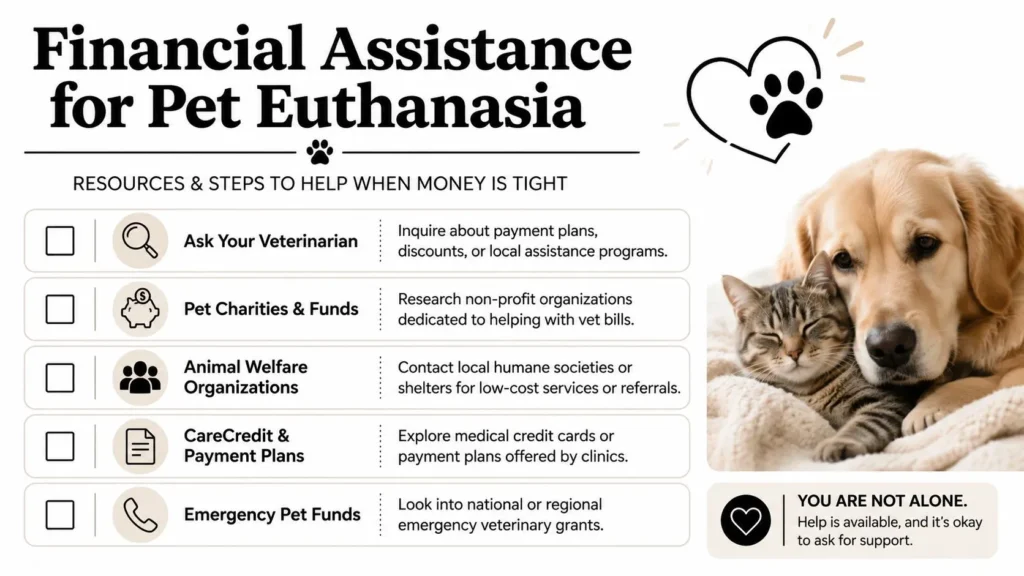
That matters because affordability isn’t only about finding the lowest sticker price. It’s about widening your options fast enough to make a thoughtful choice instead of a panicked one.
Where to call first
If you’re worried about the cost to put a dog to sleep, start with the places most owners overlook:
- Local humane societies: These organizations may offer direct services or point you to reduced-cost partners.
- Municipal shelters and rescue groups: Some have emergency referrals for euthanasia assistance.
- Nonprofit veterinary providers: These may have sliding-scale or hardship support.
- Your current veterinarian: Even if they don’t discount, they may know who does.
A practical companion to this conversation is understanding other routine veterinary expenses, especially if end-of-life care is landing on top of overdue medical needs. This overview of dog vaccination costs can help you think through the broader financial picture of pet care.
What to ask when you call
Many people ask only, “Do you do euthanasia?” Ask better questions and you’ll usually get better help.
Try this:
- Ask about hardship pricing: Some clinics don’t advertise it, but they may have options.
- Ask for nonprofit referrals: Front-desk teams often know which local groups help in urgent cases.
- Ask whether aftercare is optional: Separating the services may lower your immediate out-of-pocket cost.
- Ask about payment tools: Some clinics accept CareCredit or other structured payment options.
A short, honest script works well: “My dog may need euthanasia soon, and cost is a concern. Are there lower-cost options or referrals you recommend?”
Insurance and timing
Insurance rarely helps if you wait to check until after a claim deadline or policy question becomes a problem. If your dog is insured, review the policy before the appointment if possible. Look specifically for end-of-life care, senior-pet coverage, reimbursement rules, and whether the clinic can give you itemized invoices.
The owners who find the most workable solutions usually do one thing early. They call before the emergency peaks. Even one day of planning can open options that disappear once you need immediate care that same hour.
What to Expect During the Euthanasia Appointment
The appointment is usually quieter and gentler than many owners fear. Knowing the sequence ahead of time helps because it removes some of the fear of the unknown.
Most visits begin with paperwork and consent. The veterinarian or a staff member will confirm your wishes, discuss aftercare if it hasn’t already been decided, and explain how the process will go. If you want to stay with your dog the entire time, tell them. If you think you may need a moment before or after, tell them that too.
The usual flow of the visit
In many appointments, the dog first receives a sedative or calming medication if the plan calls for it. This allows the dog to relax, become sleepy, and settle into a comfortable position. Once the pet is calm, the veterinarian gives the final medication.
The passing is typically peaceful. After death, some physical responses can still occur. A pet may release the bladder or bowels, take a final reflexive breath, or remain with open eyes. These are normal body responses and don’t mean your dog was aware or suffering.
What you can do in the room
You don’t need to perform anything. Your job is to be present in the way that feels right.
Some owners talk softly. Some hold a paw. Some sit nearby because that is all they can manage. All of that is enough.
Your dog doesn’t need a perfect goodbye. Your dog needs your familiar presence, your scent, and a calm voice if you can offer one.
If children or other family members are present, prepare them gently and plainly. Tell them the veterinarian will help the dog die peacefully because the body isn’t doing well enough anymore. Simple language is kinder than vague language in this moment.
Afterward, most clinics give you private time if you want it. Take it. Rushing out often leaves people feeling more unsettled later.
If you want more clear, approachable pet guidance without the jargon, visit maxijournal.com. It publishes practical articles across pets, health, science, and everyday questions, written for readers who want straightforward answers when life gets complicated.
Discover more from Maxi Journal
Subscribe to get the latest posts sent to your email.