Friday night is coming, the group chat is active, and somebody has already asked the practical question that most “best Christian movies” lists skip. Not “What’s it about?” but “Can we watch it this weekend, and if so, where?” That’s the main planning problem with new Christian movie releases. Some open wide in theaters, some appear as limited event screenings, and some sit behind a streaming membership model that changes how fast you can access them.
That’s why this guide stays focused on the service details. You’ll find what each film is, how its release is being handled, and what kind of audience it seems built for. The faith-based market has shown that broad theatrical reach can matter. The Passion of the Christ remains the highest-grossing Christian-theme title listed by Box Office Mojo, with $370,274,604 in the United States and Canada and an $83,848,082 opening weekend across 3,408 domestic screens at peak release, a reminder that faith-based films can break out when distribution is wide enough (Box Office Mojo’s Christian-theme chart). If you’re also interested in the wider conversation around how Christian media shapes culture, this year’s slate gives you plenty to watch, discuss, and compare.
1. I Can Only Imagine 2
The easiest title on this list for ordinary moviegoing logistics is I Can Only Imagine 2. It’s the sequel to a recognizable faith-based property, and that matters because familiarity often translates into simpler access. If you’re trying to organize a family outing, church staff night, or small-group trip, a studio-backed rollout usually means fewer headaches with local showtimes and ticketing.
The expected viewing path is straightforward. It’s slated for a wide U.S. theatrical release on February 20, 2026, followed by a home-video window beginning March 24, 2026, according to the film’s official Lionsgate page for I Can Only Imagine 2. That quick shift from theaters to at-home access makes it one of the more planner-friendly entries in the current wave of new movie releases Christian audiences are tracking.
How to watch it
For most readers, there are two realistic options. Go early in theaters if you want the communal opening-weekend feel, or wait for home release if your group would rather pause, discuss, and rewatch scenes.
- Theater-first convenience: A wide release usually means better placement at national chains and easier online ticket booking.
- Shorter wait for home viewing: The home-video timing should help churches and families that prefer a living-room or classroom setting.
- Familiar audience fit: The MercyMe connection gives it immediate recognition among Christian music listeners.
Practical rule: If your group needs guaranteed seats together, book the theatrical outing. If your priority is discussion, snacks, and flexibility, the home window is probably the better fit.
There’s also a broader media angle here. Readers who follow latest entertainment news coverage at MaxiJournal may recognize this release strategy from other mainstream studio sequels. The difference is the audience expectation. Some viewers will welcome a return to a known story of faith and suffering, while others may question whether the sequel is necessary. Both reactions are fair. What’s clear is that this one should be easier to find than most niche faith titles.
2. A Great Awakening

A Great Awakening serves a different audience than the music-centered and testimony-driven titles that often dominate this space. It leans historical, educational, and discussion-friendly, centering on the friendship between George Whitefield and Benjamin Franklin. That puts it in a useful lane for church classes, homeschool groups, Christian schools, and viewers who want a film that opens into conversation about American religious history.
Its release setup also reflects that use case. The film is scheduled for U.S. theaters on April 3, 2026, with ticketing and group resources available through the official A Great Awakening website. Because the team is highlighting organizer tools, it feels less like a casual Friday-night gamble and more like an event film for planned attendance.
Best fit for groups
This is the sort of release where the official site matters almost as much as the trailer. If you’re coordinating a class trip or church outing, those group materials can save time.
- School and church utility: Historical framing gives teachers and ministry leaders an obvious reason to build a discussion around it.
- Family-friendly angle: The subject matter appears suited to mixed-age audiences.
- Potential limitation: Theatrical runs can vary by region, especially for specialized historical dramas.
Some readers will appreciate the educational purpose. Others may find that the film’s appeal depends heavily on their interest in the Whitefield-Franklin relationship rather than on spectacle or star power.
Local availability may be the deciding factor. With films like this, the nearest showing sometimes matters more than the premise.
That’s the recurring challenge in this category. The Christian Movie Database lists 2,441 movies, and roughly two-thirds were released between 2006 and 2015, which suggests a large modern-era catalog competing for attention and discoverability rather than a tiny niche with no alternatives (Stephen Follows on the growth of Christian films). In that crowded field, a title like A Great Awakening stands out less by sheer volume and more by clear positioning and practical group support.
3. David

If your main question is whether a Christian release works for kids, David may be one of the more approachable options. It’s an animated musical retelling of King David’s life, and that format changes the planning equation immediately. Animation lowers the barrier for family viewing, and music gives younger audiences something to latch onto even if they don’t follow every plot turn.
Its access model is more layered than a standard studio release. The film opened theatrically on December 19, 2025, then moved to the Angel platform for Angel Guild members on January 27, 2026, followed by a Netflix U.S. window starting June 3, 2026, according to the official Angel page for David. For viewers trying to decide when to jump in, that means convenience depends on what subscriptions or memberships you already have.
Membership versus patience
Practical viewing details now hold greater importance than enthusiasm.
- Watch sooner with Angel: Households already in the Angel ecosystem may get earlier access.
- Wait for wider streaming: Netflix makes the film easier for general audiences to reach later.
- Family feature: The sing-along option adds replay value for younger children.
Angel’s model won’t suit everyone. Some viewers like the community-backed approach and don’t mind a Guild membership. Others would rather wait for a mainstream platform they already pay for.
Viewing shortcut: If your children want repeat plays and sing-along use, Angel may make sense. If you just want one low-friction family movie night, waiting for Netflix is simpler.
There’s also a bigger industry point in the background. Streaming can turn a faith-based release into a mainstream conversation fast when the title has recognizable biblical material and a clear pitch. Netflix’s Testament: The Story of Moses reached 13.5 million views in its first five days after release in March 2024, showing how quickly faith-centered storytelling can travel on a major platform when the concept is immediately legible (NRB on the rise and reach of Christian cinema). For readers who like comparing reception across outlets, movie review websites covered by MaxiJournal can help you gauge whether David is landing more as children’s entertainment, biblical adaptation, or both.
4. Zero A.D.
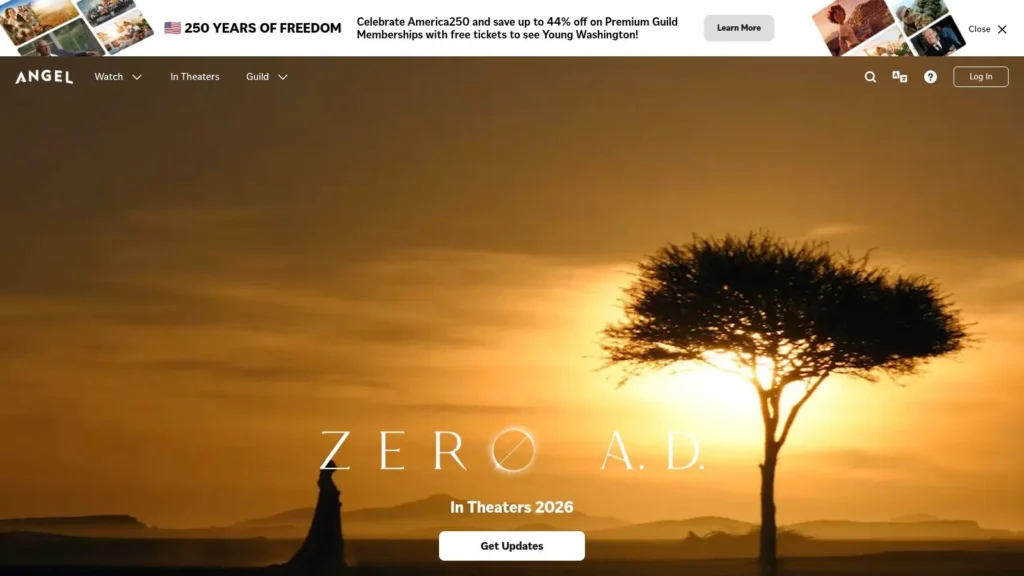
Zero A.D. looks built for viewers who want a larger-scale biblical film rather than a modest contemporary drama. The project is positioned around the Massacre of the Innocents from the Gospel of Matthew, and that premise alone signals a heavier tone than the animated or music-driven titles on this list. If it lands as intended, it could become one of the year’s more talked-about theatrical faith releases.
The practical complication is timing. The film is positioned for a 2026 U.S. theatrical release, but the exact release date and final rollout details remain pending on the official Angel page for Zero A.D.. That makes it the least settled “how-to-watch” option here. For planners, it’s more of a watchlist title than a calendar-lock title right now.
What to expect from access
Angel releases often create a split audience. Highly engaged supporters follow updates, sign up early, and track community-driven promotion. Casual viewers usually wait for the title to become visible through mainstream theatrical listings or later digital access.
- Best for early followers: If you already use Angel, the film will be easier to track.
- Less ideal for fixed planning: Churches scheduling months ahead may need firmer dates first.
- Potential seasonal appeal: The biblical setting could give it strong church-calendar relevance depending on final timing.
Some readers will be drawn to the scale and seriousness. Others may want to hold off until there’s a clearer sense of tone, age suitability, and release scope. That hesitation is reasonable. This is a title to monitor, not one to assume is instantly accessible everywhere.
5. That They May Be One
That They May Be One is the clearest example of why a plain “upcoming Christian movies” list often isn’t enough. This isn’t a standard theatrical run. It’s a special event release, presented as a two-night nationwide Fathom Events engagement on May 19 and 20, 2026, with details and ministry materials on the official Flourish Your Faith Films site.
That event structure changes everything about how you approach it. You don’t casually get around to this movie later in the week. You either plan for the date, coordinate tickets, and go, or you probably miss the initial run.
Best used as a discussion night
Because the film combines docudrama material with faith-leader perspectives and historical reenactments, it feels naturally suited to post-screening conversation. That could be a strength if your church values discussion, or a drawback if your group just wants light entertainment.
- Fixed-date simplicity: Everyone knows the showing window.
- Good for ministry coordination: The event model fits pastors, leaders, and group hosts.
- Harder for casual viewers: Miss the date, and your options narrow fast.
This is the kind of film where deciding early matters more than comparing review scores.
The underserved issue in Christian release coverage is often availability by window and format, not just title awareness. The current release spectrum spans theatrical, streaming-first, and episodic projects like House of David, Gabriel and the Guardians, The Chosen Adventures, Brave the Dark, and The Unbreakable Boy, which is why readers often need practical watch-path information more than another synopsis roundup (release-window analysis highlighted in this Christian cinema discussion). That They May Be One makes that point better than almost any title here.
6. He’ll Provide a Way
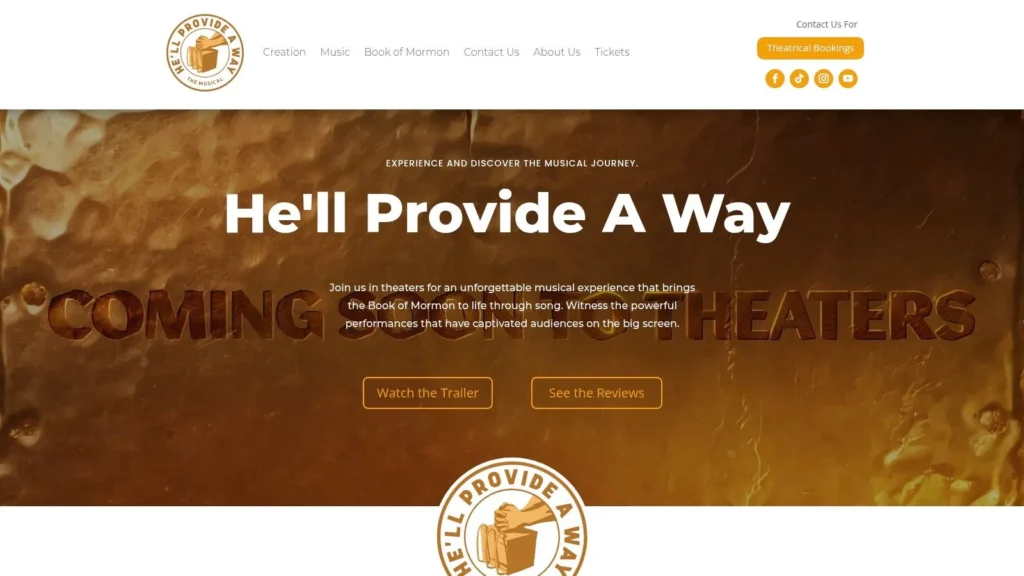
Some faith films arrive through polished national campaigns. He’ll Provide a Way appears to be taking the opposite route. It’s a grassroots musical with local-theater booking tools and city-by-city engagement details, which means access depends less on a massive distributor and more on whether nearby communities rally behind it.
That creates a very specific audience experience. For church networks, congregation-based promotion, or viewers in areas where local organizers actively book faith events, the film can feel participatory. For everyone else, availability may be patchy. The official Provide A Way Musical website is the key planning tool because local engagements and requests sit at the center of the release model.
Why it may work for your group
This one isn’t about passive discovery. It’s about whether your local community wants it enough to bring it in or support a limited playdate.
- Community energy matters: Churches can treat it as an event rather than just another ticket purchase.
- Musical format: Worship-driven songs may appeal strongly to audiences who want devotion woven into performance.
- Regional uncertainty: You may need to travel or request a local booking.
The overlap between Latter-day Saint and broader Christian interest may also shape reception differently depending on region and denomination. Some viewers will welcome the musical devotion and community spirit. Others may prefer a more conventional release path with easier nationwide access.
If you like grassroots faith cinema, check the local booking options early. Waiting can mean missing the only nearby showing.
7. The King of Kings
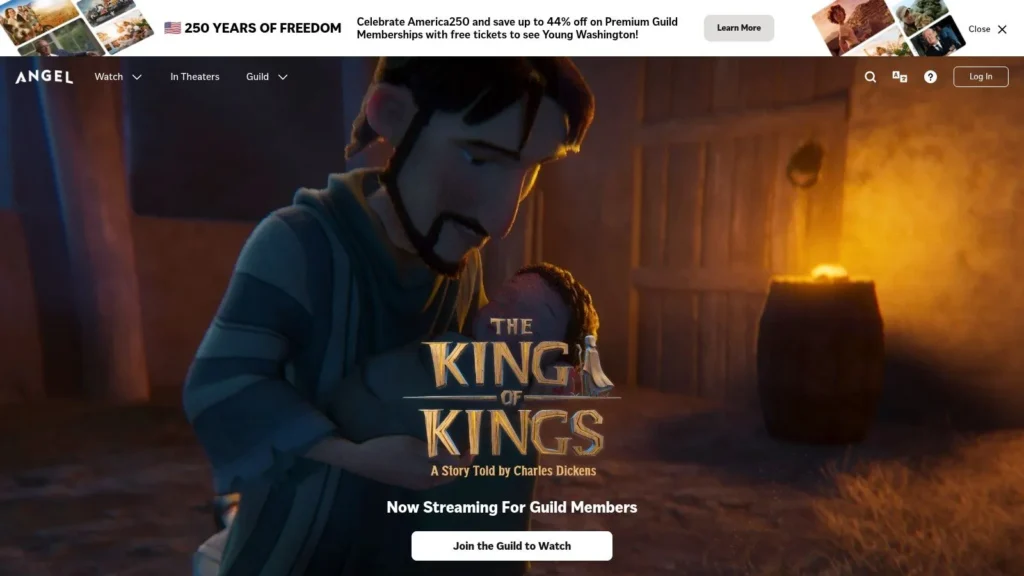
Not every useful entry in a guide to new movie releases Christian audiences are searching for has to be brand new in theaters. The King of Kings earns a place because it’s now in the easier-to-watch phase that many families prefer. After its U.S. theatrical release in April 2025, it has moved into a broader access period through Angel, Peacock, and digital retail options, according to the official Angel page for The King of Kings.
That makes it one of the strongest convenience picks in this lineup. If your group doesn’t want to coordinate showtimes, drive to a participating theater, or gamble on a short event window, this is a much simpler recommendation.
The practical appeal
Animated retellings of Jesus’ life can serve several audiences at once. Children can follow the visual storytelling, parents can use it for home discussion, and churches can slot it into family programming or seasonal events.
- Multiple access paths: Angel, Peacock, and retail home-viewing create flexibility.
- Good for intergenerational watching: The format is accessible to children without excluding adults.
- Subscription caveat: Availability may depend on whether you already pay for the platform carrying it.
This is also the least risky recommendation for planners who care more about certainty than novelty. You’re not waiting for a date to firm up or hoping your town gets a booking. You can usually decide and watch.
For readers who like comparing inspirational and mainstream crowd-pleasers side by side, MaxiJournal’s ranking of superhero movies offers a very different corner of movie culture. That contrast is useful. It highlights how The King of Kings functions less as event spectacle and more as dependable family programming with a clear devotional center.
7-Film Comparison of New Christian Releases
| Title | Implementation complexity | Resource requirements | Expected outcomes | Ideal use cases | Key advantages |
|---|---|---|---|---|---|
| I Can Only Imagine 2 | Low, wide theatrical release; easy to schedule | Standard ticket/home-video costs; no membership required | Broad reach with reliable faith-audience turnout | Church/small-group outings, family viewing | Studio distribution, strong brand recognition, wide availability |
| A Great Awakening | Moderate, regional showtime variability; group sales coordination helpful | Theater booking; use of group sales materials and event coordination | Educational engagement and historical interest; variable local reach | School/church educational events, family historical screenings | Historical focus, group support resources, family-friendly |
| David (Angel Studios) | Low–Moderate, theatrical then streaming; membership affects early access | Angel Guild membership for early/full access (later Netflix window) | High family and child engagement; sing-along participation | Family nights, children’s programming, sing-along events | Animated musical format, sing-along features, multi-platform rollout |
| Zero A.D. (Angel Studios) | Moderate–High, release details pending; community-driven rollout | Likely Angel Guild/community organization and theatrical logistics | Potential high seasonal interest and tentpole drawing for faith audiences | Seasonal/holiday screenings, large church or community events | Epic scale, built-in Angel audience, tentpole positioning |
| That They May Be One (Fathom Events) | Low for planning, fixed two-night event dates; limited flexibility | Fathom Events ticketing; group coordination; possible travel | Focused engagement and conversation-starting within limited window | Church discussion nights, ecumenical events, small-group dialogue | Fixed event format, ready-made ministry resources, strong discussion focus |
| He’ll Provide a Way (Provide A Way Musical) | Moderate, grassroots/local booking required | Local-theater booking toolkit and organizer effort; limited runs | Community-driven turnout; variable depending on bookings | Local congregation events, community musical screenings | Worship-driven musical content, community-centered distribution, positive early feedback |
| The King of Kings (Angel Studios / MOFAC) | Low, widely available across platforms and formats | Angel Guild for full access; streaming/EST/home-video options | Broad intergenerational engagement; good for seasonal programming | Church family nights, intergenerational and seasonal use | Multi-platform availability, animated all-ages format, broad accessibility |
From Theaters to Living Rooms Choosing Your Next Film
The strongest lesson from this year’s slate is simple. “New” doesn’t always mean “easy to watch.” Some of the most interesting Christian releases depend on the format as much as the story. I Can Only Imagine 2 looks built for broad theatrical access and quick home viewing. A Great Awakening appears better suited to schools and church groups that want historical discussion. David and The King of Kings show how animation and staggered streaming windows can expand family access. That They May Be One and He’ll Provide a Way remind you that event screenings and grassroots bookings still play a major role in faith-based cinema.
That practical difference matters because Christian moviegoing no longer sits in one lane. The audience can move from theaters to limited Fathom events to platform memberships to mainstream streaming subscriptions in a matter of weeks. Some viewers like the commitment and community of opening-night or special-event attendance. Others would rather wait until a title is available at home, where they can watch with children, pause for discussion, or avoid the uncertainty of local showtimes.
If you’re planning for a church, the safest route is usually the one with the clearest release mechanics. Wide theatrical runs and established streaming windows are easier to organize around than titles still waiting on firm dates. If you’re planning only for yourself or your family, patience often improves convenience. A film that’s hard to catch in theaters may become much easier to access a few weeks or months later.
Always check the official film website before you finalize plans. Showtimes shift, participating theaters vary, and streaming rights can change by platform and region. If you like following release timing across entertainment categories, best sources for sermon film clips can also help ministry planners think beyond the feature itself and into how a film may be used afterward. Readers who want broader entertainment commentary may also find maxijournal.com useful as an independent magazine covering films and related cultural topics.
If you enjoy practical entertainment guides and want more accessible coverage across movies, culture, and media, visit maxijournal.com.
Discover more from Maxi Journal
Subscribe to get the latest posts sent to your email.