You sweep the same patch of floor again, find fur on the sofa, notice a tuft clinging to your clothes, and then discover a few strands on your coffee mug. If you’re thinking, “My cat is shedding a lot,” you’re not alone. Loose hair is a normal consequence of feline coat biology, but a noticeable change in shedding can also provide an early clue that something needs attention.
The useful question isn’t just how much fur is in the house. It’s whether your cat’s shedding pattern, coat texture, skin, grooming behavior, or general health has changed. Normal hair-cycle turnover usually leaves loose hairs without creating bald areas. Parasites, allergies, systemic illness, stress, and pain can produce a different picture.
Why Your Cat Is Shedding Everywhere Right Now
A cat’s coat is constantly renewing itself. Old hairs finish their resting phase, loosen from the follicles, and fall out as new hairs develop. That process continues whether your cat lives indoors, sleeps on a dark blanket, or spends most of the day grooming.
For many owners, the frustration comes from visibility rather than sudden disease. A short-haired cat can leave fine strands across bedding and clothing, while a long-haired cat may produce more noticeable tufts because each released fiber is longer. Neither situation automatically means the follicles are failing or the cat is unhealthy.
The first distinction: loose hair without baldness is usually a coat-management issue. Visible thinning, bare skin, irritation, or a change in behavior deserves closer attention.
Two questions help you interpret what you’re seeing. First, how much shedding can a healthy cat produce? Second, what changes suggest that the fur is being lost through scratching, overgrooming, poor grooming, or an underlying medical condition?
A foundational veterinary research estimate gives useful perspective. A short-haired cat loses about 28 grams of hair per kilogram of body weight each year, and roughly two-thirds of that hair is swallowed and later found in feces, according to veterinary research on feline hair loss and ingestion. For a 4 kg short-haired cat, that works out to about 112 grams annually, or approximately 9.3 grams per month on average, before seasonal changes are considered.
That doesn’t mean you should weigh every brush full. It means the household fur has a biological explanation. Your job is to identify whether the coat is turning over or whether the pattern has changed in a way that points toward skin disease, parasites, allergies, endocrine illness, stress, or pain.
The Biology of Normal Cat Shedding
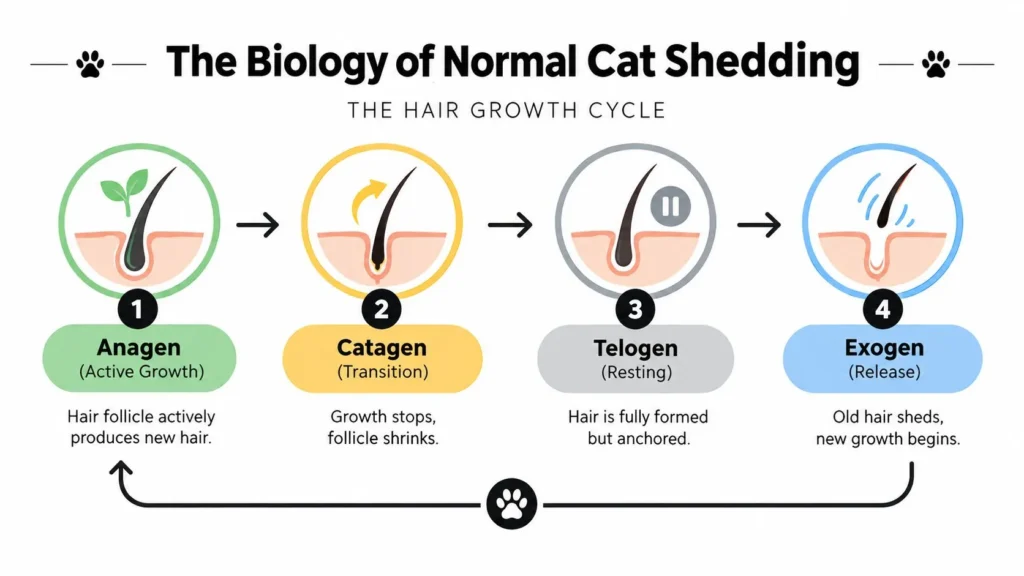
Every hair follicle moves through a repeating cycle. During anagen, the follicle actively produces a hair. In catagen, growth stops and the follicle enters a transition phase. Telogen is the resting stage, when the fully formed hair remains anchored. Finally, exogen releases the old hair, allowing the cycle to continue.
The follicles don’t all enter these stages at the same time. That independent timing is why cats usually don’t lose their entire coat at once. Instead, small numbers of hairs are released continually, with more visible turnover during particular periods.
Daylight helps regulate the timing. Veterinary guidance commonly describes heavier shedding in spring and fall, especially for outdoor cats in cooler climates. Indoor cats may shed more evenly throughout the year because artificial lighting can soften the natural photoperiod signal, so their coat may not follow two sharply defined seasonal bursts. Veterinary guidance on seasonal shedding also describes controlled measurements in which cats shed 0.068 g at day 45 and 0.102 g at day 90, while one mineral formulation group shed 0.057 g compared with 0.080 g in controls at day 45. Another treatment group had 23 mg less shed hair than controls at day 60.
What normal looks like
A healthy shedding cat generally has:
- An even coat with no bare patches.
- Skin that isn’t persistently red, crusted, or scaly.
- Loose hairs that come away during petting or brushing.
- No sudden increase in licking, chewing, or scratching.
- Stable appetite, weight, energy, and bathroom habits.
Coat length changes what you see, not necessarily how actively the follicles cycle. Long fibers collect into visible clumps, while short fibers may spread across surfaces. If you’re comparing your cat’s age and care needs with another feline, this guide to cat age in human years can add useful context, especially when an older cat’s grooming ability begins to change.
Normal shedding becomes abnormal when it creates visible coat loss, bald patches, or symmetric alopecia. As the Merck Veterinary Manual explains, stress can also cause a rapid release of resting hairs without an underlying skin disease. The appearance of the coat and the cat’s wider health signs matter more than the amount of fur on your brush alone.
Seven Common Reasons Cats Shed More Than Usual
“Heavy shedding” has several possible explanations, and they don’t all produce the same pattern. Looking at cause and effect helps prevent two common mistakes: dismissing a medical problem as grooming trouble, or treating normal seasonal turnover as an illness.
Daylight and seasonal coat turnover
Changes in daylight influence the hair cycle. As the photoperiod shifts, follicles adjust their timing, and many cats release more hair during spring and fall. Indoor lighting can make this pattern less dramatic, so an indoor cat may shed steadily instead of producing two obvious seasonal events.
Stress and rapid release of resting hairs
A move, a new animal, a disrupted routine, or a frightening veterinary visit can trigger stress-related shedding. Frightened cats may rapidly release telogen hairs when the muscles attached to the follicles contract. The shedding can appear after the stressful event rather than during it, which makes the connection easy to miss.
Nutrition and coat construction
Hair is made from protein, and the skin and follicles also depend on an adequate, balanced diet. Poor nutrition can affect coat quality, but veterinary dermatology guidance describes nutritional deficiency as a relatively uncommon cause of feline skin problems. A dull coat or persistent loss shouldn’t automatically lead to random supplements or repeated food changes. A veterinarian can decide whether the diet, digestion, or another condition needs investigation.
Fleas, mites, and fungal infection
Parasites irritate the skin and can prompt scratching, chewing, or extra grooming. Flea allergy dermatitis is recognized as the most common cause of feline symmetrical alopecia, while mites and ringworm can damage the coat in different ways. Some cats show irritation subtly, so the absence of dramatic scratching doesn’t rule out a parasite.
Allergic skin disease
Food, flea, and environmental allergies can activate itch and grooming behavior. The cat may remove hair faster than the follicles replace it, creating thinning that looks like excessive shedding. Allergic disease may be distributed across the belly, flanks, or other accessible areas, but patterns vary.
Endocrine or systemic disease
Hyperthyroidism, kidney disease, adrenal disorders, cancer, and other systemic illnesses can alter coat quality or hair retention. These causes become more concerning when shedding appears alongside weight, appetite, thirst, energy, or bathroom changes. The coat may be the first visible sign that prompts a broader health check.
Pain, reduced mobility, and overgrooming
A painful joint, abdominal discomfort, or another localized problem can change grooming behavior. Some cats overgroom one region, while older, obese, or arthritic cats may groom less effectively and leave more dead hair in the coat. That can make shedding look heavier even though the main issue is discomfort or limited mobility.
| Driver | Shedding pattern | Key confirming clue |
|---|---|---|
| Seasonal turnover | More loose fur during expected coat changes | No baldness or skin irritation |
| Stress | Sudden or delayed increase in loose hair | Recent disruption or frightening event |
| Nutrition | Dull, fragile, or uneven coat | Diet concern or digestive problem |
| Parasites | Patchy, moth-eaten, or uneven loss | Fleas, scabs, scales, or broken hairs |
| Allergies | Often patterned thinning or overgroomed areas | Licking, chewing, redness, or recurrent irritation |
| Endocrine disease | Diffuse thinning or altered coat quality | Weight, appetite, thirst, or energy changes |
| Pain or mobility trouble | Localized overgrooming or poorly maintained coat | Licking one area, stiffness, or reduced grooming |
When Shedding Is Really an Allergy or Parasite Signal
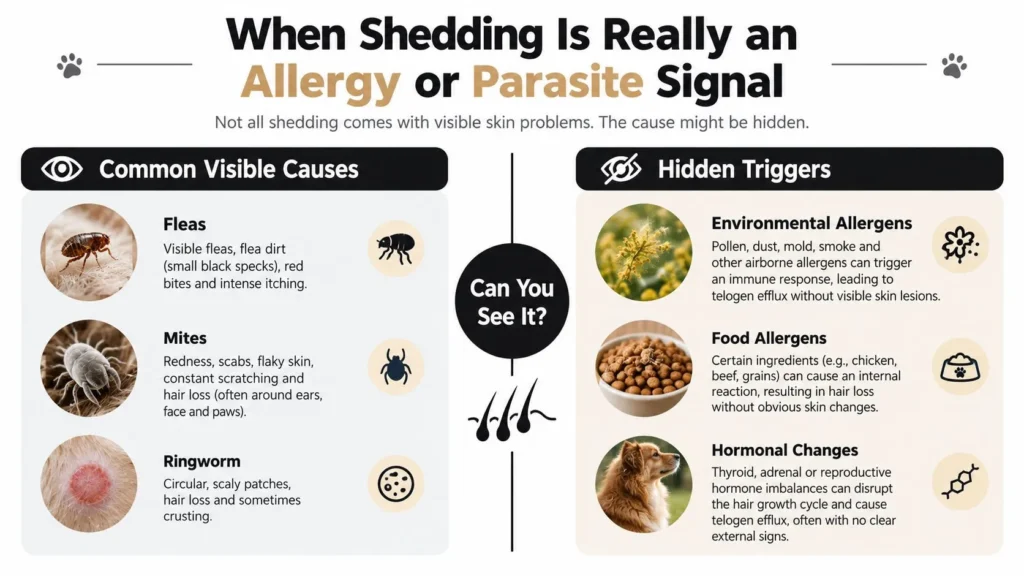
A cat doesn’t need to look obviously itchy for parasites or allergies to be involved. Some cats groom themselves frequently, removing hair before an owner sees scratching. Others develop subtle scaling or broken hairs rather than a dramatic bald patch.
Flea allergy dermatitis deserves particular attention because a sensitive cat can react strongly to flea exposure, even when you don’t find a visible flea. Indoor living also doesn’t provide complete protection. Parasites can enter on clothing, shoes, bags, or other animals, so “my cat never goes outside” doesn’t settle the question.
What to look for during handling
Part the coat instead of judging it only from above. Check the skin along the back, belly, flanks, and tail base for:
- Fine flakes or a rough, dull surface.
- Small scabs, especially along the back.
- Black specks that may indicate flea debris.
- Broken hairs rather than naturally released full-length hairs.
- Repeated licking or chewing in one accessible region.
- Areas where the coat looks thinner on both sides.
A symmetrical pattern can occur with allergic disease, while scattered circular areas with broken hairs can raise concern for ringworm. Mite-related disease may create an uneven, moth-eaten appearance with crusting, but presentations can be subtle. A 2024 case report described Demodex gatoi in a cat with excessive shedding and scales even without the itchiness or overgrooming many owners expect. That makes a skin examination valuable even when your cat seems comfortable.
Cat hair also isn’t the original cause of cat allergy in people. Fel d 1 is produced mainly in salivary and sebaceous glands, then spread onto hair and dander during grooming. More loose hair can distribute allergen around the home, but removing hair doesn’t remove the source.
If you see circular lesions, scales, or suspicious broken hairs, Bandana Rx cat ringworm care can help you understand why suspected ringworm requires careful veterinary guidance. Don’t apply household antifungal products or insecticides without professional advice. A separate concern, such as coccidia in cats, involves intestinal parasites rather than coat disease, so digestive signs should be reported separately instead of assumed to explain the shedding.
Practical Ways to Reduce Shedding at Home
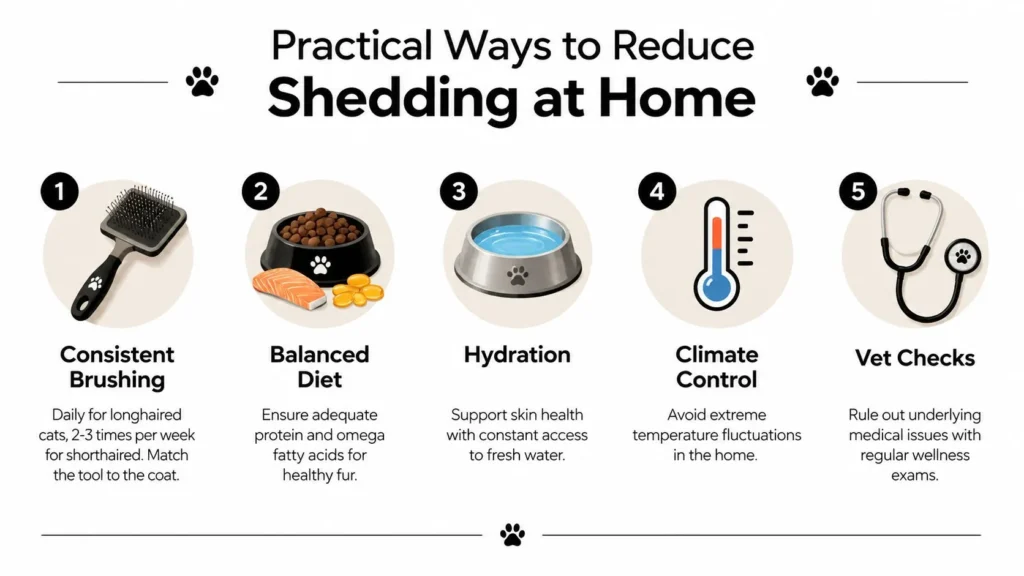
Home care should remove loose hair while preserving clues about your cat’s health. Begin with grooming, then review nutrition, hydration, the home environment, and stress. A cleaner coat is useful, but it does not explain why shedding increased.
Begin with the right brush
Choose a tool that suits the coat. A slicker brush lifts loose hair from many short-haired coats, a wide-tooth comb separates long hair gently, and a de-shedding tool suits periods when a double-coated cat releases a heavy undercoat. Brush lightly in the direction of hair growth. Stop if the skin turns pink or your cat resists.
For many cats, brushing two to three times weekly provides a practical routine, with more frequent sessions during peak shedding. Long-haired cats may need daily attention to limit tangles. Brushing spreads natural oils and removes loose undercoat before it reaches furniture. It does not correct hair loss caused by fleas, allergies, or illness.
Support the coat from within
Feed a complete, balanced cat food with adequate animal protein. Fish oil and other supplements can improve coat condition, but discuss them with your veterinarian before adding them, especially if your cat has a medical condition or takes medication. Random zinc supplementation and repeated diet changes can make the underlying cause harder to identify.
Keep fresh water available. Wet food, several bowls, or a fountain may encourage some cats to drink, but choose hydration strategies for the individual cat. Guidance on choosing food for indoor cats helps compare feeding considerations without treating food as a replacement for a medical examination.
Make the home easier to manage
HEPA filtration and regular dust removal reduce airborne particles and loose fur. Wash bedding routinely, vacuum preferred resting areas, and keep grooming sessions calm and predictable. Vertical space, quiet hiding places, and a stable daily rhythm may reduce stress-related grooming changes.
Washable throws and fitted covers limit the fur that settles into furniture. Advice on furniture protection for pet owners offers practical covering ideas. Furniture covers simplify cleanup while you determine whether the shedding pattern is normal.
Keep each grooming session brief and safe. Reward cooperation, handle one body area at a time, and let your cat leave before anxiety builds.
Your At-Home Shedding and Coat Health Checklist
Turn one brushing session into a brief health screen. You don’t need specialist equipment. You need good light, a calm cat, and notes that describe what you observe.
Inspect the skin. Part the fur over the back, belly, flanks, and tail base. Look for redness, flakes, scabs, crusts, black specks, or bare skin.
Assess the hairs. Are they full length and naturally loose, or are they broken, chewed, greasy, brittle, or clumped? Broken hairs suggest that grooming, scratching, infection, or another process may be removing them.
Compare both sides. Check whether thinning is even on the flanks and belly or concentrated in one area. Symmetry can point toward a different group of causes than a single overgroomed patch.
Notice behavior. Watch for increased licking, chewing, scratching, hiding, stiffness, or difficulty reaching parts of the coat. Reduced grooming can be as informative as excessive grooming.
Record the change. Note when the shedding increased, whether it followed a stressful event, and whether appetite, weight, thirst, stool, energy, or vomiting changed. Photos taken in the same light can make gradual coat changes easier to discuss.
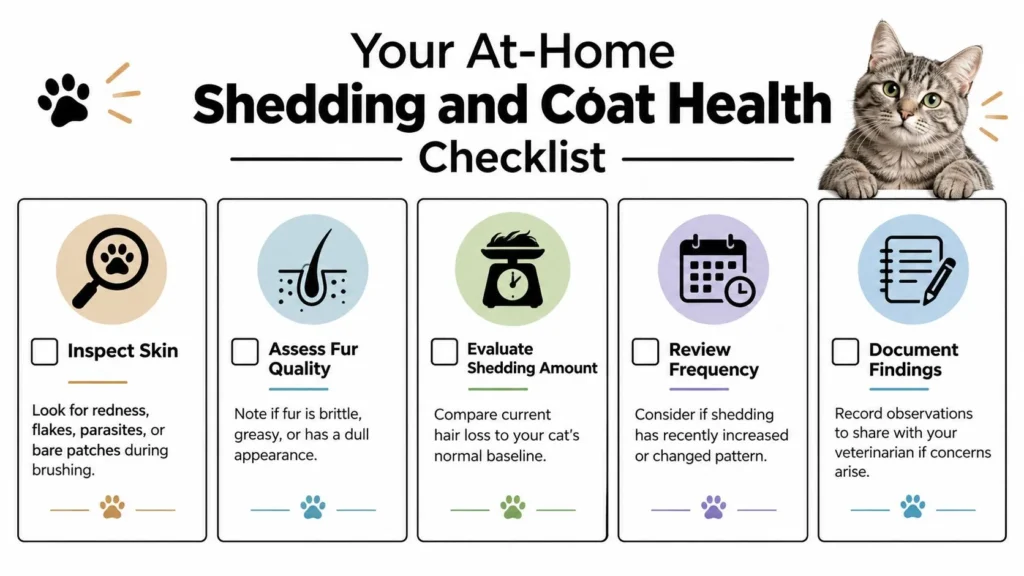
Monitor mild changes when the skin looks healthy and your cat otherwise behaves normally. Arrange veterinary care when the coat keeps thinning, the pattern becomes more defined, or the skin findings persist. Bring your notes and photographs. “A lot of fur” is difficult to measure, but “thin on the right flank, licking after meals, and rougher than last month” gives a veterinarian a useful starting point.
Warning Signs That Mean a Vet Visit Cannot Wait
Shedding stops being a minor housekeeping issue when it comes with visible coat loss, skin damage, or a change in general health. Bald patches, symmetric thinning, persistent irritation, or a sudden grooming change should prompt a veterinary appointment rather than another brush or supplement.
Seek prompt professional assessment if you notice:
- Bare or rapidly thinning areas, especially on the belly, flanks, face, or tail.
- Scratching, chewing, scabs, pustules, redness, or scaling that damages the skin.
- Overgrooming one spot or a cat that suddenly stops maintaining parts of the coat.
- A dull or greasy coat with weight, appetite, thirst, energy, vomiting, or diarrhea changes.
- Lethargy or obvious discomfort accompanying the shedding increase.
A veterinarian may examine the entire skin surface, look for parasites, perform skin scrapings or cytology, and assess whether fungal testing is appropriate. Depending on the history, bloodwork may help evaluate systemic or endocrine disease, and a structured diet trial may be considered when allergy is a concern. The exact workup should follow the cat’s pattern and other signs, not a one-size-fits-all checklist.
Don’t wait for dramatic baldness if the change is worsening or your cat seems unwell. Early assessment can prevent repeated self-trauma, chronic inflammation, and months of treating the wrong problem at home. If you’re uncertain, a photograph and a clear timeline are more useful than trying to estimate the total weight of fur.
Bringing It All Together for a Calmer, Cleaner Home
Use a three-level decision rule.
First, normal biology: seasonal or steady loose hair with an even coat, healthy skin, and normal behavior usually calls for consistent brushing, balanced nutrition, fresh water, parasite prevention, and a calm routine.
Second, changed pattern: persistent shedding, broken hairs, scales, scabs, symmetrical thinning, localized licking, or reduced grooming is diagnostic information. Run the coat checklist and arrange a veterinary assessment if the change continues.
Third, red flags: bald patches, skin injury, pain, lethargy, digestive signs, or weight and appetite changes should move directly to professional care. More brushing won’t solve an allergy, parasite, endocrine disorder, or painful joint.
Shedding is easier to manage when you read it as a weekly health signal rather than a household failure. You’ll still find fur on the sofa, but you’ll have a clearer way to decide when it’s ordinary turnover and when your cat is asking for help.
Maxi Journal publishes approachable articles across pets, health, science, and everyday questions, including practical guidance for cat owners. Visit maxijournal.com for more clear, useful reading to support informed care for your cat and a calmer home.
Discover more from Maxi Journal
Subscribe to get the latest posts sent to your email.