You’ve got a commute, a long walk, a workout, a flight, or a quiet evening ahead, and you want an audiobook that won’t lose you halfway through. The problem isn’t finding titles. It’s choosing one that matches how you want to feel, how much attention you can give, and whether the narrator’s voice works for you.
These audiobook suggestions focus on the listening experience rather than bestseller status alone. Each recommendation considers narrative style, narrator performance, production strengths, emotional intensity, flexibility, and practical value. The list moves across self-discovery, habits, fiction, science, nature, gaming, writing, travel, wellness, and culture, which suits maxijournal.com’s wide editorial interests across science, technology, health, business, arts, education, games, and entertainment.
Before committing, use the sample strategically. Listen for voice fit, pacing, clarity, emotional tone, and opening curiosity. A useful audiobook guide from BarkerBooks can also help you understand format differences before you choose.
Audiobooks have become a major discovery category. The Audio Publishers Association reports that U.S. audiobook publisher receipts reached $2.43 billion in 2025, up 9% year over year, while publishers reported more than 750,000 active titles, a 43% increase from 2024. The same survey found that 58% of American adults, about 157 million people, have listened to an audiobook, according to the Audio Publishers Association survey data. With so much choice, the right recommendation starts with the experience you want.
1. Educated by Tara Westover for personal growth and self-discovery
Tara Westover’s Educated is the choice for a commute that calls for transformation, tension, and intellectual awakening. This memoir follows Westover’s path from an isolated upbringing toward education and a wider understanding of the world. It’s inspiring, but it isn’t lightweight. The story examines family loyalty, fear, memory, identity, and the painful cost of changing your life.
Julia Whelan gives the book a controlled, nuanced performance. She keeps the prose clear during intense scenes and allows emotional shifts to develop without forcing them. That restraint matters because the memoir moves between reflection and confrontation. The narration supports the sense that Westover is not recounting events, but trying to understand how those events shaped her.
Best listening context: Choose a daytime commute, train journey, or steady walk where you can give the story partial attention without needing to solve complex tasks.
The main limitation is emotional intensity. This isn’t the audiobook to play as background noise during a stressful workout or a crowded errand run. Difficult chapters benefit from space afterward, especially if the themes of family conflict and isolation feel personal.
Sample it this way:
- Check the emotional register: Listen through a section where the narration shifts from observation to conflict.
- Test the pacing: Make sure Whelan’s measured delivery suits your preferred rhythm.
- Leave room to reflect: Don’t judge the experience only by whether it keeps you moving. Its impact often builds between chapters.
Pair it with science and education reading on maxijournal.com if the book leaves you thinking about learning, opportunity, or intellectual independence.

2. Atomic Habits by James Clear for practical momentum
Atomic Habits works best when you want your listening time to produce an action. James Clear presents a structured approach to building useful routines and reducing unhelpful ones, drawing on research, examples, and practical frameworks. The book belongs on a morning commute, during household tasks, or alongside a planning session when you’re ready to turn an idea into a small experiment.
Clear narrates the audiobook himself, and that choice gives the presentation a direct, instructional quality. He sounds like a guide explaining a method at a whiteboard, not an actor performing a dramatic text. That clarity makes the book easy to pause, revisit, and apply.
Don’t rush through it as if completion were the goal. The strongest experience comes from listening to one concept, identifying where it fits your life, and trying it before moving on. A listener rebuilding a morning routine will use the book differently from a manager trying to improve team practices.
Practical rule: After each useful chapter, choose one behavior to test. Keep the experiment small enough that you can repeat it without relying on motivation.
Use the audiobook actively:
- Keep notes nearby: Record the ideas that apply to your schedule rather than copying every principle.
- Match the context: Play habit-focused chapters while preparing the environment for the behavior you want.
- Revisit strategically: Return to relevant sections when you’re changing a routine, not only when you need general inspiration.
For a related practical resource, see how to build healthy habits. The limitation is repetition. If you already know Clear’s central framework, the value comes less from novelty and more from applying the ideas consistently.

3. The Midnight Library by Matt Haig for hopeful fiction
Choose The Midnight Library when you want fiction that feels entertaining but still gives you something to consider after the final chapter. Matt Haig’s contemporary fantasy follows a woman confronting alternate versions of her life and the choices that might have led her elsewhere. The premise creates an accessible route into questions about regret, possibility, identity, and second chances.
Carey Mulligan’s narration is warm and contemplative. She gives the story a gentle emotional center, which suits its reflective structure. The performance doesn’t turn the novel into a theatrical production. Instead, it keeps the listener close to the protagonist’s inner experience while allowing the fantastical setting to remain inviting.
This is a strong evening listen, especially when you want a complete story rather than advice or information. It rewards attention, so save it for leisure time instead of playing it beneath demanding work. The book’s emotional themes can also make it a poor choice when you want pure escapism or a fast, plot-heavy thriller.
Try a short sample before buying or borrowing:
- Listen for warmth: Mulligan’s tone should feel comforting rather than too restrained.
- Notice the pauses: The reflective pacing is part of the experience.
- Test your response to the premise: If the opening questions about alternate lives appeal to you, the larger structure should hold your interest.
A quiet room, a walk after dinner, or a relaxed weekend afternoon gives the story enough space to work. Afterward, discuss it with a book club or write down which parts felt most relevant to your own choices. The audiobook’s value lies in that conversation with yourself, not in racing toward the ending.

4. Range by David Epstein for career reflection
Range is a smart selection for a career transition, a change in direction, or any period when conventional professional advice feels too narrow. David Epstein challenges the assumption that people should always specialize early and stay within one lane. He examines how broad experience, experimentation, and cross-disciplinary thinking can shape performance and innovation.
Will Damron’s narration suits the material. His delivery is analytical without becoming dry, and he handles evidence-heavy passages with enough variation to maintain momentum. This is a nonfiction audiobook for listeners who like arguments supported by examples and research, but who don’t want a purely academic presentation.
Listen during a train ride, a long drive, or a low-distraction work session. It’s less suitable for a crowded gym because the book develops its ideas through comparisons and extended examples. Missing a few minutes can make a later point harder to evaluate.
Take a practical note after each major idea:
- Career fit: Identify one skill or experience outside your current specialty that could strengthen your work.
- Education fit: Consider whether a broad learning path would serve you better than another narrow credential.
- Writing fit: Use the book’s interdisciplinary themes when developing articles about business, education, or technology.
The limitation is that the book may feel more useful during reflection than during immediate crisis. It won’t tell you which career to choose. It gives you a stronger way to question inherited assumptions about expertise and progress.
Sample the narration through a section with several examples rather than only the opening. You’re testing whether Damron’s even, evidence-focused style can carry a longer argument for you.
5. Braiding Sweetgrass by Robin Wall Kimmerer for contemplative nature listening
Braiding Sweetgrass creates a slower, more attentive listening experience. Robin Wall Kimmerer brings together Indigenous wisdom, botanical science, personal reflection, and ideas about reciprocity with the natural world. The essays invite you to notice relationships between people, plants, knowledge, and responsibility rather than consume information as a rapid sequence of conclusions.
Suzanne Toren’s narration is soothing and respectful. She doesn’t flatten the lyrical passages into a lecture, and she gives the scientific material enough clarity to remain approachable. The audiobook suits listeners who want a reflective companion for an outdoor walk, gardening, quiet travel, or an evening when they’re trying to reduce mental noise.
This isn’t a productivity audiobook. Its pace asks you to linger. Some listeners will find that spaciousness absorbing, while others may prefer a more linear argument or a stronger plot.
“Listen outdoors when possible, then pause before starting the next chapter.”
The advice is simple because the book benefits from a change in attention, not a complicated system. Let a chapter lead you toward observation. Notice a tree, a garden, weather, or a familiar setting with more care than usual.
Sample for texture rather than plot:
- Hear the lyrical passages: The language should feel natural in Toren’s voice.
- Test the science sections: Make sure the balance between reflection and explanation suits you.
- Choose the right mood: This works for restoration and contemplation, not hurried multitasking.
The audiobook is especially relevant to readers interested in sustainable living, environmental questions, wellness, and the relationship between scientific and cultural knowledge. Keep a note of passages that could inspire your own nature writing or cross-category reading.
6. Educated Games for interdisciplinary education and gaming
Educated Games suits listeners who want to explore where gaming meets education, psychology, science, and learning design. Presented in an anthology style with multiple narrators, it offers a range of voices and perspectives instead of one continuous authorial argument. That structure makes it useful for sampling. You can begin with the chapters closest to your interests and decide whether the wider collection deserves your time.
The production’s main strength is variety. Different narrators can clarify shifts in subject and perspective, helping the collection feel like a guided conversation across disciplines. The trade-off is consistency. If you prefer one narrator and one sustained narrative voice, an anthology may feel fragmented.
A teacher might listen while planning a lesson. A parent might use selected chapters to think about how a child interacts with educational games. A game designer or student could listen for ideas about motivation, feedback, problem-solving, and learning environments.
Approach the collection selectively:
- Start with your question: Choose education, psychology, classroom practice, or game design first.
- Compare perspectives: Notice where the narrators and contributors frame gaming differently.
- Move from theory to practice: Research the games or learning approaches mentioned before applying them.
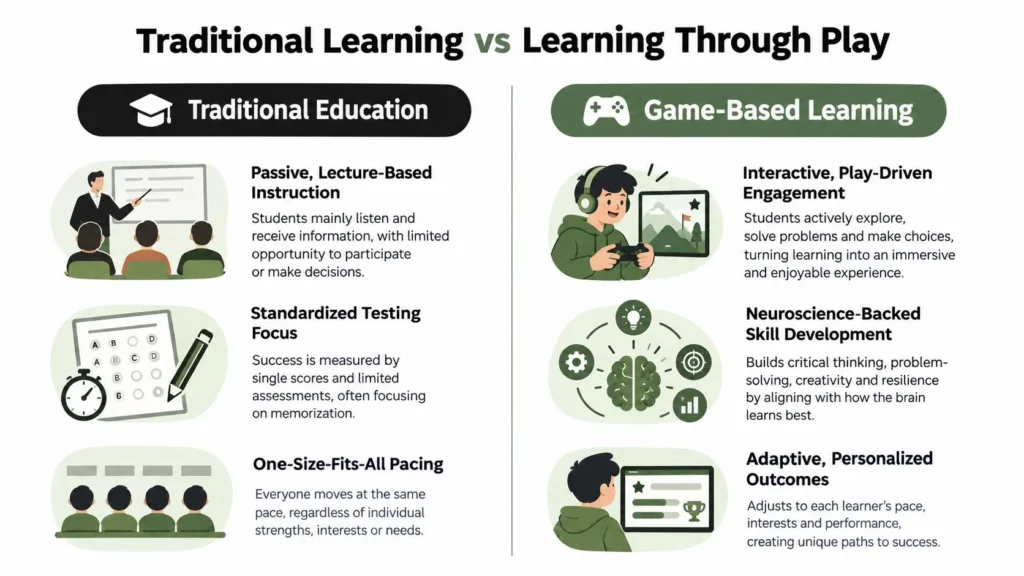
Sample two contrasting chapters before committing. The goal is to check whether the anthology’s changes in tone and subject keep you curious. For families, shared listening can make the material more useful because discussion reveals how adults and children interpret games differently. It also fits the wider growth of audiobook listening in households, where recommendations increasingly need to account for more than one listener.
7. On Writing Well by William Zinsser for clear communication
A report feels bloated, or a draft loses its point halfway through. On Writing Well gives writers a practical way to fix those problems. William Zinsser examines clarity, economy, structure, and voice across articles, reports, applications, newsletters, pitches, and professional messages. His advice works at sentence level, where vague wording and unnecessary detail usually weaken communication.
Grover Gardner narrates with a warm, professorial quality. He sounds like a patient mentor explaining why a passage works, where it loses energy, and which revision would make it clearer. That delivery suits a focused walk before a writing session, especially when you can return to a draft soon afterward.
Use this audiobook as a working guide, not background entertainment. Listen to one chapter, open a current piece, and revise a paragraph while the principle is fresh. The method is simple and produces more value than collecting tips.
Turn each chapter into a revision routine:
- Take brief notes: Record the principle in your own words.
- Apply one idea: Rewrite a section immediately instead of trying to use every lesson.
- Match advice to deadlines: Revisit a relevant chapter before an article, proposal, or major edit.
- Discuss the method: Share useful passages with fellow writers and contributors.
Aspiring writers can pair it with how to become a published author. Professionals who want a repeatable practice can also explore daily writing habits for professionals.
The limitation is its classic perspective. Some examples and assumptions reflect traditional nonfiction publishing, so digital-first writers may need to translate the advice for their format. The central standard still holds: clear thinking produces cleaner prose.
Sample a chapter on clarity and another on style before committing. If Gardner’s measured delivery keeps your attention and makes you reach for a draft, the audiobook fits focused revision sessions.
8. The Art of Travel by Alain de Botton for thoughtful journeys
The Art of Travel is for listeners who want travel to feel richer, not merely busier. Alain de Botton examines why people travel, what they expect to find, and how observation can change the experience of a place. It’s part philosophy, part cultural reflection, and part invitation to pay closer attention.
Douglas Hodge brings a measured presence to the narration. His voice suits de Botton’s contemplative prose, especially when the book moves from practical travel scenes into larger questions about anticipation, beauty, boredom, and memory. The result is best consumed before a trip, on a flight, or during a slow walk through a place you already know.
The book won’t function as a destination guide. It won’t tell you which hotel to book or how to build an itinerary. Its value is in changing the questions you bring with you.
Use it around a real journey:
- Before departure: Listen while planning, then identify what you’re hoping the trip will provide.
- During travel: Revisit a relevant chapter when you have time to observe rather than rush.
- After returning: Write down which moments stayed with you and why.
For a practical writing extension, try travel journal prompts. They can turn the book’s ideas about observation into a record of your own trip.
Sample a reflective passage and a more descriptive one. Hodge’s delivery should feel calm enough for contemplation without becoming distant. Choose another audiobook if you need constant plot movement or fast factual guidance. This recommendation is about attention, and it works when you’re willing to notice ordinary details.
9. Why Buddhism Is True for evidence-minded wellness
Robert Wright’s Why Buddhism Is True fits listeners who are curious about meditation and Buddhist thought but want an accessible discussion grounded in psychology and neuroscience. Wright explores how ancient practices may connect with modern ideas about the mind, attention, desire, and suffering. The book doesn’t require a listener to adopt a religious identity before engaging with its questions.
Roger Wayne’s narration is authoritative yet approachable. He gives technical concepts enough structure to follow while keeping the overall tone conversational. That makes the audiobook useful during a health-conscious routine, a walk, or a period when you’re beginning to examine meditation beyond its popular surface language.
The strongest way to listen is to pair the ideas with practice. Don’t let the audiobook become another abstract wellness project. After a relevant chapter, sit, observe your attention, and note what you experienced.
Listen, then test the idea in your own attention.
Keep the experience grounded:
- Separate explanation from certainty: Treat the book as an argument to examine, not a substitute for personal judgment.
- Practice gently: Use short sessions while you’re learning what meditation feels like.
- Track reactions: Notice whether a concept clarifies your habits or adds more information.
- Discuss carefully: Conversations with wellness communities can reveal different interpretations.
The limitation is that listeners seeking a traditional introduction to Buddhist practice may want more historical or religious context. This is a philosophical and science-oriented entry point. Sample the neuroscience-heavy sections first if that’s what attracted you, then decide whether the broader discussion matches your interests.
10. The Anthropocene Reviewed for flexible culture listening
The Anthropocene Reviewed is the most flexible recommendation on this list. John Green presents essays about human-made objects, cultural habits, natural phenomena, and everyday experiences, combining humor, nostalgia, science, and philosophical reflection. Because each essay stands on its own, you don’t need a long uninterrupted session to enjoy it.
Green narrates the audiobook himself, and his performance gives the collection a personal, conversational warmth. His delivery supports quick shifts from a joke to a serious observation without making either feel out of place. That balance makes the audiobook a strong introduction for someone who’s unsure whether longer narrative nonfiction will hold attention.
Play one essay while cooking, walking, commuting, or taking a short break. You can listen in order, but the format also lets you choose based on your mood. That flexibility is the central production strength.
Use the collection as a listening menu:
- For curiosity: Pick an essay about an ordinary object or familiar experience.
- For conversation: Share a favorite essay with someone who has a different interest.
- For creative work: Use an unexpected topic as a prompt for an article, review, or personal reflection.
- For beginners: Start with a single essay rather than committing to the whole book.
Sample several essays instead of relying only on the opening. You’re checking whether Green’s humor, pacing, and shifts into vulnerability suit your taste. Some listeners may find the essay structure less immersive than a continuous story, but that same structure makes the audiobook easy to pause and resume.
It also matches a broad, interdisciplinary reading habit. A single essay can lead toward science, culture, entertainment, education, or ordinary-life observation, which is exactly why it works for listeners who don’t want to stay inside one category.
Top 10 Audiobooks, Comparison
| Title | Implementation complexity | Resource requirements | Expected outcomes | Ideal use cases | Key advantages |
|---|---|---|---|---|---|
| Educated by Tara Westover – Narrated by Julia Whelan | Medium, requires emotional engagement and reflection | 13 hours listening, emotional bandwidth, chance to pair with articles | Increased critical thinking, motivation for education and personal change | Commuting, workouts, reflective moments | Deep, emotionally resonant narration; strong personal-growth arc |
| Atomic Habits by James Clear – Narrated by the Author | Low–Medium, actionable steps that require consistent practice | 10.5 hours, note-taking, habit-tracking tools | Practical habit change, improved productivity and routines | Gym sessions, morning routines, focused work | Evidence-based frameworks, author narration for clarity |
| The Midnight Library by Matt Haig – Narrated by Carey Mulligan | Low, primarily contemplative enjoyment | 12.5 hours, leisure attention | Emotional uplift, perspective on choices and purpose | Evening relaxation, travel, creative breaks | Uplifting, thought-provoking story with evocative narration |
| Range by David Epstein – Narrated by Will Damron | Medium–High, engages with dense research and career application | 12 hours, focused listening, follow-up reflection | Broadened view on specialization, career and learning strategy shifts | Career transitions, focused commutes, professional development | Research-backed interdisciplinary insights challenging specialization norms |
| Braiding Sweetgrass by Robin Wall Kimmerer – Narrated by Suzanne Toren | Medium, contemplative listening and reflective integration | 9.5 hours, quiet or outdoor listening recommended | Greater ecological awareness, integration of indigenous and scientific perspectives | Outdoor walks, meditation, evening reflection | Lyrical prose blending indigenous wisdom and botanical science |
| Educated Games: How Video Games Are Shaping Education (Anthology) | Medium, variable chapter applicability, selective implementation | 11 hours, chapter-by-chapter consumption, educator collaboration | Practical classroom strategies, ideas for game-based learning | Educators, parents, EdTech researchers; modular listening | Diverse expert perspectives; practical links between gaming and learning |
| On Writing Well by William Zinsser – Narrated by Grover Gardner | Medium, requires practice and iterative application | 7.5 hours, pen-and-paper, time to apply exercises | Clearer, more effective writing across genres | Aspiring and practising writers; pre-writing preparation | Timeless, practical writing principles and exercises |
| The Art of Travel by Alain de Botton – Narrated by Douglas Hodge | Low–Medium, conceptual shifts rather than concrete steps | 9 hours, reflective listening | Enriched travel perspective, more mindful trips and observation | Before trips, during travel downtime, armchair travel | Philosophical, artful reflections on travel and experience |
| Why Buddhism Is True by Robert Wright – Narrated by Roger Wayne | Medium–High, mixes neuroscience with contemplative practice | 11 hours, willingness to practice meditation, focused attention | Better understanding of mindfulness and evidence-based wellness | Meditation sessions, walks, health-focused routines | Science-informed integration of Buddhist practice and psychology |
| The Anthropocene Reviewed by John Green – Narrated by John Green | Low, episodic essays, easy to consume in segments | 14 hours total but highly modular | Cultural insight, entertainment, creative inspiration | Leisure listening, walks, commutes, short breaks | Witty, wide-ranging essays with author-narration and broad appeal |
Final Thoughts
The best audiobook suggestions begin with the experience you need, not the title with the loudest reputation. Choose Educated when you want a powerful story of learning and transformation. Pick Atomic Habits when you’re ready to act on a practical idea. Use The Midnight Library for hopeful fiction, Range for career reflection, and Braiding Sweetgrass for a slower connection with nature and knowledge.
The remaining choices solve different listening problems. Educated Games gives families, educators, and gaming audiences a way into interdisciplinary questions. On Writing Well turns listening into a revision tool. The Art of Travel changes how you observe a journey. Why Buddhism Is True supports evidence-minded reflection about attention and wellness. The Anthropocene Reviewed offers the easiest entry point when you want short, self-contained essays.
Narration should guide your decision as much as subject. An excellent book can still fail as an audiobook if the voice, pacing, or emotional register doesn’t suit you. Samples exist for a reason. Listen long enough to hear the narrator handle a complete thought, a transition, and the book’s characteristic tone. Don’t choose based only on the first few sentences.
Your listening context matters just as much. A demanding nonfiction argument needs more attention than a standalone essay. A memoir with painful themes may require recovery time between chapters. A reflective nature book can deepen an outdoor walk, while a habit book becomes more useful when you stop and apply one idea.
Access also affects the decision. Audiobook listeners use several legal routes, including direct purchases, subscriptions, libraries, and dedicated-service credits, according to the Audio Publishers Association’s research FAQ. That means the most useful recommendation includes not only what to hear, but where to find it in a format and access model that suits your budget and platform mix. Sample before committing, check your library, and compare legal options before paying.
The category continues to expand. Digital audiobooks accounted for 99% of publisher revenue in 2025, and the Audio Publishers Association’s survey information places that shift within a long period of year-on-year growth. Industry forecasts also describe continued expansion, although estimates vary by methodology, as outlined in Mordor Intelligence’s audiobook market analysis. More titles and more listening routes make personal fit even more important.
Start with the mood you want to create tonight. Sample one recommendation for five minutes, notice how the voice and pacing feel, then commit only if the listening experience earns your attention.
Visit maxijournal.com for approachable writing across science, technology, health, business, arts, travel, education, gaming, entertainment, and more. Use its cross-category coverage to find your next listening companion, then return with the ideas your audiobook sparked.
Discover more from Maxi Journal
Subscribe to get the latest posts sent to your email.