Your dog may be moving more slowly, hesitating before jumping on the couch, or looking back at you after surgery with that tired, uncomfortable expression every owner recognizes. When a veterinarian prescribes carprofen, owners often ask the same questions right away. How much should I give? Is it safe? What if my dog seems worse instead of better?
Those are good questions. Carprofen can be very helpful for pain and inflammation in dogs, but it works best when owners understand both the dose and the day-to-day decisions that come with using it. A prescription label gives you the amount. It usually doesn’t answer the practical worries that show up at home on a Tuesday night when your dog skips dinner or vomits after a pill.
This guide is written the way I’d explain it in an exam room. Clear, calm, and focused on safety. You’ll learn how veterinarians think about carprofen for dogs dosage, how the math is worked out, how to give it well, what side effects matter, and what to do if the dose is technically correct but your dog still isn’t tolerating the medication.
Your Dog Is in Pain What Comes Next
A common scene goes like this. A dog with arthritis takes longer to stand up after a nap. A younger dog comes home limping after an injury. Or a dog has surgery and seems sore once the excitement of the day wears off. Owners often notice the small things first. Slower stairs, less tail wagging, reluctance to go for a walk, a different look in the eyes.
Pain changes behavior before it changes anything else.
When your veterinarian prescribes carprofen, the aim isn’t just to “give a pain pill.” The aim is to help your dog rest, move, and recover more comfortably while limiting risk. That matters because pain control is never only about comfort. A sore dog may eat less, sleep poorly, and move less than needed for healthy recovery.
Why owners feel uneasy
Many people hear the word “NSAID” and get nervous. That’s understandable. They know pain medicines can irritate the stomach or stress organs in some situations. They may also have heard a story from a friend whose dog “didn’t do well” on a medication.
A prescription is only the starting point. Safe use depends on what you notice at home and how quickly you tell your vet if something changes.
That’s why understanding the medication matters. You don’t need to become your own veterinarian. You do need to know what your vet is trying to accomplish, what normal use looks like, and when to pick up the phone.
What a good plan looks like
In real life, a good carprofen plan usually includes:
- An accurate weight: Dose decisions depend on body weight, so guessing isn’t good enough.
- A clear schedule: Once daily and twice daily instructions are not interchangeable unless your veterinarian says so.
- A watchful owner: You’re the person who sees appetite, stool, energy, thirst, and comfort level at home.
- A backup plan: If the medication upsets your dog, your vet may want you to stop, pause, recheck, or switch.
That last point is where owners often feel lost. They assume the “correct” dose should automatically mean the “correct” outcome. Sometimes it does. Sometimes it doesn’t. A dog can receive an appropriate prescription and still need a change because the body doesn’t tolerate that particular drug well.
What Is Carprofen and How Does It Work
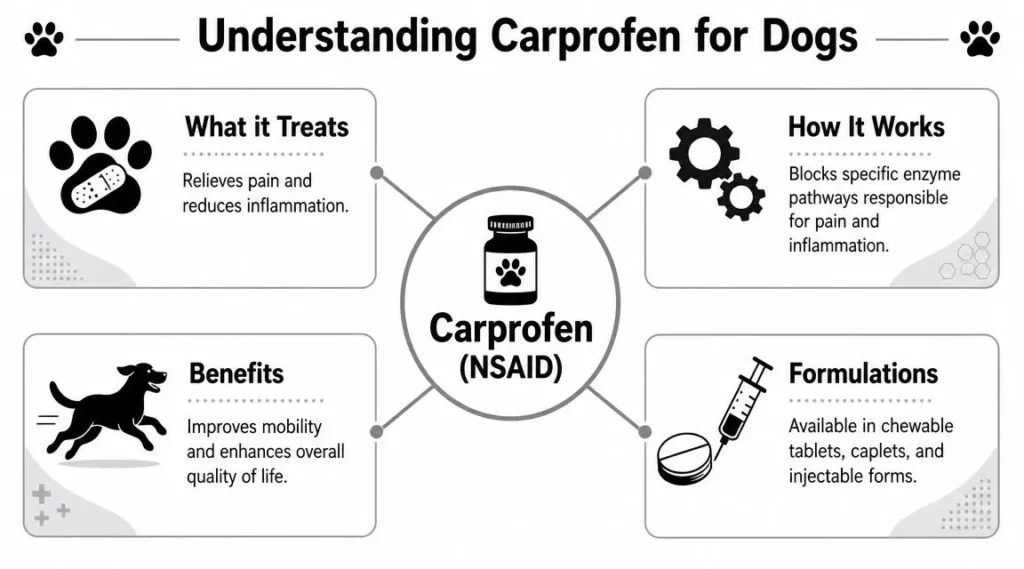
Carprofen is a non-steroidal anti-inflammatory drug, or NSAID, made for dogs. Veterinarians use it mainly to treat osteoarthritis pain and postoperative pain in dogs, which is part of why dosing is handled carefully and why prescription instructions matter so much. The approved dosing and indications are summarized in this carprofen guide for dog owners.
A simple way to think about it is this: inflammation turns the body’s pain signal up, like raising the volume on a speaker. Carprofen helps turn that volume down. It doesn’t erase the underlying condition. It reduces the pain and inflammation that make movement miserable.
Why vets choose it
For many dogs, carprofen helps them do normal dog things again. Getting up from bed. Walking without as much stiffness. Settling after surgery without obvious soreness. That doesn’t mean it’s casual medication. It means it’s a useful tool when used with care.
Veterinarians also like it because it targets inflammation, not just pain sensation alone. That distinction matters in arthritis and after surgery, where inflammation is a large part of what hurts.
Why human pain medicines are not substitutes
Owners sometimes wonder whether a human medicine in the cabinet is “basically the same thing.” It isn’t. Even if two medications are in the broad NSAID family, that does not make them interchangeable for dogs.
Human products such as ibuprofen or naproxen are not safe substitutes for prescribed canine NSAIDs. Your veterinarian selected carprofen because it’s a dog medication with a known dosing approach, known indications, and a monitoring strategy. Reaching for a human pill creates a different risk profile entirely.
What carprofen is and isn’t
It helps to keep these straight:
- It is a pain and inflammation medication for dogs.
- It isn’t a cure for arthritis or joint disease.
- It can improve comfort and mobility.
- It still requires observation at home.
Think of carprofen as a gatekeeper, not a magic fix. It blocks part of the inflammatory traffic that keeps pain active. If your dog does well on it, you may see better movement and a brighter mood. If your dog doesn’t tolerate it, that doesn’t mean you did something wrong. It means your veterinarian may need a different plan.
Calculating the Correct Carprofen Dosage
Your dog is hurting, your veterinarian prescribes carprofen, and the first question is usually simple: how much should my dog get? The answer starts with your vet’s instructions, but understanding the math helps you catch mix-ups and feel more confident giving it at home.
For oral carprofen, the approved daily dose is 4.4 mg per kilogram per day. In pounds, that is 2 mg per pound once daily. Some dogs receive that same total amount divided into 1 mg per pound every 12 hours.
Those schedules reach the same daily total. The difference is how the dose is spaced across the day.
The simple formula
A quick way to check the prescription is:
- Once daily: 2 mg per pound
- Twice daily: 1 mg per pound every 12 hours
Here is what that looks like in real life.
A 50-pound dog getting the once-daily plan would receive:
- 50 lb × 2 mg = 100 mg for the day
That same 50-pound dog on a twice-daily plan would receive:
- 50 lb × 1 mg = 50 mg every 12 hours
- 50 mg + 50 mg = 100 mg total for the day
The math is straightforward. The prescribing is not always quite as neat, because tablets come in fixed sizes.
Why your dog’s tablet may look odd on paper
Owners often expect the tablet size to match the calculation perfectly. It often cannot. Your veterinarian has to work with the strengths available and may prescribe a whole tablet or half tablet that gets as close as possible to the target dose.
That is why a dog may be told to take half a tablet, one and a half tablets, or a split schedule that looks a little different from the raw equation. It does not mean the prescription is sloppy. It means real-world dosing has to fit real tablet strengths.
Here is a simple reference using the 2 mg per pound once-daily target:
| Dog weight | Typical total daily target |
|---|---|
| 10 lb | 20 mg |
| 25 lb | 50 mg |
| 50 lb | 100 mg |
| 75 lb | 150 mg |
| 100 lb | 200 mg |
Use this table to understand the pattern only. Your veterinarian’s directions are the dose to follow.
Where owners get confused
The problems at home are usually practical ones.
“My dog gets half a tablet. Does that mean half a dose?”
No. Half a tablet may be the full prescribed dose for your dog’s weight and tablet strength.“Can I switch from once daily to twice daily on my own?”
No. The total daily amount may be the same, but the schedule still matters and should be chosen by your veterinarian.“My dog missed a dose. Should I double the next one?”
Contact your veterinary clinic or pharmacist for instructions. Do not guess.“My dog is still limping even on the correct dose. Should I give more?”
No. This is one of the most important what-ifs. If the prescribed dose is not giving enough relief, the next step is a call to your vet, not an extra tablet. Your dog may need a recheck, a different schedule, another pain medication, or a closer look at whether the problem has changed.
That last point matters. Owners often worry that a correct dose should work perfectly every time. Medicine does not work like a light switch. A dose can be correct and still need follow-up because the dog’s condition, stomach tolerance, or response to the drug is different than expected.
Many owners who manage several medications at once find it helpful to keep one written schedule for everything, from pain medicine to parasite prevention. If that sounds familiar, this practical guide to dog flea and tick medicine advice can help you organize your dog’s routine.
A final safety point. If your dog has gained or lost weight, the old dose may no longer fit. That is one reason recheck visits matter, especially if carprofen is becoming part of a longer-term plan.
How to Administer Carprofen for Best Results
Your dog may have the right prescription and still have a rough time taking it. That is common. The goal is not just getting the tablet into your dog once. The goal is building a routine your dog can tolerate, and that you can repeat without stress.
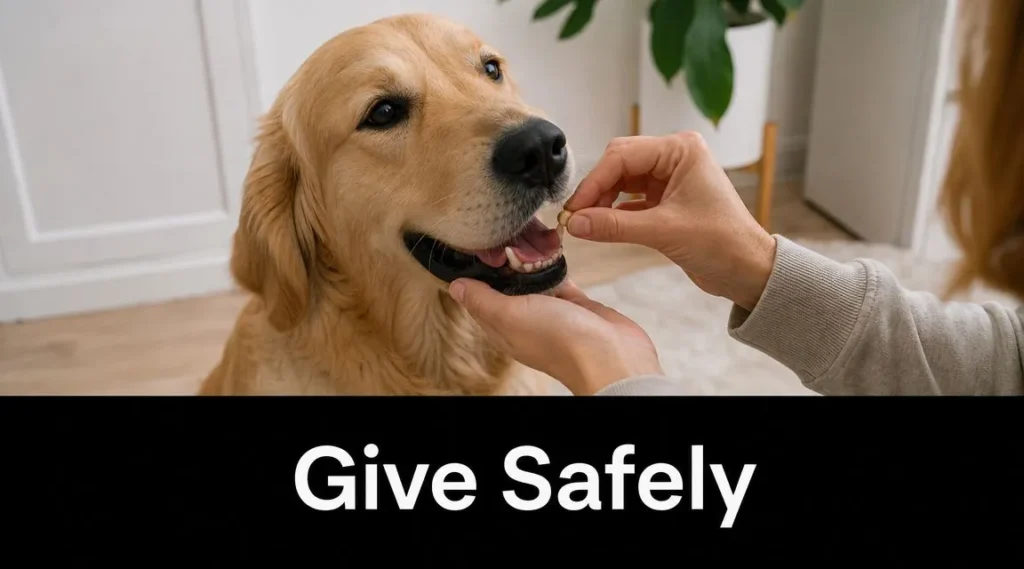
Carprofen is usually sent home as a chewable tablet or caplet. Veterinarians also use an injectable form in the clinic. For most owners, the practical question is simple. Which form and routine will your dog consistently accept every time?
Once daily or twice daily
Some dogs do well on a once-daily schedule because it is easier to remember and easier to fit into family life. Other dogs seem more comfortable when the same total daily amount is split into two smaller doses. A split schedule can sometimes be easier on the stomach, and some dogs seem to have steadier relief that way.
Your veterinarian chooses that schedule for a reason. It is a bit like deciding whether to water a plant once with a full can or twice with smaller pours. The total amount matters, but timing can affect how well the body handles it.
Practical ways to make dosing easier
A simple routine usually works best:
- Give it with food if your veterinarian recommends that approach: Many dogs handle NSAIDs better when the medication is paired with a meal.
- Follow the tablet instructions exactly: If your vet has you give a half tablet, use only the prescribed split. Do not trim pieces smaller on your own to “fine-tune” the dose.
- Watch your dog swallow: Some dogs tuck pills in their cheek, then drop them later when no one is looking.
- Use the same time each day: A steady routine helps prevent missed doses and makes it easier to notice changes in appetite, energy, or stool.
If your dog is scheduled for surgery, your veterinary team may handle carprofen a little differently. In some cases, they will tell you when to give it before the procedure, or they may give an injectable form at the hospital. Follow their instructions exactly rather than using your usual home routine.
If your dog hates pills
Medication administration often presents a challenge for owners. A dog who refuses the medication may look stubborn, but the problem is usually taste, texture, or a bad memory from a previous pill.
If your veterinarian says it is okay to give carprofen with food, hide it in a small amount of something your dog reliably finishes. Keep the portion small so you know the full dose went in. If your dog eats around pills, ask your clinic whether a different formulation would work better. Daily medication should be sustainable, not a wrestling match.
For dogs that get queasy with oral medicines, your vet may also want to discuss whether the issue is the pill itself, the drug, or stomach irritation from treatment in general. In some cases, owners are also taught how anti-nausea drugs fit into a broader plan. This overview of metoclopramide for dogs and how it is used for nausea can help you understand that conversation.
For a quick visual walk-through, this video can help with technique:
A small routine that pays off
I often tell owners to treat carprofen like seatbelt use. The safest habit is the one you do the same way every time, without debate. Pick the meal, pick the location, and use one method consistently.
That routine also helps with the what-ifs owners worry about. If your dog suddenly resists the pill, seems nauseated after a dose, or starts acting uncomfortable even though you gave the medicine correctly, do not keep experimenting at home. Call your veterinarian. A correct dose can still need adjustment, a different schedule, or a closer look at what your dog’s body is telling us.
Recognizing and Responding to Side Effects
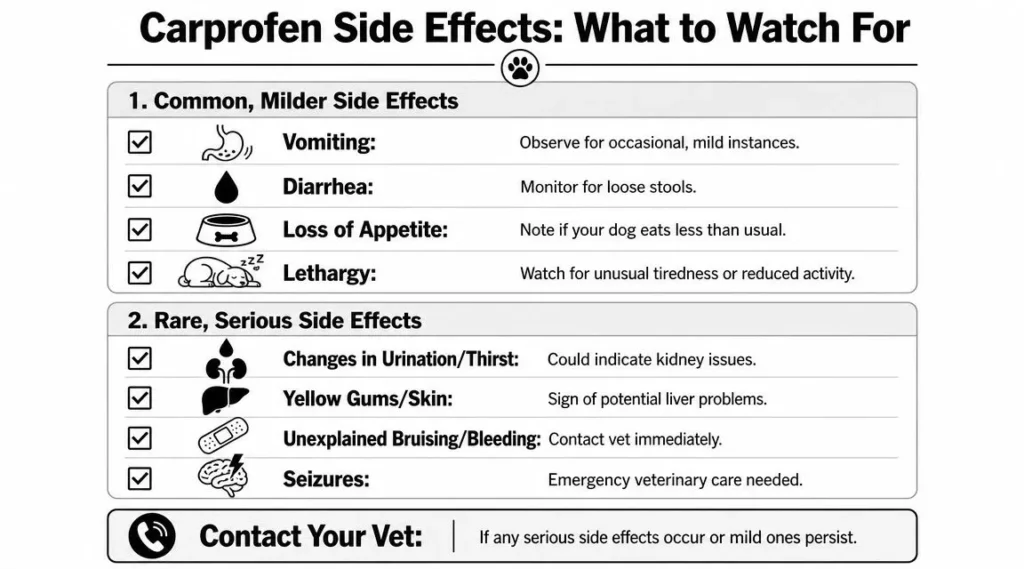
This is the part owners worry about most, and for good reason. Side effects can range from mild stomach upset to signs that need urgent veterinary attention. The key is not to panic. The key is to act early and clearly.
A useful safety principle in veterinary practice is to use the lowest effective dose for the shortest duration. Veterinary pharmacology guidance also notes that toxicity can appear within an hour of a significant overdose, and clinical signs may occur at about 22 mg/kg, which is around 5 times the therapeutic dose, as summarized in Today’s Veterinary Practice on carprofen use and toxicity.
Common signs that still matter
These are the problems owners most often notice first:
- Vomiting: Even one episode deserves attention if it happens after starting the medication.
- Diarrhea: Loose stool may seem minor, but it can be the first sign your dog isn’t tolerating the drug.
- Loss of appetite: A dog who suddenly doesn’t want breakfast may be telling you something important.
- Lethargy: Less energy than expected can mean discomfort, stomach upset, or a medication reaction.
For those signs, I generally want owners to stop the medication and call their veterinarian for guidance. Don’t keep giving doses just because the label says once or twice daily.
A medication can be correctly prescribed and still be the wrong fit for an individual dog.
If your dog is also nauseated and your veterinarian recommends treatment for that symptom, they may discuss other medications. For background reading on one anti-nausea option, you can review this article on metoclopramide for dogs.
Serious signs that should never wait
Some symptoms push this from “call soon” to “call now”:
- Black stools
- Marked increase in drinking or urination
- Yellow tint to gums, eyes, or skin
- Unexplained bruising or bleeding
- Seizures or collapse
These signs may point to gastrointestinal bleeding or organ stress. They are not watch-and-wait problems.
What to do in real time
Keep the response simple:
- Stop giving the medication.
- Call your veterinarian immediately.
- If your dog may have eaten extra tablets, seek urgent care without delay.
- Bring the bottle or package with you.
Owners get into trouble when they try to “top up” pain control after a missed dose, repeat a dose after vomiting, or wait to see whether black stool happens again. Don’t troubleshoot NSAID reactions alone. Fast communication protects dogs.
When Carprofen Is the Wrong Choice
Sometimes the safest use of carprofen is not using it at all. That doesn’t make it a bad medication. It means it’s one tool among many, and some dogs need a different one.
Dogs who may need another plan
Carprofen deserves extra caution in dogs with a history of:
- Kidney problems
- Liver problems
- Stomach or intestinal disease
- Bleeding risk
- Prior trouble with NSAIDs
Older dogs also deserve a more careful conversation because they’re more likely to have other medical issues or to be taking more than one medication.
Drug combinations that raise concern
One of the most important things you can tell your veterinarian is every medication and supplement your dog is getting. That includes the items people forget to mention because they seem harmless, such as aspirin from home, leftover prescriptions, joint products, or calming remedies.
The biggest concern is combining carprofen with other NSAIDs or with steroids such as prednisone. That kind of overlap can increase the risk of serious problems. If your dog has recently taken another anti-inflammatory, your veterinarian needs to know before carprofen is started.
The most dangerous drug interaction is often the one the vet doesn’t know about.
The same goes for over-the-counter products owners sometimes use casually. For example, many people ask about antihistamines and pain medicines in the same visit. If your dog is already taking something else and you’re also wondering about products like Benadryl, this overview of how much Benadryl for dog is a reminder that every medication decision belongs in the same conversation.
Full disclosure protects your dog
If your dog has ever had vomiting, black stool, appetite loss, unusual thirst, or a prior medication reaction, say so. Don’t assume it’s unrelated. The “right” pain plan depends on the whole dog, not just the sore joint or recent surgery.
Working with Your Vet for Ongoing Care
Two weeks after starting carprofen, many owners find themselves asking the same question: “My dog seems better, but how do I know this is still going well?” That is the point where follow-up matters most. Pain control is not a one-time decision. It is an ongoing check of comfort, appetite, digestion, energy, and the small daily changes only you can see at home.
Your veterinarian chooses the starting plan. You provide the day-to-day report that shows whether the plan is still the right fit. That matters even more with long-term use for arthritis, because the correct dose on paper can still be the wrong match for a particular dog.
One practical way to think about it is like breaking in a new pair of shoes. The size may be correct, but if they rub in the wrong place, you do not keep walking and hope for the best. You reassess. Carprofen works the same way. If your dog seems painful, nauseated, unusually tired, or just “not right,” your vet may want to pause the medication, adjust the schedule, switch drugs, or look for another cause.
What to report at home
Keep your updates simple, brief, and concrete:
- Appetite: normal, reduced, or absent
- Stool: normal, loose, black, or bloody-looking
- Water intake and urination: unchanged or noticeably increased
- Mobility: easier movement, no change, or worse
- Energy: brighter, sleepy, restless, or dull
A short note on your phone is often enough. “Ate half breakfast, softer stool, slower getting up today” is much more useful than “seems off.”
Questions worth asking at rechecks
Bring a written list. It helps you remember the details once you are in the exam room.
- Is my dog still a good candidate for this medication?
- Would a different schedule make sense?
- What signs mean I should stop it immediately?
- What monitoring do you want over time?
Long-term care also works better when your dog’s whole health picture stays organized. Preventive care, vaccine timing, bloodwork, and medication reviews often overlap, especially in older dogs. If you want a plain-language review, this complete guide to dog vaccines is a useful companion read, and this overview of the DHPP dog vaccine can help you keep routine care on schedule.
A careful owner watches for patterns, shares them clearly, and calls sooner rather than later. That turns “what if something goes wrong?” into a simple plan. You notice the change, your vet helps interpret it, and your dog gets safer, steadier care.
Discover more from Maxi Journal
Subscribe to get the latest posts sent to your email.