Goldendoodles look easy to love. The harder question is whether they’re easy to live with.
That gap matters. A lot of breed content stops at the teddy-bear face, the friendly temperament, and the promise of a low-shedding family dog. Prospective owners often discover later that the full story includes coat unpredictability, daily grooming work, major upfront costs, and a breeder market shaped as much by demand as by dog welfare.
These facts about Goldendoodles deserve a myth-versus-reality lens because the breed’s appeal is real, but so are the tradeoffs. Goldendoodles were developed with a practical purpose, then became one of the best-known designer dogs. That shift changed how they’re marketed. It also changed what buyers need to ask before bringing one home.
If you’re considering a puppy, the useful questions aren’t just “Are they cute?” or “Are they good with families?” They’re more concrete. What coat might this individual dog inherit? How much brushing will you do between groomer visits? What does ethical sourcing look like in a crowded breeder market? And how much are you prepared to spend before the first year is over?
The good news is that Goldendoodles can be affectionate, bright, patient companions in the right household. The bad news is that their most repeated selling points are often simplified to the point of being misleading.
Here’s the practical version. Not the brochure version.
1. Origin and Breed Development
Why does a dog marketed as a near-perfect family companion show so much variation from one litter to the next? The answer starts with how the Goldendoodle was developed.
Goldendoodles are a deliberate cross between a Golden Retriever and a Poodle, not a long-established purebred with tightly fixed traits. The cross was promoted as an attempt to combine the Golden Retriever’s working temperament with the Poodle’s intelligence and lower-shedding coat. That goal shaped the breed’s public image. It did not eliminate the genetic variability that comes with mixing two distinct parent lines.
History matters here because it explains a gap that still catches buyers off guard. Early interest in Poodle crosses was tied to function, including service and companion roles. Later demand shifted toward appearance and lifestyle marketing. Once the dog became popular, the label started doing too much work. Buyers often treated “Goldendoodle” as if it described a standardized package of coat, temperament, and maintenance level.
It does not.
A Goldendoodle may lean more heavily toward the Golden Retriever side or the Poodle side in coat texture, body type, intensity, and trainability. That is normal for a crossbred dog. It also explains why breeder quality matters so much more than the name alone suggests. Anyone comparing other Poodle mixes, including the Shepherd Poodle mix, will see the same basic pattern. The shared lesson is simple. A cross can produce appealing combinations, but it does not guarantee uniform outcomes.
What prospective owners should take from the breed’s history
Goldendoodle origin stories are often presented as proof that the dog was engineered to solve common ownership problems. That framing is incomplete. Intentional breeding can improve the odds of certain traits, but it cannot promise consistency across every puppy.
For a buyer, that leads to three practical conclusions:
- The label is only a starting point. You still need to assess the individual dog.
- Parent dogs matter. Their coat, structure, behavior, and health background offer better clues than branding does.
- Breeder transparency matters even more. Ethical breeders explain variation. Weak breeders sell certainty.
This is also where the popular “designer dog” narrative needs a reality check. Designer status says more about market demand than biological predictability. In some cases, it reflects careful selection. In others, it reflects consumer appetite for a look, a reputation, or the hope of an easier dog.
Buyers who want a lower-shedding dog often start with doodles, but that search should be broader and more precise. A comparison with other small hypoallergenic dog breeds often considered by allergy-conscious owners can clarify an important point. Coat expectations should be based on actual inheritance patterns and breeder records, not on category labels.
A stronger approach is straightforward. Meet the parent dogs if possible. Ask what traits have appeared in prior litters. Ask how the breeder selects for temperament and health, not just coat type. If every puppy is described as equally calm, equally low-shedding, and equally suited to any home, treat that as a warning sign.
2. Coat Types and Hypoallergenic Qualities
What are buyers really getting when a Goldendoodle is advertised as low-shedding or hypoallergenic?
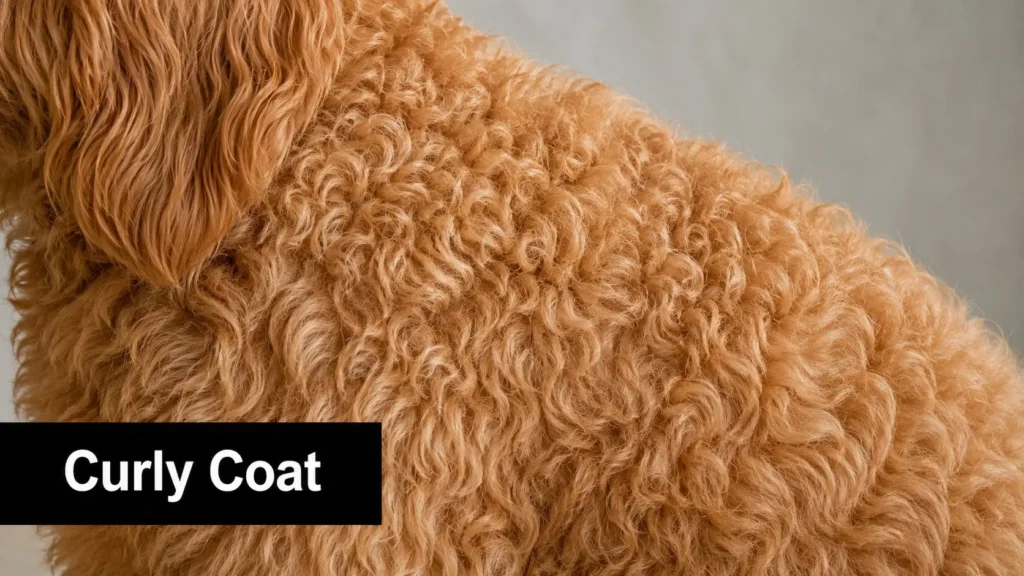
This is one of the biggest gaps between the breed’s image and day-to-day ownership. Goldendoodles can have straight, wavy, or curly coats, and that variation affects shedding, brushing needs, matting risk, and how often the dog needs professional grooming. The practical problem is simple. Buyers often shop for a coat promise, but mixed-breed inheritance does not produce identical results from puppy to puppy.
Myth vs. reality on shedding and allergies
Myth: Goldendoodles are hypoallergenic.
Reality: No dog is reliably hypoallergenic for every allergic person. Goldendoodles may shed less than some other breeds, but they still produce dander and saliva, both of which can trigger reactions. The American Kennel Club’s overview of hypoallergenic dogs makes the broader point clearly. “Hypoallergenic” is a relative label, not a guarantee.
That distinction matters more than marketing suggests. A curlier coat may release less visible hair into the home, yet an allergic person can still react. For households managing sensitivities, comparisons with other small hypoallergenic dog breeds often considered by allergy-conscious owners can help put Goldendoodles in context, but the safest approach is still direct exposure to the individual dog before committing.
A lower-shedding coat can reduce mess. It does not reliably remove allergy risk.
Coat type changes the workload
The coat question is not only about allergies. It is also about maintenance.
A straighter coat may shed more and collect less dense matting. A curlier coat may trap loose hair better, which can make shedding look lighter, but that same coat usually needs more brushing and a more disciplined grooming schedule. Wavy coats often fall in the middle, though “middle” still does not mean low-maintenance.
Prospective owners should connect coat type to cost and labor, not only appearance. A soft teddy-bear look is popular because it photographs well. In practice, that look often requires regular line brushing, coat checks behind the ears and legs, and repeat trips to a groomer.
Questions that expose whether the sales pitch matches reality
Breeders and sellers who speak cautiously about coats tend to be more credible than those who promise certainty.
Ask:
- What coat types have appeared in past litters?
- How much variation is typical in this breeding pair?
- How often do owners of related dogs need professional grooming?
- Which areas mat first in this line?
- What do you tell buyers with allergies?
Clear, specific answers are useful. Absolute promises are not.
The same standard applies to your own decision-making. Meet the dog if possible. Spend time in the breeder’s environment. If allergies are a serious concern, test your reaction before bringing the puppy home. That step is more reliable than any label attached to a doodle litter.
Watch this before assuming all coats behave the same way:
The popular story says Goldendoodles solve the shedding problem neatly. The situation, however, is more complex. Coat type is one of the breed’s main selling points, but it is also one of the least predictable parts of ownership.
3. Temperament and Personality Traits
Why do so many people assume a Goldendoodle will fit easily into almost any home?
The answer starts with reputation, but ownership works better when you look at pattern rather than marketing. Goldendoodles are often bred from two parent breeds with strong people-oriented tendencies. The Golden Retriever side is widely associated with sociability and eagerness to engage, and the Poodle side often adds alertness, sensitivity, and quick learning. The American Kennel Club descriptions of Golden Retrievers and Poodles help explain why many Goldendoodles come across as affectionate, responsive, and highly involved in daily family life.

That broad picture is useful, but it is still only a starting point. Goldendoodles are not a standardized breed, so temperament can vary more than many buyers expect. Breeding choices, early socialization, household routine, and training quality all shape the adult dog you end up living with.
Why a friendly temperament still requires training
A social dog often feels easy in the first meeting. Daily life is a better test.
A Goldendoodle may greet every visitor with enthusiasm, follow family members from room to room, and seek constant interaction. Those traits can feel warm and charming. They can also create friction if the dog has never learned to settle, wait calmly, or spend short periods alone without stress.
Prospective owners should evaluate temperament in practical terms:
- Sociable often means people-focused: Many Goldendoodles prefer company and may struggle in homes where they are left alone for long stretches.
- Sensitivity affects handling: These dogs often respond well to calm, consistent training and may become more reactive or confused under harsh correction.
- Excitability is common: A friendly dog can still jump on guests, mouth during play, or become overstimulated in busy households.
- Watchdog instincts are usually limited: Some individuals alert bark, but many are more likely to greet strangers than deter them.
Myth vs. reality in household behavior
Myth: A sweet-natured puppy naturally becomes an easy adult dog.
Reality: Good manners usually come from repetition, boundaries, and structured exposure to everyday situations.Myth: A family-friendly dog automatically does well with children.
Reality: Success depends on supervision, teaching the dog how to stay calm, and teaching children how to interact respectfully.Myth: Sociability means low maintenance.
Reality: Highly social dogs often need more guidance because they are so engaged with people, visitors, sounds, and routine changes.
Buyer expectations often miss the mark. The popular image centers on a cheerful, cuddly companion. The more accurate view is a dog that usually wants involvement, feedback, and routine. For the right household, that feels rewarding. For owners who want a highly independent dog, it can feel like constant management.
One of the more useful facts about Goldendoodles is that their temperament is often a real strength. It just works best for households prepared to shape that strength into stable behavior.
4. Exercise Requirements and Activity Levels
How much exercise does a Goldendoodle need once the cute, social image wears off and daily life begins?
A practical answer matters because activity level affects far more than weekend fun. It shapes behavior at home, training progress, grooming upkeep after outdoor play, and even long-term body condition. The common buyer assumption is that a friendly, family-oriented dog will naturally adapt to a low-effort routine. In practice, Goldendoodles usually do best with regular physical exercise plus planned mental work.

The breed mix helps explain why. Golden Retrievers were developed to work closely with people and stay active for extended periods. Poodles also bring stamina, responsiveness, and a tendency to learn patterns quickly. The result is often a dog that wants both movement and involvement. Owners who expected a dog that would entertain itself in the yard often find that open space does not replace structured walks, play, and training.
For many households, enough activity looks like a mix rather than a single outlet. A brisk walk may cover physical movement, but it often does not satisfy a dog that also wants retrieval games, short obedience sessions, scent work, or food puzzles. A Goldendoodle that gets these outlets is often easier to live with indoors. One that does not may redirect that energy into barking for attention, pacing, counter surfing, chewing, or constant attempts to start interaction.
This is one of the less glamorous facts about Goldendoodles. Grooming gets the attention, but unmet exercise needs often create the day-to-day frustration.
Activity requirements also vary by size, age, and individual temperament. A young standard Goldendoodle may need far more structured output than an older mini with a calmer disposition. Puppies need careful exercise rather than constant impact, especially while joints are still developing. Owners concerned about growth, mobility, or overdoing high-impact activity should spend time understanding dog hip dysplasia, since exercise planning is partly about protecting the dog, not just tiring it out.
A useful rule is to judge the routine by the dog’s behavior after activity, not by the owner’s intention. If the dog still struggles to settle, demands interaction nonstop, or becomes unruly indoors, the plan may be too short, too repetitive, or missing mental work. Broader pet care guidance for exercise and daily routines can help owners build a more realistic schedule.
The myth is that a Goldendoodle’s upbeat personality makes exercise easy to manage, but the truth is more specific. Their sociability often increases their need for guided engagement because they want to do things with people, not merely exist near them.
Prospective owners should treat exercise as part of the breed’s operating cost. It takes time every day, affects how manageable the dog feels at home, and separates the popular image from the ownership reality.
5. Health Considerations and Common Conditions
Does a Goldendoodle’s popular image as a healthier hybrid match the day-to-day reality of ownership? Only partly.
Goldendoodles often have long, active lives, but the common myth is that a mixed breed automatically avoids inherited disease. Reality is less reassuring. A Goldendoodle can inherit risks seen in Poodles, Golden Retrievers, or both, which means health outcomes depend heavily on breeding quality, body condition, coat care, and routine veterinary follow-up.
That is why health should be evaluated before purchase, not after symptoms appear. Breeder claims matter less than documentation. Buyers should ask for evidence of parent health testing, a clear veterinary history, and an explanation of what conditions the breeder has screened for in their lines.
The main health areas owners should watch
Goldendoodles are not defined by one single breed-specific problem. The more useful approach is to look at the pressure points that show up repeatedly in ownership.
- Joints and mobility: Larger and more athletic Goldendoodles can be prone to orthopedic strain. Learning the basics of understanding dog hip dysplasia helps owners notice stiffness, altered gait, reluctance to jump, or reduced exercise tolerance early.
- Skin and coat health: Coat type affects more than appearance. Dense, curly, or poorly maintained coats can trap moisture, debris, and irritation close to the skin, which can make minor problems harder to spot.
- Ears: Floppy ears and frequent moisture exposure can increase the chance of irritation or infection, especially in dogs that swim often or need more regular grooming.
- Weight-related stress: Extra body weight increases pressure on joints and can reduce comfort over time.
Skin irritation and allergies are also common owner concerns in recent pet insurance commentary. That does not mean every Goldendoodle will struggle with them. It does mean the breed’s coat should be seen as part of a broader maintenance and health issue, not just a selling point.
Myth vs. reality on Goldendoodle health
Myth: Hybrid dogs are naturally low-risk.
Reality: Mixed ancestry can widen genetic diversity, but it does not erase inherited conditions.
Myth: A soft, low-shedding coat is only a grooming question.
Reality: Coat condition, skin comfort, ear care, and matting risk often overlap.
Myth: If a puppy looks healthy at pickup, the hard part is over.
Reality: Good outcomes usually come from screening, prevention, and consistent care across the dog’s life.
Owners who want a practical maintenance baseline can use broader pet care advice for routine health habits, but Goldendoodles deserve closer scrutiny than their friendly image sometimes suggests.
Health management starts before purchase, not at the first vet visit.
One of the more useful facts about Goldendoodles is not that they are automatically healthier than other dogs. It is that careful sourcing and preventive care have an outsized effect on how healthy they are likely to stay.
6. Training and Intelligence Capabilities
Why do so many Goldendoodles look easy to train at first, then frustrate owners a few months later?
The usual myth is simple: intelligent dogs train themselves. Training them, however, is more demanding. Goldendoodles often learn cues quickly, but they also learn loopholes, routines, and owner inconsistency with the same speed. That combination can make the breed feel unusually responsive in one setting and unexpectedly unruly in another.
Their parent breeds help explain the pattern. Poodles are widely recognized for trainability and problem-solving ability, while Golden Retrievers were developed to work closely with people. In practice, that often produces a dog that notices human behavior closely, responds well to rewards, and benefits from structure early.
Myth vs. reality on Goldendoodle trainability
Myth: A smart Goldendoodle will be naturally obedient.
Reality: Intelligence increases learning speed. It does not guarantee impulse control, calm greetings, or reliable recall.
Myth: One puppy class is enough to cover the basics.
Reality: Skills have to be repeated in different places, around distractions, and across developmental stages.
Myth: Friendly dogs are easy dogs.
Reality: Social enthusiasm can create its own training problems, especially jumping, pulling, demand barking, and difficulty settling.
This is why training quality matters more than the breed’s reputation. Goldendoodles usually respond best to reward-based methods, short sessions, and predictable household rules. Harsh corrections often create confusion or avoidance in dogs that are highly tuned in to human feedback.
What strong training usually looks like
- Clear household rules: Decide early how greetings, furniture access, crate use, and settling indoors will work.
- Short repetitions: Brief daily practice tends to hold attention better than occasional long sessions.
- Proofing in real settings: A dog that can sit in the kitchen still needs practice on sidewalks, in parks, and around visitors.
- Reinforcement for calm behavior: Owners often reward excitement by accident. Calm behavior needs rewards too.
Leash walking is a good example. Many Goldendoodles grasp the cue structure fast in low-distraction spaces, then pull hard outside because smells, movement, and people compete successfully with the handler. That is usually a training progression issue, not stubbornness.
Professional support can help owners build that progression correctly. Group classes are often useful for social dogs that need focus around distractions, and local programs can help you find Zoom Room dog classes if you want a structured starting point.
A practical fact about Goldendoodles is that their mental ability raises the ceiling for training, but it also raises the cost of inconsistency. For prospective owners, the key question is not whether the breed is smart. It is whether the household is ready to train with the same consistency the dog brings to learning.
7. Breeding Practices and Ethical Considerations
What does “well bred” mean in a dog type with no single breed standard and wide variation from litter to litter?
That question matters with Goldendoodles because the gap between marketing and practice can be large. The popular image is straightforward: friendly family dog, low-shedding coat, easy fit. The buying reality is less simple. Since Goldendoodles are a crossbreed rather than a standardized purebred, breeder quality varies sharply, and buyers often have to judge the program more than the label.
Myth vs. reality in the breeding market
Myth: A polished website and long waitlist signal a responsible breeder.
Reality: They signal demand and presentation. Responsible breeding is shown through records, disclosure, and decision-making.
A breeder’s strongest evidence usually appears in material that does not help the sales pitch. That includes parent health information, a clear explanation of coat uncertainty, details about how puppies are raised, and direct answers about whether a specific puppy is a poor match for your home. Sellers who guarantee a universally hypoallergenic result are usually selling certainty that the cross itself cannot guarantee.
This point is easy to miss because Goldendoodles are often marketed as a finished product. In practice, each litter can vary in coat, size, shedding tendency, and energy level. Ethical breeders discuss that variation early. Less careful sellers often treat it as a minor footnote until after the deposit is paid.
What to look for from a breeder
The American Kennel Club’s guidance on how to find and work with a responsible breeder offers a useful benchmark, even though Goldendoodles are not an AKC-recognized breed. The principles still apply.
Look for breeders who can show:
- Thorough health testing: Screening should be specific to the parent breeds’ known risks, not vague assurances that the dogs are “checked by a vet.”
- Clear parent documentation: Buyers should be able to learn about the sire and dam, including temperament and health history.
- Raised-in-home or well-managed early environments: Early handling and exposure affect how puppies adjust after placement.
- Buyer screening: Good breeders ask about schedule, grooming tolerance, training plans, and household fit.
- A return policy or take-back commitment: That shows the breeder cares where the dog ends up after the sale.
One detail separates strong programs from weak ones fast. Strong breeders explain what they cannot promise.
Ethical sourcing affects ownership outcomes
Breeding ethics do not stop at pedigree paperwork. They shape the dog you live with.
A breeder who selects stable temperaments, socializes puppies properly, and speaks candidly about coat maintenance is reducing the chance that a buyer walks into preventable problems. A breeder who overpromises on allergies, grooming ease, or adult size increases the odds of mismatch. For Goldendoodles, mismatch often shows up later as grooming neglect, unrealistic expectations, or rehoming.
Training support can help after pickup, especially for first-time doodle owners who want structure and social exposure. Options that help owners find Zoom Room dog classes can be useful. They do not correct poor breeding decisions made at the start.
A practical rule for buyers
Ask questions that make sales language harder to maintain.
For example:
- What health tests were done on both parents?
- What coat outcomes have appeared in past litters?
- What happens if the dog is not a fit?
- How do you match puppies to homes?
- What would make you decline a buyer?
Breeders with sound practices usually answer plainly and with limits. Breeders focused on closing the sale tend to answer with reassurance.
For prospective owners, the key fact is simple. Goldendoodle ethics are not mainly about whether the puppies look healthy on pickup day. They are about whether the breeder is transparent about uncertainty before money changes hands.
8. Cost of Ownership and Financial Considerations
What does a Goldendoodle cost once the excitement of bringing one home wears off?
The practical answer is more than the purchase price suggests. As noted earlier, well-bred Goldendoodles often sell at premium prices, but the larger financial question is what happens after the first payment. A lower asking price can reflect softer demand. It does not automatically make the dog a better value, and it does not reduce the cost of care.
Grooming is a significant, often underestimated, expense.
That point matters because the breed’s popular image can distort buyer expectations. Low shedding is often treated as if it means low maintenance. For many Goldendoodles, the opposite is closer to reality. Coats that trap loose hair can also trap tangles and mats, especially in friction areas such as behind the ears, under the front legs, and around the collar. Guidance in the cited grooming warning describes how some dogs need very frequent brushing to keep the coat manageable. That creates recurring costs in tools, home care time, and professional grooming appointments.
Myth vs. reality on cost
Myth: The main expense is buying the puppy.
Reality: The purchase price is only the entry cost. Grooming, training, supplies, food, and veterinary care continue for the life of the dog.Myth: A discounted puppy is a cheaper Goldendoodle.
Reality: A lower initial price does not change what coat care, preventive medicine, or behavior support cost afterward.Myth: Low shedding saves money.
Reality: Lower shedding often shifts the workload from vacuuming to brushing, dematting prevention, and paid grooming.
Where the budget pressure usually shows up
Owners tend to feel the expense in three places.
- Acquisition: Goldendoodles are commonly marketed at premium prices.
- Coat maintenance: Regular brushing equipment and professional grooming can become a fixed household expense.
- Routine support: Training classes, preventive veterinary care, and unexpected medical bills still apply to an intelligent, active dog.
A realistic budget includes more than enthusiasm and a one-time payment. It includes the coat tools that work on dense hair, a grooming schedule that prevents matting, training support during adolescence, and money set aside for ordinary and unplanned veterinary needs.
The useful conclusion is simple. Goldendoodles can be excellent companions, but they are rarely low-cost dogs. Prospective owners who evaluate them through a myth-versus-reality lens usually make better decisions, especially when comparing breeder price, grooming commitment, and the total cost of responsible care.
Goldendoodle Facts: 8-Point Comparison
| Item | Implementation complexity | Resource requirements | Expected outcomes | Ideal use cases | Key advantages |
|---|---|---|---|---|---|
| Origin and Breed Development | Moderate, selective crossbreeding and multi‑generation planning | Breeder expertise, time, genetic selection, health screening | Hybrid offspring combining parent traits; variability in coat and temperament | Owners wanting designed traits (friendliness + intelligence) | Combines Golden Retriever temperament with Poodle intelligence; designer appeal |
| Coat Types and Hypoallergenic Qualities | Variable, outcome depends on generation and genetics | Regular professional grooming, frequent brushing, grooming tools | Low to moderate shedding if curly coat; grooming commitment required | Allergy‑sensitive households willing to budget for grooming | Reduced shedding potential; multiple coat aesthetics |
| Temperament and Personality Traits | Moderate, influenced by genetics plus socialization/training | Consistent social interaction, training time, early socialization | Friendly, affectionate, highly trainable; risk of separation anxiety if neglected | Families, therapy/emotional support roles, social households | Highly social and trainable; gentle with children and people |
| Exercise Requirements and Activity Levels | High, needs daily, consistent physical and mental activity | 30–60 min daily exercise, outdoor access, enrichment toys, varied activities | Healthy, well‑behaved dog when exercised; destructive/anxious if understimulated | Active families, hikers, agility and water sports enthusiasts | Motivates owner activity; excels in active and sports roles |
| Health Considerations and Common Conditions | Moderate, requires proactive health screening and monitoring | Regular veterinary care, genetic tests, preventive measures, possible surgeries | Improved longevity and reduced risk with screening; some inherited risks remain | Owners committed to preventative care and health investment | Hybrid vigor possible; responsive to preventive management |
| Training and Intelligence Capabilities | Low–Moderate, highly trainable but needs mental challenges | Short frequent training sessions, rewards, obedience classes | Rapid learning, excels in advanced tasks; bored if unstimulated | First‑time owners, service/therapy dogs, competitive training | High intelligence, eager to please, versatile in roles |
| Breeding Practices and Ethical Considerations | High, demands strict standards, transparency and oversight | Comprehensive health testing, ethical facilities, breeder accountability | Healthier litters and informed buyers when ethical; harm if irresponsible | Buyers seeking responsibly bred dogs; adoption/rescue consideration | Protects dog welfare; improves predictability of health/temperament |
| Cost of Ownership and Financial Considerations | Low–Moderate, requires budgeting and planning | Purchase price, grooming, food, veterinary care, training, insurance | Significant lifetime costs; predictable when budgeted and insured | Prospective owners prepared for long‑term financial commitment | Investment in quality reduces emergency risk; clear cost expectations |
Is a Goldendoodle the Right Dog for You?
A Goldendoodle can be a great fit, but only if you like the authentic version of the breed and not just the marketed one.
This breed is affectionate, intelligent, social, and often a joy to train. It’s also variable in coat, demanding in upkeep, and expensive enough that impulse buying makes little sense. That mix is exactly why this breed inspires both devotion and disappointment. Owners who expected a polished, low-effort family dog often feel overwhelmed. Owners who expected a hands-on companion often feel rewarded.
The strongest lesson across these facts about Goldendoodles is that the breed’s most attractive traits come bundled with practical obligations. A social dog may need more company than you planned to give. A beautiful coat may require more brushing than you imagined. A “designer” puppy may come from a market where sales language is smoother than breeder ethics. None of that means you should avoid the breed. It means you should enter with clear eyes.
A good decision starts with your household, not the dog’s popularity. Ask whether you can handle regular training, coat management, exercise, and a meaningful financial commitment. Ask whether everyone in the home wants a people-oriented dog that’s likely to be involved in daily life. Ask whether you’re prepared to reject breeders who make easy promises. Those questions matter more than color, fluffiness, or social media appeal.
It also helps to compare similar breeds before committing. A side-by-side Goldendoodle vs Labradoodle comparison can sharpen your thinking by showing how coat expectations, temperament patterns, and lifestyle fit may differ across popular doodle mixes.
If you can meet the breed where it lives, not where advertising places it, a Goldendoodle may be an excellent companion. You may get a dog that’s warm with family, responsive in training, playful outdoors, and woven into daily routines. If you can’t meet those needs, the mismatch will show up quickly, usually in the coat, the behavior, or your budget.
That’s the clearest conclusion. Goldendoodles aren’t low-maintenance accessories. They’re active, relational dogs that ask for time, structure, and money. For the right owner, that trade is worth it. For the wrong one, the problems start long before the dog does.
If you enjoy practical, evidence-grounded pet writing like this, explore more guides and commentary on maxijournal.com, where independent writers cover pets along with health, science, travel, business, arts, entertainment, and everyday questions readers have.
Discover more from Maxi Journal
Subscribe to get the latest posts sent to your email.