You’re in the bathroom mirror again, plucking the same chin hair you swore you got yesterday, or tilting your face toward the window because that soft upper-lip shadow suddenly looks louder in daylight. That’s usually the moment people start searching for the best facial hair removal for women, and there isn’t one universal winner. The answer depends on skin tone, hair color, pain tolerance, and how permanent you want the result to be.
Facial hair removal is common enough to be a real behavior pattern, not a niche concern. A clinical study of 135 women with hirsutism found that 21.5% used laser for facial hair removal, 20.7% used tweezers, 17.0% used wax, 8.1% used threading/sewing equipment, 5.2% used a device, and 11.1% used no method at all, which is a good reminder that people are making trade-offs, not chasing perfection, according to the study table on PMC. For a broader consumer-facing overview of treatment choices, our clinic’s facial hair removal guide is a useful companion read.
| Method | Pain | Lasts | Yearly cost | Best for |
|---|---|---|---|---|
| Tweezing | Low to moderate | Days to weeks | Low | A few stray hairs, precision cleanup |
| Threading | Moderate | Days to weeks | Low to moderate | Upper lip, brows, small precise areas |
| Waxing | Moderate to high | Weeks | Moderate | Larger facial zones if your skin tolerates it |
| Depilatory creams | Low to moderate | Days | Low to moderate | Fast surface removal if your skin tolerates chemicals |
| Dermaplaning | Low | Days to weeks | Low | Peach fuzz plus surface exfoliation |
| Shaving | Low | Days | Low | Quick maintenance and very sensitive skin when done gently |
| At-home IPL or laser devices | Low to moderate | Weeks to months | Moderate to high | Light to medium skin with dark hair |
| Professional laser | Moderate | Months to years | High | Longer-term reduction on the right skin and hair type |
| Electrolysis | Moderate | Permanent | High | Light, grey, red hair, and stubborn individual hairs |
Why Picking a Facial Hair Method Is Harder Than It Looks
The hard part is not removing hair. The hard part is choosing a method that will not irritate your skin, waste your time, or leave you feeling like you bought the wrong tool for your face.
A lot of women end up stuck in the same loop. Tweezing works until the regrowth feels endless. Waxing gives smoothness, then redness. Shaving feels efficient, then someone tells you it makes hair thicker, which it does not. That turns the problem into decision fatigue, not a beauty problem.
The four questions that matter
Start with how much hair you have, not with what the marketing promises. A few coarse chin hairs need a different plan than a blanket of peach fuzz or a hormonally driven jawline pattern. Then ask whether your skin is calm, reactive, acne-prone, or prone to dark marks after inflammation.
The second filter is hair color. Light, grey, and red hairs behave differently from dark terminal hairs, and that matters more than most product pages admit. The third is your pain tolerance, because a method that works on paper but feels miserable every time usually fails in real life.
The fourth is permanence. Some people want a quick tidy-up before work. Others want to reduce facial hair for good. Those are different goals, and they should not get the same advice.
Practical rule: the best method is usually the one that fits your skin first and your patience second.
There is also a plain demand issue. Facial hair removal is common, and that explains why the market is crowded with options. A practical overview of the trade-offs is laid out in our clinic’s facial hair removal guide, and AARP’s facial hair removal overview gives a useful consumer-friendly look at the main choices. That does not make any one method right, but it does make the decision tree obvious.
The Main Methods at a Glance
Start with the method’s bucket, not the marketing copy. Once you separate surface removal, root removal, light-based reduction, and true permanent options, the decision gets much clearer.
Surface methods
Shaving removes hair at the skin’s surface. It is the fastest, cheapest, most temporary option, which is exactly why it stays in the bathroom cabinet. Dermaplaning follows the same basic idea with a sharper blade and an extra skin-smoothing effect, since it also clears away dead surface cells. Depilatory creams break hair down with chemicals at the surface, so they are quick, but they can be unforgiving on delicate facial skin.
These methods make sense if you want speed and do not want to commit to a longer session. They do not make sense if you want long-lasting results.
Root-pulling methods
Tweezing, threading, and waxing remove hair from the root. Tweezing handles one hair at a time, threading uses twisted thread for precise shaping, and waxing clears a larger patch in one pass. These methods last longer than shaving, but they ask more from your skin, especially if you get redness, bumps, or ingrowns.
If you want a precise root-removal option for the face, the practical advice in don’t be soft on fuzz hard wax shows why hard wax gets used for smaller areas. It still pulls, so sensitive skin needs caution.
Light and energy methods
At-home IPL and laser devices use light to target pigment in the follicle. They are built for gradual reduction, not instant perfection, and they only make sense if you will use them consistently. The catch is simple. They work best on the right hair and skin combination, and they are a poor fit when hair is very light or skin is very reactive.
For a deeper look at how hormonal patterns can change the facial hair picture, this endometriosis blood test guide is useful background reading on the bigger hormone conversation. That matters because light-based methods are usually a long-game choice, not a quick fix.
Professional and definitive options
Professional laser does the same general job as at-home light devices, but with stronger equipment and a trained operator. It is the better route if you want longer-term reduction and your skin and hair type are a match. Electrolysis is the only method that destroys individual follicles one by one, which is why it remains the standard for permanent removal.
If you are comparing women’s permanent hair removal at NYC Laser, keep one thing straight. Laser gives long-term reduction on the right candidate, while electrolysis is the permanent option when you want each follicle gone for good.
Comparing Pain, Longevity, Cost, and Skin Match
The useful way to compare facial hair removal is by matching the method to your skin and your tolerance for upkeep. If you want a gentle routine, stay with surface methods. If you want less hair over time, pick a method that targets the follicle. If you want true permanence, accept that the process is slower and usually more expensive.
| Method | Pain | Lasts | Yearly cost | Best for |
|---|---|---|---|---|
| Tweezing | Low to moderate | Days to weeks | Low | A few stray hairs and precise cleanup |
| Threading | Moderate | Days to weeks | Low to moderate | Brows, upper lip, clean lines |
| Waxing | Moderate to high | Weeks | Moderate | Hair you want gone from the root fast |
| Depilatory creams | Low to moderate | Days | Low to moderate | Speed, if your skin tolerates chemicals |
| Dermaplaning | Low | Days to weeks | Low | Peach fuzz plus smoother makeup application |
| Shaving | Low | Days | Low | Fast maintenance and sensitive skin when done gently |
| At-home IPL or laser | Low to moderate | Weeks to months | Moderate to high | Light to medium skin with dark hair |
| Professional laser | Moderate | Months to years | High | Long-term reduction on the right skin and hair type |
| Electrolysis | Moderate | Permanent | High | Light, grey, red hair and stubborn coarse hairs |
For skin match, the big question is not which method sounds strongest. It is which one your skin can tolerate without getting irritated, burned, or overworked. That is why permanence versus gentleness is the primary trade-off here.
Tweezing belongs in the “small problem, small tool” category. Use it for a few isolated hairs, or for cleanup after another method. Use it for an entire jawline, and you will hate the upkeep. It is precise, but precision does not make it a full plan.
Threading gives the cleanest control for brows and the upper lip. It also keeps chemicals off the skin, which is helpful if your face reacts to creams or waxes. The catch is friction. If your skin gets red fast, threading can leave it looking angry even when the hair removal itself is tidy.
Waxing removes more at once, which is why it feels efficient. It also asks more from your skin barrier than people admit. On skin that flushes, stings, or breaks out after irritation, waxing is a rough choice. If you are serious about waxing the face, use proper technique and products meant for facial skin, as covered in the ProMD Health Bel Air guide.
Depilatory creams are the fastest chemical option, but the face has less room for error than the body. If your skin is dry, sensitized, acne-prone, or recently exfoliated, skip the guesswork and patch test first. I would only use creams when speed matters more than control and your skin has already proven it can handle them.
Dermaplaning is a surface fix, and that is exactly why people like it. It clears peach fuzz and dead skin at the same time, so makeup sits flatter and skin looks smoother in daylight. It does not reduce growth. It just makes the current hair less visible for a while.
Shaving is the easiest method to repeat without drama. It is low pain, low cost, and easy to manage at home. If your skin hates pulling or chemicals, shaving is often the least irritating choice. It does not make hair grow back thicker, it just keeps the cycle short.
At-home IPL and laser devices sit between grooming and treatment. They make sense if you are consistent and if your hair gives the device enough pigment to find. They are also a better fit for people who want reduction without booking clinic visits. For a side-by-side look at how home devices compare with professional options, the best at-home device comparison guide is a useful place to start, especially if you are trying to decide whether home treatment is enough or whether you need a provider.
Professional laser is the method for people who want real reduction and have the right skin-hair match. It is stronger than home devices, but it is also less forgiving on the wrong candidate. That is why the best result comes from matching the laser platform to the skin tone, not from chasing the cheapest session.
Electrolysis is the hard answer for hairs that do not cooperate with light-based treatment. It works on light, grey, red, and stubborn individual hairs because it targets follicles one by one. It is slower than laser, but if your goal is to get rid of a specific hair for good, this is the method that fits that goal. That is the same basic distinction described in the broader comparison of women’s permanent hair removal at NYC Laser, laser for reduction, electrolysis for permanence.
The shortest version is this. Choose shaving, dermaplaning, threading, or tweezing if you want gentler upkeep. Choose waxing or depilatory creams if your skin can handle a little more aggression and you want quicker cleanup. Choose IPL or laser if your hair is dark enough for the device to see. Choose electrolysis if permanence matters more than speed.
Matching the Method to Your Skin Tone, Hair Color, and Hormones
For facial hair, the smartest choice starts with pigment, not preference. If your hair is dark enough for light-based devices to see and your skin is a good match, laser or IPL can do real reduction. If the hair is too light, too fine, or too hormone-driven, that same method can waste time fast.
If you have fair to medium skin and dark coarse hair
This is the easiest setup for laser and IPL. Strong pigment contrast gives light-based devices a clear target, which is exactly what they need to work well. In the provided data, laser treatments are commonly reported to produce 60% to 80% hair reduction after 6 to 8 sessions, with some studies showing up to 90% reduction in facial-hair density after a full course, as summarized by AARP.
Do not chase the cheapest option just because your hair looks compatible. This is the profile that usually benefits most from long-term reduction instead of constant surface cleanup. If your hair is dark and coarse, stop paying for methods that only trim what you can already see.
If you have darker skin tones
Dark skin needs pigment-aware treatment. That usually means careful device selection and, in clinic settings, the right laser platform for your skin tone, not the one that gets pushed the hardest in ads. The reason is simple, more melanin in the skin leaves less room for a broad light source to be careless.
Ask what device they use and ask whether they have treated your skin tone before. A method that performs well on one face can be a poor fit on another, and that gap matters more than marketing language.
If your hair is light, grey, or red
Light hair is the difficult one. Light-based methods need pigment, and grey or very fair hairs often do not give them enough to grab. In The Tested Hub’s comparison, the Braun Face 810 epilator is highlighted for grey or light hair, which is a useful reminder that not every facial-hair problem belongs to IPL.
For stubborn pale hairs, electrolysis is the stronger answer. Threading and tweezing still work for cleanup, but they are maintenance tools, not a long-term fix.
If hormones are driving the growth
Hormonal facial hair from PCOS, perimenopause, or other endocrine shifts usually needs a two-track plan. A few coarse hairs can go to electrolysis, while the wider area gets a temporary method that does not irritate the skin. If the growth is new, sudden, or clearly worsening, use a clinician, because cosmetics do not fix the driver. If you are also sorting out symptom patterns, a resource like this endometriosis blood test page can be part of the bigger picture.
For acne or rosacea, skin first, hair second. Calm the inflammation, then remove the hair. Too many faces get more reactive because someone keeps threading or waxing through active irritation.
The common mistake is treating every face like it has the same pigment, the same sensitivity, and the same growth pattern. It doesn’t.
Mainstream advice tends to blur all of that together. It talks about cleansing and mild exfoliation, but it skips the part that decides whether a method will work or backfire. For readers with overlapping health issues, even unrelated hormonal conditions can change how closely they track symptoms and skin changes, which is why that broader symptom-tracking conversation matters here.
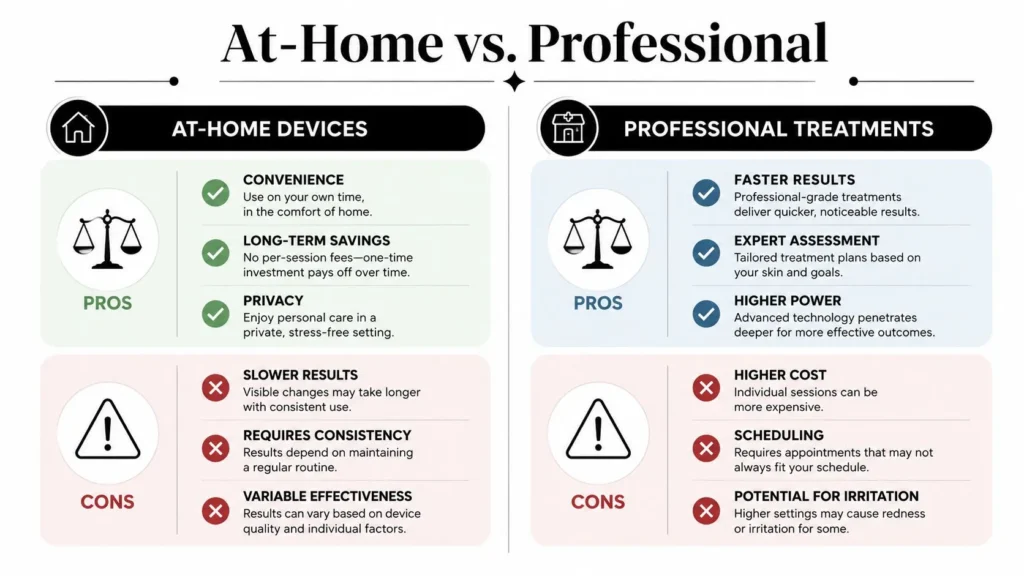
At Home Devices Versus Professional Treatments
If you want the easiest path, at-home IPL is the convenience play. If you want stronger reduction with tighter control, professional laser is the better choice. If you want the hairs gone for good, electrolysis is the finish-line option.
What at-home devices do
A good at-home IPL device, like the Braun Silk Expert Pro 5, is a real tool, not a gimmick. Forbes Vetted lists it as a face-and-body IPL device with 400,000 flashes, 10 intensity levels, four interchangeable caps, and FDA clearance, and points it to light-to-medium skin tones. That flash count supports repeated use over time, and the adjustable settings matter because the upper lip and chin usually need more caution than larger body areas, according to Forbes Vetted.
The trade-off is simple. At-home devices are for gradual reduction and upkeep, not for the fastest route to the smoothest face. If you want a result you can keep, you need consistency, not optimism.
What professional treatment gives you
Professional laser is the stronger choice when you want more reduction and your skin and hair profile can support it. The primary advantage is not just power, it is matching the device to your skin tone and having someone experienced watch your response as they go. That matters more than brand names.
Electrolysis sits in a separate category. It is the only permanent method in the verified data set, and it makes sense when hair is light, grey, or red, or when laser leaves behind a few stubborn coarse hairs. The trade-off is time, because treating follicle by follicle is slow by design.
The trap people fall into
Don’t compare your at-home IPL result to a clinic laser result and call the device a failure too early. Also don’t book the strongest laser in town without checking whether it fits your skin tone.
That mistake drives a lot of bad reviews. People quit too soon, or they choose a provider who does not work with their skin and hair profile carefully enough to give a fair result.
If you are choosing between convenience and maximum reduction, be honest about what you will stick with. Convenience wins if you will use the device. Maximum reduction wins if you want a professional to handle the technical matching.
For readers who compare beauty tools across routines, the same logic shows up in the best gel nail light, because a tool only performs well when the device and the job fit each other.
The Method I Would Pick for Each Common Reader
If you want the shortest possible answer, here it is.
Budget-conscious and wants low daily hassle: pick dermaplaning plus occasional tweezing. It gives you the fastest polished look for the least commitment, and it doesn’t drag you into a complicated schedule.
Fair to medium skin with dark hair and wants long-term reduction without clinic visits: pick an FDA-cleared at-home IPL device. That’s the cleanest at-home strategy for the skin-hair combo that light-based tools like best.
Darker skin tone: pick professional Nd:YAG laser with a vetted provider. Don’t gamble on generic laser marketing if your skin needs a more careful setup.
Light, red, or grey hair, or just a few stubborn coarse chin hairs: pick electrolysis. It’s the method that still makes sense when pigment-based tools don’t.
Sensitive skin or active acne or rosacea that reacts to waxing and threading: pick careful shaving with a clean blade plus soothing aftercare, and wait on professional treatment until your skin calms down.
That’s a recommendation framework, not a beauty hierarchy. The right pick is the one that fits your skin, your hair, and your tolerance for maintenance, not the one with the loudest packaging.
Aftercare, Red Flags, and Questions to Ask a Provider

Cool compresses help. So does a fragrance-free moisturizer and mineral sunscreen on freshly treated skin. If you’ve just waxed, lasered, or threaded, stop treating the area like it’s invincible.
Watch for the obvious red flags. Persistent redness beyond 24 hours, hyperpigmentation, ingrown clusters, or any blistering after laser or waxing means the method or the settings are wrong for your skin. Don’t keep pushing through that because you paid for a session.
Before booking professional laser or electrolysis, ask three things. Which device do they use and why, have they treated your skin tone before, and what reduction do they realistically expect for your hair color? Also ask how they handle adverse reactions, because a good clinic has a plan, not just a sales pitch.
If facial hair has shown up suddenly or is getting worse, talk to a clinician. The best cosmetic method in the world can’t fix a hormonal driver on its own, and that’s the part worth checking first.
For skin recovery after cosmetic procedures, this glycolic acid guide is useful background on why barrier-friendly aftercare matters.
Take the method that fits your skin, not the trend that’s loudest this week.
If you want more candid, practical beauty and wellness guidance like this, visit maxijournal.com for clear, no-nonsense articles that help you compare options before you buy, book, or try something new. It’s a good place to keep sorting out questions like facial hair removal, skin care, and everyday treatments without the fluff.
Discover more from Maxi Journal
Subscribe to get the latest posts sent to your email.